Wang Huaxiang, Xu Fengfeng, Lu Lingling, Yang Fang, Huang Xinghua, Lv Lizhi, Hu Huanzhang, Jiang Yi
The Fuzong Clinical Medical College of Fujian Medical University, Fuzhou, Fujian 350025, PR China.
Department of Hepatobiliary Surgery, 900 Hospital of the Joint Logistic Team, Fuzhou, Fujian 350025, PR China.
J Cancer. 2022 Jan 1;13(1):184-201. doi: 10.7150/jca.65225. eCollection 2022.
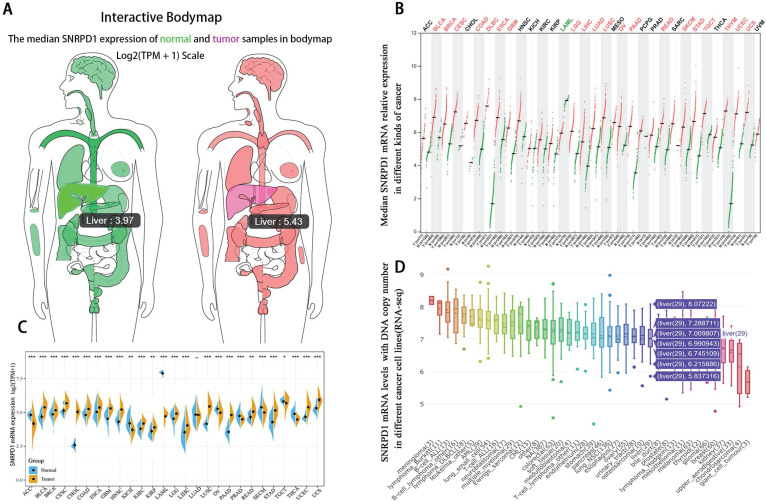
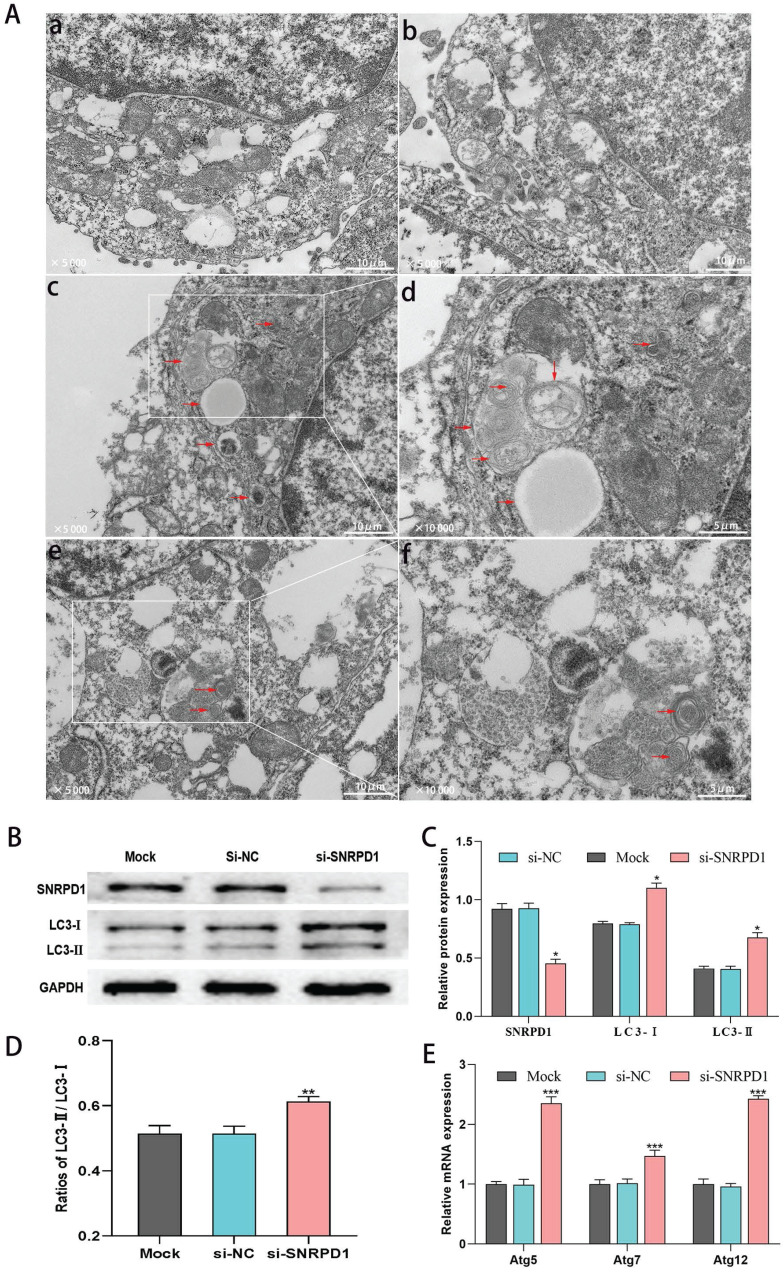
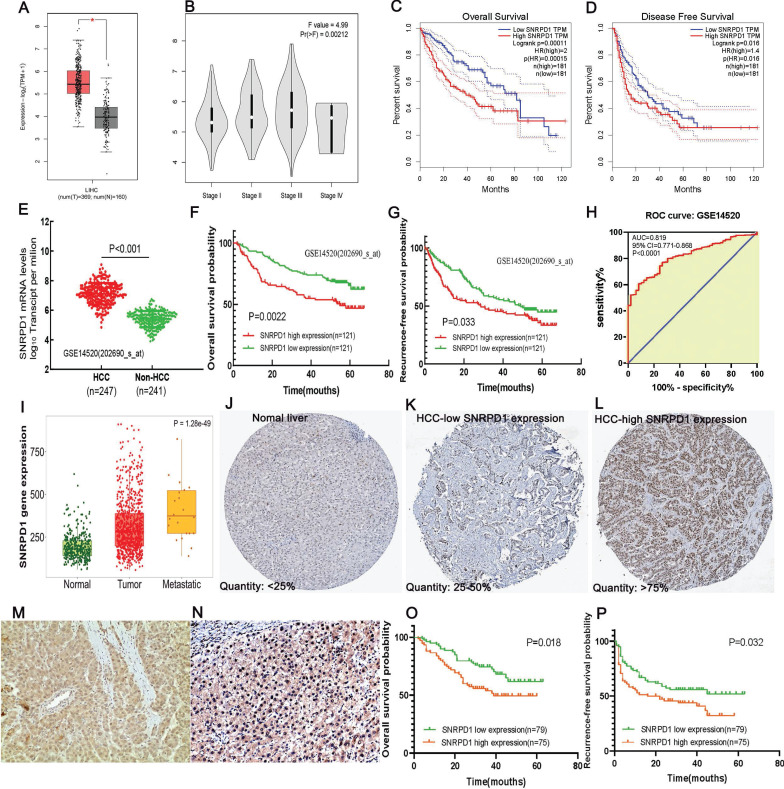
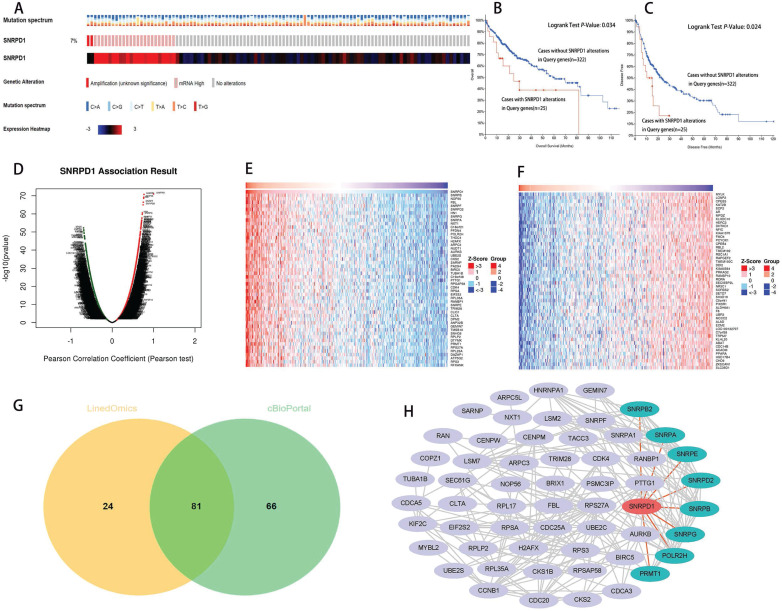
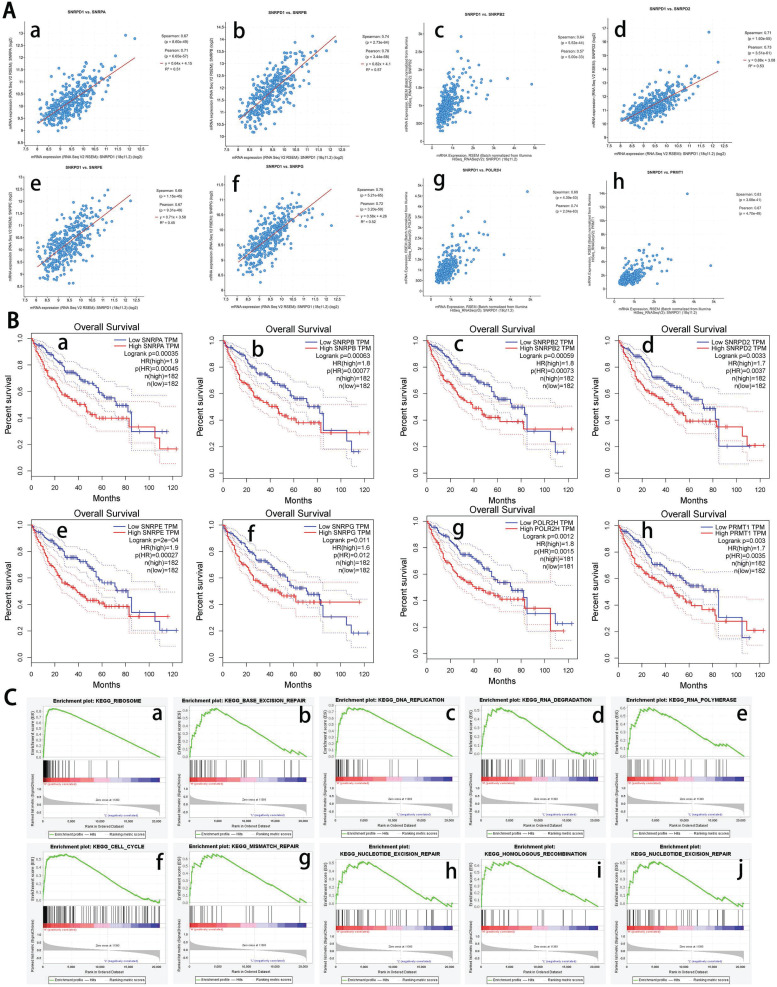
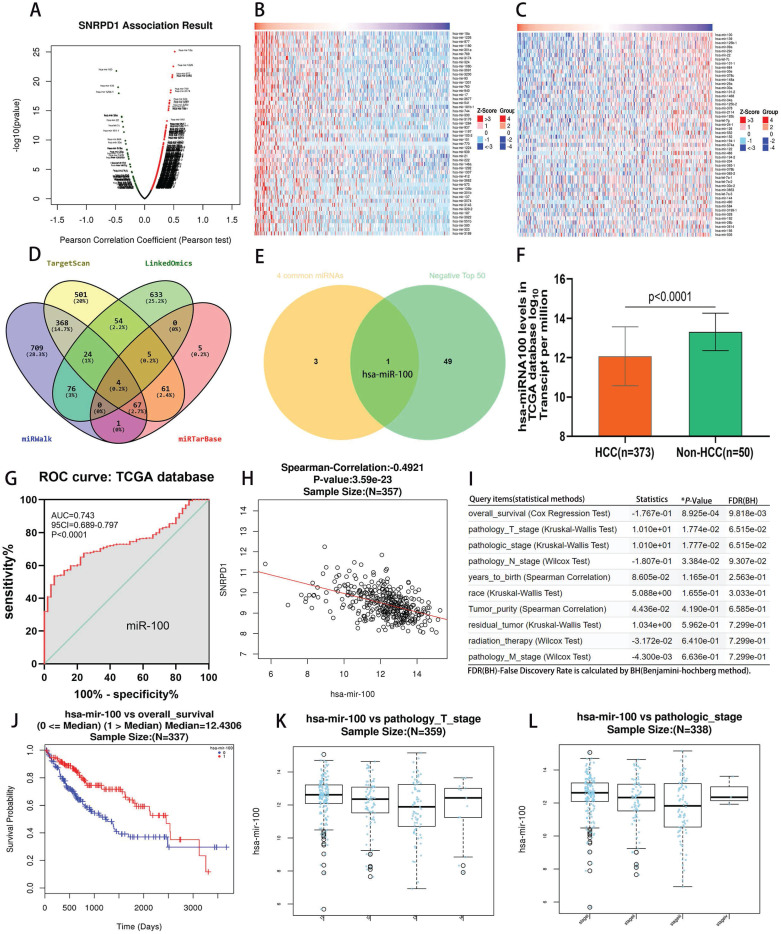
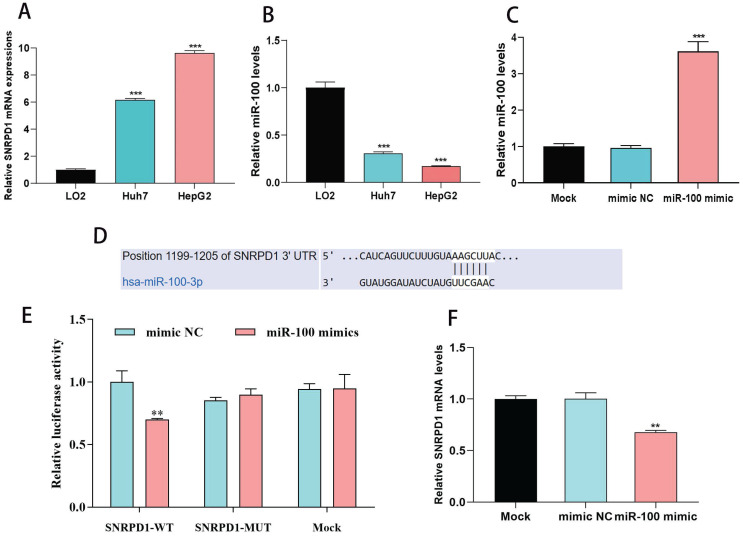
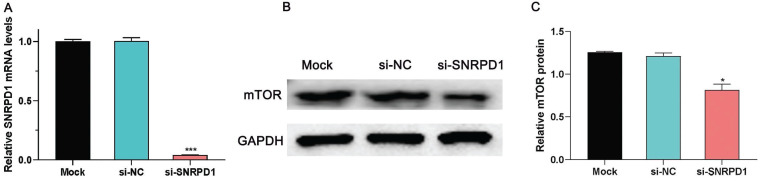
Small nuclear ribonucleoprotein Sm D1 (SNRPD1), one of the crucial genes encoding core spliceosome components, was abnormally highly expressed in multiple types of tumors. In this study, we investigated the diagnostic and prognostic significance of SNRPD1 in hepatocellular carcinoma (HCC). The investigation of datasets from GEO and TCGA databases revealed that SNRPD1 expression in HCC was significantly higher than adjacent normal liver tissues, which was validated by immunohistochemistry (IHC). Both GO, KEGG analysis showed that the SNRPD1 co-expressed genes mainly enriched in Cell division, Nuclear import, mRNA splicing via spliceosome, Ribosome, Cell cycle, etc. Survival analysis from the GSE14520 dataset and 154 HCC cohorts exhibited a significant association of high SNRPD1 expression with poor overall survival and recurrence-free survival. ROC analysis showed that the abnormally high SNRPD1 mRNA expression has diagnostic significance in distinguishing between HCC and normal liver tissue (AUC = 0.819). Gene set enrichment analysis (GSEA) demonstrated that the high expression of SNRPD1 might regulate HCC tumorigenesis and progression by affecting the cell cycle, mismatch repair, DNA replication, and RNA degradation, etc. The luciferase report assay revealed that SNRPD1 was the direct target gene of miR-100 manifested by decreased SNRPD1 expression and luciferase activity in the HCC cells upon miR-100 overexpression. Finally, SNRPD1 may as an oncogene affecting the progression of HCC through regulates the mTOR pathway and autophagy.
小核核糖核蛋白Sm D1(SNRPD1)是编码核心剪接体成分的关键基因之一,在多种类型的肿瘤中异常高表达。在本研究中,我们调查了SNRPD1在肝细胞癌(HCC)中的诊断和预后意义。对来自GEO和TCGA数据库的数据集进行的调查显示,HCC中SNRPD1的表达显著高于相邻的正常肝组织,这通过免疫组织化学(IHC)得到了验证。GO和KEGG分析均表明,SNRPD1共表达基因主要富集于细胞分裂、核输入、通过剪接体进行的mRNA剪接、核糖体、细胞周期等。来自GSE14520数据集和154个HCC队列的生存分析显示,SNRPD1高表达与总体生存率和无复发生存率差显著相关。ROC分析表明,SNRPD1 mRNA异常高表达在区分HCC和正常肝组织方面具有诊断意义(AUC = 0.819)。基因集富集分析(GSEA)表明,SNRPD1的高表达可能通过影响细胞周期、错配修复、DNA复制和RNA降解等过程来调节HCC的肿瘤发生和进展。荧光素酶报告基因检测显示,SNRPD1是miR - 100的直接靶基因,miR - 100过表达后HCC细胞中SNRPD1表达和荧光素酶活性降低即表明了这一点。最后,SNRPD1可能作为一种癌基因,通过调节mTOR途径和自噬来影响HCC的进展。