Department of Surgery at Sir Y.K. Pao Center for Cancer, The Chinese University of Hong Kong, Shatin, Hong Kong, China.
Department of Biomedical Engineering, The Chinese University of Hong Kong, Shatin, Hong Kong, China.
Nanotheranostics. 2022 Jan 1;6(2):161-174. doi: 10.7150/ntno.62639. eCollection 2022.
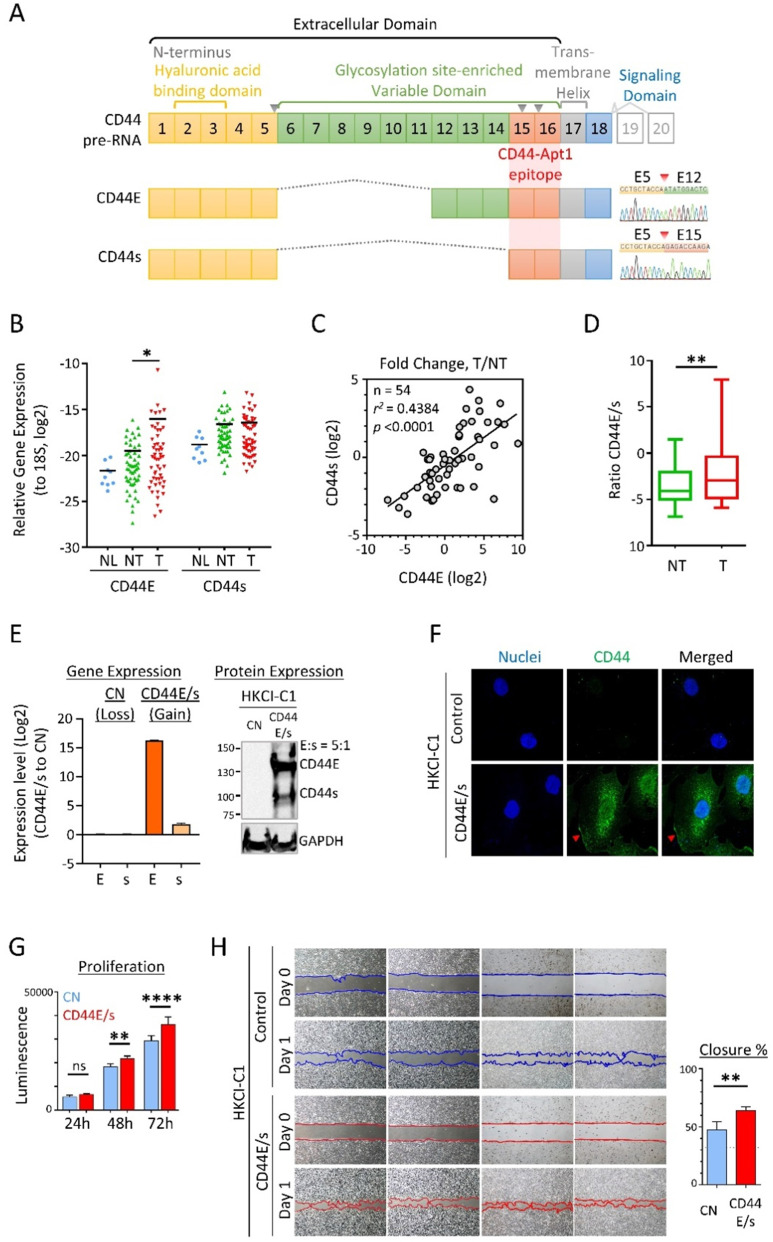
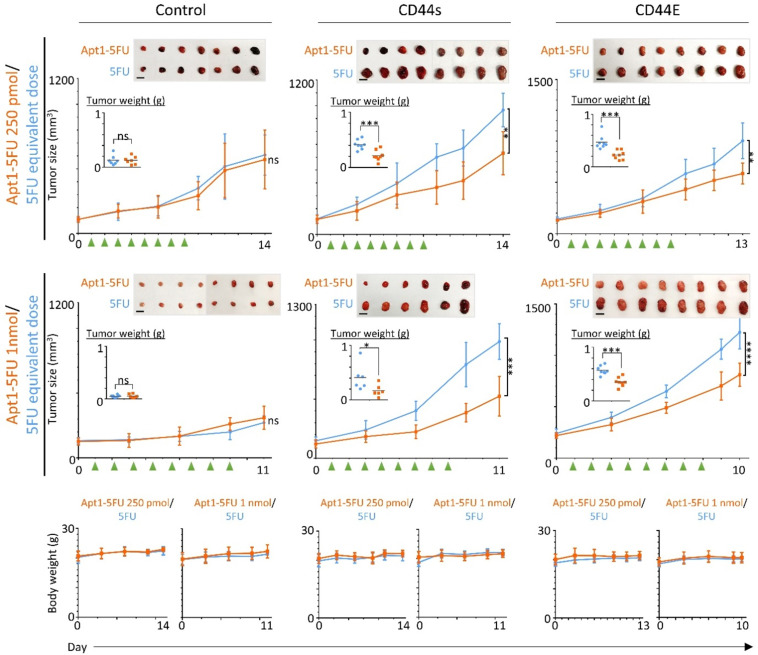
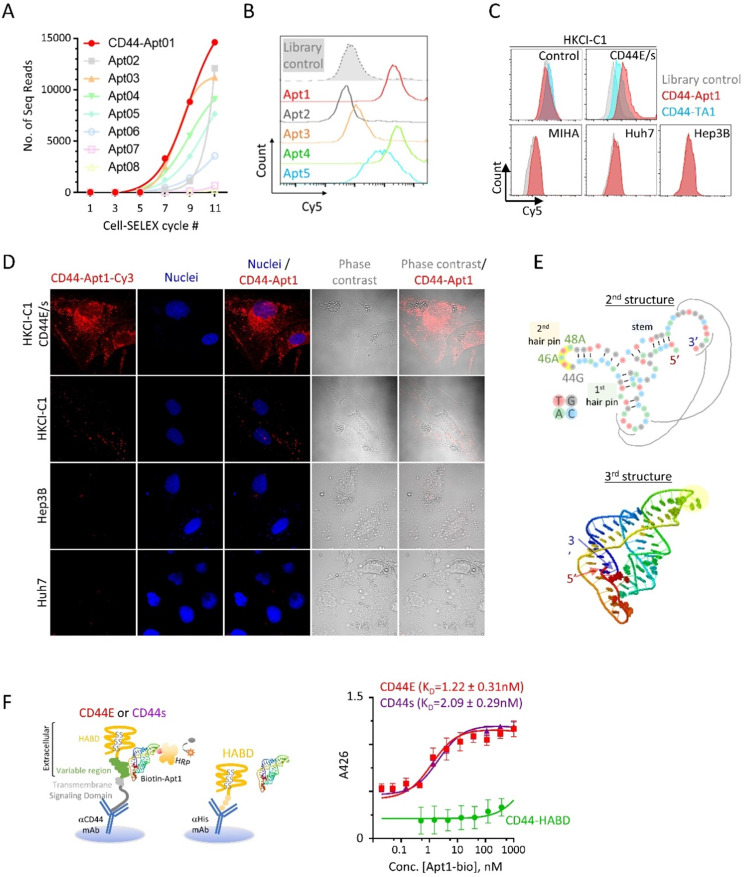
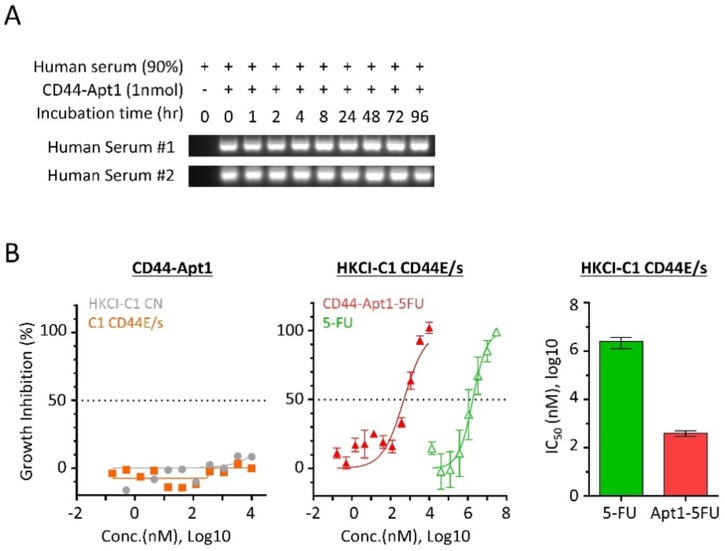
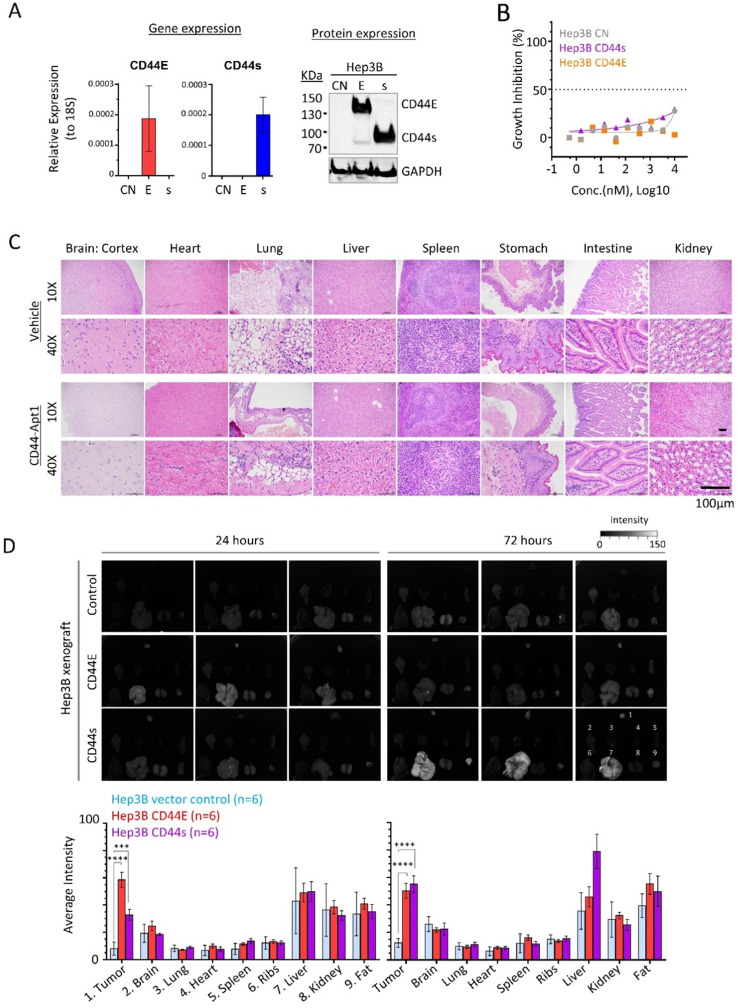
Hepatocellular carcinoma (HCC) is the predominant subtype of liver cancer with an extraordinary high mortality. Resistance to systemic therapy is a major cause of inferior clinical outcome in most patients with HCC. CD44 is a transmembrane cell-surface glycoprotein that is characterized by its variants displaying differential overexpression in human cancers. Aptamers, also known as chemical antibodies, can target cell-surface molecules with high affinity and specificity via structural recognition. Aptamer-mediated drug delivery hence is of high potentials in guiding therapy to improve efficacy. Variants CD44E and CD44s were studied for HCC relevance by investigating their expressions in primary HCC tumors, adjacent cirrhotic/fibrotic livers and normal livers using junction specific primers in qPCR assay. CD44E/s dual-targeted aptamers were uncovered by integrating loss-gain cell-SELEX and next generation sequencing. Selected aptamers were characterized for binding affinity and specificity, biostability, and cytotoxicity, homing and biodistribution, and ability to deliver 5-FU into targeted cells . Both CD44E and CD44s isoforms showed significant upregulations in HCC tumors with CD44E/s activities promoting cell proliferation and migration. Loss-gain cell-SELEX uncover a CD44E/s dual-targeting aptamer, termed CD44-Apt1. Strong binding of CD44-Apt1 to cell-surface CD44 positive cells but not CD44-negative cells was demonstrated by flow-cytometry. CD44-Apt1 displayed strong affinity to CD44E and CD44s with K as low as 1 nM but not the hyaluronic acid binding domain of CD44. Confocal imaging of CD44-positive cells stained with fluorescent-labeled CD44-Apt1 showed profound cytoplasmic localization, suggesting efficient cell-penetrating ability. Meanwhile, no apparent staining was observed in CD44-negative cells. CD44-Apt1 when conjugated with inhibitor 5-FU showed efficient guidance of 5-FU into HCC cells that significantly enhanced drug toxicity by more than thousands-fold. Both cell treatment and animal biodistribution indicated that CD44-Apt1 is non-toxic. In HCC xenograft model, CD44-Apt1 efficiently homed to tumor xenografts in a CD44 expression-dependent manner. Novel discovery of aptamer CD44-Apt1 that can bind both CD44E and CD44s illustrates high potential as nanoprobe to deliver anti-cancer therapeutics.
肝细胞癌(HCC)是肝癌的主要亚型,死亡率极高。大多数 HCC 患者对系统治疗的耐药性是临床预后不良的主要原因。CD44 是一种跨膜细胞表面糖蛋白,其特征是变体在人类癌症中表现出不同程度的过表达。适体,也称为化学抗体,可通过结构识别与细胞表面分子高亲和力和特异性结合。因此,适体介导的药物传递在指导治疗以提高疗效方面具有很高的潜力。通过使用 qPCR 检测原发性 HCC 肿瘤、相邻肝硬化/纤维化肝脏和正常肝脏中的接头特异性引物,研究了 CD44E 和 CD44s 变体与 HCC 的相关性。通过整合缺失-增益细胞 SELEX 和下一代测序,发现了 CD44E/s 双靶向适体。对所选适体进行了结合亲和力和特异性、生物稳定性、细胞毒性、归巢和生物分布以及将 5-FU 递送到靶细胞的能力的表征。CD44E 和 CD44s 同工型在 HCC 肿瘤中均显示出显著上调,CD44E/s 活性促进细胞增殖和迁移。缺失-增益细胞 SELEX 揭示了一种 CD44E/s 双靶向适体,称为 CD44-Apt1。通过流式细胞术证明 CD44-Apt1 与细胞表面 CD44 阳性细胞但不与 CD44 阴性细胞强烈结合。CD44-Apt1 与 CD44E 和 CD44s 具有低至 1 nM 的亲和力,而与 CD44 的透明质酸结合域没有亲和力。用荧光标记的 CD44-Apt1 染色 CD44 阳性细胞的共聚焦成像显示出深刻的细胞质定位,表明具有有效的细胞穿透能力。同时,在 CD44 阴性细胞中没有观察到明显的染色。当与抑制剂 5-FU 缀合时,CD44-Apt1 能够有效地将 5-FU 引导到 HCC 细胞中,使药物毒性增强数千倍以上。细胞处理和动物生物分布均表明 CD44-Apt1 无毒。在 HCC 异种移植模型中,CD44-Apt1 以 CD44 表达依赖性方式有效地归巢到肿瘤异种移植物中。发现能够结合 CD44E 和 CD44s 的适体 CD44-Apt1 具有作为纳米探针传递抗癌治疗药物的高潜力。