Ni Na, Deng Fang, He Fang, Wang Hao, Shi Deyao, Liao Junyi, Zou Yulong, Wang Hongwei, Zhao Piao, Hu Xue, Chen Connie, Hu Daniel A, Sabharwal Maya, Qin Kevin H, Wagstaff William, Qin David, Hendren-Santiago Bryce, Haydon Rex C, Luu Hue H, Reid Russell R, Shen Le, He Tong-Chuan, Fan Jiaming
Ministry of Education Key Laboratory of Diagnostic Medicine, and Department of Clinical Biochemistry, The School of Laboratory Medicine, Chongqing Medical University, Chongqing 400016, China.
Molecular Oncology Laboratory, Department of Orthopaedic Surgery and Rehabilitation Medicine, The University of Chicago Medical Center, Chicago, IL 60637, USA.
Mol Ther Oncolytics. 2021 Nov 20;23:602-611. doi: 10.1016/j.omto.2021.11.011. eCollection 2021 Dec 17.
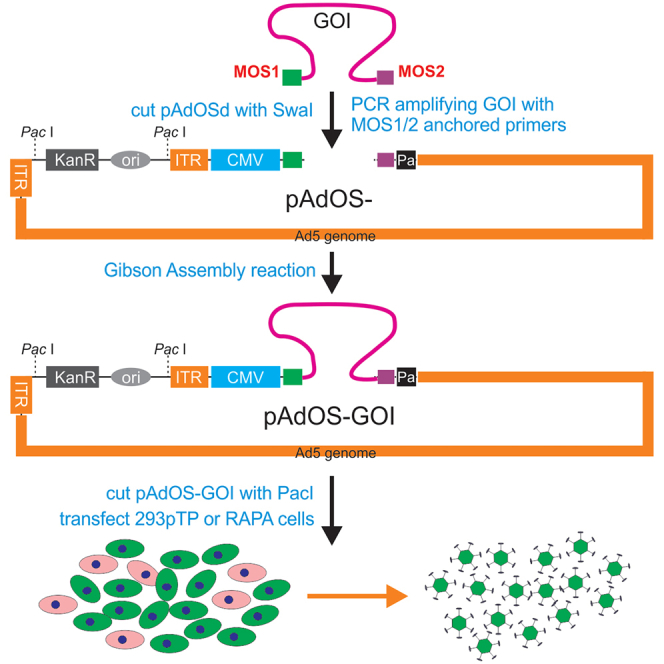
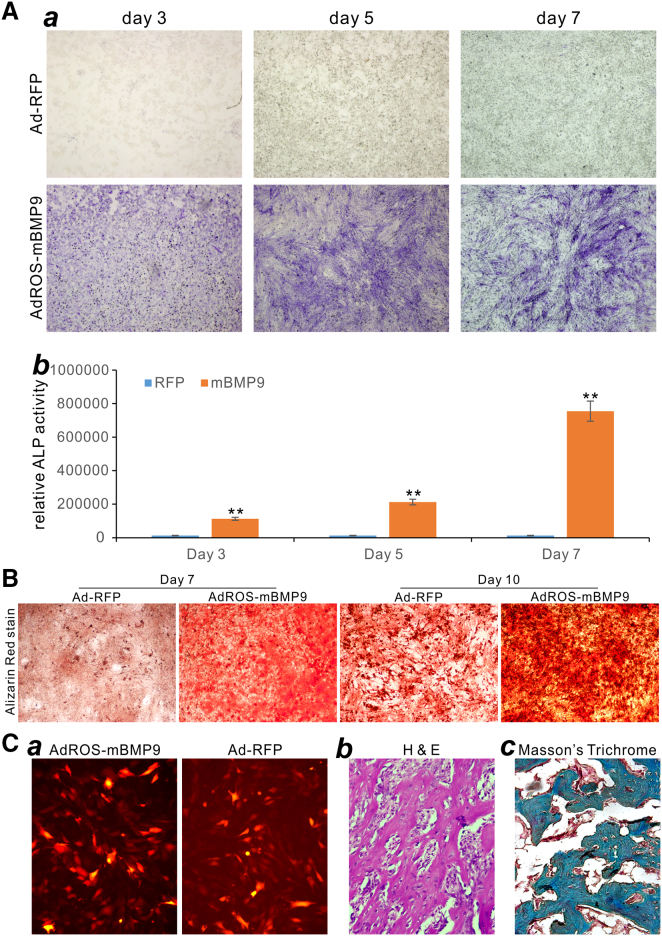
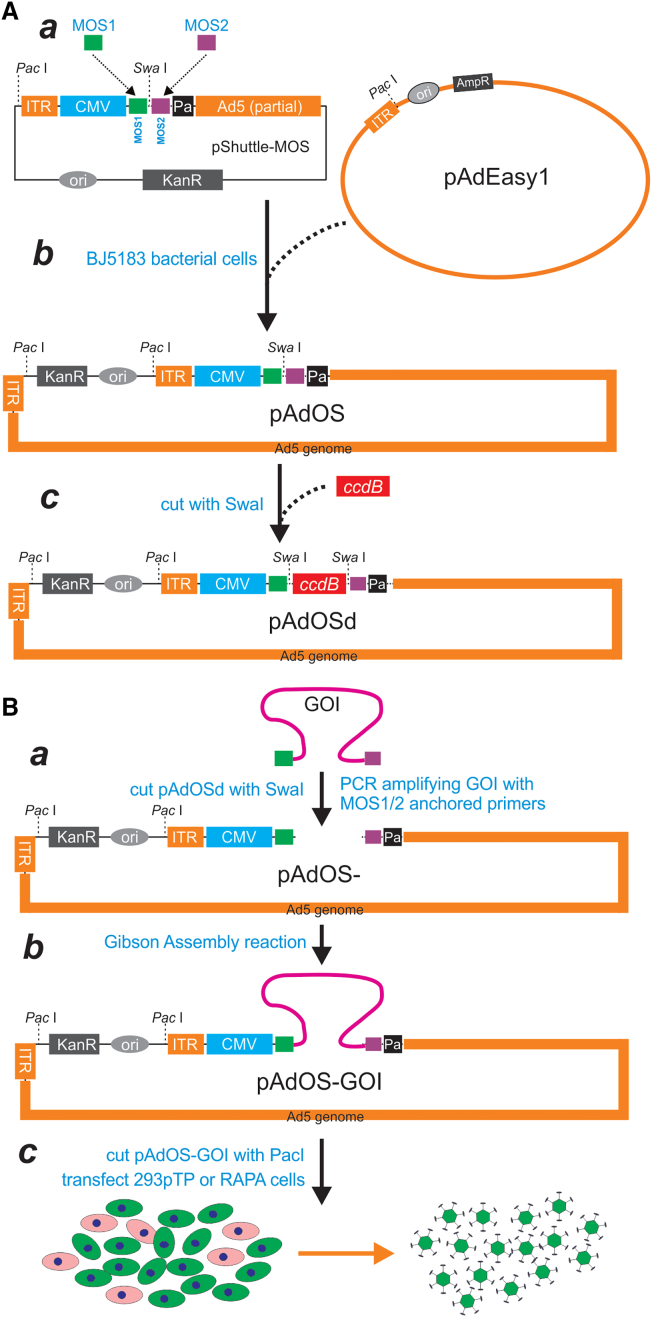
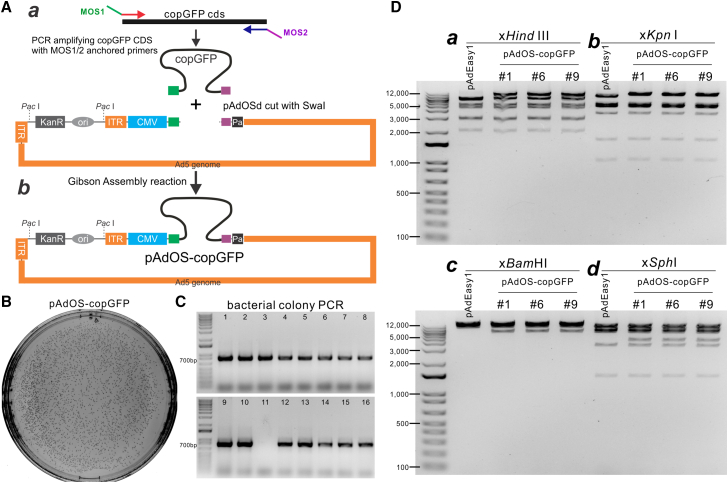
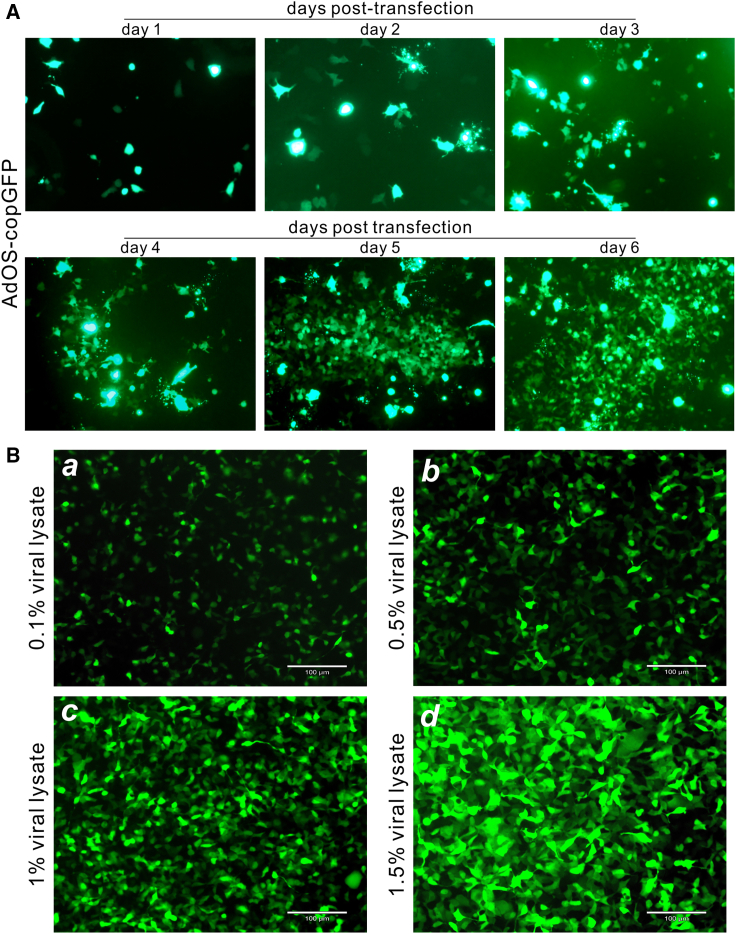
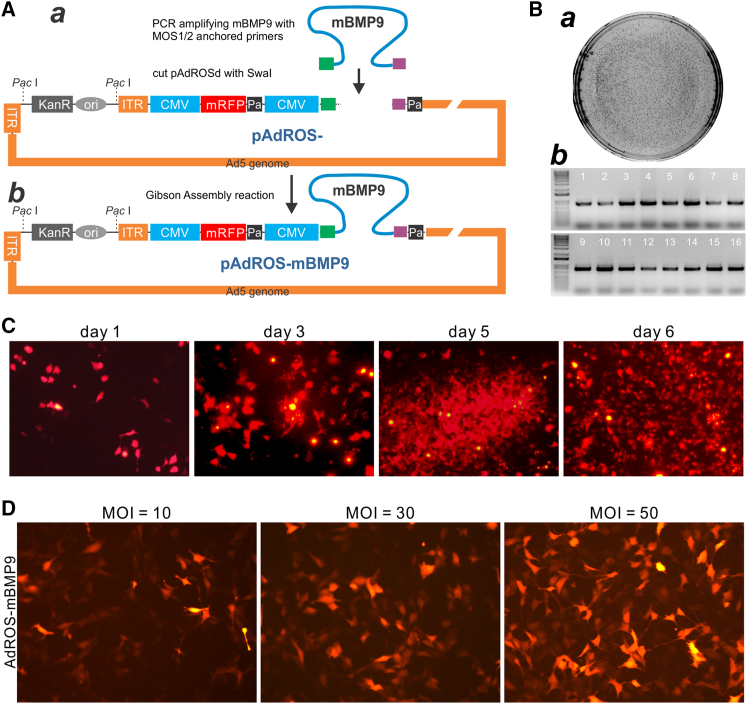
Adenovirus (Ad) is a non-enveloped linear double-stranded DNA virus with >50 serotypes in humans. Ad vectors have been used as gene delivery vehicles to express transgenes, small interfering RNAs (siRNAs) for gene silencing, or CRISPR/Cas and designer nucleases for genome editing. Although several methods are used to generate Ad vectors, the Ad-making process remains technically challenging and time consuming. Moreover, the Ad-making techniques have not been improved for the past two decades. Gibson DNA Assembly (GDA) technology allows one-step isothermal DNA assembly of multiple overlapping fragments. Here, we developed a one-step construction of Ad (OSCA) system using GDA technology. Specifically, we first engineered several adenoviral recipient vectors that contain the suicide gene flanked with two 20-bp unique sequences, which serve as universal sites for GDA reactions in the Ad genome ΔE1 region. In two proof-of-principle experiments, we demonstrated that the GDA reactions were highly efficient and that the resulting Ad plasmids could be effectively packaged into Ads. Ad-mediated expression of mouse BMP9 in mesenchymal stem cells was shown to effectively induce osteogenic differentiation both and . Collectively, our results demonstrate that the OSCA system drastically streamlines the Ad-making process and should facilitate Ad-based applications in basic, translational, and clinical research.
腺病毒(Ad)是一种无包膜的线性双链DNA病毒,在人类中有50多种血清型。腺病毒载体已被用作基因传递工具,用于表达转基因、用于基因沉默的小干扰RNA(siRNA),或用于基因组编辑的CRISPR/Cas和定制核酸酶。尽管有几种方法用于生成腺病毒载体,但腺病毒制备过程在技术上仍然具有挑战性且耗时。此外,在过去二十年中,腺病毒制备技术并未得到改进。吉布森DNA组装(GDA)技术允许对多个重叠片段进行一步等温DNA组装。在这里,我们利用GDA技术开发了一种一步构建腺病毒(OSCA)系统。具体而言,我们首先构建了几种腺病毒受体载体,这些载体包含两侧带有两个20个碱基对独特序列的自杀基因,这些序列作为腺病毒基因组ΔE1区域中GDA反应的通用位点。在两个原理验证实验中,我们证明了GDA反应非常高效,并且所产生的腺病毒质粒可以有效地包装成腺病毒。腺病毒介导的小鼠BMP9在间充质干细胞中的表达被证明在体内和体外均能有效诱导成骨分化。总的来说,我们的结果表明,OSCA系统极大地简化了腺病毒制备过程,应该会促进基于腺病毒的应用在基础、转化和临床研究中的开展。