Zhi Wei, Wang Xiaohua, Sun Dong, Chen Taijun, Yuan Bo, Li Xiangfeng, Chen Xuening, Wang Jianxin, Xie Zhao, Zhu Xiangdong, Zhang Kai, Zhang Xingdong
Key Laboratory of Advanced Technologies of Materials, Ministry of Education, Southwest Jiaotong University, Chengdu, 610031, China.
Department of Orthopaedics, First Affiliated Hospital, Third Military Medical University(Army Medical University), Gaotanyan No.30, 400038, Chongqing, China.
Bioact Mater. 2021 Sep 23;11:240-253. doi: 10.1016/j.bioactmat.2021.09.024. eCollection 2022 May.
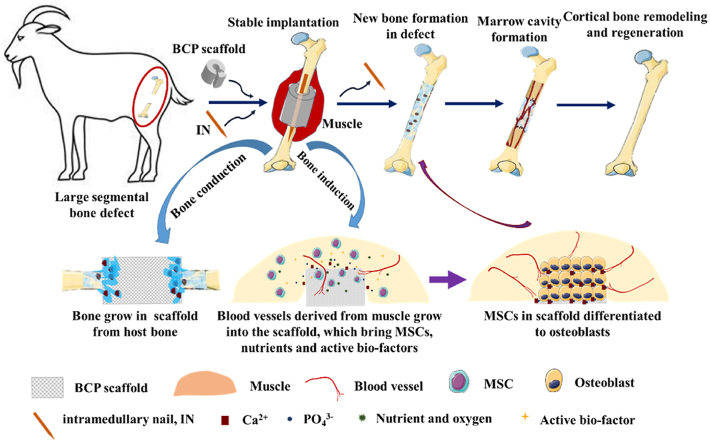
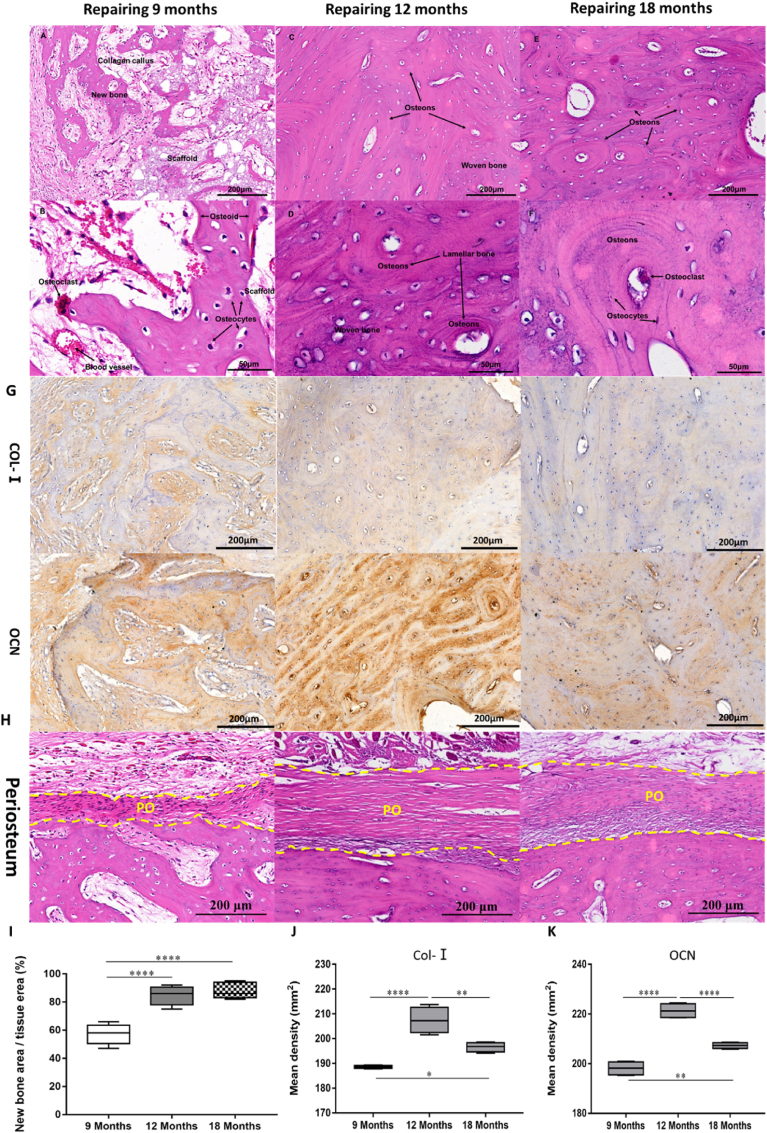
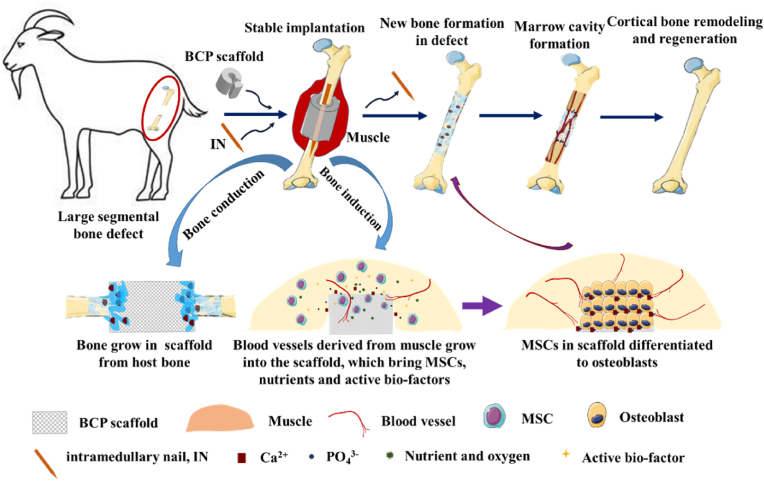
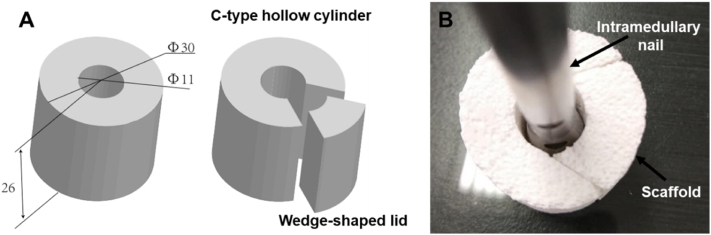
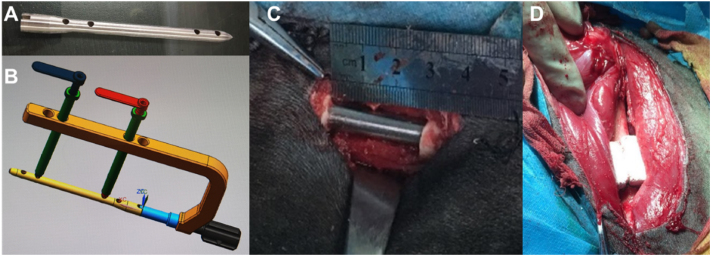
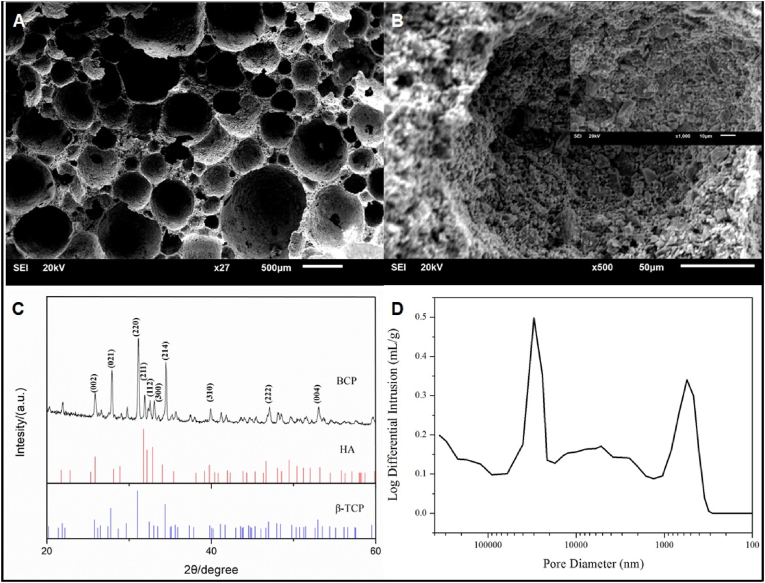
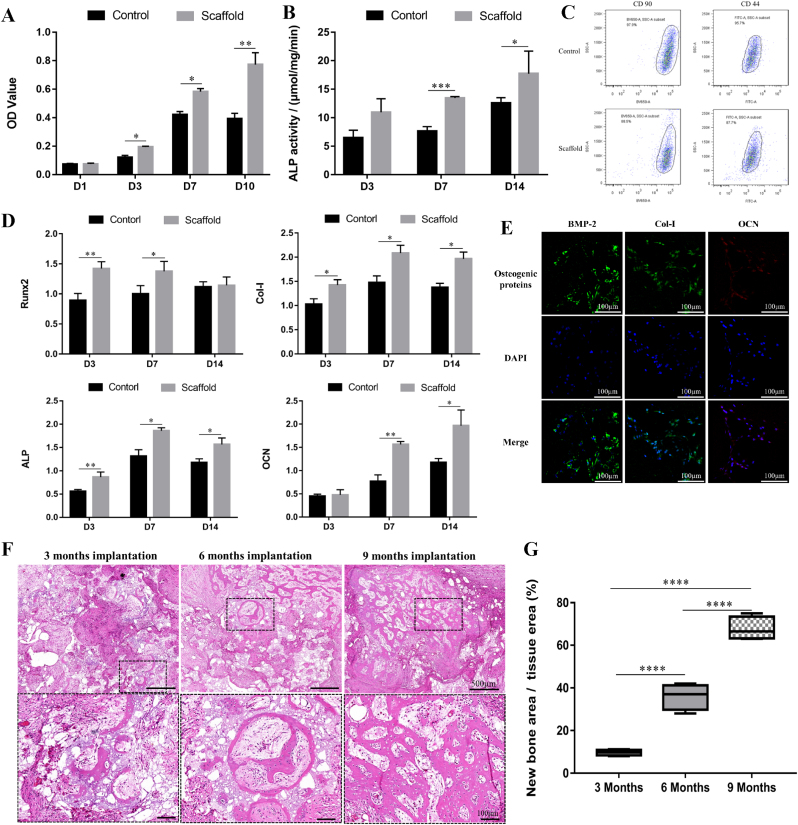
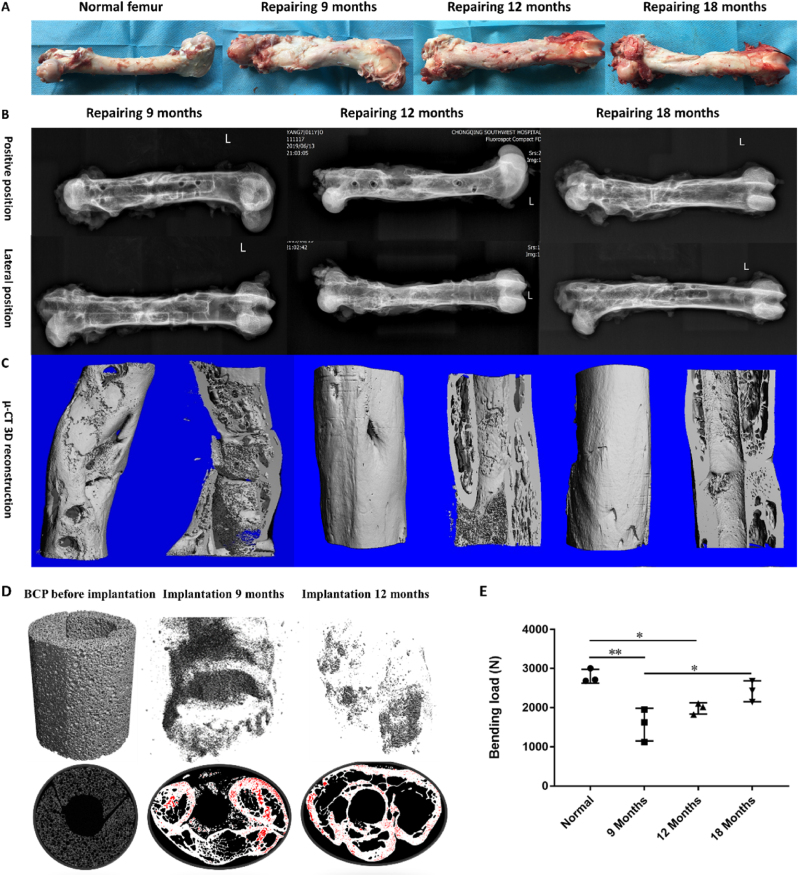
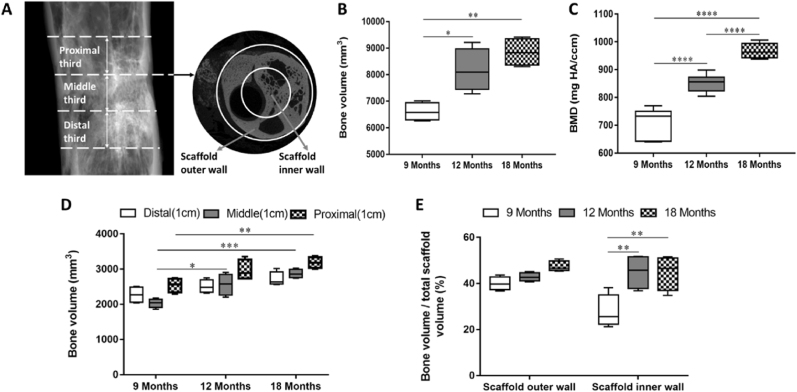
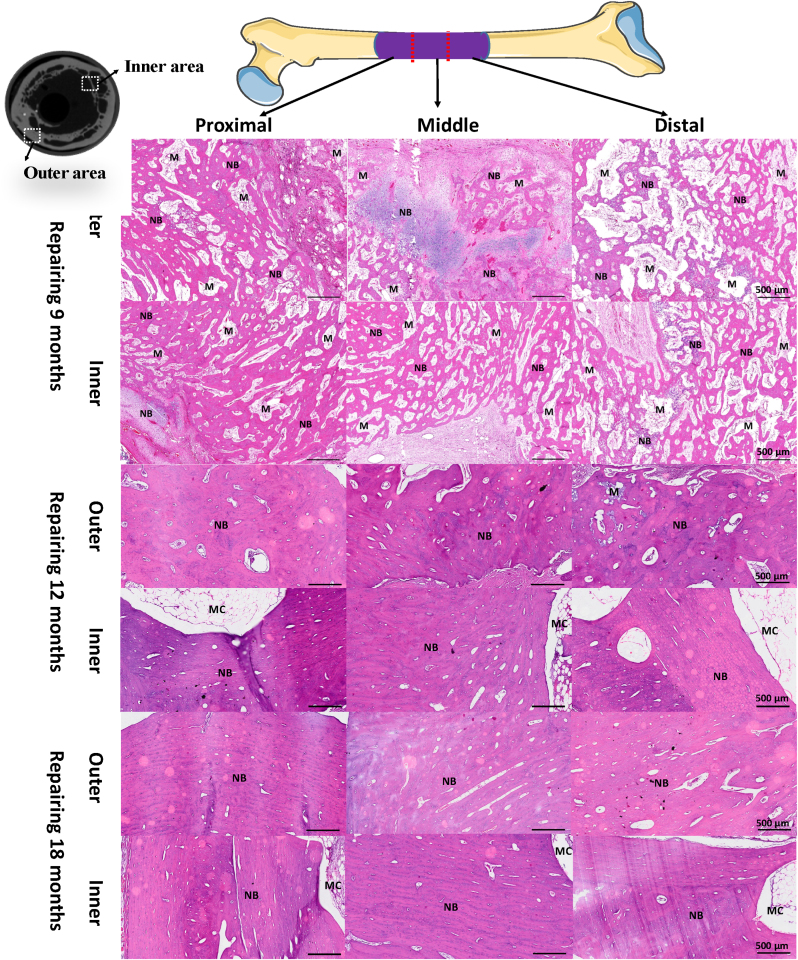
So far, how to achieve the optimal regenerative repair of large load-bearing bone defects using artificial bone grafts is a huge challenge in clinic. In this study, a strategy of combining osteoinductive biphasic calcium phosphate (BCP) bioceramic scaffolds with intramedullary nail fixation for creating stable osteogenic microenvironment was applied to repair large segmental bone defects (3.0 cm in length) in goat femur model. The material characterization results showed that the BCP scaffold had the initial compressive strength of over 2.0 MPa, and total porosity of 84%. The cell culture experiments demonstrated that the scaffold had the excellent ability to promote the proliferation and osteogenic differentiation of rat bone marrow-derived mesenchymal stem cells (BMSCs). The in vivo results showed that the intramedullary nail fixation maintained the initial stability and structural integrity of the implants at early stage, promoting the osteogenic process both guided and induced by the BCP scaffolds. At 9 months postoperatively, good integration between the implants and host bone was observed, and a large amount of newborn bones formed, accompanying with the degradation of the material. At 18 months postoperatively, almost the complete new bone substitution in the defect area was achieved. The maximum bending strength of the repaired bone defects reached to the 100% of normal femur at 18 months post-surgery. Our results demonstrated the good potential of osteoinductive BCP bioceramics in the regenerative repair of large load-bearing bone defects. The current study could provide an effective method to treat the clinical large segmental bone defects.
到目前为止,如何使用人工骨移植材料实现大承重骨缺损的最佳再生修复是临床上的一项巨大挑战。在本研究中,将骨诱导双相磷酸钙(BCP)生物陶瓷支架与髓内钉固定相结合以创建稳定成骨微环境的策略应用于山羊股骨模型中3.0厘米长的大段骨缺损修复。材料表征结果显示,BCP支架的初始抗压强度超过2.0兆帕,总孔隙率为84%。细胞培养实验表明,该支架具有促进大鼠骨髓间充质干细胞(BMSCs)增殖和成骨分化的优异能力。体内结果显示,髓内钉固定在早期维持了植入物的初始稳定性和结构完整性,促进了由BCP支架引导和诱导的成骨过程。术后9个月,观察到植入物与宿主骨之间良好整合,形成大量新生骨,同时材料发生降解。术后18个月,缺损区域几乎实现了完全的新骨替代。术后18个月,修复骨缺损的最大弯曲强度达到正常股骨的100%。我们的结果证明了骨诱导BCP生物陶瓷在大承重骨缺损再生修复中的良好潜力。本研究可为临床治疗大段骨缺损提供一种有效方法。