Song Bryant M, Lu Yining, Wilbur Ryan R, Lavoie-Gagne Ophelie, Pareek Ayoosh, Forsythe Brian, Krych Aaron J
Department of Orthopedic Surgery & Sports Medicine, Mayo Clinic, Rochester, Minnesota, U.S.A.
Department of Orthopedic Surgery, Massachusetts General Hospital, Harvard Medical School, Boston, Massachusetts, U.S.A.
Arthrosc Sports Med Rehabil. 2021 Nov 12;3(6):e1981-e1990. doi: 10.1016/j.asmr.2021.10.001. eCollection 2021 Dec.
The purposes of this study were to identify patient characteristics and risk factors for overnight admission following outpatient hip arthroscopy and to develop a machine learning algorithm that can effectively identify patients requiring admission following elective hip arthroscopy.
A retrospective review of a prospectively collected national surgical outcomes database was performed to identify patients who underwent elective outpatient hip arthroscopy from 2006 to 2018. Patients admitted overnight postoperatively were identified as those with length of stay of 1 or more days. Models were generated using random forest (RF), extreme gradient boosting (XGBoost), adaptive boosting (AdaBoost), elastic net penalized logistic regression, and an additional model was produced as a weighted ensemble of the four final algorithms.
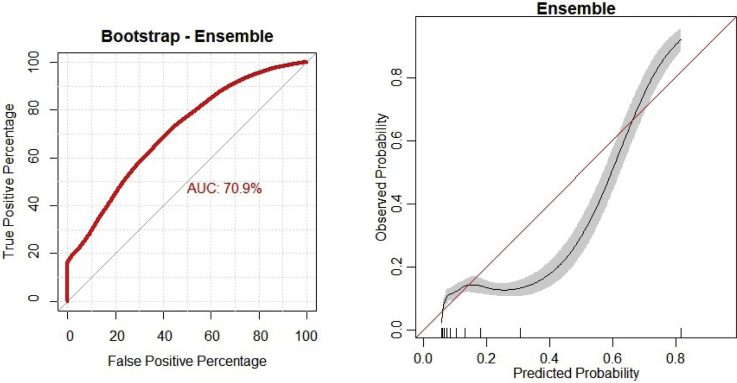
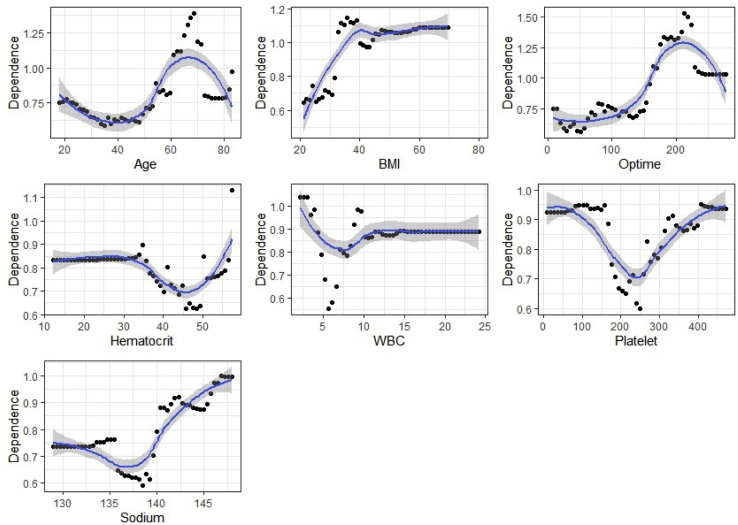
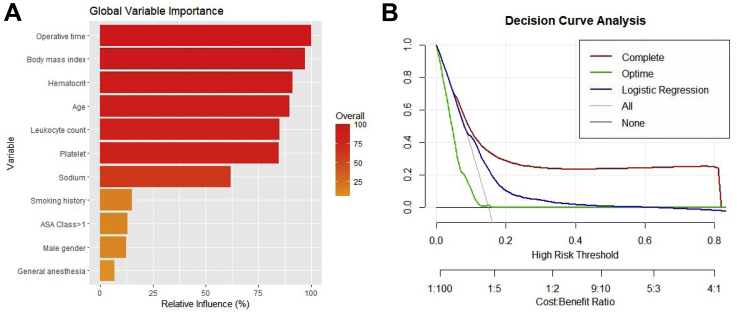
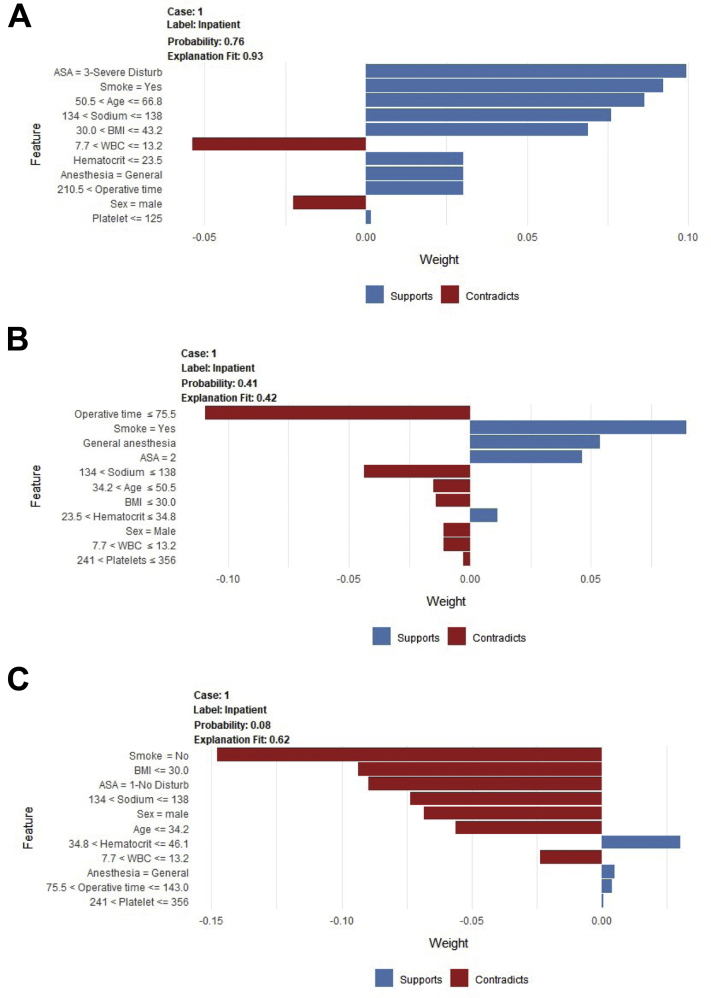
Overall, 1,276 patients were included. The median age was 43 years, and 64.2% (819) were female. Of the included patients, 109 (8.5%) required an overnight stay following elective outpatient hip arthroscopy. The most important factors for inpatient admission were increasing operative time, general anesthesia, age extremes, male gender, greater body mass index (BMI), American Society of Anesthesiologists classification >1, and the following preoperative lab values outside of normal ranges: sodium, platelet count, hematocrit, and leukocyte count. The ensemble model achieved the best performance based on discrimination assessed via internal validation (area under the curve = .71), calibration, and decision curve analysis. The model was integrated into a Web-based open-access application able to provide both personalized predictions and explanations.
A machine learning algorithm developed based on preoperative features identified increasing operative time, age extremes, greater BMI, sodium, hematocrit, platelets, and leukocyte count as the most important variables associated with inpatient admission with fair validity.
本研究旨在确定门诊髋关节镜检查后过夜住院的患者特征和危险因素,并开发一种机器学习算法,以有效识别择期髋关节镜检查后需要住院的患者。
对前瞻性收集的国家外科手术结果数据库进行回顾性分析,以确定2006年至2018年接受择期门诊髋关节镜检查的患者。术后过夜住院的患者被定义为住院时间为1天或更长时间的患者。使用随机森林(RF)、极端梯度提升(XGBoost)、自适应提升(AdaBoost)、弹性网惩罚逻辑回归生成模型,并将四个最终算法的加权集成作为另一个模型。
总共纳入了1276例患者。中位年龄为43岁,64.2%(819例)为女性。在纳入的患者中,109例(8.5%)在择期门诊髋关节镜检查后需要过夜住院。住院的最重要因素包括手术时间增加、全身麻醉、年龄极端情况、男性、更高的体重指数(BMI)、美国麻醉医师协会分级>1,以及以下术前实验室值超出正常范围:钠、血小板计数、血细胞比容和白细胞计数。基于通过内部验证评估的辨别力(曲线下面积=0.71)、校准和决策曲线分析,集成模型表现最佳。该模型被集成到一个基于网络的开放获取应用程序中,能够提供个性化预测和解释。
基于术前特征开发的机器学习算法确定手术时间增加、年龄极端情况、更高的BMI、钠、血细胞比容、血小板和白细胞计数是与住院相关的最重要变量,具有一定的有效性。