Centre d'Estudis Demogràfics, Carrer de Ca n'Altayó, Edifici E-2, Campus de la UAB, 08193, Cerdanyola del Vallès, Spain.
ICREA Research Professor. ICREA, Passeig Lluis Companys 23, 08010, Barcelona del Vallès, Spain.
Popul Health Metr. 2022 Jan 4;20(1):1. doi: 10.1186/s12963-021-00279-8.
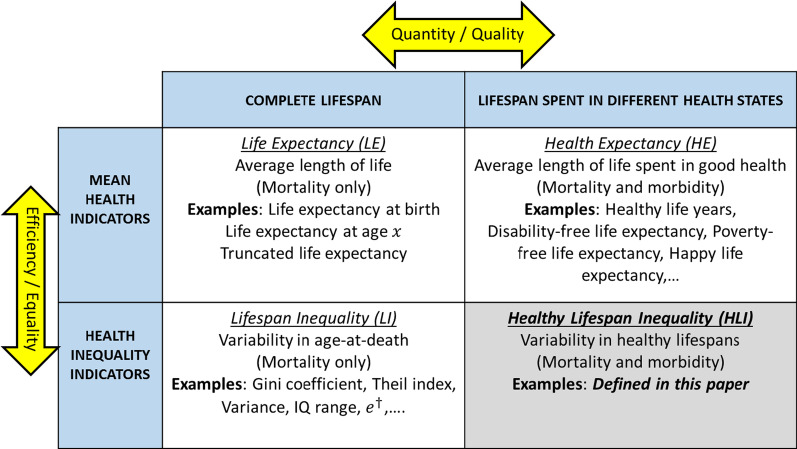
Current measures to monitor population health include indicators of (i) average length-of-life (life expectancy), (ii) average length-of-life spent in good health (health expectancy), and (iii) variability in length-of-life (lifespan inequality). What is lacking is an indicator measuring the extent to which healthy lifespans are unequally distributed across individuals (the so-called 'healthy lifespan inequality' indicators).
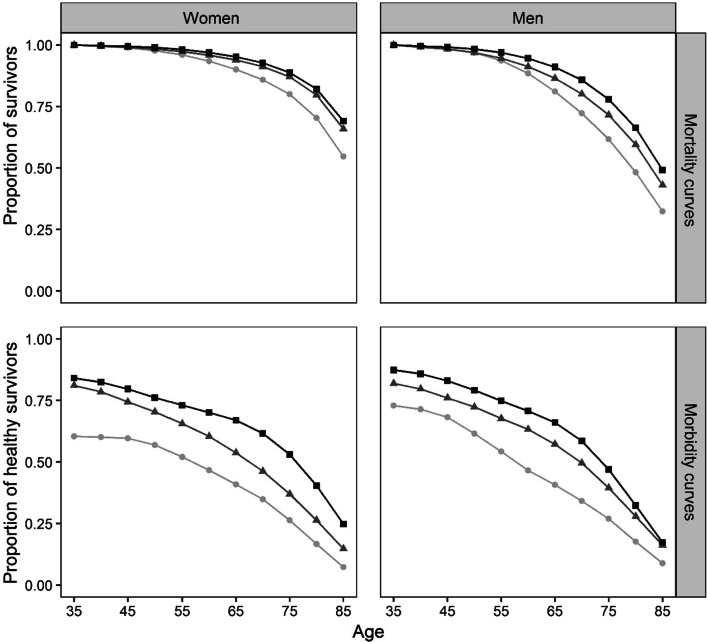
We combine information on age-specific survival with the prevalence of functional limitation or disability in Spain (2014-2017) by sex and level of education to estimate age-at-disability onset distributions. Age-, sex- and education-specific prevalence rates of adult individuals' daily activities limitations were based on the GALI index derived from Spanish National Health Surveys held in 2014 and 2017. We measured inequality using the Gini index.
In contemporary Spain, education differences in health expectancy are substantial and greatly exceed differences in life expectancy. The female advantage in life expectancy disappears when considering health expectancy indicators, both overall and across education groups. The highly educated exhibit lower levels of lifespan inequality, and lifespan inequality is systematically higher among men. Our new healthy lifespan inequality indicators suggest that the variability in the ages at which physical daily activity limitations start are substantially larger than the variability in the ages at which individuals die. Healthy lifespan inequality tends to decrease with increasing educational attainment, both for women and for men. The variability in ages at which physical limitations start is slightly higher for women than for men.
The suggested indicators uncover new layers of health inequality that are not traceable with currently existing approaches. Low-educated individuals tend to not only die earlier and spend a shorter portion of their lives in good health than their highly educated counterparts, but also face greater variation in the eventual time of death and in the age at which they cease enjoying good health-a multiple burden of inequality that should be taken into consideration when evaluating the performance of public health systems and in the elaboration of realistic working-life extension plans and the design of equitable pension reforms.
当前用于监测人口健康的指标包括(i)平均寿命(预期寿命)、(ii)健康寿命(预期健康寿命)以及(iii)寿命变化(寿命不平等)。目前缺乏衡量健康寿命在个体间分布不均程度的指标(即所谓的“健康寿命不平等”指标)。
我们结合了西班牙按性别和教育程度划分的特定年龄段的生存信息和功能障碍或残疾的流行率,以估计残疾发病年龄分布。基于源自 2014 年和 2017 年西班牙国家健康调查的 GALI 指数,我们得出了特定年龄段、性别和教育程度的成年人日常活动受限的流行率。我们使用基尼指数衡量不平等程度。
在当代西班牙,健康预期方面的教育差异很大,且大大超过了预期寿命方面的差异。考虑到健康预期指标,女性在预期寿命方面的优势就会消失,无论是整体情况还是在各个教育群体中都是如此。受教育程度较高的人寿命不平等程度较低,而男性的寿命不平等程度则更高。我们的新健康寿命不平等指标表明,身体日常活动受限开始的年龄变化比个体死亡年龄的变化大得多。健康寿命不平等程度随着教育程度的提高而降低,无论是女性还是男性都是如此。女性身体受限开始的年龄变化略高于男性。
所提出的指标揭示了目前现有方法无法追踪的新的健康不平等层次。受教育程度较低的人不仅比受教育程度较高的人更早死亡,且健康寿命更短,而且在最终死亡时间和停止享受健康生活的年龄方面的变化更大——这种不平等的多重负担,在评估公共卫生系统的绩效以及制定现实的延长工作寿命计划和公平的养老金改革时应予以考虑。