Nigussie Jemberu, Girma Bekahegn, Molla Alemayehu, Mareg Moges, Mihretu Esmelealem
Department of Nursing College of Health Sciences and Medicine, Dilla University, Dilla, Ethiopia.
Department of Psychiatry College of Health Science and Medicine, Dilla University, Dilla, Ethiopia.
Arch Public Health. 2022 Jan 5;80(1):19. doi: 10.1186/s13690-021-00785-z.
In the developing world, such as the sub-Saharan African region, HIV/AIDS has worsened the impact of under-nutrition in children. HIV infected children are highly vulnerable to under-nutrition. Therefore, the objective of this systematic review and meta-analysis was to estimate the pooled prevalence of under-nutrition, and the pooled effect sizes of associated factors among HIV-infected children in sub-Saharan Africa.
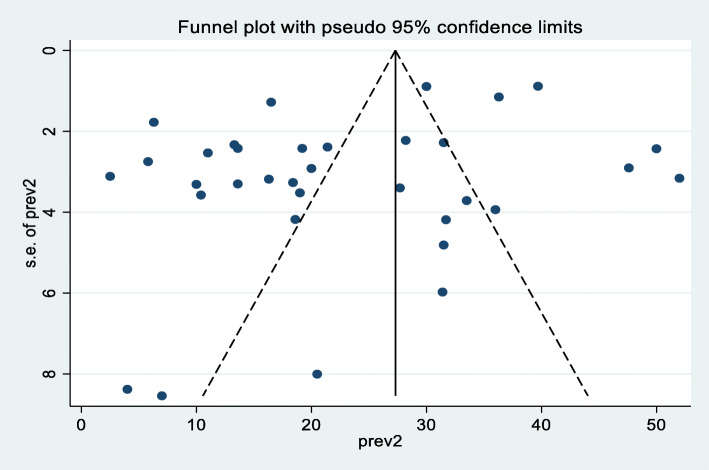
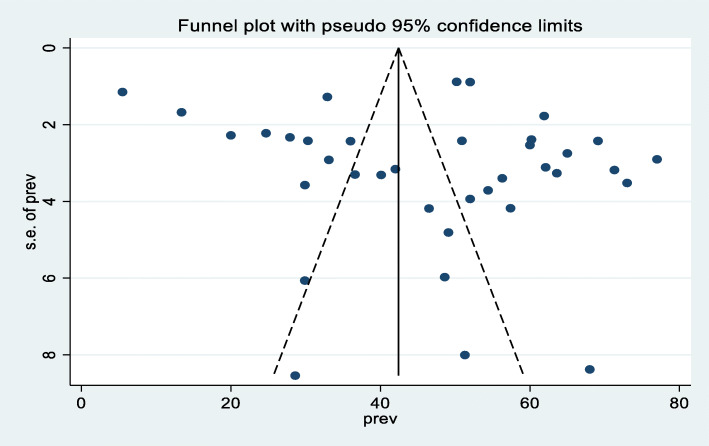
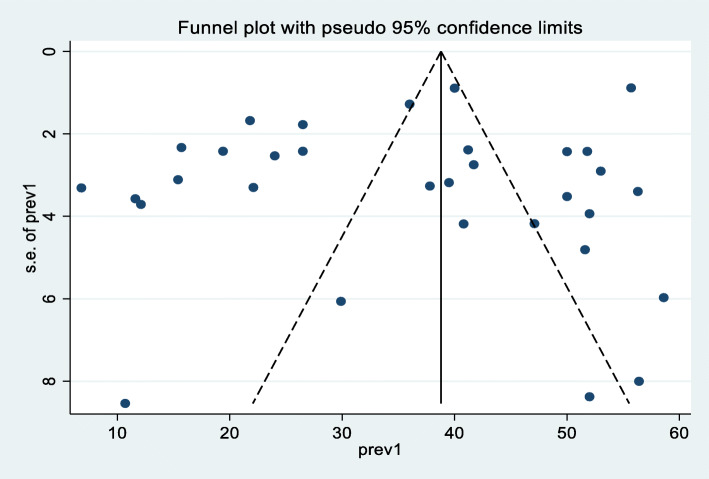
The primary studies for this review were retrieved from PubMed/ MEDLINE online, Science Direct, Hinari, web of science, CINHAL, EMBASE, WHO databases, Google, and Google Scholar databases. The articles selected for this meta-analysis were published between 2010 and 2020. The last search date was 18 October 2021. The data was extracted in Microsoft Excel format and exported to STATA Version 14.0. A random effect meta-analysis model was used. Heterogeneity was evaluated by the I test. The Egger weighted regression test was used to assess publication bias.
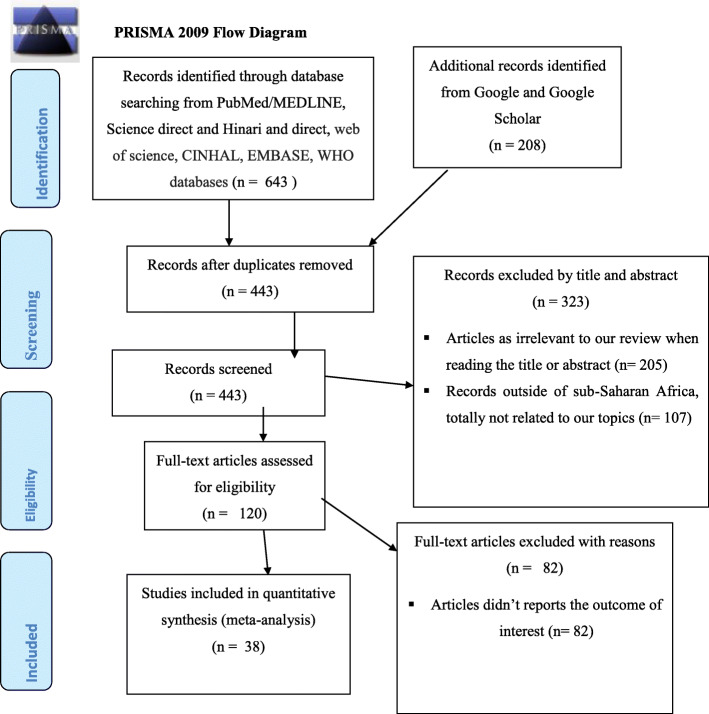
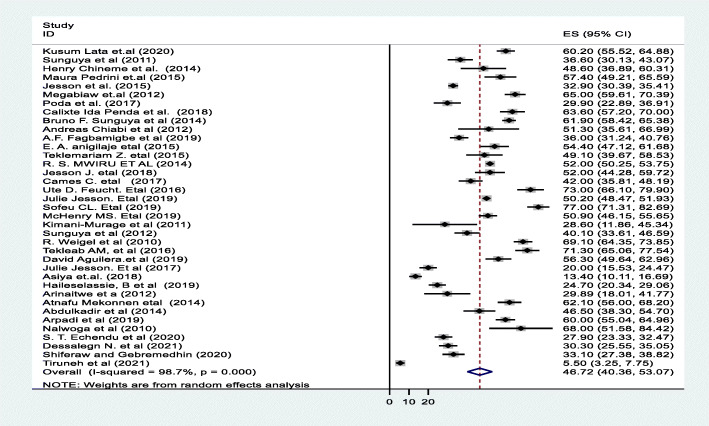
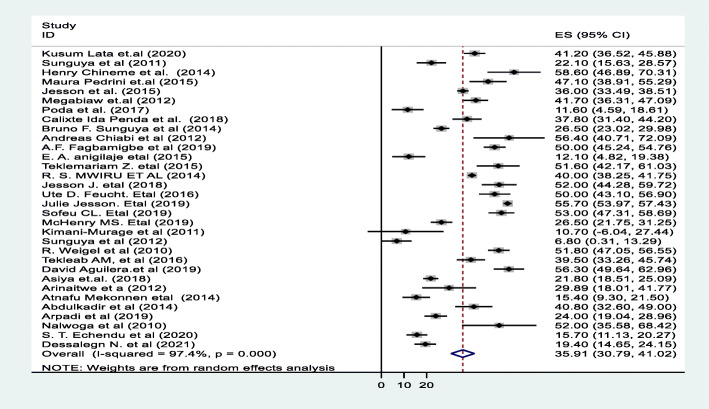
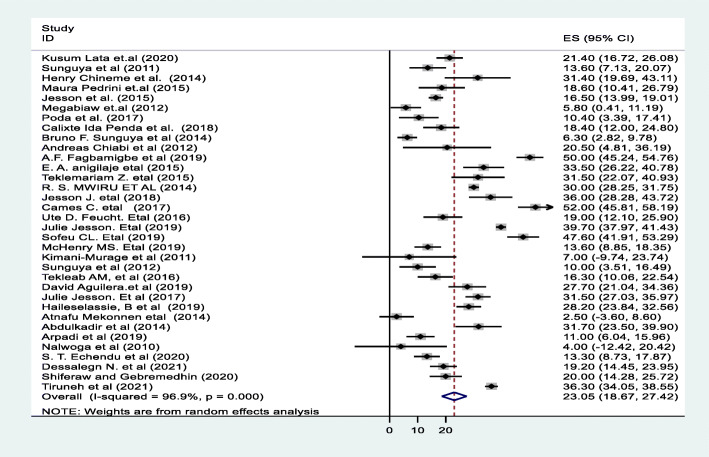
We retrieved 847 records from these databases. Of which records, 813 were excluded due to different reasons and 34 studies were included in the final analysis. The pooled prevalence of stunting, underweight and wasting in HIV infected children was 46.7% (95% CI; 40.36-53.07, I = 98.7%, p < 0.01), 35.9% (95% CI; 30.79-41.02, I = 97.4% p < 0.01), and 23.0% (95% CI; 18.67-27.42, I = 96.9%, p < 0.01) respectively. The advanced WHO HIV/AIDS clinical staging (III&IV) [OR = 6.74 (95%: 1.747, 26.021), I = 94.7%] and household food insecurity were associated with stunting [OR = 5.92 (95% CI 3.9, 8.87), I = 55.7%]. Low family economic status [OR = 4.737 (95% CI: 2.605, 8.614), I = 31.2%] and increased feeding frequency [OR = 0.323 (95% CI: 0.172, 0.605), I = 69.8%] were significantly associated with under-weight. Anemia [OR = 2.860 (95% CI: 1.636, 5.000), I = 74.8%] and diarrhea in the previous month [OR = 4.117 (95% CI: 2.876, 5.894), I = 0.0%] were also associated with wasting among HIV infected children in sub-Saharan Africa.
The pooled prevalence of under-nutrition among HIV infected children was high. Nutritional assessment and interventions need great attention as a part of HIV care for HIV positive children. The implementation of policies and strategies established by national and international stakeholders in ART care centres should take a maximum emphasis on reducing under-nutrition among HIV infected children.
在发展中世界,如撒哈拉以南非洲地区,艾滋病毒/艾滋病加剧了儿童营养不良的影响。感染艾滋病毒的儿童极易营养不良。因此,本系统评价和荟萃分析的目的是估计撒哈拉以南非洲感染艾滋病毒儿童的营养不良合并患病率以及相关因素的合并效应量。
本评价的原始研究从PubMed/MEDLINE在线数据库、Science Direct、Hinari、科学网、CINHAL、EMBASE、世卫组织数据库、谷歌及谷歌学术数据库中检索。纳入本荟萃分析的文章发表于2010年至2020年之间。最后检索日期为2021年10月18日。数据以Microsoft Excel格式提取并导出至STATA 14.0版本。采用随机效应荟萃分析模型。通过I²检验评估异质性。采用Egger加权回归检验评估发表偏倚。
我们从这些数据库中检索到847条记录。其中,813条记录因不同原因被排除,最终分析纳入34项研究。感染艾滋病毒儿童的发育迟缓、体重不足和消瘦合并患病率分别为46.7%(95%置信区间:40.36 - 53.07,I² = 98.7%,p < 0.01)、35.9%(95%置信区间:30.79 - 41.02,I² = 97.4% p < 0.01)和23.0%(95%置信区间:18.67 - 27.42,I² = 96.9%,p < 0.01)。世界卫生组织艾滋病毒/艾滋病临床晚期(III&IV期)[比值比(OR)= 6.74(95%:1.747,26.021),I² = 94.7%]和家庭粮食不安全与发育迟缓相关[OR = 5.92(95%置信区间3.9,8.87),I² = 55.7%]。家庭经济地位低[OR = 4.737(95%置信区间:2.605,8.614),I² = 31.2%]和喂养频率增加[OR = 0.323(95%置信区间:0.172,0.605),I² = 69.8%]与体重不足显著相关。贫血[OR = 2.860(95%置信区间:1.636,5.000),I² = 74.8%]和前一个月腹泻[OR = 4.117(95%置信区间:2.876,5.894),I² = 0.0%]也与撒哈拉以南非洲感染艾滋病毒儿童的消瘦相关。
感染艾滋病毒儿童的营养不良合并患病率很高。作为对艾滋病毒阳性儿童进行艾滋病毒护理的一部分,营养评估和干预需要得到高度重视。国家和国际利益相关者在抗逆转录病毒治疗护理中心制定的政策和策略的实施应最大程度地强调减少感染艾滋病毒儿童的营养不良情况。