Bauru School of Dentistry, Department of Biological Sciences, University of São Paulo, Bauru, Brazil.
School of Pharmaceutical Sciences, Department of Immunology, São Paulo State University, Araraquara, Brazil.
Front Immunol. 2021 Dec 21;12:782566. doi: 10.3389/fimmu.2021.782566. eCollection 2021.
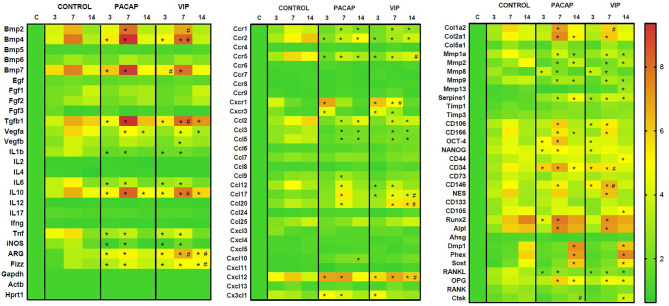
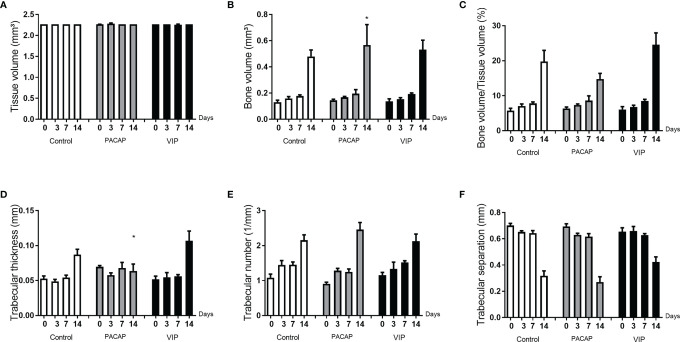
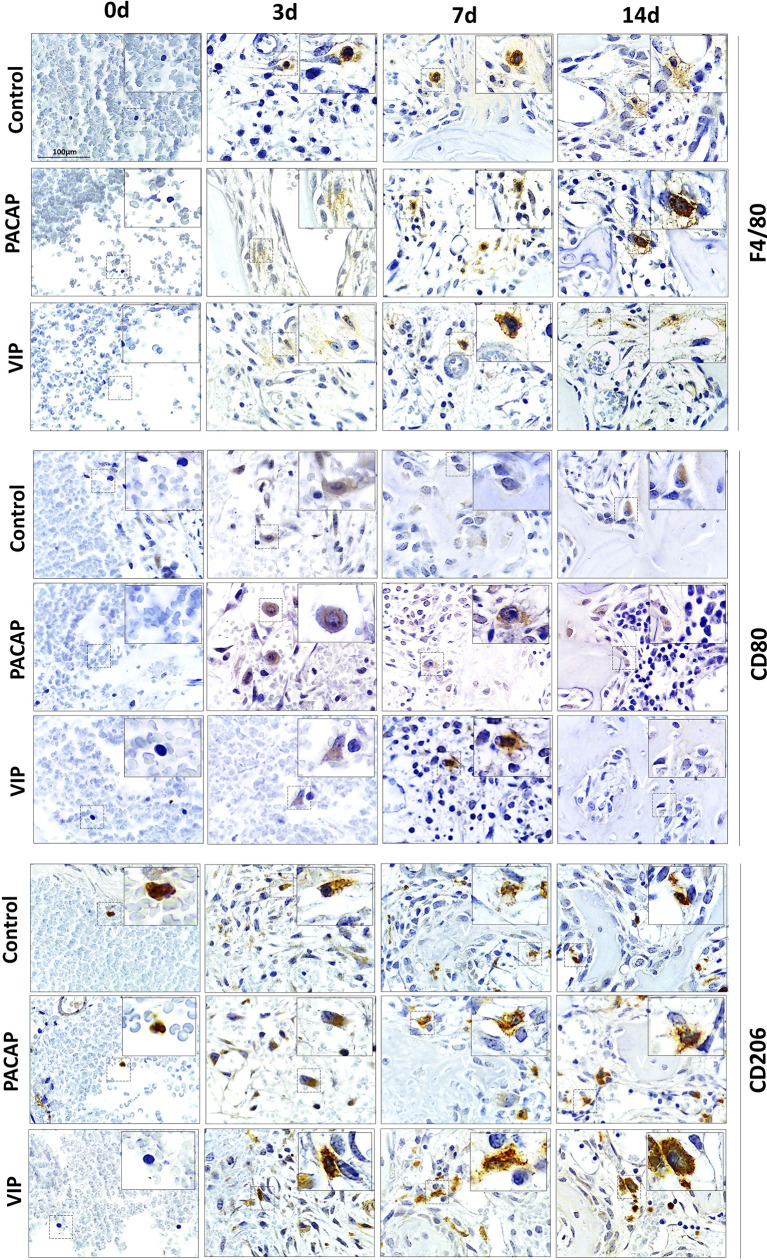
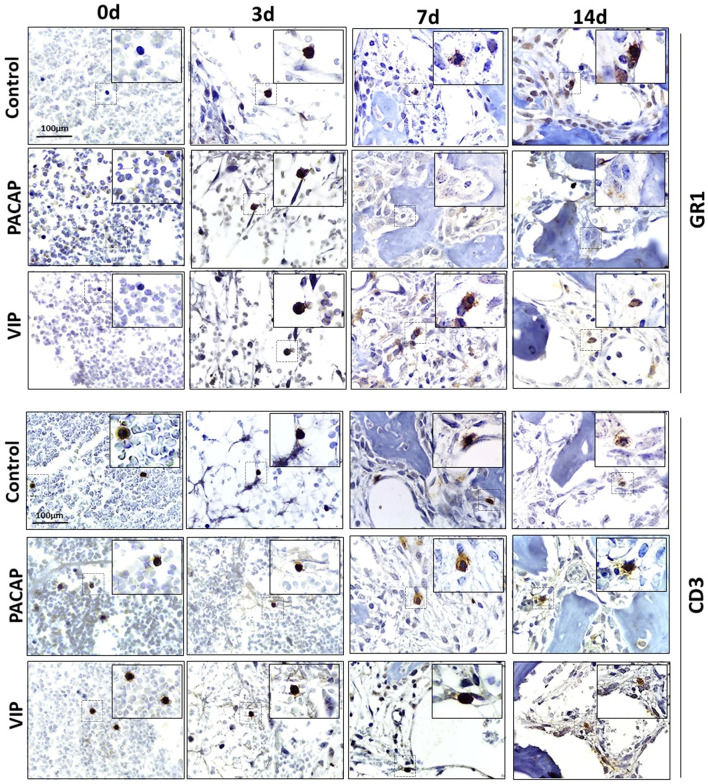
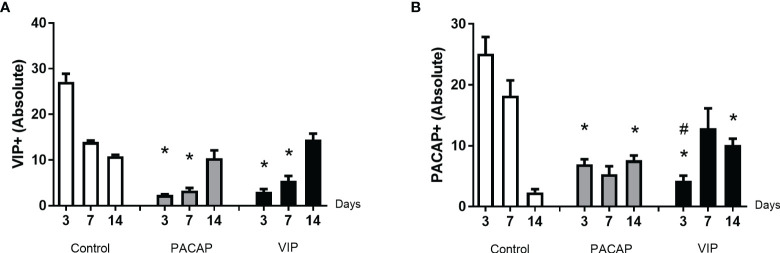
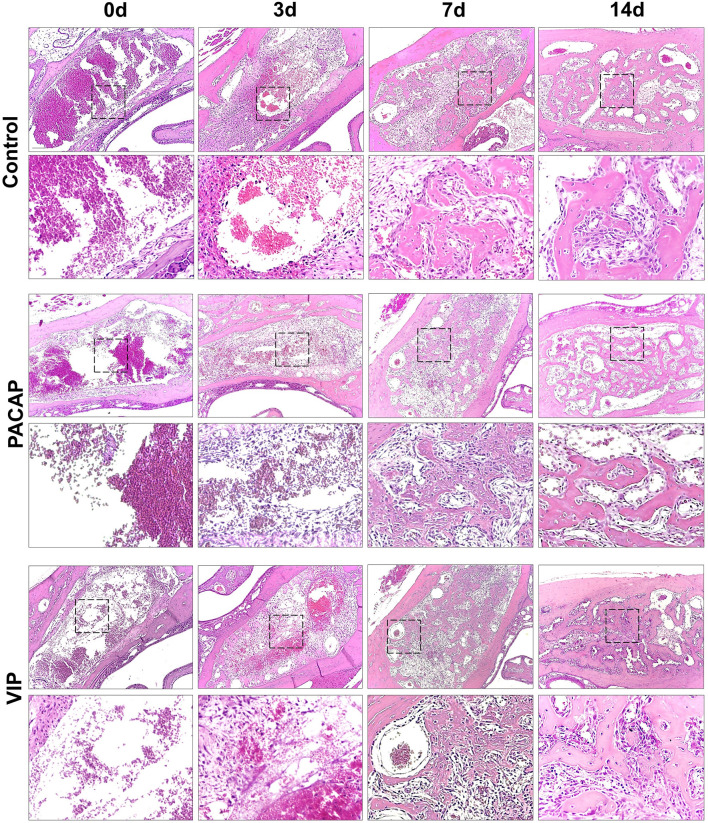
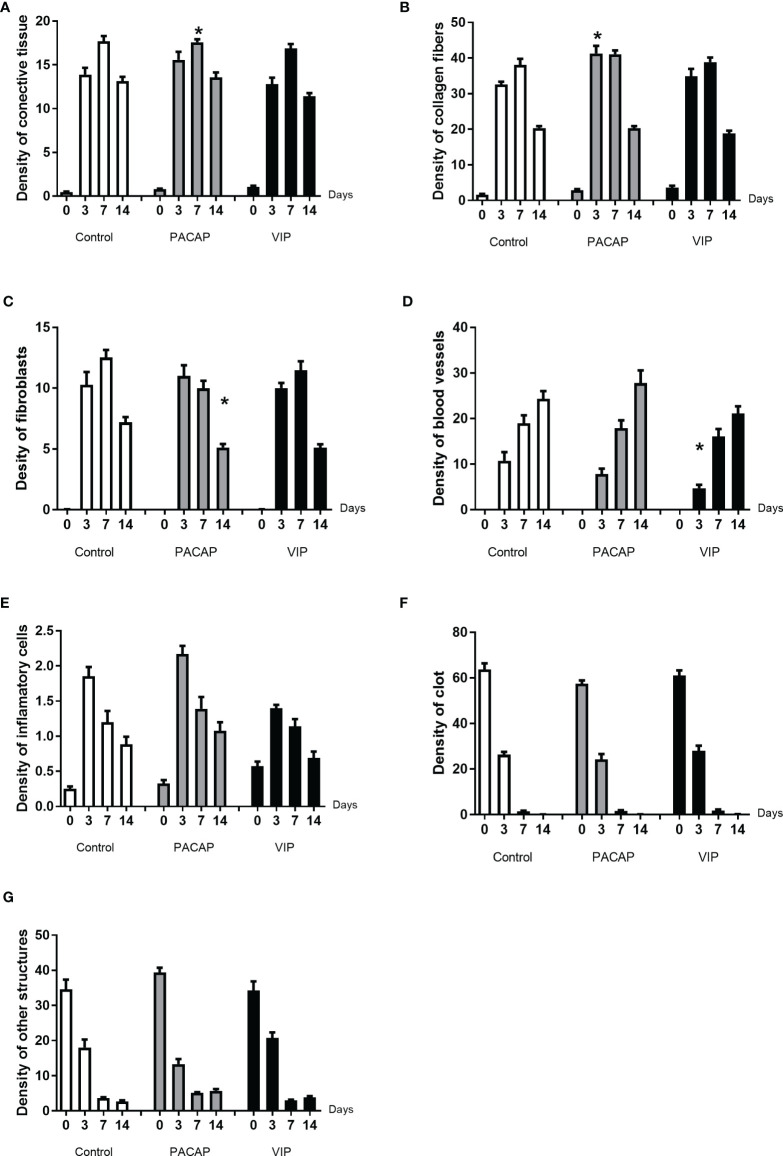
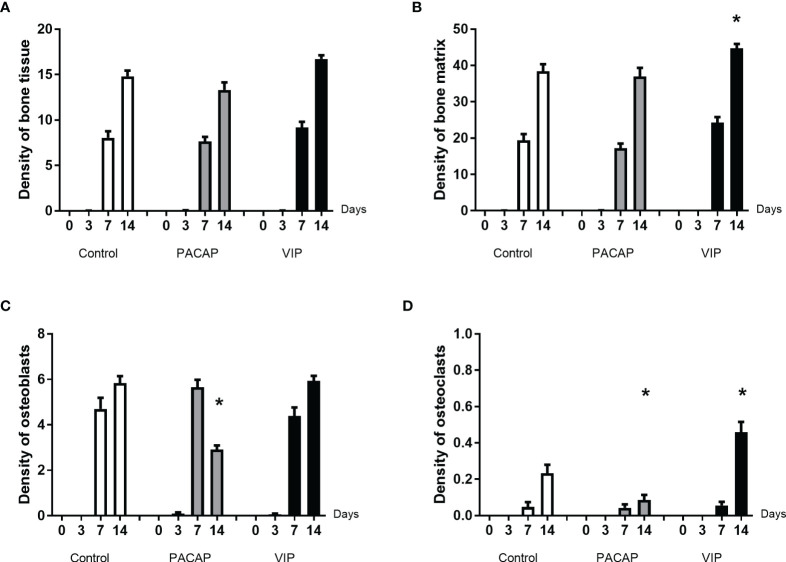
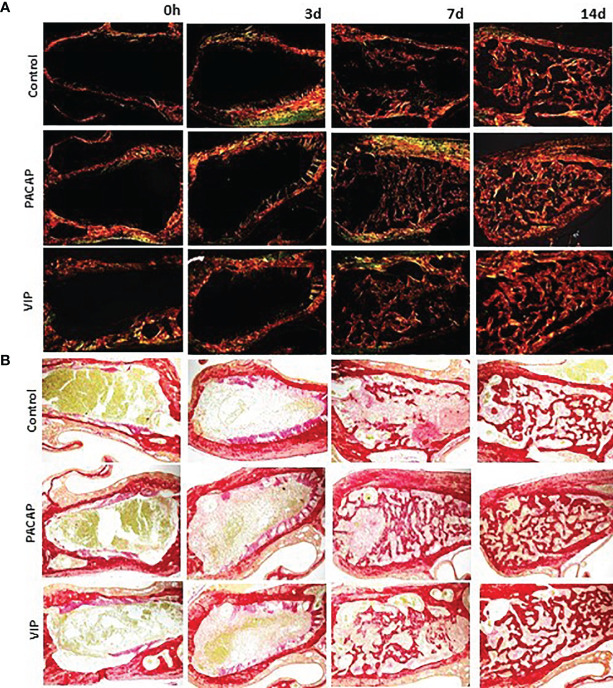
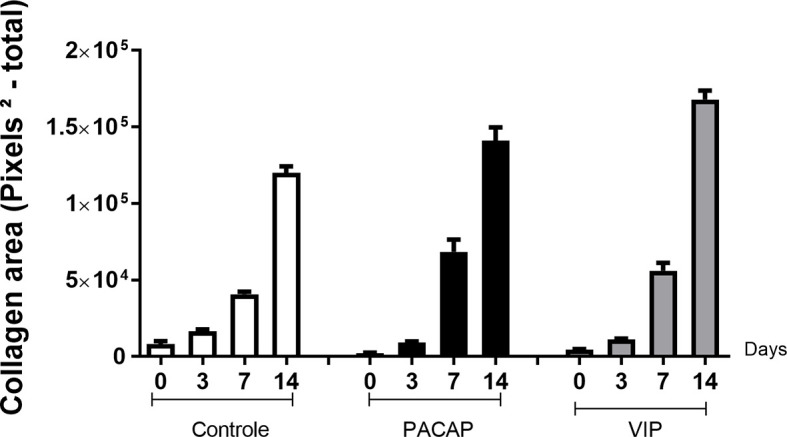
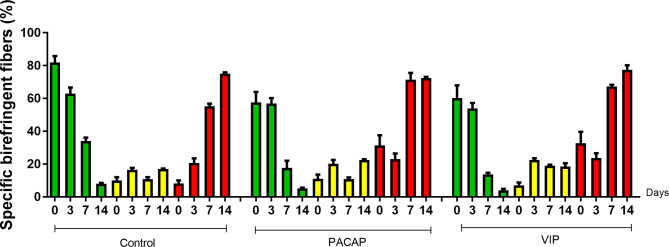
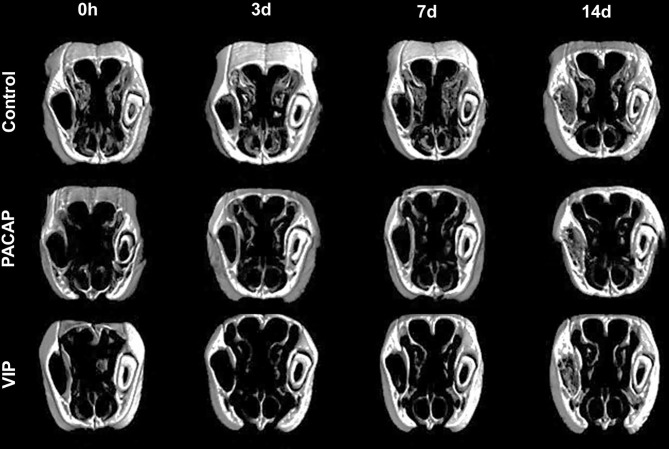
Host inflammatory immune response comprises an essential element of the bone healing process, where M2 polarization allegedly contributes to a favorable healing outcome. In this context, immunoregulatory molecules that modulate host response, including macrophage polarization, are considered potential targets for improving bone healing. This study aims to evaluate the role of the immunoregulatory molecules VIP (Vasoactive intestinal peptide) and PACAP (Pituitary adenylate cyclase activating polypeptide), which was previously described to favor the development of the M2 phenotype, in the process of alveolar bone healing in C57Bl/6 (WT) mice. Experimental groups were submitted to tooth extraction and maintained under control conditions or treated with VIP or PACAP were evaluated by microtomographic (µCT), histomorphometric, immunohistochemical, and molecular analysis at 0, 3, 7, and 14 days to quantify tissue healing and host response indicators at the healing site. Gene expression analysis demonstrates the effectiveness of VIP or PACAP in modulating host response, evidenced by the early dominance of an M2-type response, which was paralleled by a significant increase in M2 (CD206) in treated groups. However, despite the marked effect of M1/M2 balance in the healing sites, the histomorphometric analysis does not reveal an equivalent/corresponding modulation of the healing process. µCT reveals a slight increase in bone matrix volume and the trabecular thickness number in the PACAP group, while histomorphometric analyzes reveal a slight increase in the VIP group, both at a 14-d time-point; despite the increased expression of osteogenic factors, osteoblastic differentiation, activity, and maturation markers in both VIP and PACAP groups. Interestingly, a lower number of VIP and PACAP immunolabeled cells were observed in the treated groups, suggesting a reduction in endogenous production. In conclusion, while both VIP and PACAP treatments presented a significant immunomodulatory effect with potential for increased healing, no major changes were observed in bone healing outcome, suggesting that the signals required for bone healing under homeostatic conditions are already optimal, and additional signals do not improve an already optimal process. Further studies are required to elucidate the role of macrophage polarization in the bone healing process.
宿主炎症免疫反应是骨愈合过程的一个重要组成部分,据称 M2 极化有助于有利的愈合结果。在这种情况下,调节宿主反应的免疫调节分子,包括巨噬细胞极化,被认为是改善骨愈合的潜在靶点。本研究旨在评估免疫调节分子 VIP(血管活性肠肽)和 PACAP(垂体腺苷酸环化酶激活肽)的作用,先前的研究表明它们有利于 M2 表型的发展,在 C57Bl/6(WT)小鼠牙槽骨愈合过程中的作用。实验组进行拔牙,并在对照条件下或用 VIP 或 PACAP 处理,通过微断层扫描(µCT)、组织形态计量学、免疫组织化学和分子分析在 0、3、7 和 14 天评估组织愈合和宿主反应指标在愈合部位。基因表达分析表明 VIP 或 PACAP 调节宿主反应的有效性,这表现在早期以 M2 型反应为主,同时在治疗组中 M2(CD206)显著增加。然而,尽管在愈合部位 M1/M2 平衡有明显的作用,但组织形态计量学分析并没有显示愈合过程的等效/相应调节。µCT 显示在 PACAP 组中骨基质体积和小梁厚度数略有增加,而在 VIP 组中组织形态计量分析显示略有增加,两者均在 14 天时间点;尽管 VIP 和 PACAP 组中骨生成因子、成骨细胞分化、活性和成熟标志物的表达增加。有趣的是,在治疗组中观察到 VIP 和 PACAP 免疫标记细胞的数量减少,表明内源性产生减少。总之,虽然 VIP 和 PACAP 治疗均表现出显著的免疫调节作用,并有增加愈合的潜力,但在骨愈合结果方面没有观察到重大变化,这表明在稳态条件下骨愈合所需的信号已经是最佳的,并且额外的信号不能改善已经最佳的过程。需要进一步研究来阐明巨噬细胞极化在骨愈合过程中的作用。