Benito-Martínez Selma, Rodríguez Marta, García-Moreno Francisca, Pérez-Köhler Bárbara, Peña Estefanía, Calvo Begoña, Pascual Gemma, Bellón Juan Manuel
Departamento de Medicina y Especialidades Médicas, Facultad de Medicina y Ciencias de la Salud, Universidad de Alcalá, 28805, Alcalá de Henares, Madrid, Spain.
Biomedical Networking Research Centre On Bioengineering, Biomaterials and Nanomedicine (CIBER-BBN), 28029, Madrid, Spain.
Hernia. 2022 Apr;26(2):543-555. doi: 10.1007/s10029-021-02552-z. Epub 2022 Jan 7.
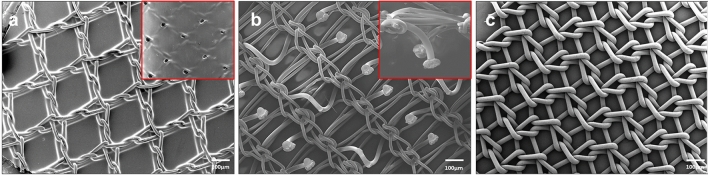
Atraumatic mesh fixation for abdominal hernia repair has been developed to avoid the disadvantages of classical fixation with sutures, which is considered a cause of chronic pain and discomfort. This study was designed to analyze, in the short and medium term, the biological and mechanical behavior of two self-fixing meshes compared to that of a polypropylene (PP) mesh fixed with a cyanoacrylate (CA) tissue adhesive.
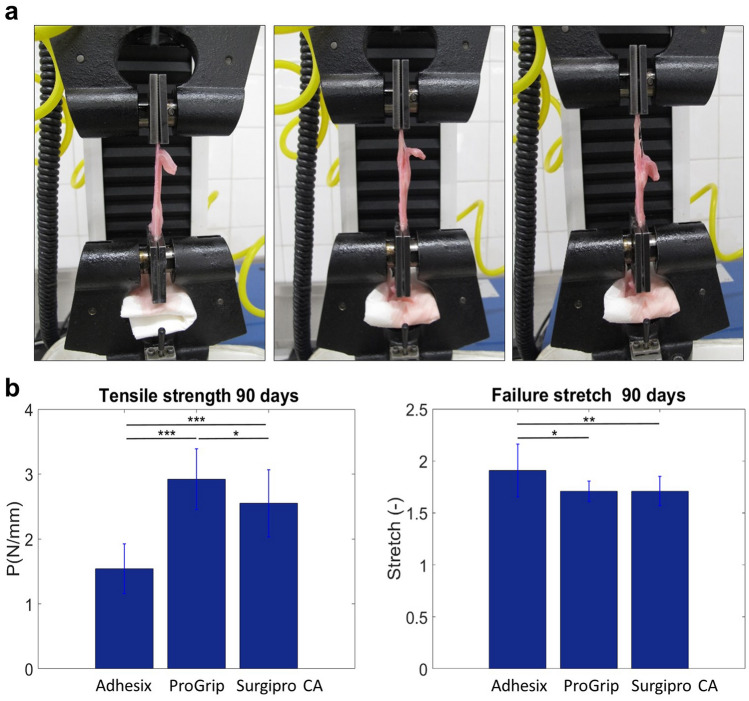
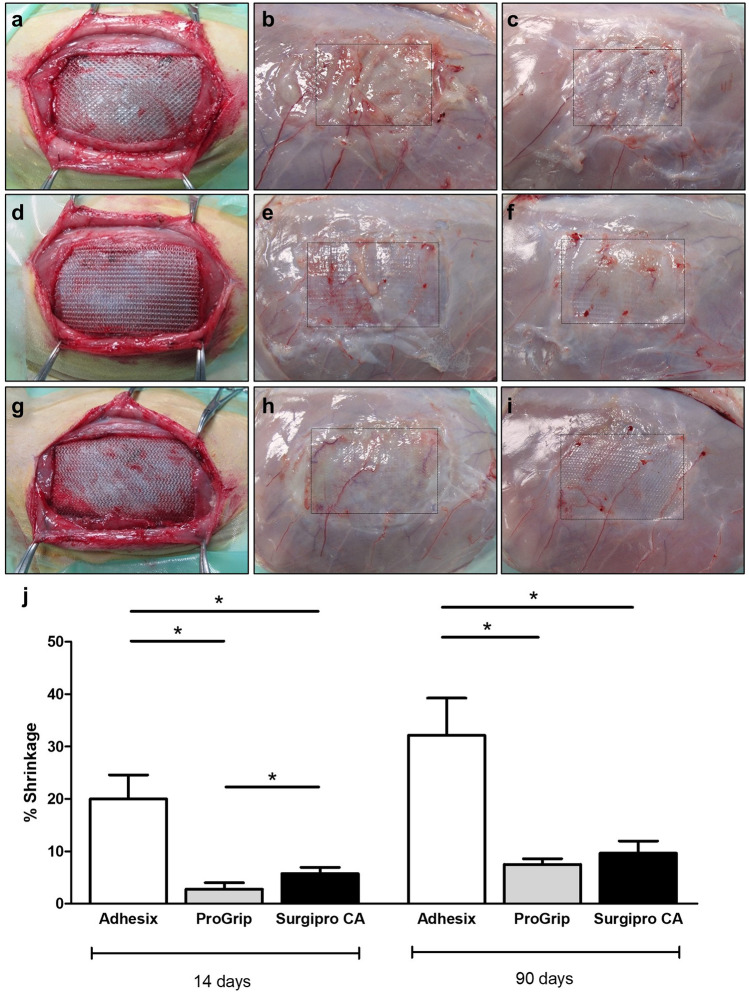
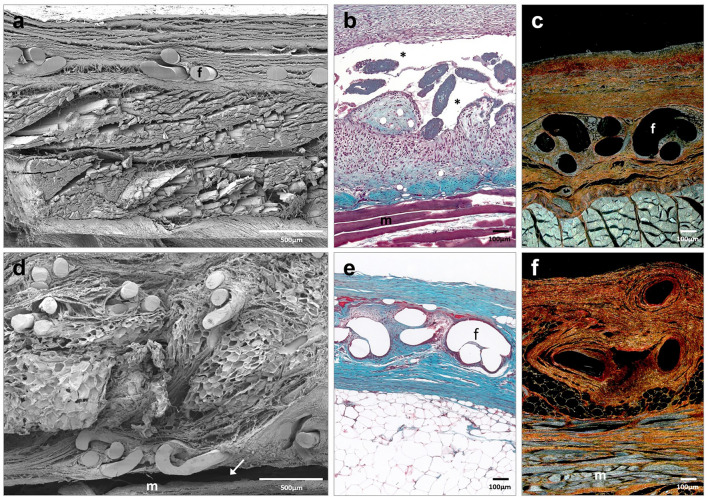
Partial abdominal wall defects (6 × 4 cm) were created in New Zealand rabbits (n = 36) and repaired using a self-adhesive hydrogel mesh (Adhesix™), a self-gripping mesh (ProGrip™) or a PP mesh fixed with CA (Surgipro™ CA). After 14 and 90 days, the host tissue incorporation, macrophage response and biomechanical strength were examined.
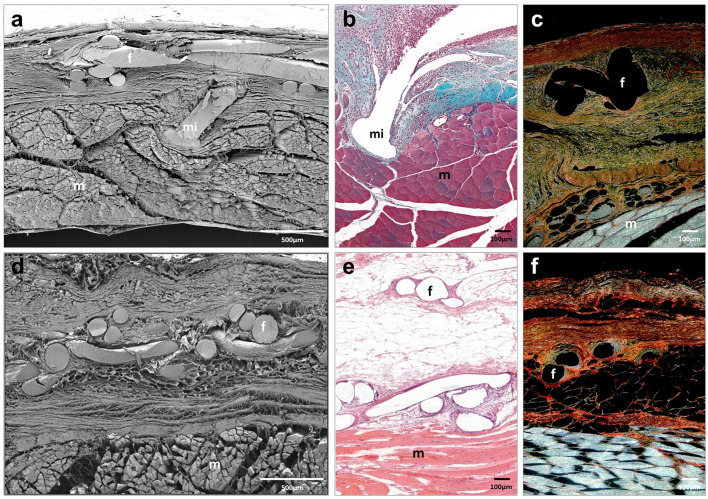
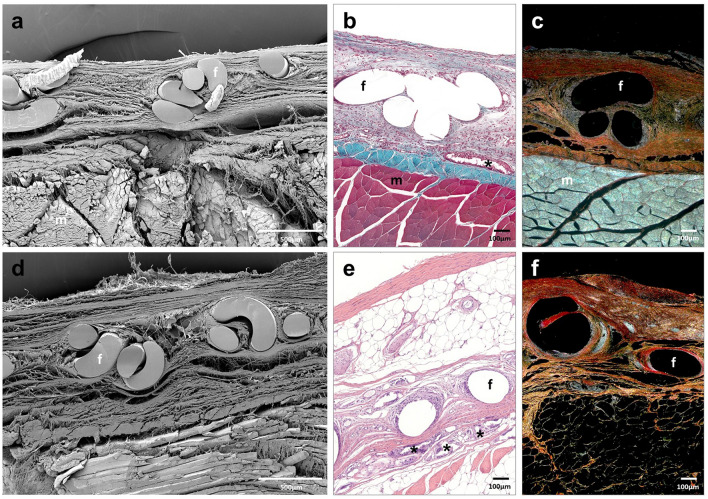
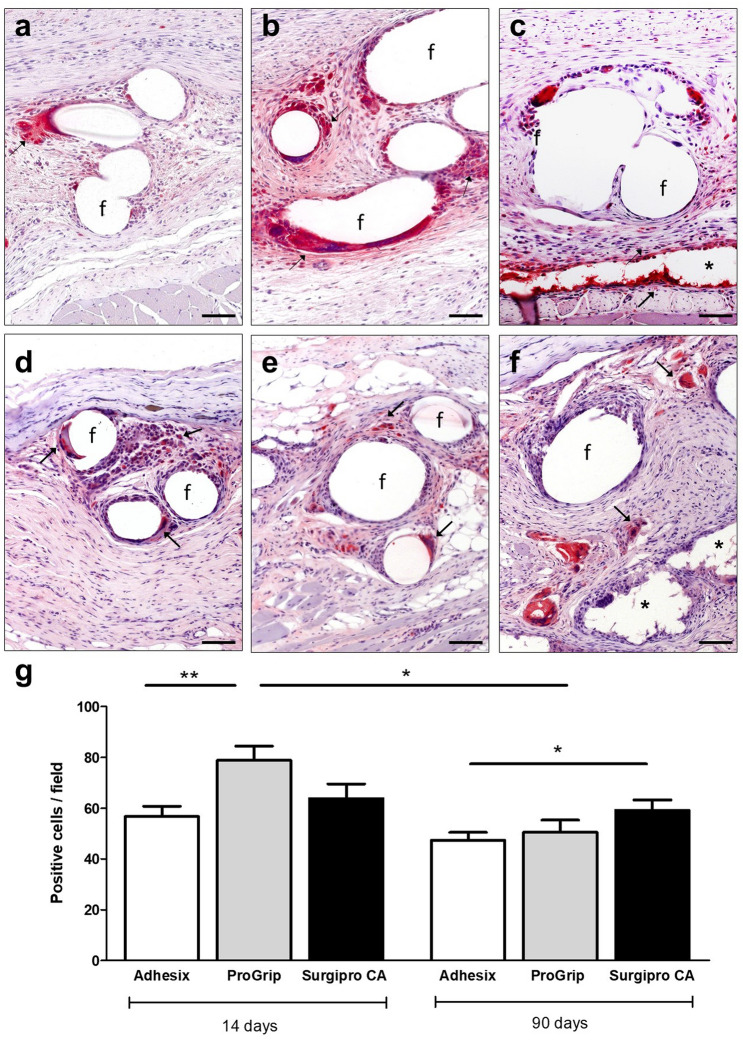
At 14 and 90 days, the ProGrip and Surgipro CA meshes showed good host tissue incorporation; however, the Adhesix implants presented poor integration, seroma formation and a higher degree of shrinkage. The Adhesix hydrogel was completely reabsorbed at 14 days, whereas ProGrip microhooks were observed at all study times. The macrophage response was higher in the ProGrip and Surgipro CA groups at 14 and 90 days, respectively, and decreased over time. At 90 days, the ProGrip implants showed the highest tensile strength values and the Adhesix implants showed the highest failure stretch.
Meshes with mechanical microgrip self-fixation (ProGrip) show better biological and mechanical behavior than those with adhesive hydrogel (Adhesix) in a preclinical model of abdominal hernia repair in rabbits.
已研发出用于腹壁疝修补的无创伤网片固定方法,以避免经典缝合固定的缺点,后者被认为是慢性疼痛和不适的一个原因。本研究旨在短期和中期分析两种自固定网片与用氰基丙烯酸酯(CA)组织粘合剂固定的聚丙烯(PP)网片相比的生物学和力学行为。
在新西兰兔(n = 36)身上制造部分腹壁缺损(6×4厘米),并使用自粘性水凝胶网片(Adhesix™)、自抓紧网片(ProGrip™)或用CA固定的PP网片(Surgipro™ CA)进行修复。在14天和90天后,检查宿主组织整合、巨噬细胞反应和生物力学强度。
在14天和90天时,ProGrip和Surgipro CA网片显示出良好的宿主组织整合;然而,Adhesix植入物表现出整合不良、血清肿形成和更高程度的收缩。Adhesix水凝胶在14天时完全被重新吸收,而在所有研究时间都观察到ProGrip微钩。巨噬细胞反应在ProGrip和Surgipro CA组中分别在14天和90天时较高,并随时间下降。在90天时,ProGrip植入物显示出最高的拉伸强度值,而Adhesix植入物显示出最高的断裂伸长率。
在兔腹壁疝修补的临床前模型中,具有机械微抓紧自固定(ProGrip)的网片比具有粘性水凝胶(Adhesix)的网片表现出更好的生物学和力学行为。