Max Planck Institute for Chemical Physics of Solids, Nöthnitzer Straße 40, 01187 Dresden, Germany.
Institute of Materials Science, Technische Universität Dresden, Helmholtzstraße 7, 01069 Dresden, Germany.
ACS Biomater Sci Eng. 2022 Feb 14;8(2):526-539. doi: 10.1021/acsbiomaterials.1c01280. Epub 2022 Jan 7.
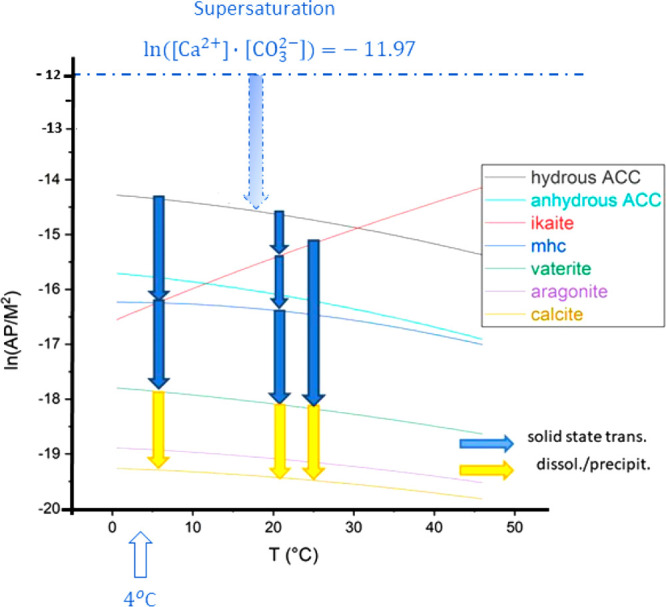
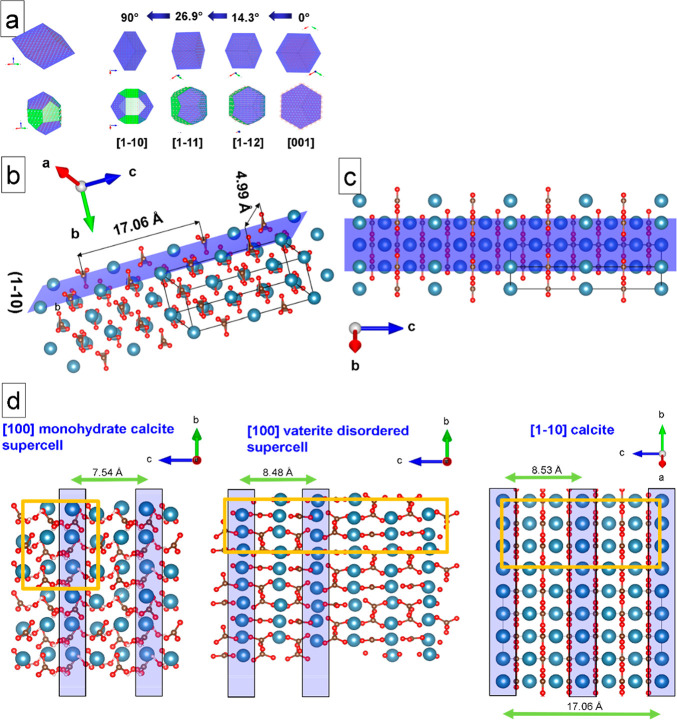
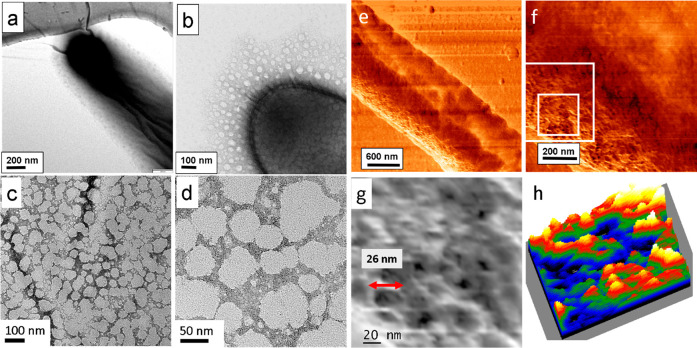
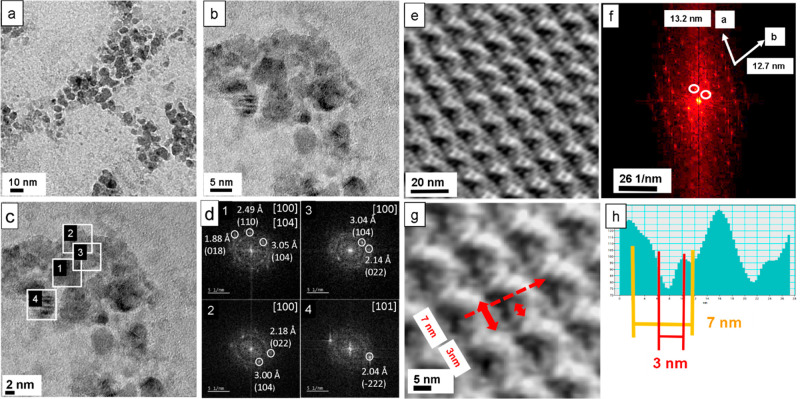
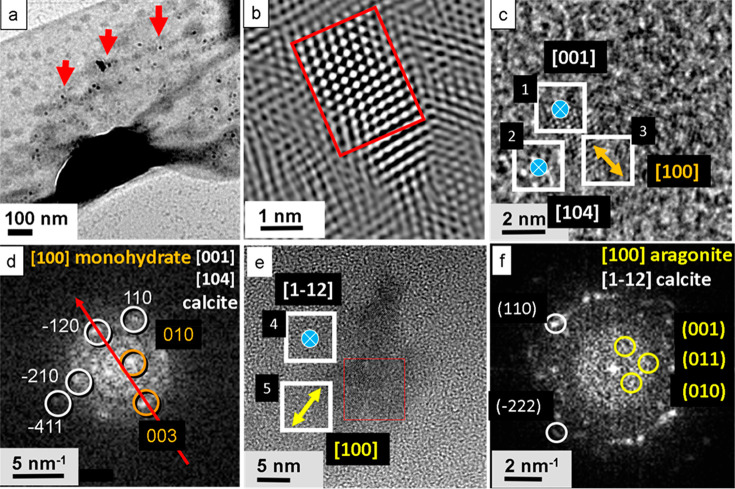
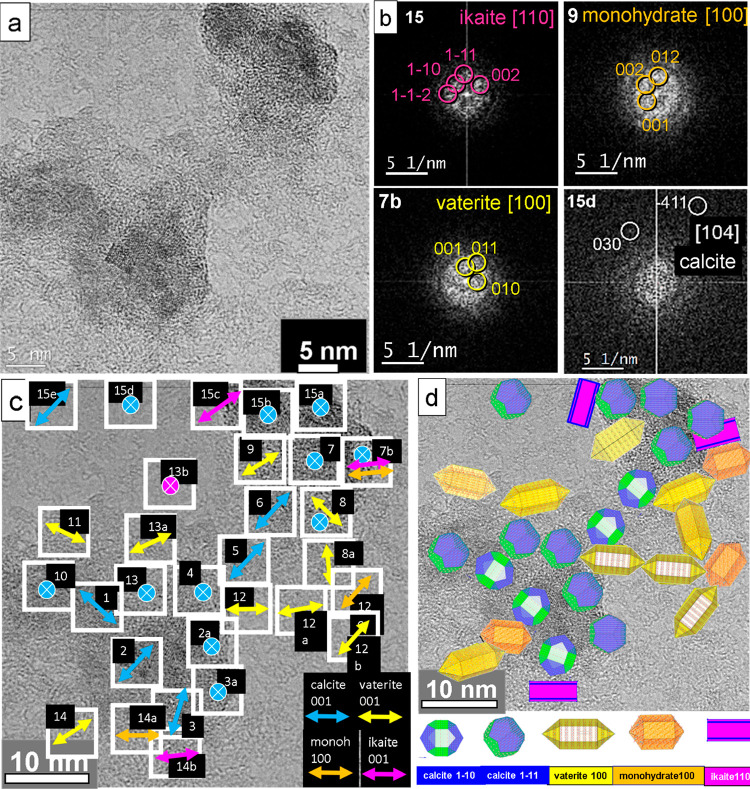
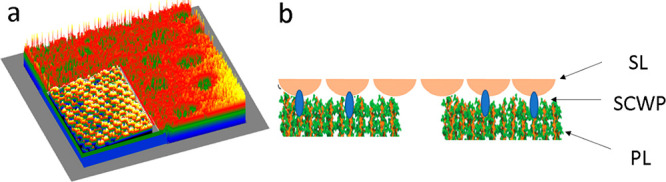
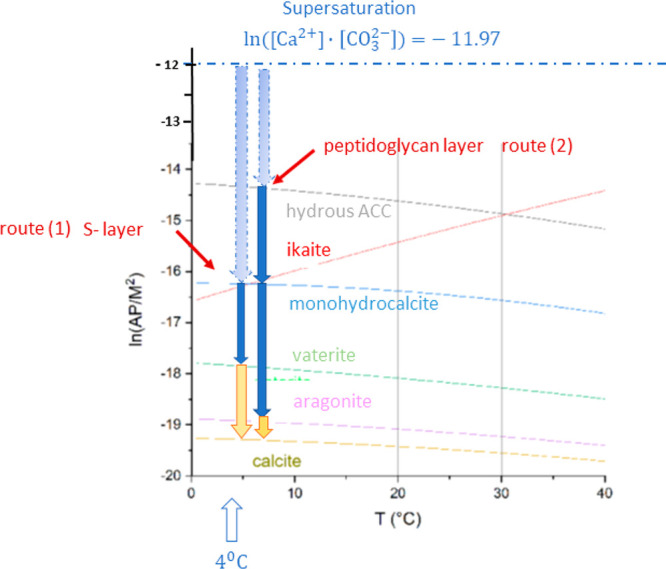
It is the intention of this study to elucidate the nested formation of calcium carbonate polymorphs or polyamorphs in the different nanosized compartments. With these observations, it can be concluded how the bacteria can survive in a harsh environment with high calcium carbonate supersaturation. The mechanisms of calcium carbonate precipitation at the surface membrane and at the underlying cell wall membrane of the thermophilic soil bacterium DSM 13240 have been revealed by high-resolution transmission electron microscopy and atomic force microscopy. In this Gram-positive bacterium, nanopores in the surface layer (S-layer) and in the supporting cell wall polymers are nucleation sites for metastable calcium carbonate polymorphs and polyamorphs. In order to observe the different metastable forms, various reaction times and a low reaction temperature (4 °C) have been chosen. Calcium carbonate polymorphs nucleate in the confinement of nanosized pores (⌀ 3-5 nm) of the S-layer. The hydrous crystalline calcium carbonate (ikaite) is formed initially with [110] as the favored growth direction. It transforms into the anhydrous metastable vaterite by a solid-state transition. In a following reaction step, calcite is precipitated, caused by dissolution of vaterite in the aqueous solution. In the larger pores of the cell wall (⌀ 20-50 nm), hydrated amorphous calcium carbonate is grown, which transforms into metastable monohydrocalcite, aragonite, or calcite. Due to the sequence of reaction steps via various metastable phases, the bacteria gain time for chipping the partially mineralized S-layer, and forming a fresh S-layer (characteristic growth time about 20 min). Thus, the bacteria can survive in solutions with high calcium carbonate supersaturation under the conditions of forced biomineralization.
本研究旨在阐明不同纳米隔室中碳酸钙多晶型物或多形体的嵌套形成。通过这些观察,可以得出细菌如何在高碳酸钙过饱和度的恶劣环境中生存的结论。通过高分辨率透射电子显微镜和原子力显微镜揭示了嗜热土壤细菌 DSM 13240 表面膜和底层细胞壁膜上碳酸钙沉淀的机制。在这种革兰氏阳性菌中,表面层(S-层)和支撑细胞壁聚合物中的纳米孔是亚稳碳酸钙多晶型物和多形体的成核位点。为了观察不同的亚稳形式,选择了各种反应时间和低温(4°C)。碳酸钙多晶型物在 S-层纳米孔(⌀3-5nm)的限制内成核。最初形成含水结晶碳酸钙(方解石),其优先生长方向为[110]。通过固态转变转化为无水亚稳文石。在随后的反应步骤中,由于文石在水溶液中的溶解,方解石沉淀。在细胞壁较大的孔(⌀20-50nm)中,水合无定形碳酸钙生长,转化为亚稳一水碳酸钙、霰石或方解石。由于通过各种亚稳相的反应步骤顺序,细菌有时间部分矿化 S-层,并形成新的 S-层(特征生长时间约为 20 分钟)。因此,在强制生物矿化条件下,细菌可以在高碳酸钙过饱和度的溶液中存活。