Línea de Inflamación Molecular, Instituto Murciano de Investigación Biosanitaria IMIB-Arrixaca, Hospital Clínico Universitario Virgen de la Arrixaca, Carretera Buenavista s/n. 30120 El Palmar, Murcia, Spain.
Tasmanian School of Medicine, University of Tasmania, Tasmania, Australia.
BMC Biol. 2022 Jan 7;20(1):9. doi: 10.1186/s12915-021-01220-z.
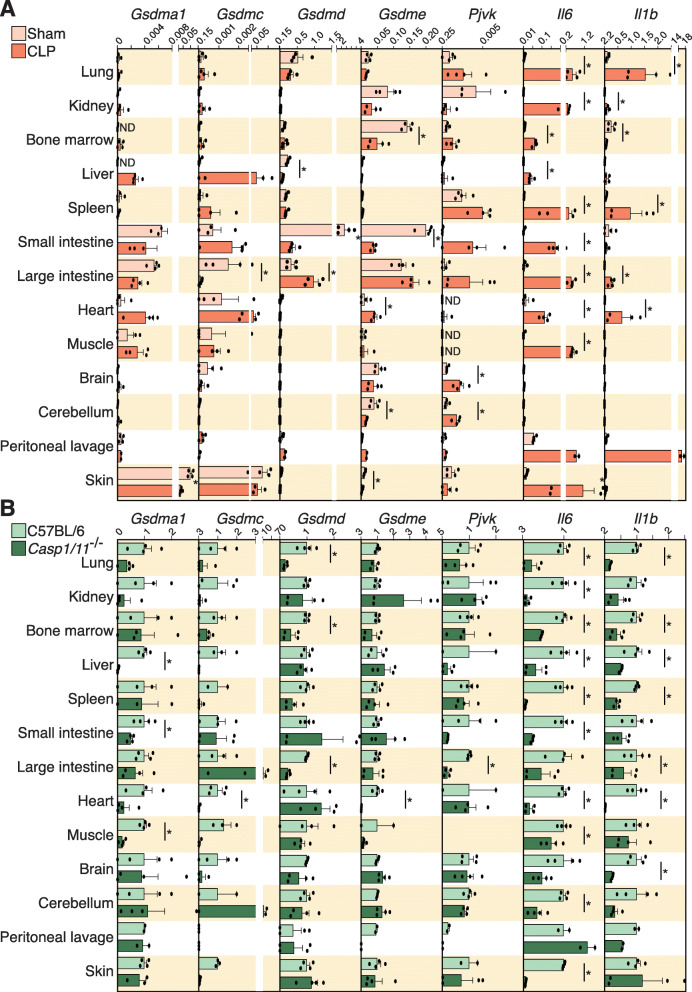
Gasdermins are ancient (>500million-years-ago) proteins, constituting a family of pore-forming proteins that allow the release of intracellular content including proinflammatory cytokines. Despite their importance in the immune response, and although gasdermin and gasdermin-like genes have been identified across a wide range of animal and non-animal species, there is limited information about the evolutionary history of the gasdermin family, and their functional roles after infection. In this study, we assess the lytic functions of different gasdermins across Metazoa species, and use a mouse model of sepsis to evaluate the expression of the different gasdermins during infection.
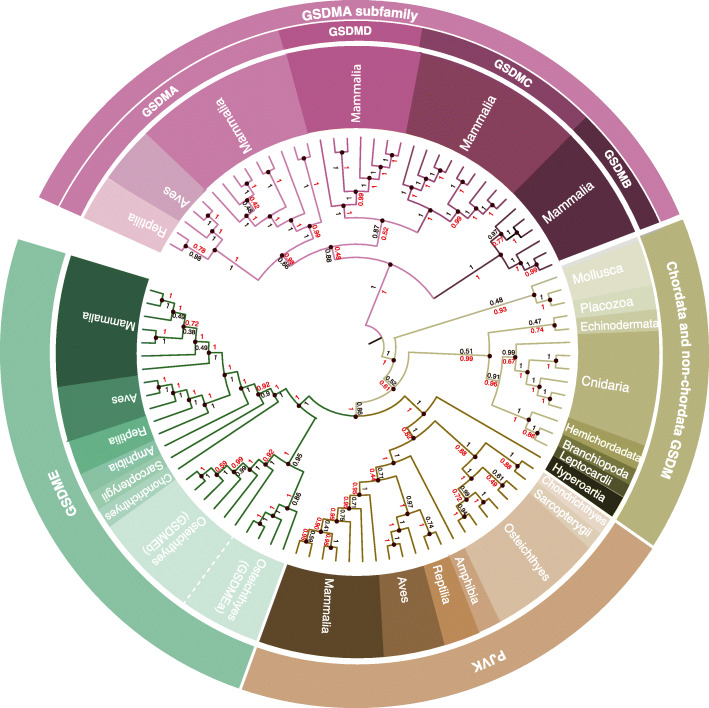
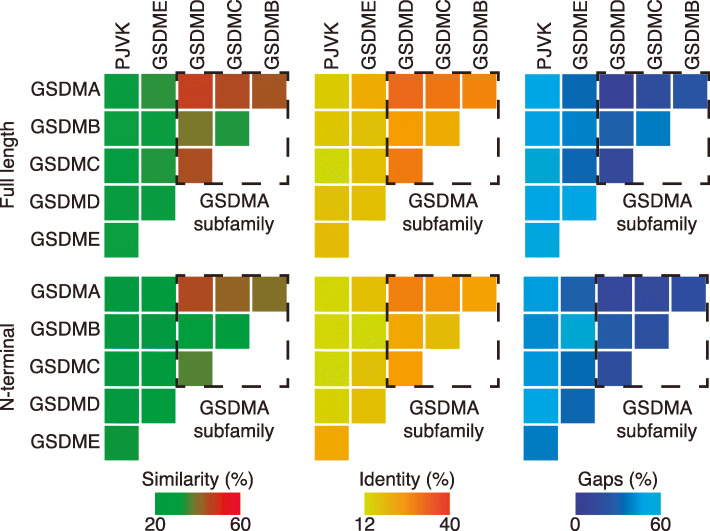
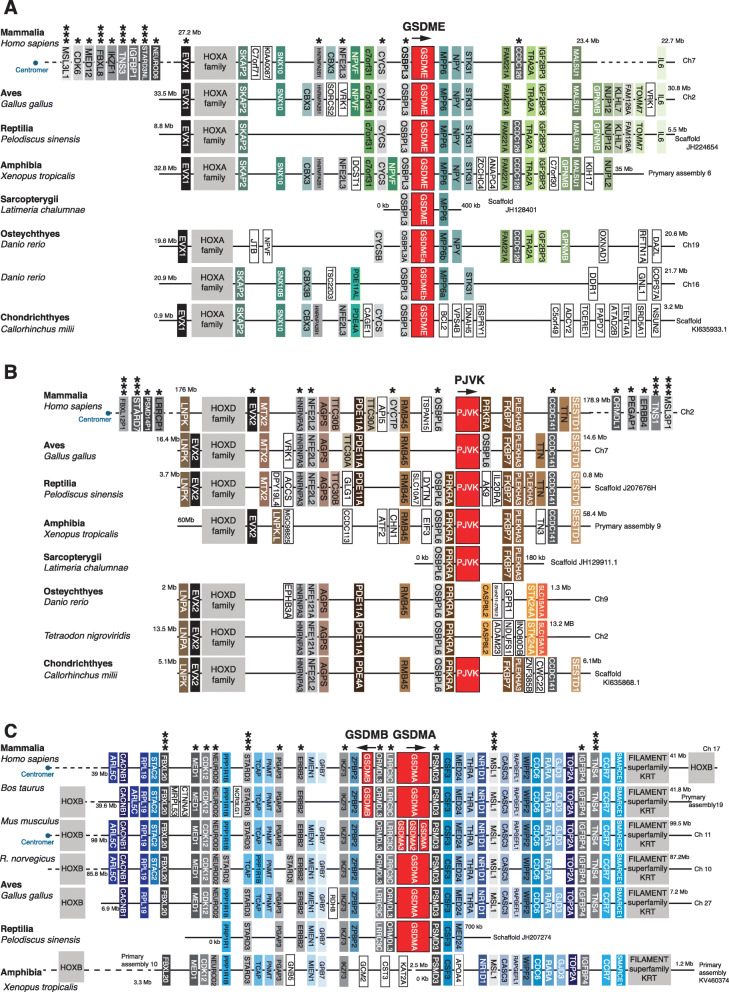
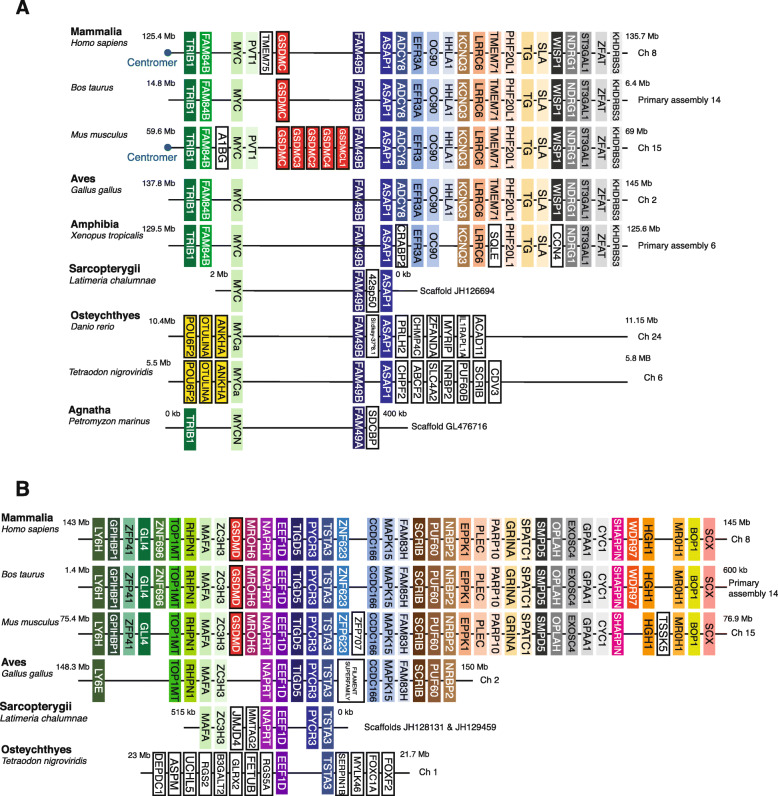
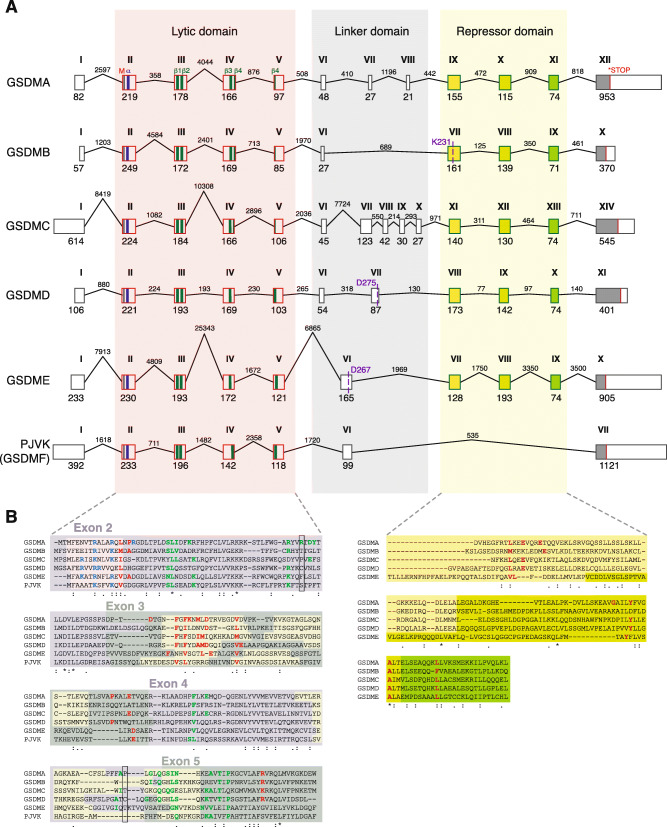
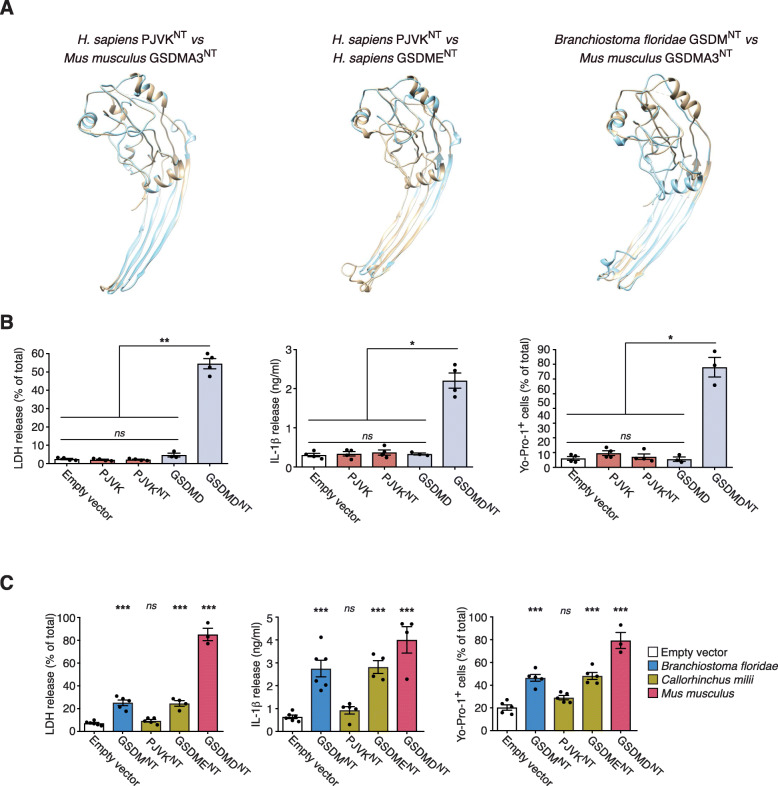
We show that the majority of gasdermin family members from distantly related animal clades are pore-forming, in line with the function of the ancestral proto-gasdermin and gasdermin-like proteins of Bacteria. We demonstrate the first expansion of this family occurred through a duplication of the ancestral gasdermin gene which formed gasdermin E and pejvakin prior to the divergence of cartilaginous fish and bony fish ~475 mya. We show that pejvakin from cartilaginous fish and mammals lost the pore-forming functionality and thus its role in cell lysis. We describe that the pore-forming gasdermin A formed ~320 mya as a duplication of gasdermin E prior to the divergence of the Sauropsida clade (the ancestral lineage of reptiles, turtles, and birds) and the Synapsid clade (the ancestral lineage of mammals). We then demonstrate that the gasdermin A gene duplicated to form the rest of the gasdermin family including gasdermins B, C, and D: pore-forming proteins that present a high variation of the exons in the linker sequence, which in turn allows for diverse activation pathways. Finally, we describe expression of murine gasdermin family members in different tissues in a mouse sepsis model, indicating function during infection response.
In this study we explored the evolutionary history of the gasdermin proteins in animals and demonstrated that the pore-formation functionality has been conserved from the ancient proto-gasdermin protein. We also showed that one gasdermin family member, pejvakin, lost its pore-forming functionality, but that all gasdermin family members, including pejvakin, likely retained a role in inflammation and the physiological response to infection.
Gasdermins 是古老的(> 5 亿年前)蛋白质,构成了一类形成孔的蛋白质,允许包括前炎性细胞因子在内的细胞内内容物释放。尽管它们在免疫反应中很重要,并且尽管已经在广泛的动物和非动物物种中鉴定出了 gasdermin 和 gasdermin 样基因,但关于 gasdermin 家族的进化历史及其在感染后的功能作用的信息有限。在这项研究中,我们评估了不同的 Metazoa 物种中的 gasdermins 的裂解功能,并使用了小鼠败血症模型来评估不同 gasdermins 在感染过程中的表达。
我们表明,来自亲缘关系较远的动物类群的大多数 gasdermin 家族成员都是形成孔的,这与细菌的原始原 gasdermin 和 gasdermin 样蛋白的功能一致。我们证明,这个家族的第一次扩张是通过对祖先 gasdermin 基因的复制形成的,该基因在软骨鱼和硬骨鱼分化之前(约 4.75 亿年前)形成了 gasdermin E 和 pejvakin。我们表明,软骨鱼和哺乳动物的 pejvakin 失去了形成孔的功能,因此失去了其在细胞裂解中的作用。我们描述了形成孔的 gasdermin A 是在 Sauropsida 进化枝(爬行动物、海龟和鸟类的祖先谱系)和 Synapsid 进化枝(哺乳动物的祖先谱系)分化之前(约 3.2 亿年前)作为 gasdermin E 的复制而形成的。然后,我们证明了 gasdermin A 基因的复制形成了其余的 gasdermin 家族,包括 gasdermins B、C 和 D:形成孔的蛋白质,其连接序列中的外显子具有很高的变异,从而允许不同的激活途径。最后,我们描述了在小鼠败血症模型中不同组织中鼠类 gasdermin 家族成员的表达,表明它们在感染反应中具有功能。
在这项研究中,我们探索了动物中 gasdermin 蛋白的进化历史,并表明从远古的原 gasdermin 蛋白起,形成孔的功能就得到了保留。我们还表明,一个 gasdermin 家族成员 pejvakin 失去了形成孔的功能,但所有的 gasdermin 家族成员,包括 pejvakin,可能仍然在炎症和对感染的生理反应中发挥作用。