Programa Institucional de Biomedicina Molecular, Escuela Nacional de Medicina y Homeopatía. Instituto Politécnico Nacional, CDMX, México.
Laboratorio de Procesos Biotecnológicos, Universidad Politécnica de Tlaxcala, Tlaxcala, México.
Pol J Microbiol. 2021 Dec;70(4):501-509. doi: 10.33073/pjm-2021-047. Epub 2021 Dec 23.
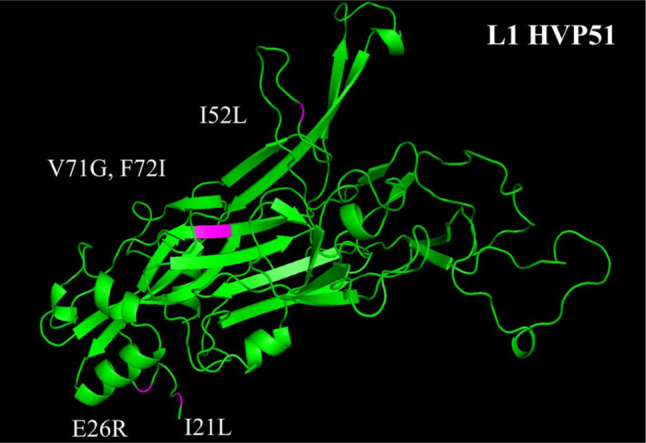
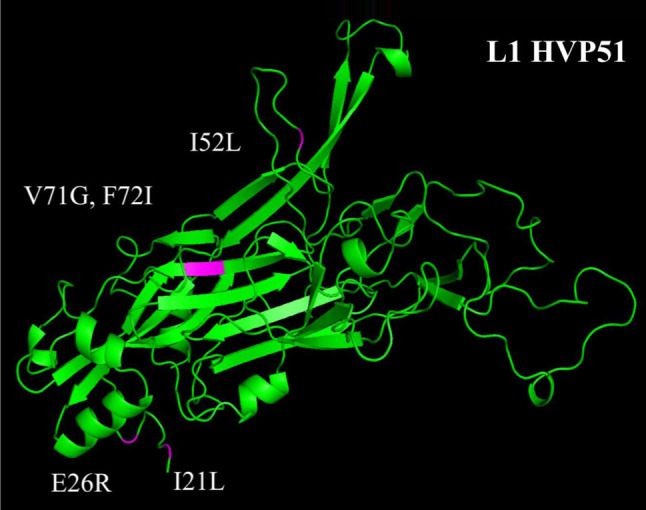
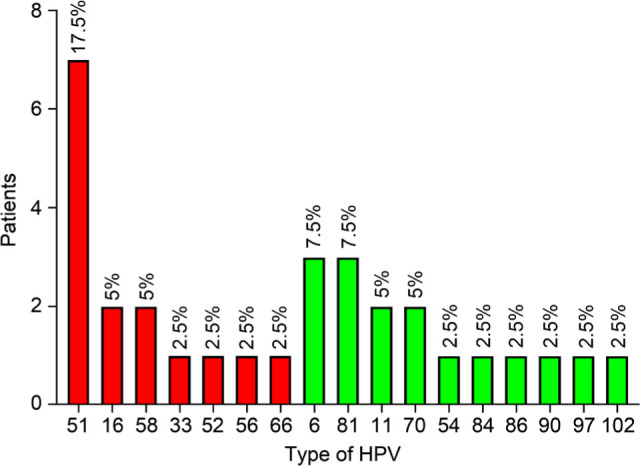
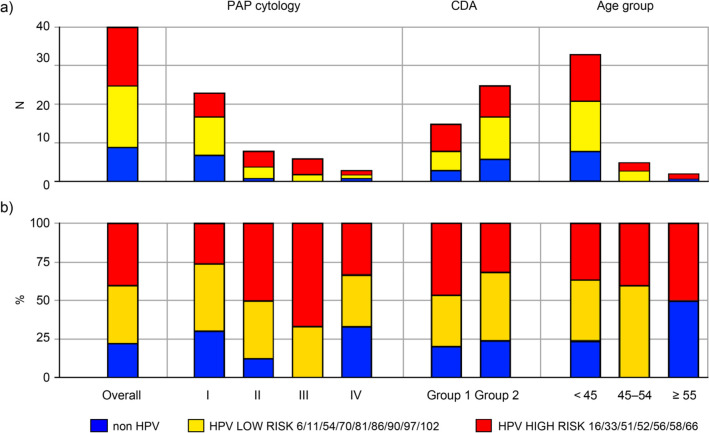
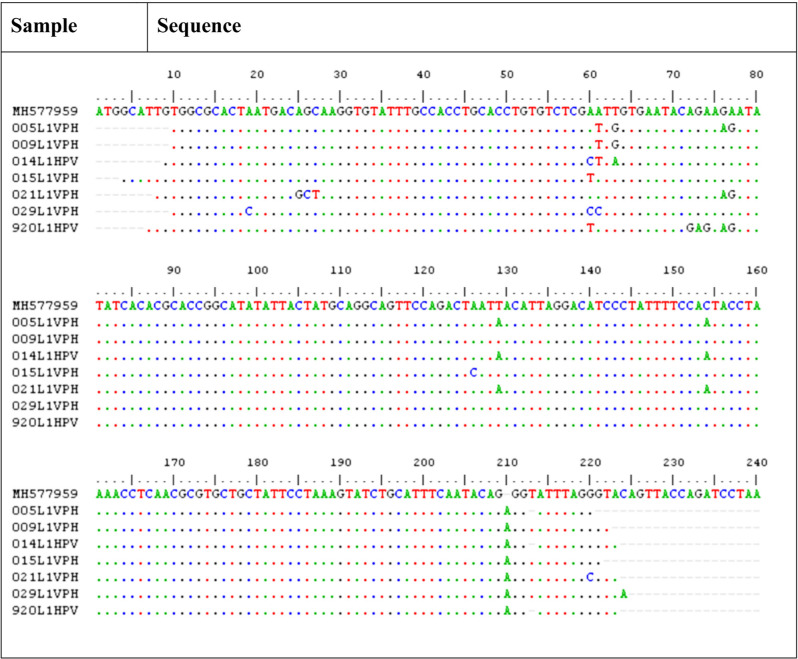
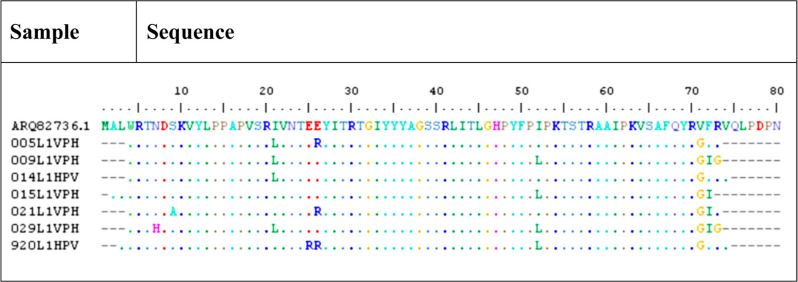
Infections caused by the human immunodeficiency virus (HIV) and human papillomavirus (HPV) cause thousands of deaths worldwide each year. So far, there has been no consensus on whether there is a direct relationship between the incidence of neoplasms and the immunosuppression caused by HIV that could help understand if coinfection increases the likelihood of cervical cancer. The objective of the study was to identify the presence of genetic variants of HPV in a group of HIV-positive women and their possible association with cervical cancer. Cervical samples were taken from HIV-positive patients for cytological analysis to identify the HPV genotype by polymerase chain reaction (PCR) and sequencing. The most prevalent L1 capsid protein mutations in the HPV genotype were analyzed . Various types of HPV were identified, both high-risk (HR) and low-risk (LR). The most prevalent genotype was HPV51. Analysis of the L1 gene sequences of HPV51 isolates showed nucleotide variations. Of the samples analyzed in Puebla, Mexico, HPV51 had the highest incidence (17.5%, 7/40). Different mutations, which could be used as population markers, were detected in this area, and they have not been reported in the L1 databases for HPV51 in Mexico. Genotypes 6, 14, 86, 87, 89, and 91, not detected or reported in samples from patients with HPV in Mexico, were also identified. Data from the population analyzed suggest no direct relationship between HIV immunosuppression and cervical cancer, regardless of the high- or low-risk HPV genotype. Furthermore, it is possible to develop regional population markers for the detection of HPV based on the mutations that occur in the sequence of nucleotides analyzed.
由人类免疫缺陷病毒(HIV)和人乳头瘤病毒(HPV)引起的感染每年在全球造成数千人死亡。到目前为止,还没有共识认为肿瘤的发病率与 HIV 引起的免疫抑制之间是否存在直接关系,这有助于了解是否合并感染会增加宫颈癌的可能性。本研究的目的是确定一组 HIV 阳性妇女中 HPV 的遗传变异的存在及其与宫颈癌的可能关联。从 HIV 阳性患者中采集宫颈样本进行细胞学分析,通过聚合酶链反应(PCR)和测序来识别 HPV 基因型。分析了 HPV 基因型中 L1 衣壳蛋白的常见突变。确定了各种 HPV 类型,包括高危型(HR)和低危型(LR)。最常见的基因型是 HPV51。对 HPV51 分离株 L1 基因序列的分析显示存在核苷酸变异。在墨西哥普埃布拉分析的样本中,HPV51 的发病率最高(17.5%,7/40)。在该地区检测到不同的突变,这些突变可以作为人群标志物,并且在墨西哥 HPV51 的 L1 数据库中没有报道。还鉴定了未在墨西哥 HPV 患者样本中检测到或报道的基因型 6、14、86、87、89 和 91。分析人群的数据表明,无论 HPV 基因型是高危型还是低危型,HIV 免疫抑制与宫颈癌之间没有直接关系。此外,基于分析的核苷酸序列中发生的突变,可以为 HPV 的检测开发区域性人群标志物。