Akiyama Hiroshi, Adachi Reiko
Hoshi University, School of Pharmacy, Department of Analytical Chemistry, 2-4-41 Ebara, Shinagawa-ku, Tokyo 142-8501, Japan.
National Institute of Health Sciences, Division of Foods, 3-25-26 Tonomachi, Kawasaki-ku, Kawasaki 210-0821, Japan.
Food Saf (Tokyo). 2021 Dec 7;9(4):101-116. doi: 10.14252/foodsafetyfscj.D-21-00008. eCollection 2021 Dec.
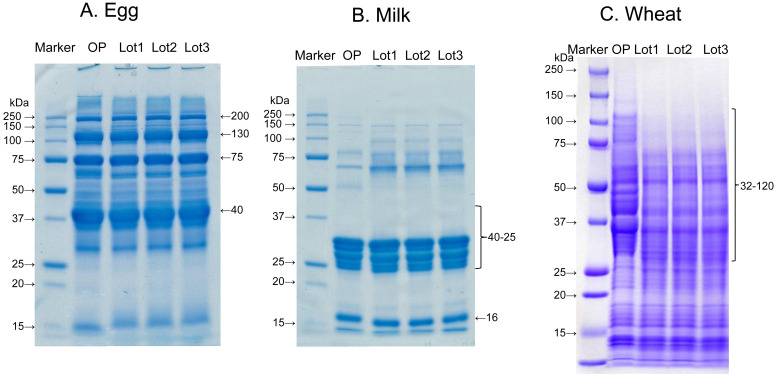
In the Japanese allergy-labeling system, food labeling is mandated for 7 specific ingredients (egg, cow's milk, wheat, buckwheat, peanut, shrimp, and crab) and recommended for 21 food ingredients in reference to case numbers of actual illness and the degree of seriousness. To monitor the validity of the labeling system, official methods for the detection of specific ingredient proteins in processed foods were developed. The official methods consist of ELISA methods for screening, and western blot methods for egg and milk, and PCR methods for wheat, buckwheat, peanut, shrimp/prawn, and crab as confirmation tests. The official methods consist of ELISA methods for screening, and western blot methods for egg and milk, and PCR methods for wheat, buckwheat, peanut, shrimp/prawn, and crab as confirmation tests. Threshold amounts (a few mg/kg) for labeling were set based on the approach of the analytical detections. Any foods containing protein allergens should be labeled if these contain allergens at greater than 10 ppm (mg/kg). Validation protocol criteria were established to standardize the Japanese official method. Food Safety Commission of Japan conducted a risk assessment of egg as a specific ingredient and judged that current labeling system for foods containing allergens is generally appropriate for "eggs". In the future, it is important to accumulate necessary scientific knowledge in order to carry out food health impact assessment including further refinement. The Japanese experience and knowledge of food allergy-labeling system would contribute to harmonize international labeling guidelines to protect allergic consumers globally.
在日本的过敏标识系统中,规定对7种特定成分(鸡蛋、牛奶、小麦、荞麦、花生、虾和蟹)进行食品标识,并根据实际发病案例数量和严重程度,建议对21种食品成分进行标识。为监测该标识系统的有效性,开发了用于检测加工食品中特定成分蛋白质的官方方法。官方方法包括用于筛查的ELISA方法,用于鸡蛋和牛奶的western blot方法,以及用于小麦、荞麦、花生、虾/对虾和蟹的PCR方法作为确证试验。基于分析检测方法设定了标识的阈值量(几毫克/千克)。如果任何含有蛋白质过敏原的食品中过敏原含量高于10 ppm(毫克/千克),则应进行标识。制定了验证方案标准以规范日本官方方法。日本食品安全委员会对鸡蛋这一特定成分进行了风险评估,并判定当前的食品过敏原标识系统总体上适用于“鸡蛋”。未来,积累必要的科学知识对于开展包括进一步细化在内的食品健康影响评估至关重要。日本在食品过敏标识系统方面的经验和知识将有助于协调国际标识指南,以在全球范围内保护过敏消费者。