Bühler Antje, Willmund Gerd-Dieter
German Center for Military Mental Health, Military Hospital Berlin, Berlin, Germany.
Front Public Health. 2021 Dec 22;9:802180. doi: 10.3389/fpubh.2021.802180. eCollection 2021.
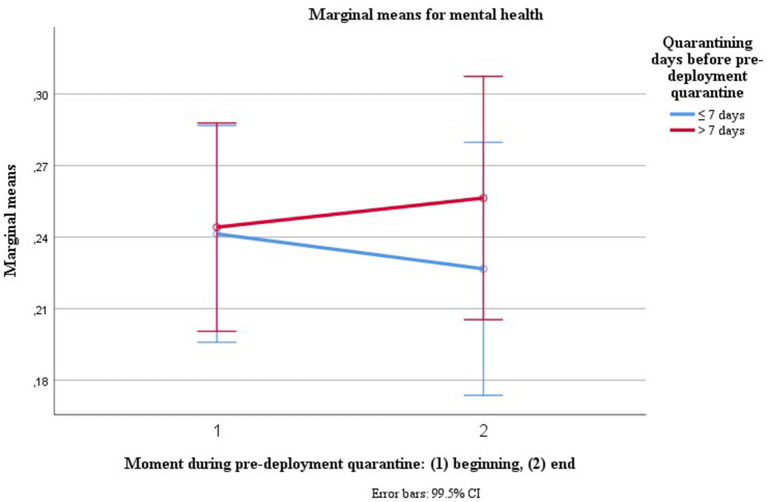
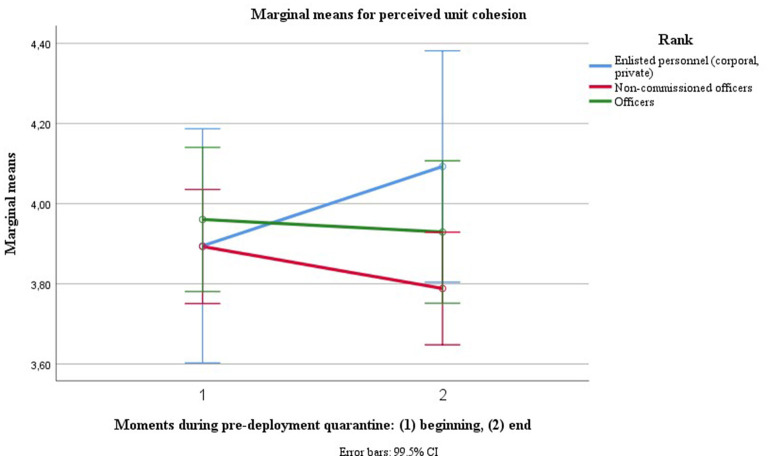
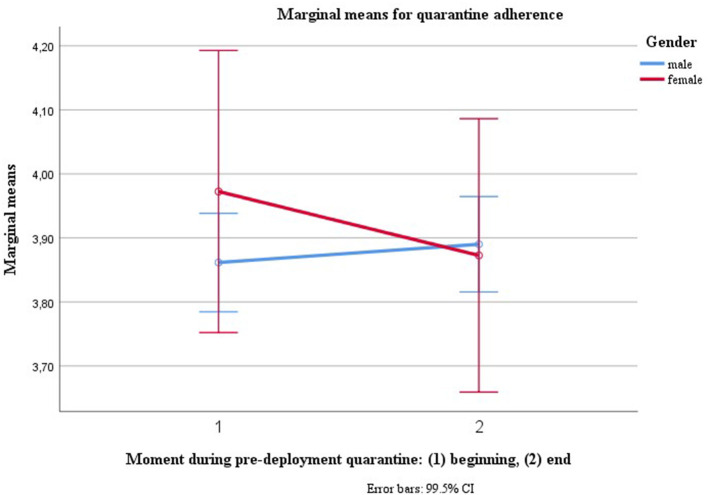
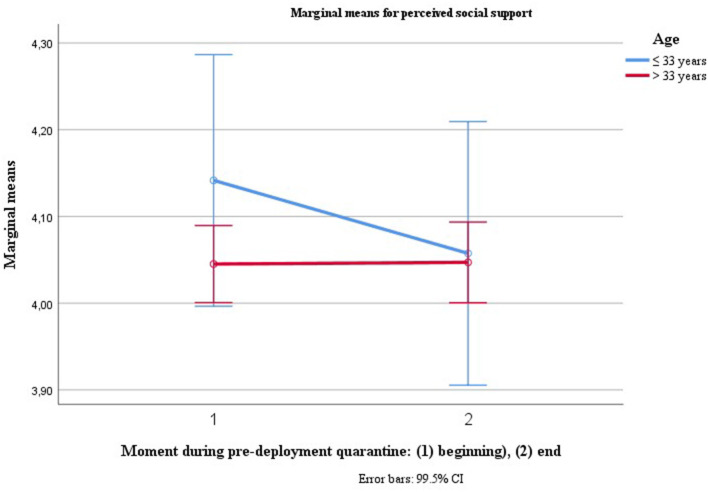
With the purpose of preventing SARS-Cov-2 traveling with the troops, pre-deployment and post-deployment quarantine are mandatory for the German military. This study investigates which factors could be addressed in order to facilitate adherence and mental health during isolation. Six hundred three soldiers completed questionnaires at the beginning and at the end of pre-deployment quarantine: Mini-SCL (BSI), Perceived Social Support (FSozU-K22), Unit Cohesion, Military Quarantine Adherence Questionnaire (MQAQ), and quarantine-associated factors including informedness about Covid-19, perceived individual risk, benefit of quarantine, clarity of quarantine protocol, need of intimacy, social norms, stigma, practicality of the quarantine, financial disadvantages, boredom, and health promoting leadership. Using stepwise regression analyses, up to 57% of the quarantine adherence was explained by social norms, boredom, perceived benefit/effectiveness of the quarantine, clear communication of the quarantine protocol and perceived risk of an infection, with social norms explaining 43%. In respect to mental health (Mini-SCL) at the beginning of quarantine, only 15% is explained by being in a partnership, (un)fulfilled need for bonding/intimacy, perceived unit cohesion, and perceived social support. Up to 20 % of the variance in mental health at the end of quarantine is explained by accumulated days of isolation before pre-deployment quarantine, age, clear communication of the quarantine protocol, perceived social support, fulfilled need for bonding/intimacy and perceived stigma. Mental health and quarantine adherence did correlate significantly, but to a slight extent. No differences between the beginning and the end of pre-deployment quarantine were found for the overall group in respect to mental health, quarantine adherence, perceived social support and perceived unit cohesion, while their trajectories differed for different subgroups including age, gender, rank, and accumulated days of quarantine: With increasing accumulated days of isolation prior to pre-deployment quarantine, mental health declined over the course of quarantine, though to a small degree. Findings suggest that addressing the norms of fellow soldiers and dependents alike could contribute to quarantine adherence in pre-deployment quarantine. Ongoing research should examine long-term effects on mental health, including these of accumulated days of quarantine, also taking into account post-deployment quarantine.
为防止新冠病毒随部队传播,德国军队在部署前和部署后均强制实施隔离。本研究调查了哪些因素有助于在隔离期间促进遵守规定以及维护心理健康。603名士兵在部署前隔离开始时和结束时完成了问卷调查:简易症状清单(BSI)、感知社会支持量表(FSozU-K22)、部队凝聚力、军事隔离遵守情况问卷(MQAQ)以及与隔离相关的因素,包括对新冠疫情的了解程度、感知到的个人风险、隔离的益处、隔离协议的清晰度、亲密需求、社会规范、污名化、隔离的实用性、经济劣势、无聊感以及促进健康的领导力。通过逐步回归分析,社会规范、无聊感、感知到的隔离益处/有效性、隔离协议的清晰传达以及感知到的感染风险解释了高达57%的隔离遵守情况,其中社会规范解释了43%。关于隔离开始时的心理健康(简易症状清单),只有15%可由恋爱关系、(未)满足的亲密需求、感知到的部队凝聚力和感知到的社会支持来解释。隔离结束时心理健康差异的20%可由部署前隔离前的累计隔离天数、年龄、隔离协议的清晰传达、感知到的社会支持、满足的亲密需求以及感知到的污名化来解释。心理健康与隔离遵守情况确实存在显著相关性,但程度较轻。在心理健康、隔离遵守情况、感知到的社会支持和感知到的部队凝聚力方面,整个群体在部署前隔离开始时和结束时未发现差异,而不同亚组(包括年龄、性别、军衔和累计隔离天数)的轨迹有所不同:随着部署前隔离前累计隔离天数的增加,心理健康在隔离过程中虽有轻微下降。研究结果表明,关注士兵及其家属的规范有助于在部署前隔离期间遵守隔离规定。正在进行的研究应考察对心理健康的长期影响,包括累计隔离天数的影响,同时也要考虑部署后的隔离情况。