Mungas Dan, Shaw Crystal, Hayes-Larson Eleanor, DeCarli Charles, Farias Sarah Tomaszewski, Olichney John, Saucedo Hector Hernandez, Gilsanz Paola, Glymour M Maria, Whitmer Rachel A, Mayeda Elizabeth Rose
Department of Neurology University of California, Davis Sacramento California USA.
Department of Epidemiology Fielding School of Public Health University of California Los Angeles California USA.
Alzheimers Dement (Amst). 2021 Dec 31;13(1):e12265. doi: 10.1002/dad2.12265. eCollection 2021.
The Kaiser Healthy Aging and Diverse Life Experiences (KHANDLE) study enrolled Asian, Black, Latino, and White adults ages 65+ without prior dementia diagnosis (N = 1709). We evaluated the prevalence of cognitive impairment (mild cognitive impairment or dementia) accounting for potential biases.
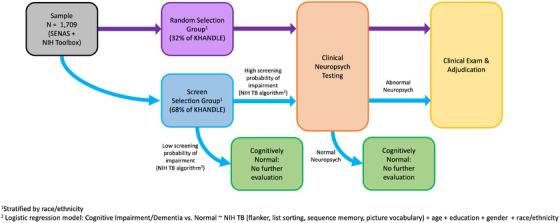
A random subgroup (N = 541) received clinical evaluation and others were evaluated if they failed a cognitive screen. Diagnoses were made under two conditions: (1) demographics-blind, based on clinical exam and demographically adjusted neuropsychological test scores; and (2) all available information (clinical exam, demographics, and adjusted and unadjusted test scores).
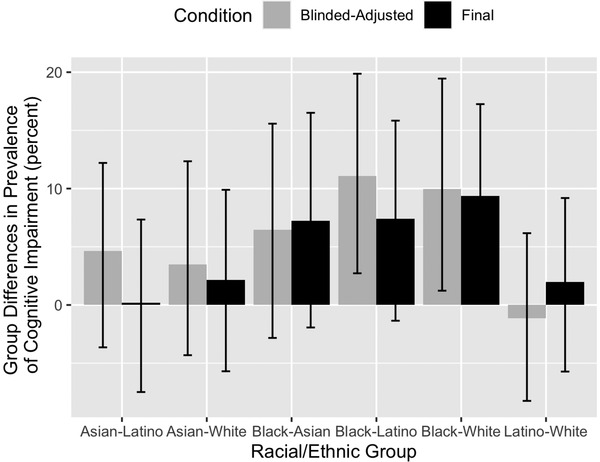
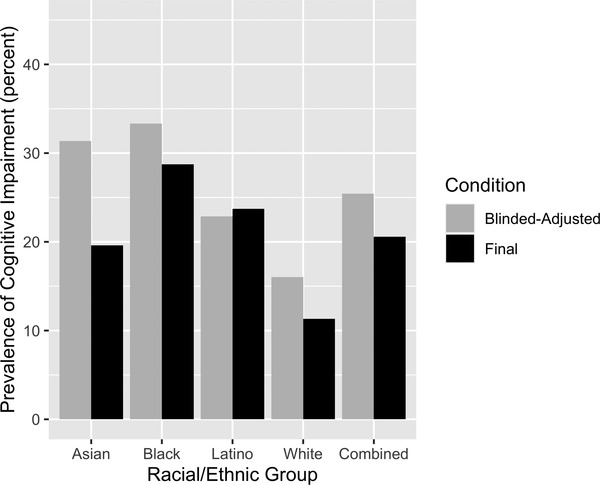
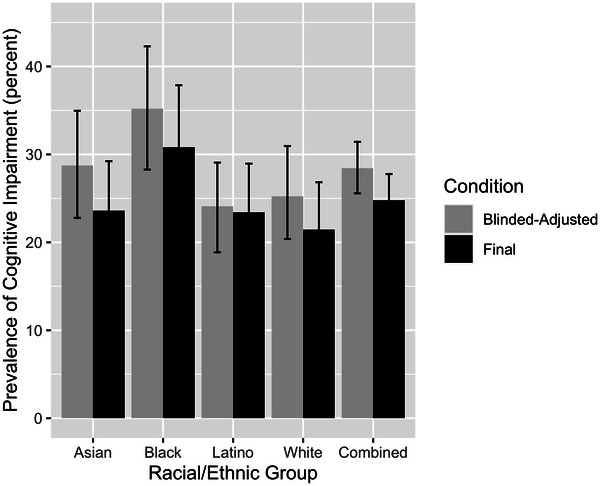
Cognitive impairment prevalence was 28% for blinded-adjusted diagnosis and 25% using all available information. Black participants had higher impairment rates than White (both conditions) and Latino (blinded-adjusted diagnosis) participants. Incomplete assessments negatively biased prevalence estimates for White participants.
Racial/ethnic disparities in cognitive impairment were amplified by attrition bias in White participants but were unaffected by type of test norms and diagnosticians' knowledge of demographics.
凯撒健康老龄化与多元生活经历(KHANDLE)研究纳入了年龄在65岁及以上、未曾被诊断患有痴呆症的亚洲、黑人、拉丁裔和白人成年人(N = 1709)。我们评估了认知障碍(轻度认知障碍或痴呆症)的患病率,并考虑了潜在偏差。
一个随机子组(N = 541)接受了临床评估,其他参与者若认知筛查未通过也会接受评估。诊断在两种情况下进行:(1)人口统计学信息盲法,基于临床检查和经人口统计学调整的神经心理学测试分数;(2)使用所有可用信息(临床检查、人口统计学信息以及调整和未调整的测试分数)。
经盲法调整后的诊断中认知障碍患病率为28%,使用所有可用信息时为25%。黑人参与者的障碍率高于白人(在两种情况下)以及拉丁裔参与者(在盲法调整后的诊断中)。评估不完整对白人参与者的患病率估计产生了负面偏差。
白人参与者的损耗偏差放大了认知障碍中的种族/族裔差异,但不受测试规范类型和诊断医生对人口统计学信息了解程度的影响。