• 文献检索
  • 文档翻译
  • 深度研究
  • 学术资讯
  • Suppr Zotero 插件Zotero 插件
  • 邀请有礼
  • 套餐&价格
  • 历史记录
应用&插件
Suppr Zotero 插件Zotero 插件浏览器插件Mac 客户端Windows 客户端微信小程序
定价
高级版会员购买积分包购买API积分包
服务
文献检索文档翻译深度研究API 文档MCP 服务
关于我们
关于 Suppr公司介绍联系我们用户协议隐私条款
关注我们

Suppr 超能文献

核心技术专利:CN118964589B侵权必究
粤ICP备2023148730 号-1Suppr @ 2026

文献检索

告别复杂PubMed语法,用中文像聊天一样搜索,搜遍4000万医学文献。AI智能推荐,让科研检索更轻松。

立即免费搜索

文件翻译

保留排版,准确专业,支持PDF/Word/PPT等文件格式,支持 12+语言互译。

免费翻译文档

深度研究

AI帮你快速写综述,25分钟生成高质量综述,智能提取关键信息,辅助科研写作。

立即免费体验

妇产科智能系统:机器学习的应用

Intelligent systems in obstetrics and midwifery: Applications of machine learning.

作者信息

Barbounaki Stavroula, Vivilaki Victoria G

机构信息

Department of Midwifery, School of Health and Care Sciences, University of West Attica, Athens, Greece.

出版信息

Eur J Midwifery. 2021 Dec 20;5:58. doi: 10.18332/ejm/143166. eCollection 2021.

DOI:10.18332/ejm/143166
PMID:35005483
原文链接:https://pmc.ncbi.nlm.nih.gov/articles/PMC8686058/
Abstract

INTRODUCTION

Machine learning is increasingly utilized over recent years in order to develop models that represent and solve problems in a variety of domains, including those of obstetrics and midwifery. The aim of this systematic review was to analyze research studies on machine learning and intelligent systems applications in midwifery and obstetrics.

METHODS

A thorough literature review was performed in four electronic databases (PubMed, APA PsycINFO, SCOPUS, ScienceDirect). Only articles that discussed machine learning and intelligent systems applications in midwifery and obstetrics, were considered in this review. Selected articles were critically evaluated as for their relevance and a contextual synthesis was conducted.

RESULTS

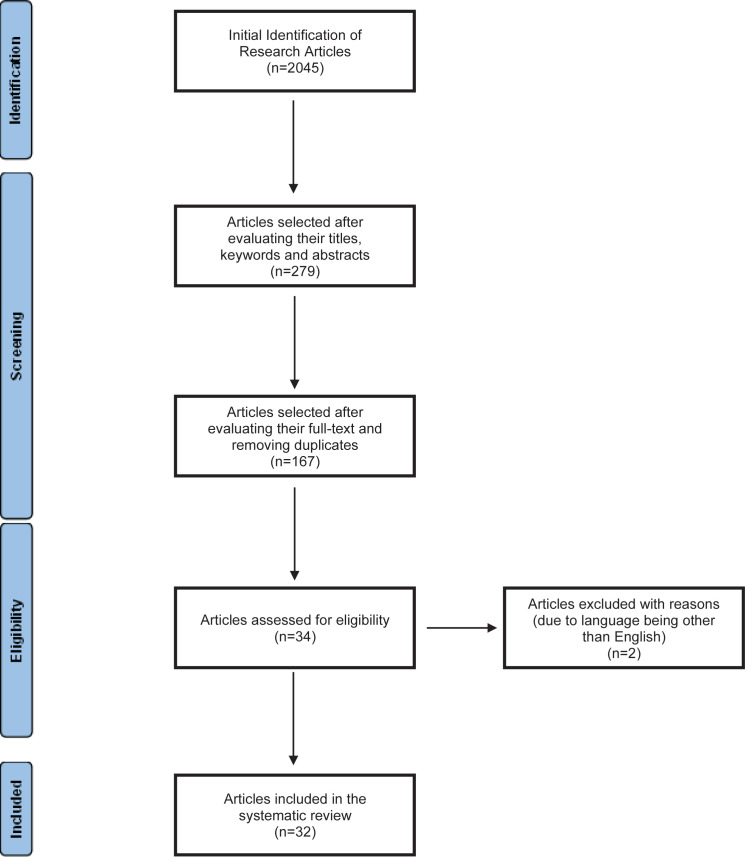
Thirty-two articles were included in this systematic review as they met the inclusion and methodological criteria specified in this study. The results suggest that machine learning and intelligent systems have produced successful models and systems in a broad list of midwifery and obstetrics topics, such as diagnosis, pregnancy risk assessment, fetal monitoring, bladder tumor, etc.

CONCLUSIONS

This systematic review suggests that machine learning represents a very promising area of artificial intelligence for the development of practical and highly effective applications that can support human experts, as well the investigation of a wide range of exciting opportunities for further research.

摘要

引言

近年来,机器学习在各个领域(包括妇产科领域)越来越多地被用于开发能够表示和解决问题的模型。本系统评价的目的是分析关于机器学习和智能系统在助产和产科应用的研究。

方法

在四个电子数据库(PubMed、APA PsycINFO、SCOPUS、ScienceDirect)中进行了全面的文献综述。本综述仅纳入讨论机器学习和智能系统在助产和产科应用的文章。对所选文章的相关性进行了严格评估,并进行了背景综合分析。

结果

本系统评价纳入了32篇文章,因为它们符合本研究规定的纳入标准和方法学标准。结果表明,机器学习和智能系统在助产和产科的广泛主题(如诊断、妊娠风险评估、胎儿监测、膀胱肿瘤等)中产生了成功的模型和系统。

结论

本系统评价表明,机器学习是人工智能中一个非常有前景的领域,可用于开发支持人类专家的实用且高效的应用程序,以及为进一步研究探索广泛的令人兴奋的机会。
https://cdn.ncbi.nlm.nih.gov/pmc/blobs/505a/8686058/b71d19d5437d/EJM-5-58-g001.jpg

相似文献

1
Intelligent systems in obstetrics and midwifery: Applications of machine learning.妇产科智能系统:机器学习的应用
Eur J Midwifery. 2021 Dec 20;5:58. doi: 10.18332/ejm/143166. eCollection 2021.
2
Fuzzy Logic Intelligent Systems and Methods in Midwifery and Obstetrics.助产与产科中的模糊逻辑智能系统及方法
Acta Inform Med. 2021 Sep;29(3):210-215. doi: 10.5455/aim.2021.29.210-215.
3
Data-driven modeling and prediction of blood glucose dynamics: Machine learning applications in type 1 diabetes.基于数据驱动的血糖动力学建模与预测:机器学习在 1 型糖尿病中的应用。
Artif Intell Med. 2019 Jul;98:109-134. doi: 10.1016/j.artmed.2019.07.007. Epub 2019 Jul 26.
4
A review on utilizing machine learning technology in the fields of electronic emergency triage and patient priority systems in telemedicine: Coherent taxonomy, motivations, open research challenges and recommendations for intelligent future work.利用机器学习技术在电子急诊分诊和远程医疗患者优先系统领域的应用综述:连贯的分类法、动机、开放的研究挑战和对智能未来工作的建议。
Comput Methods Programs Biomed. 2021 Sep;209:106357. doi: 10.1016/j.cmpb.2021.106357. Epub 2021 Aug 16.
5
Using Machine Learning to Predict Complications in Pregnancy: A Systematic Review.使用机器学习预测妊娠并发症:一项系统综述。
Front Bioeng Biotechnol. 2022 Jan 19;9:780389. doi: 10.3389/fbioe.2021.780389. eCollection 2021.
6
Exploiting machine learning for bestowing intelligence to microfluidics.利用机器学习赋予微流控技术智能。
Biosens Bioelectron. 2021 Dec 15;194:113666. doi: 10.1016/j.bios.2021.113666. Epub 2021 Sep 24.
7
Health professionals' experience of teamwork education in acute hospital settings: a systematic review of qualitative literature.医疗专业人员在急症医院环境中团队合作教育的经验:对定性文献的系统综述
JBI Database System Rev Implement Rep. 2016 Apr;14(4):96-137. doi: 10.11124/JBISRIR-2016-1843.
8
Machine Learning and Cochlear Implantation-A Structured Review of Opportunities and Challenges.机器学习与人工耳蜗植入——机遇与挑战的结构化综述
Otol Neurotol. 2020 Jan;41(1):e36-e45. doi: 10.1097/MAO.0000000000002440.
9
Advances of Sentiment Analysis Applications in Obstetrics/Gynecology and Midwifery.情感分析应用在妇产科与助产领域的进展
Mater Sociomed. 2021 Sep;33(3):225-230. doi: 10.5455/msm.2021.33.225-230.
10
Clinical Decision-Support Systems for Detection of Systemic Inflammatory Response Syndrome, Sepsis, and Septic Shock in Critically Ill Patients: A Systematic Review.用于检测重症患者全身炎症反应综合征、脓毒症和脓毒性休克的临床决策支持系统:一项系统评价
Methods Inf Med. 2019 Dec;58(S 02):e43-e57. doi: 10.1055/s-0039-1695717. Epub 2019 Sep 9.

引用本文的文献

1
Artificial Intelligence and Machine Learning: An Updated Systematic Review of Their Role in Obstetrics and Midwifery.人工智能与机器学习:对其在产科和助产领域作用的最新系统综述
Cureus. 2025 Mar 11;17(3):e80394. doi: 10.7759/cureus.80394. eCollection 2025 Mar.
2
Artificial Intelligence in Predicting the Mode of Delivery: A Systematic Review.人工智能在预测分娩方式中的应用:一项系统综述
Cureus. 2024 Sep 10;16(9):e69115. doi: 10.7759/cureus.69115. eCollection 2024 Sep.
3
The Impact of Artificial Intelligence (AI) on Midwifery Education: A Scoping Review.

本文引用的文献

1
A machine learning algorithm for predicting maternal readmission for hypertensive disorders of pregnancy.一种用于预测妊娠高血压疾病产妇再入院的机器学习算法。
Am J Obstet Gynecol MFM. 2021 Jan;3(1):100250. doi: 10.1016/j.ajogmf.2020.100250. Epub 2020 Oct 6.
2
Prediction of obstetrical and fetal complications using automated electronic health record data.利用自动化电子健康记录数据预测产科和胎儿并发症。
Am J Obstet Gynecol. 2021 Feb;224(2):137-147.e7. doi: 10.1016/j.ajog.2020.10.030. Epub 2020 Oct 22.
3
Real-time data analysis using a machine learning model significantly improves prediction of successful vaginal deliveries.
人工智能对助产士教育的影响:一项范围综述
Healthcare (Basel). 2024 May 24;12(11):1082. doi: 10.3390/healthcare12111082.
4
Identification of DTL as Related Biomarker and Immune Infiltration Characteristics of Nasopharyngeal Carcinoma via Comprehensive Strategies.通过综合策略鉴定DTL作为鼻咽癌相关生物标志物及免疫浸润特征
Int J Gen Med. 2022 Mar 2;15:2329-2345. doi: 10.2147/IJGM.S352330. eCollection 2022.
使用机器学习模型进行实时数据分析可显著提高阴道分娩成功的预测能力。
Am J Obstet Gynecol. 2020 Sep;223(3):437.e1-437.e15. doi: 10.1016/j.ajog.2020.05.025. Epub 2020 May 17.
4
Machine Learning and Statistical Models to Predict Postpartum Hemorrhage.机器学习和统计模型预测产后出血。
Obstet Gynecol. 2020 Apr;135(4):935-944. doi: 10.1097/AOG.0000000000003759.
5
Prediction of vaginal birth after cesarean deliveries using machine learning.采用机器学习预测剖宫产术后阴道分娩。
Am J Obstet Gynecol. 2020 Jun;222(6):613.e1-613.e12. doi: 10.1016/j.ajog.2019.12.267. Epub 2020 Jan 30.
6
Machine Learning in Fetal Cardiology: What to Expect.机器学习在胎儿心脏病学中的应用:未来可期。
Fetal Diagn Ther. 2020;47(5):363-372. doi: 10.1159/000505021. Epub 2020 Jan 7.
7
Machine learning mortality classification in clinical documentation with increased accuracy in visual-based analyses.基于视觉分析提高准确性的临床文档机器学习死亡率分类。
Acta Paediatr. 2020 Jul;109(7):1346-1353. doi: 10.1111/apa.15109. Epub 2019 Dec 10.
8
Prediction model development of late-onset preeclampsia using machine learning-based methods.基于机器学习的方法预测晚发型子痫前期的模型开发。
PLoS One. 2019 Aug 23;14(8):e0221202. doi: 10.1371/journal.pone.0221202. eCollection 2019.
9
Artificial intelligence in reproductive medicine.人工智能在生殖医学中的应用。
Reproduction. 2019 Oct;158(4):R139-R154. doi: 10.1530/REP-18-0523.
10
Improving preterm newborn identification in low-resource settings with machine learning.利用机器学习提高资源匮乏环境中早产儿的识别率。
PLoS One. 2019 Feb 27;14(2):e0198919. doi: 10.1371/journal.pone.0198919. eCollection 2019.