Ouyang Yan Xiu, Feng Jun, Wang Zun, Zhang Guo Jun, Chen Min
Cancer Center & Department of Breast and Thyroid Surgery, Xiang'an Hospital of Xiamen University, School of Medicine, Xiamen University, No. 2000, Xiang'an Road East, Xiamen, 361101, Fujian, China.
Clinical Central Research Core, Xiang'an Hospital of Xiamen University, No. 2000, Xiang'an Road East, Xiamen, 361101, Fujian, China.
Mol Biomed. 2021 Jun 30;2(1):20. doi: 10.1186/s43556-021-00045-0.
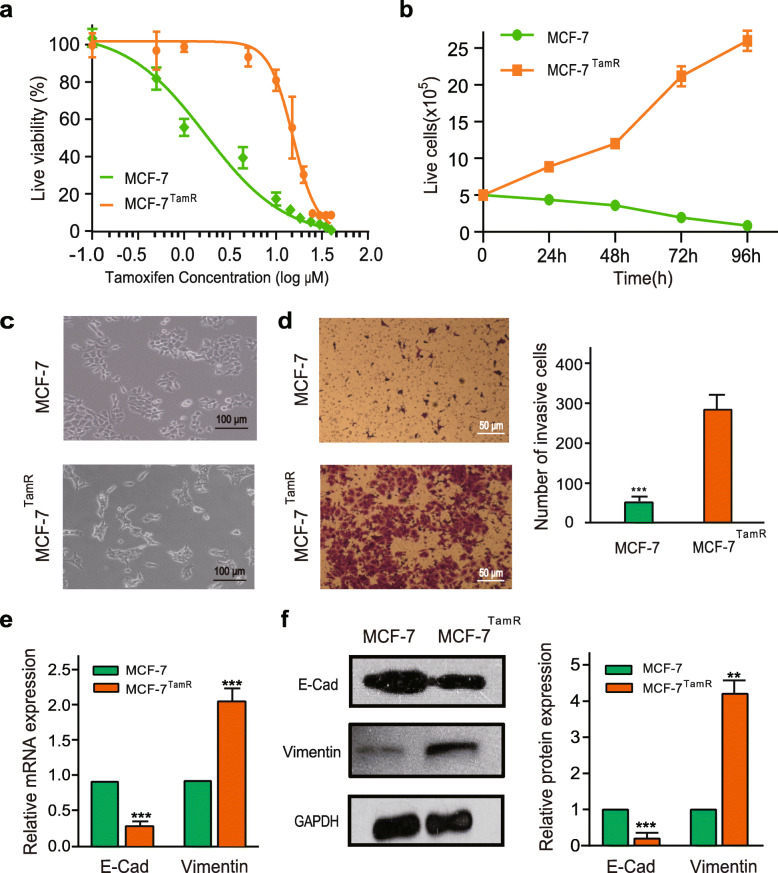
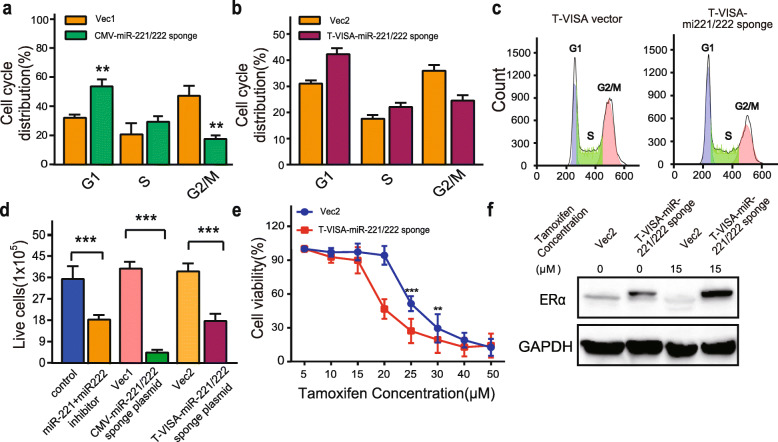
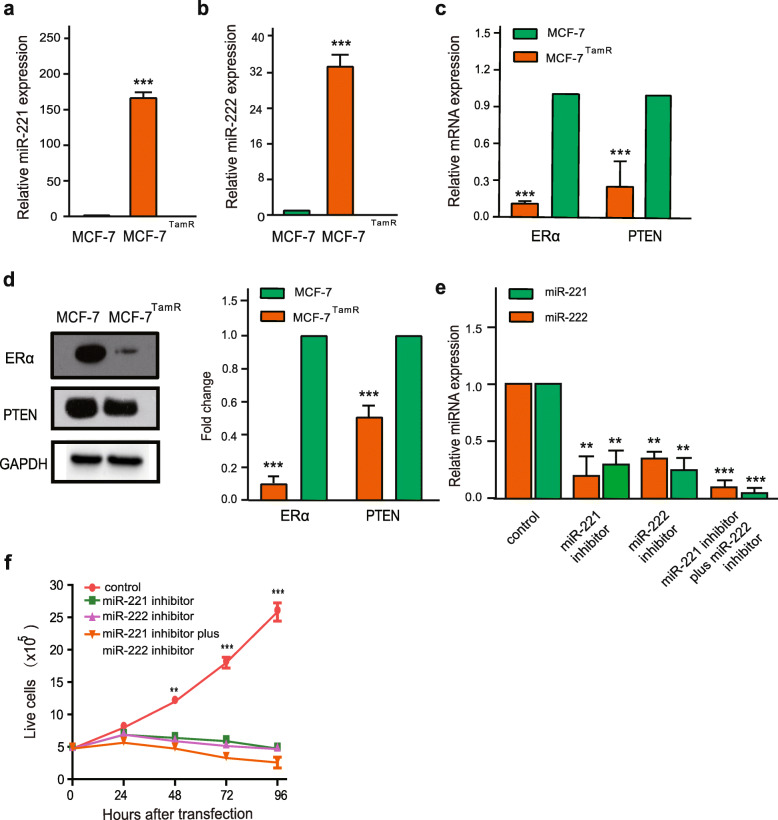
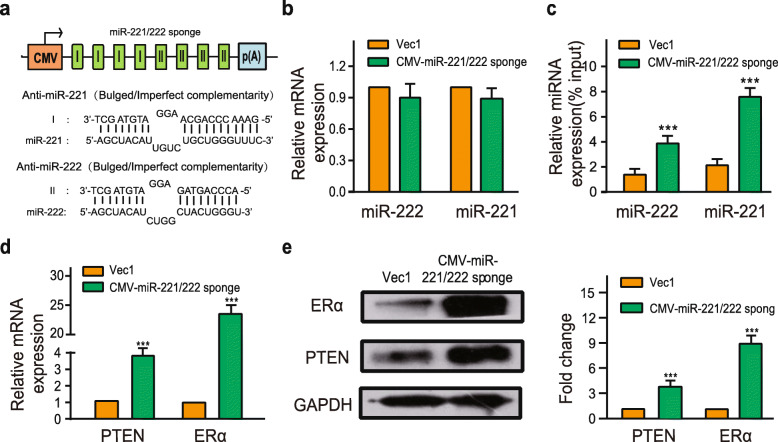
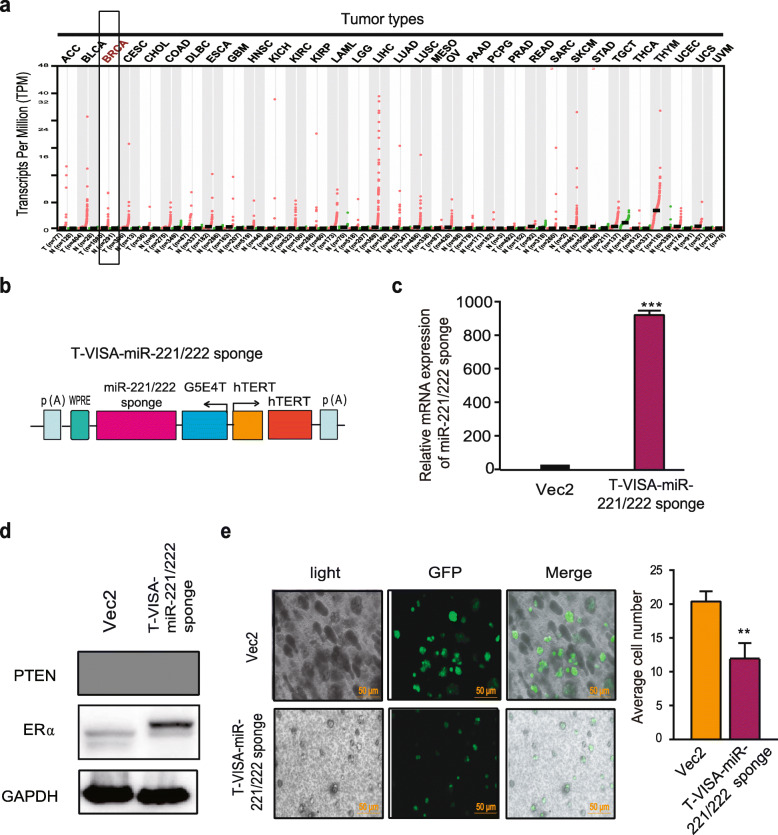
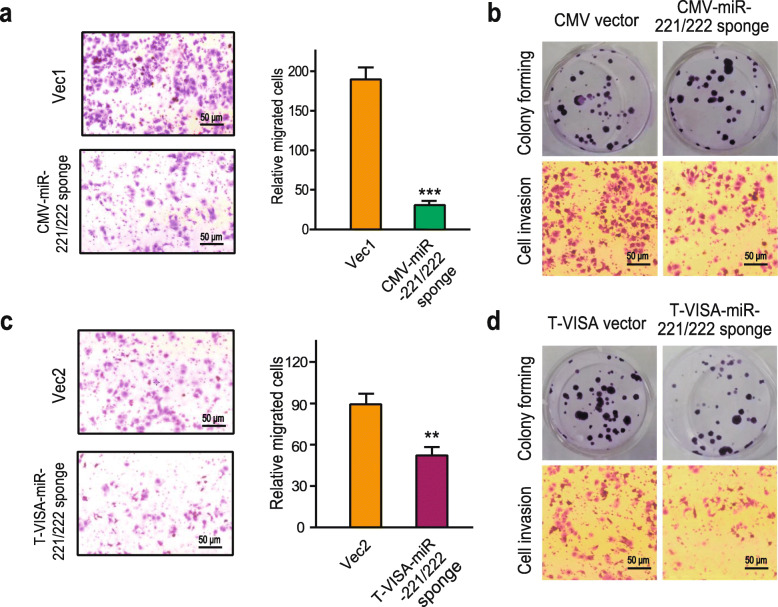
Tamoxifen resistance (TamR) prevents ER-positive breast cancer patients from benefitting from endocrine therapy, and miR-221 or miR-222 plays vital roles in inducing TamR. In this study, we designed synthetic sponges to reverse TamR by targeting these two miRs. First, we established a tamoxifen resistant breast cancer cell line (MCF-7), we verified the high expressing level of these two miRs in TamR cells. miR-221 or miR-222 inhibitors rendered MCF-7 cells responsive to tamoxifen. Next, we designed a miR-221/222 sponge, which contains total 8 multi-antisense binding sites (MBSs) for these two onco-miRs, and inserted it into CMV promoter- or hTERT promoter-driven expressing vectors. After transfected miR-221/222 sponge expressing vectors into MCF-7 cells, we identified a strong interaction between miR-221/222 sponge and endogenous miR-221 or miR-222 by RNA pulldown assay. We also found that miR-221/222 sponge restored the expression of ERα and PTEN, arrested cells in G1 phase, and finally resulted in reduced cell growth and cell migration. Notably, miR-221/222 sponge expressing cells abrogates tamoxifen resistance through restoring the expression of ERα, suggesting that miR-221/222 sponge gene therapy especially driven by tumor specific promoter could provide an effective therapeutic approach against TamR in breast cancer.
他莫昔芬耐药(TamR)使雌激素受体阳性乳腺癌患者无法从内分泌治疗中获益,而miR-221或miR-222在诱导TamR中起关键作用。在本研究中,我们设计了合成海绵来靶向这两种miR以逆转TamR。首先,我们建立了他莫昔芬耐药乳腺癌细胞系(MCF-7),验证了这两种miR在TamR细胞中的高表达水平。miR-221或miR-222抑制剂使MCF-7细胞对他莫昔芬产生反应。接下来,我们设计了一种miR-221/222海绵,其含有针对这两种致癌miR的总共8个多反义结合位点(MBS),并将其插入巨细胞病毒(CMV)启动子或人端粒酶逆转录酶(hTERT)启动子驱动的表达载体中。将miR-221/222海绵表达载体转染到MCF-7细胞后,我们通过RNA下拉试验鉴定了miR-221/222海绵与内源性miR-221或miR-222之间的强相互作用。我们还发现miR-221/222海绵恢复了雌激素受体α(ERα)和第10号染色体缺失的磷酸酶及张力蛋白同源物(PTEN)的表达,使细胞停滞在G1期,最终导致细胞生长和细胞迁移减少。值得注意的是,表达miR-221/222海绵的细胞通过恢复ERα的表达消除了他莫昔芬耐药性,这表明miR-221/222海绵基因治疗,尤其是由肿瘤特异性启动子驱动的治疗,可为乳腺癌中TamR提供一种有效的治疗方法。