Department of Pneumology, Thoracic Oncology, Sleep-, and Respiratory Critical Care Medicine, Clinic Association Allgaeu, Kempten, Germany.
Medical Care Center Kempten-Allgaeu, Kempten, Germany.
Am J Case Rep. 2022 Jan 10;23:e935263. doi: 10.12659/AJCR.935263.
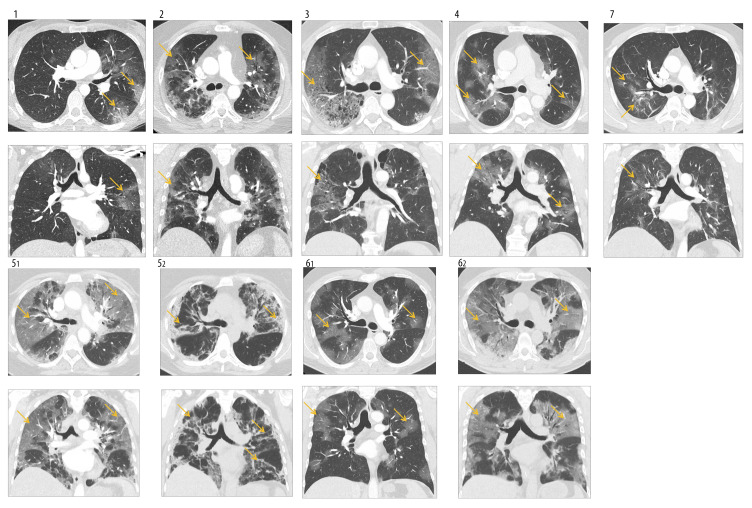
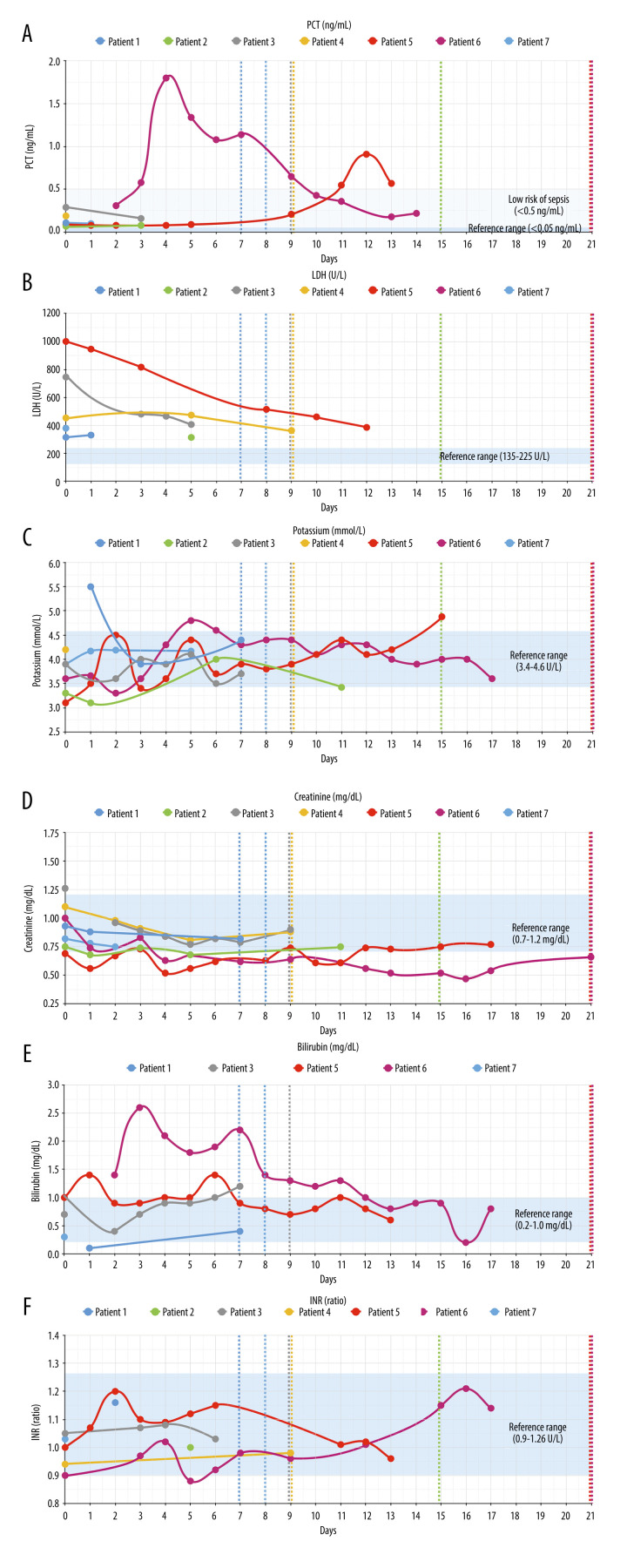
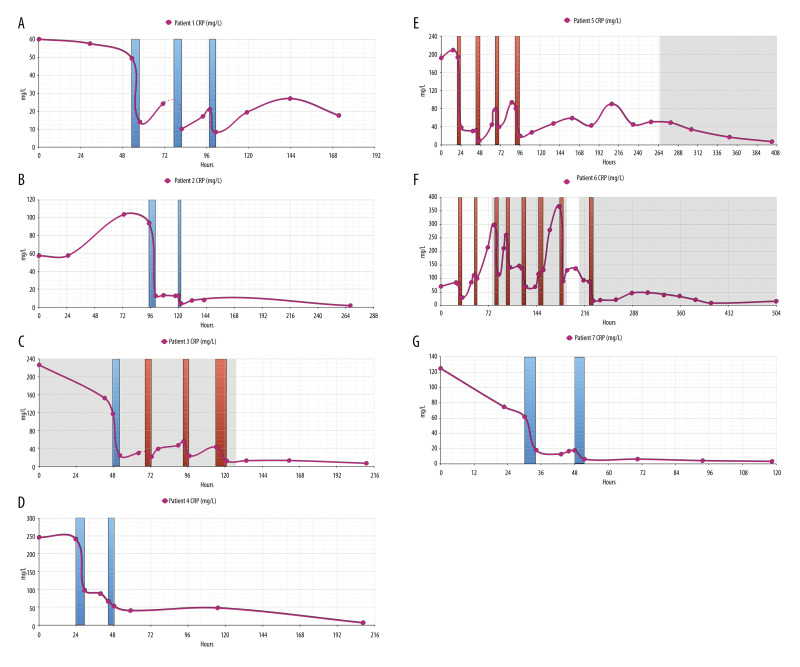
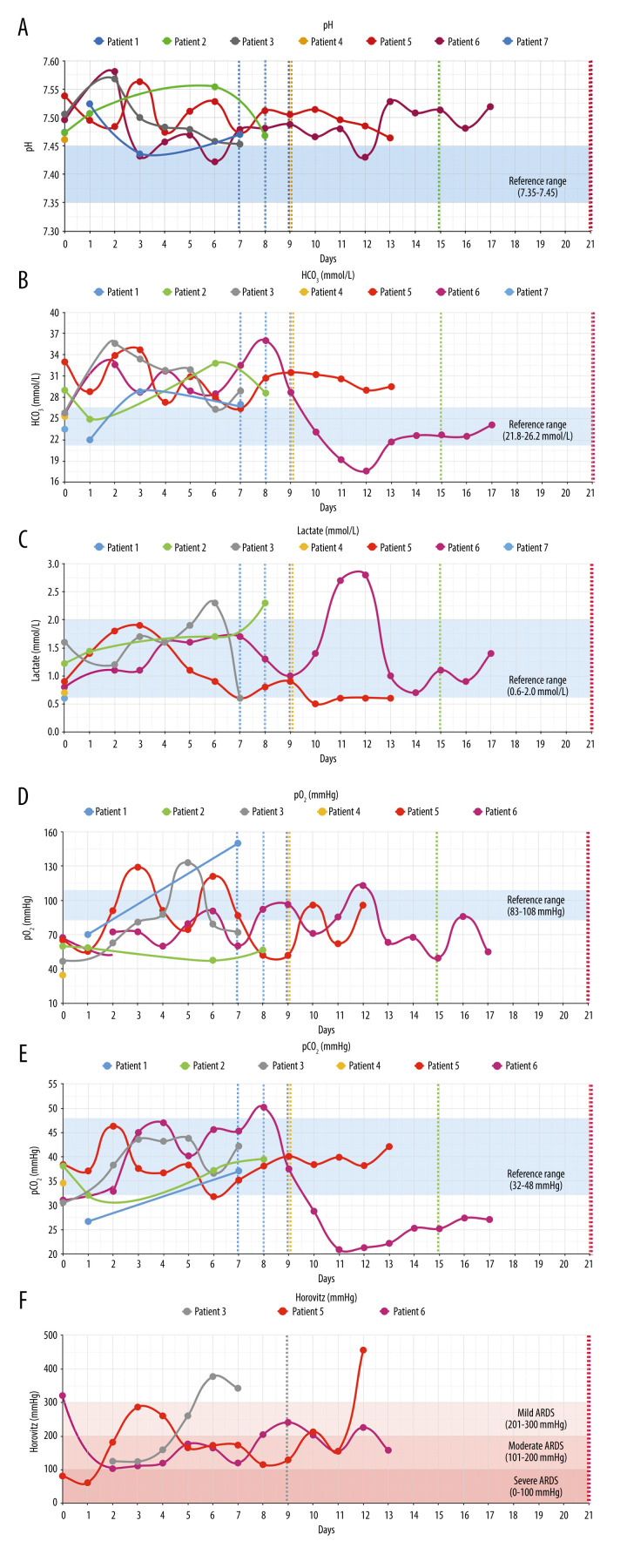
BACKGROUND Severe acute respiratory syndrome coronavirus 2 (SARS-CoV-2)-induced pneumonia is a disease with high mortality and, still, no effective treatment. Excessively elevated C-reactive protein (CRP) plasma levels inversely correlate with prognosis. As CRP, via complement and macrophage activation, can cause organ damage in COVID-19, we have recently introduced selective CRP apheresis as a potentially effective treatment. Now, we report on the first patients with severe SARS-CoV-2-induced pneumonia treated within the "C-reactive protein Apheresis in COVID" (CACOV) registry. CASE REPORT Seven sequential hospitalized patients with documented COVID-19, strongly elevated CRP plasma levels, and respiratory failure were treated by selective CRP apheresis in addition to standard therapy after having given their informed consent for inclusion in the CACOV registry. We performed 2-8 CRP apheresis sessions via either peripheral or central venous access depending on clinical course and CRP plasma levels. CRP apheresis, in COVID-19, reduced CRP plasma levels by approximately 50-90%, and it was thus highly effective, feasible, and safe. Despite severe radiological lung involvement in all our patients, only 2 patients finally required intubation, and none required extracorporeal membrane oxygenation (ECMO). All 7 patients were discharged from our 2 hospitals in good clinical condition. CONCLUSIONS Selective CRP apheresis, starting early after patient admission, may be an effective treatment of SARS-CoV-2-induced pneumonia. SARS-COV-2 can cause organ damage and multiple organ failure predominantly by an excessive CRP-mediated autoimmune response of the ancient innate immune system. Further registry data and randomized trials are needed.
严重急性呼吸综合征冠状病毒 2(SARS-CoV-2)引起的肺炎是一种死亡率高的疾病,目前仍没有有效的治疗方法。C 反应蛋白(CRP)血浆水平升高与预后呈负相关。由于 CRP 通过补体和巨噬细胞的激活可导致 COVID-19 中的器官损伤,因此我们最近引入了选择性 CRP 吸附作为一种潜在有效的治疗方法。现在,我们报告了首例在“C 反应蛋白吸附治疗 COVID-19”(CACOV)登记中接受治疗的严重 SARS-CoV-2 诱导性肺炎患者。
7 例经证实的 COVID-19 患者,强烈升高的 CRP 血浆水平和呼吸衰竭,在标准治疗的基础上,经知情同意后纳入 CACOV 登记册,进行了选择性 CRP 吸附治疗。根据临床病程和 CRP 血浆水平,我们通过外周或中心静脉通路进行 2-8 次 CRP 吸附。CRP 吸附在 COVID-19 中使 CRP 血浆水平降低约 50-90%,因此非常有效、可行且安全。尽管所有患者的肺部影像学受累均严重,但仅 2 例患者最终需要插管,无一例需要体外膜氧合(ECMO)。所有 7 例患者均在我院两所医院康复出院。
早期开始的选择性 CRP 吸附可能是治疗 SARS-CoV-2 诱导性肺炎的有效方法。SARS-CoV-2 主要通过过度的 CRP 介导的固有免疫系统的自身免疫反应引起器官损伤和多器官衰竭。需要进一步的登记数据和随机试验。