Borden Elizabeth S, Adams Anngela C, Buetow Kenneth H, Wilson Melissa A, Bauman Julie E, Curiel-Lewandrowski Clara, Chow H-H Sherry, LaFleur Bonnie J, Hastings Karen Taraszka
Department of Basic Medical Sciences, University of Arizona College of Medicine Phoenix, Phoenix, AZ 85004, USA.
Phoenix Veterans Affairs Health Care System, Phoenix, AZ 85012, USA.
Cancers (Basel). 2021 Dec 21;14(1):3. doi: 10.3390/cancers14010003.
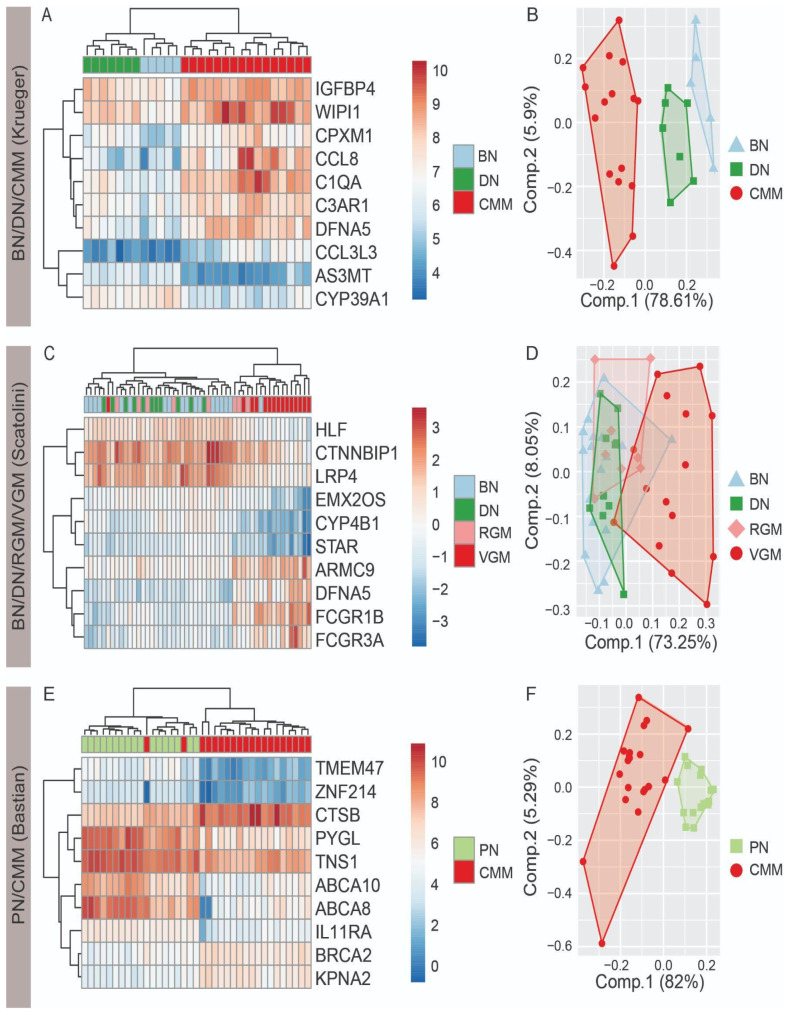
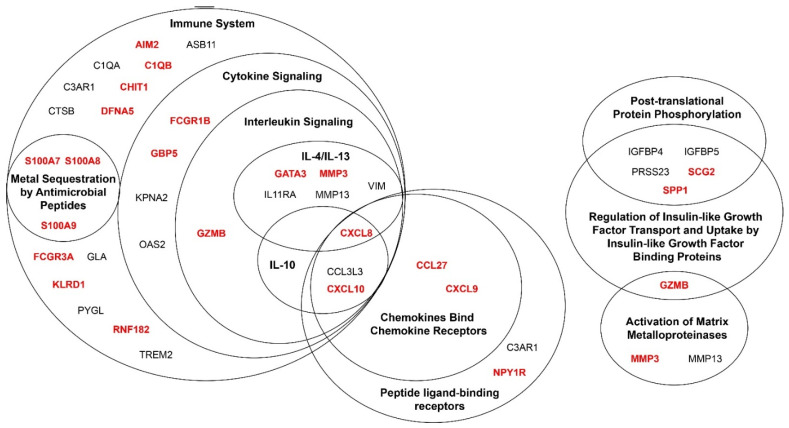
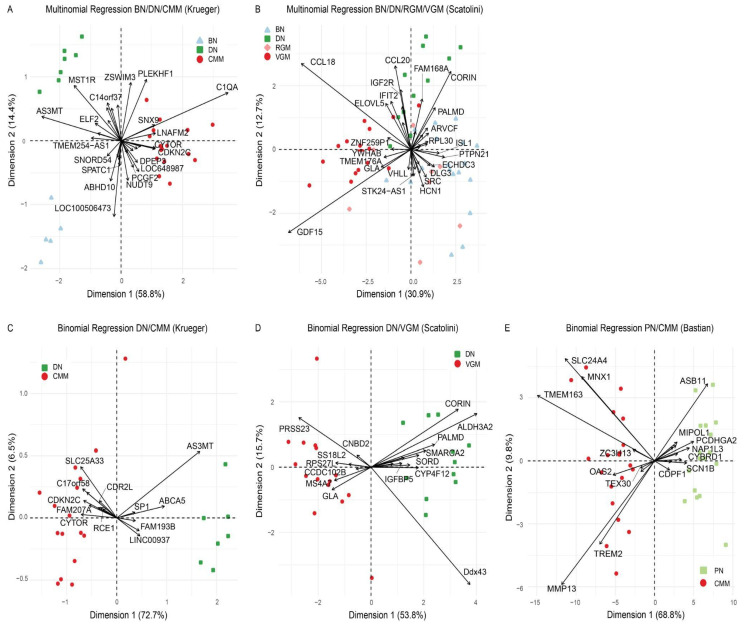
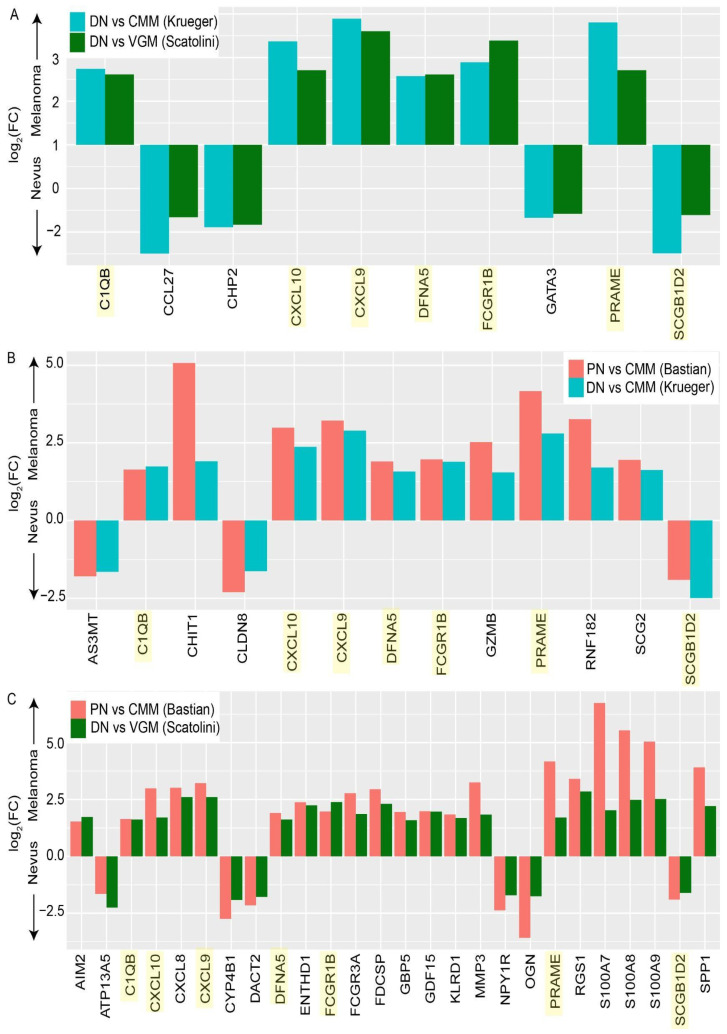
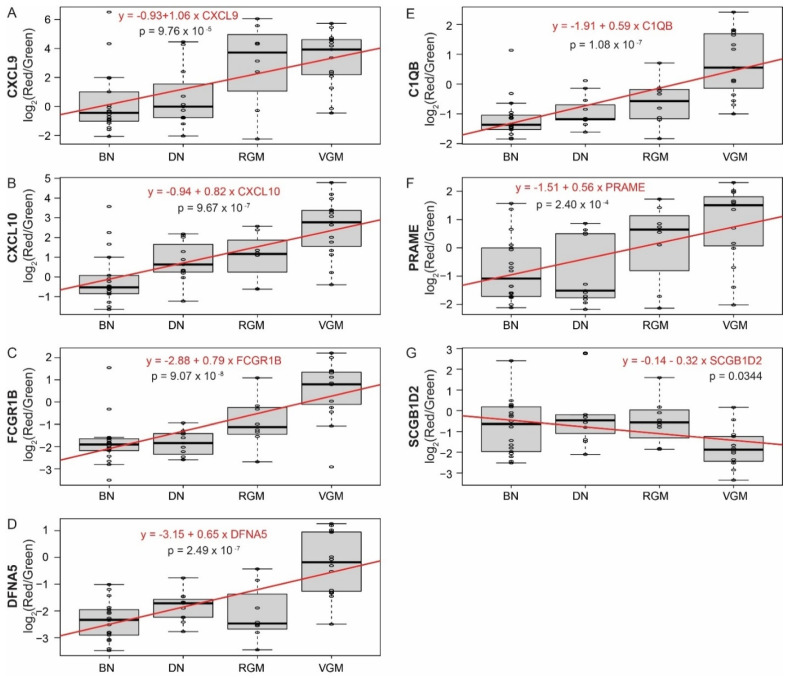
There is a need to identify molecular biomarkers of melanoma progression to assist the development of chemoprevention strategies to lower melanoma incidence. Using datasets containing gene expression for dysplastic nevi and melanoma or melanoma arising in a nevus, we performed differential gene expression analysis and regularized regression models to identify genes and pathways that were associated with progression from nevi to melanoma. A small number of genes distinguished nevi from melanoma. Differential expression of seven genes was identified between nevi and melanoma in three independent datasets. C1QB, CXCL9, CXCL10, DFNA5 (GSDME), FCGR1B, and PRAME were increased in melanoma, and SCGB1D2 was decreased in melanoma, compared to dysplastic nevi or nevi that progressed to melanoma. Further supporting an association with melanomagenesis, these genes demonstrated a linear change in expression from benign nevi to dysplastic nevi to radial growth phase melanoma to vertical growth phase melanoma. The genes associated with melanoma progression showed significant enrichment of multiple pathways related to the immune system. This study demonstrates (1) a novel application of bioinformatic approaches to aid clinical trials of melanoma chemoprevention and (2) the feasibility of determining a gene signature biomarker of melanomagenesis.
有必要识别黑色素瘤进展的分子生物标志物,以协助制定化学预防策略,降低黑色素瘤的发病率。利用包含发育异常痣和黑色素瘤或痣中发生的黑色素瘤基因表达的数据集,我们进行了差异基因表达分析和正则回归模型,以识别与从痣进展到黑色素瘤相关的基因和通路。少数基因可区分痣和黑色素瘤。在三个独立数据集中,识别出痣和黑色素瘤之间七个基因的差异表达。与发育异常痣或进展为黑色素瘤的痣相比,黑色素瘤中C1QB、CXCL9、CXCL10、DFNA5(GSDME)、FCGR1B和PRAME增加,而SCGB1D2在黑色素瘤中减少。这些基因从良性痣到发育异常痣,再到放射状生长期黑色素瘤,最后到垂直生长期黑色素瘤,表达呈线性变化,进一步支持了其与黑色素瘤发生的关联。与黑色素瘤进展相关的基因显示出与免疫系统相关的多种通路的显著富集。本研究证明了(1)生物信息学方法在协助黑色素瘤化学预防临床试验中的新应用,以及(2)确定黑色素瘤发生的基因特征生物标志物的可行性。