Kutasy Erika, Buday-Bódi Erika, Virág István Csaba, Forgács Fanni, Melash Anteneh Agezew, Zsombik László, Nagy Attila, Csajbók József
Institute of Crop Sciences, Faculty of Agricultural and Food Sciences and Environmental Management, University of Debrecen, Böszörményi Street 138, H-4032 Debrecen, Hungary.
Institute of Water and Environmental Management, Faculty of Agricultural and Food Sciences and Environmental Management, University of Debrecen, Böszörményi Street 138, H-4032 Debrecen, Hungary.
Plants (Basel). 2021 Dec 23;11(1):30. doi: 10.3390/plants11010030.
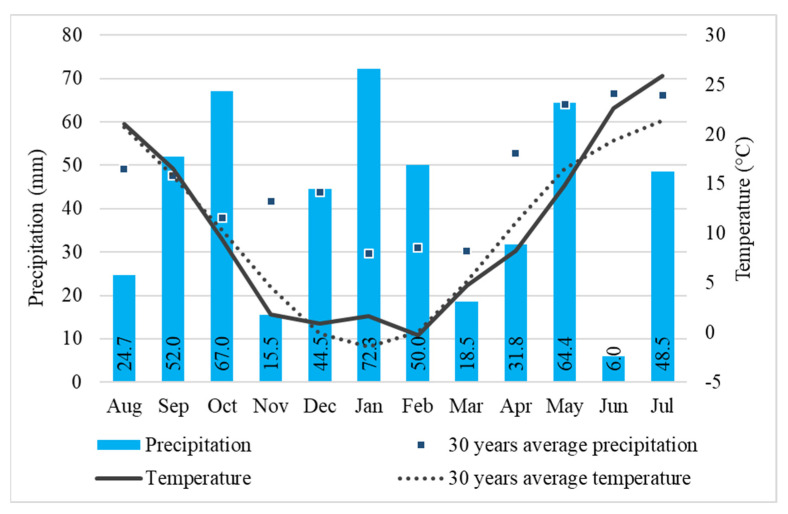
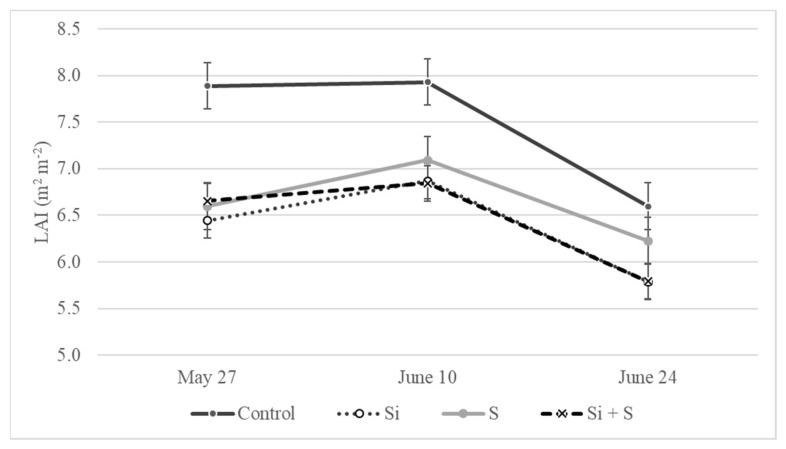
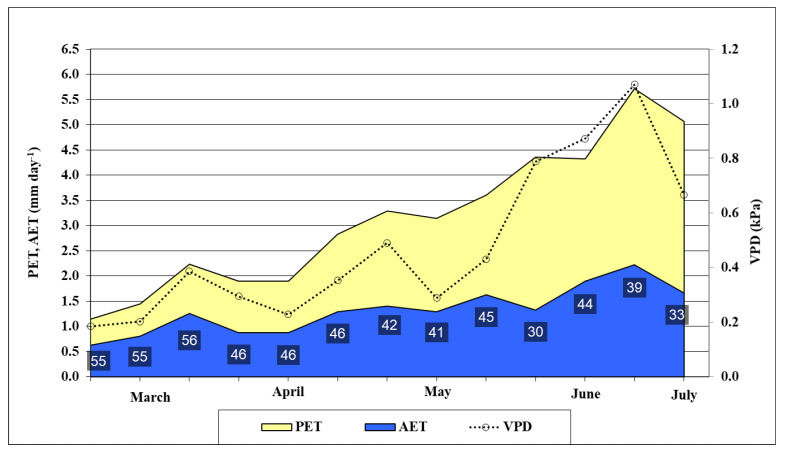
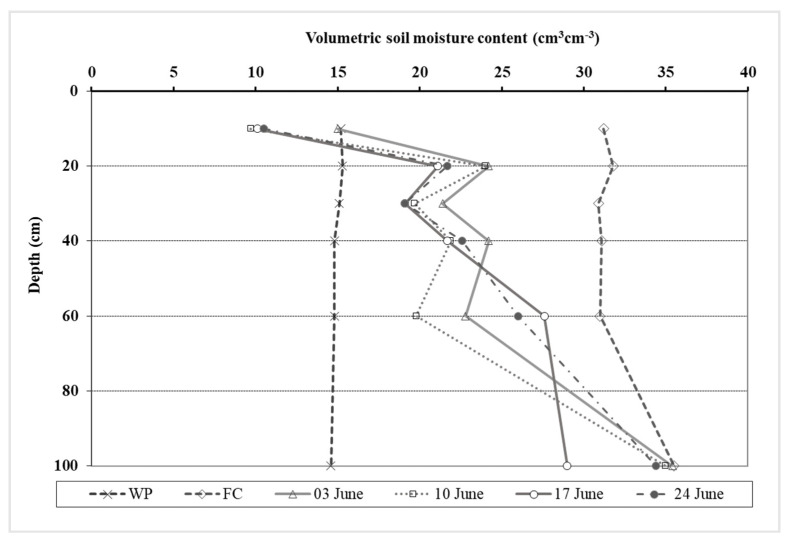
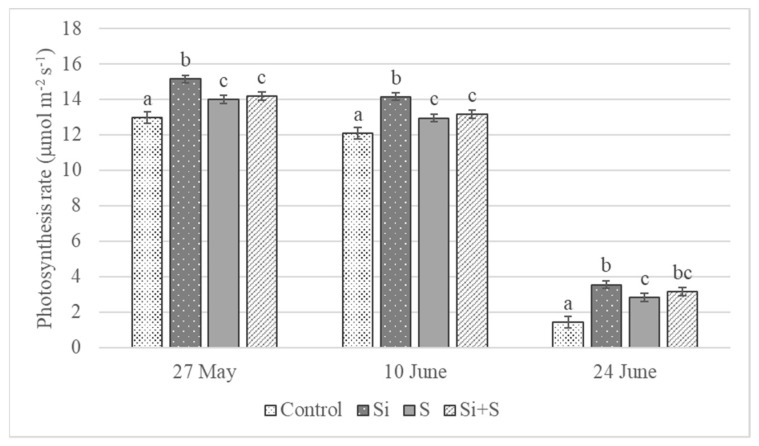
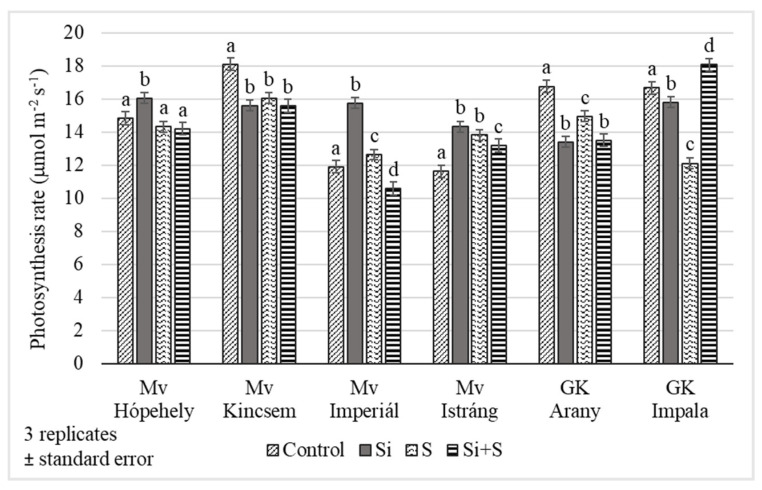
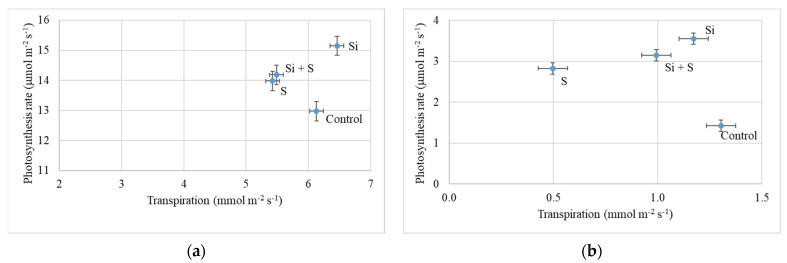
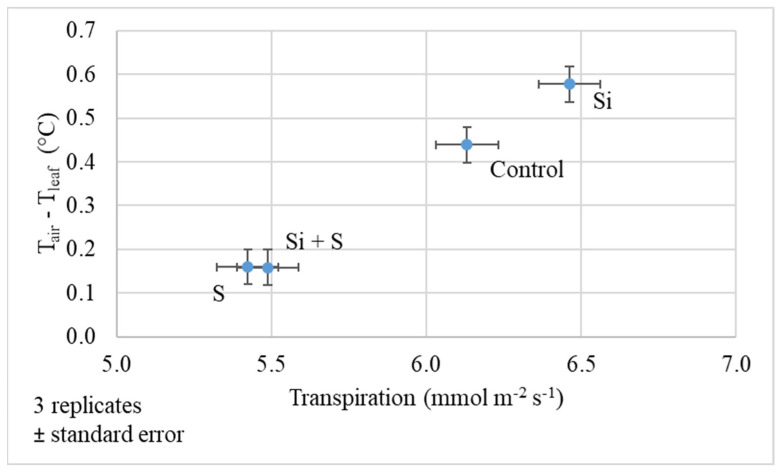
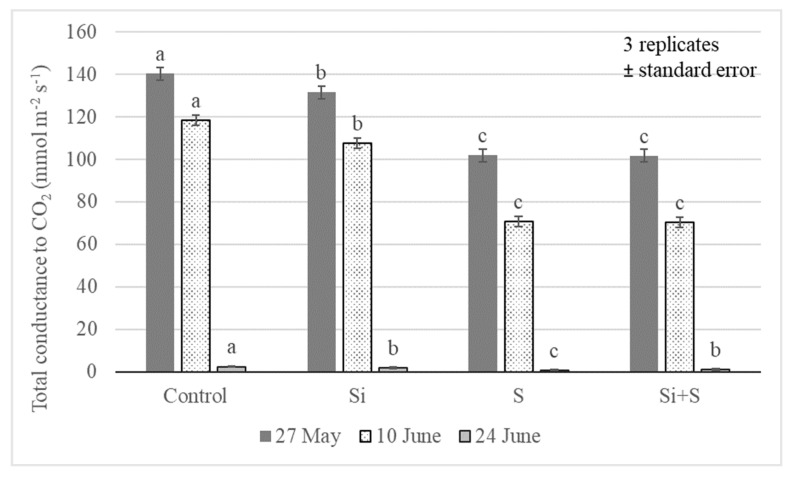
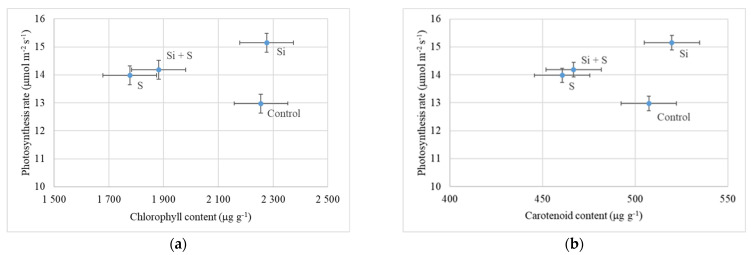
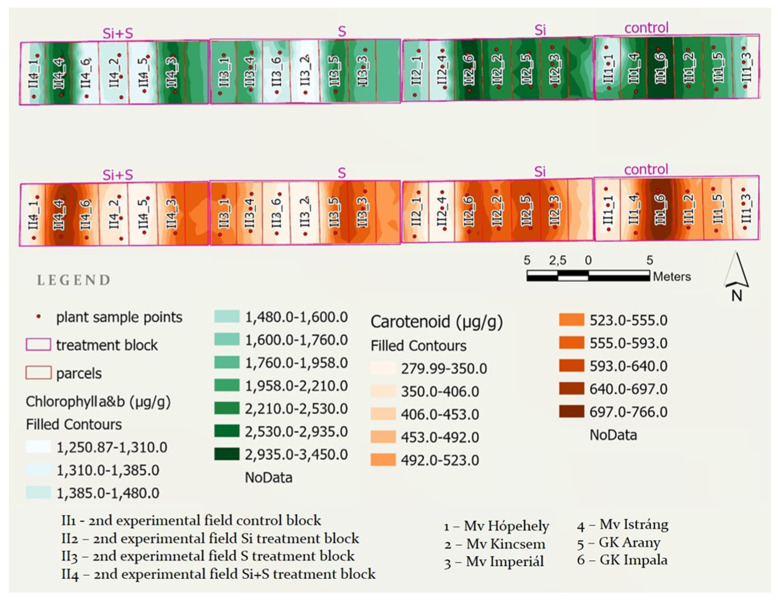
A field experiment was carried out in the 2020-2021 growing season, aiming at investigating the abiotic stress tolerance of oat ( L.) with silicon and sulphur foliar fertilization treatments and monitoring the effect of treatments on the physiology, production and stress tolerance of winter oat varieties. In the Hungarian national list of varieties, six winter oat varieties were registered in 2020, and all of the registered varieties were sown in a small plot field experiment in Debrecen, Hungary. The drought tolerance of the oat could be tested, because June was very dry in 2021; the rainfall that month totaled 6 mm only despite a 30-year average of 66.5 mm, and the average temperature for the month was 3.2 °C higher than the 30-year average. Foliar application of silicon and sulphur fertilizers caused differences in the photosynthesis rate, total conductance to CO, transpiration, water use efficiency, leaf area, chlorophyll content, carotenoid content, thousand kernel weight (TKW) and yield of winter oat. The application of silicon significantly increased the photosynthesis rate (16.8-149.3%), transpiration (5.4-5.6%), air-leaf temperature difference (16.2-43.2%), chlorophyll (1.0%) and carotenoid (2.5%) content. The yield increased by 10.2% (Si) and 8.0% (Si plus S), and the TKW by 3.3% (Si) and 5.0% (Si plus S), compared to the control plots. The plants in the control plots assimilated less CO while transpiring 1 m water more than in the Si, S or Si plus S fertilized plots. The effect of the silicon varied from 9.0 to 195.4% in water use efficiency (WUE) in the three development stages (BBCH52, BBCH65 and BBCH77). A lower leaf area index was measured in the foliar fertilized plots; even so, the yield was higher, compared to that from the control plots. Great variation was found in response to the foliar Si and S fertilization among winter oat varieties-in WUE, 2.0-43.1%; in total conductance to CO, 4.9-37.3%; in leaf area, 1.6-34.1%. Despite the droughty weather of June, the winter oat varieties produced a high yield. The highest yield was in 'GK Arany' (7015.7 kg ha), which was 23.8% more than the lowest yield ('Mv Kincsem', 5665.6 kg ha ). In the average of the treatments, the TKW increased from 23.9 to 33.9 g (41.8%). 'Mv Hópehely' had the highest TKW. Our results provide information about the abiotic stress tolerance of winter oat, which, besides being a good model plant because of its drought resistance, is an important human food and animal feed.
在2020 - 2021年生长季开展了一项田间试验,旨在研究硅和硫叶面施肥处理对燕麦(L.)非生物胁迫耐受性的影响,并监测这些处理对冬燕麦品种生理、产量和胁迫耐受性的作用。在匈牙利国家品种名录中,2020年登记了6个冬燕麦品种,所有登记品种均在匈牙利德布勒森的小块田地试验中播种。由于2021年6月非常干旱,因而可以对燕麦的耐旱性进行测试;当月降雨量仅为6毫米,而30年平均降雨量为66.5毫米,且当月平均气温比30年平均气温高3.2℃。叶面施用硅肥和硫肥导致冬燕麦的光合速率、二氧化碳总导度、蒸腾作用、水分利用效率、叶面积、叶绿素含量、类胡萝卜素含量、千粒重(TKW)和产量出现差异。施用硅显著提高了光合速率(16.8 - 149.3%)、蒸腾作用(5.4 - 5.6%)、气叶温差(16.2 - 43.2%)、叶绿素(1.0%)和类胡萝卜素(2.5%)含量。与对照地块相比,产量分别提高了10.2%(硅)和8.0%(硅加硫),TKW分别提高了3.3%(硅)和5.0%(硅加硫)。对照地块的植株在蒸腾1立方米水时比施用硅、硫或硅加硫肥料的地块少吸收二氧化碳。在三个发育阶段(BBCH52、BBCH65和BBCH77),硅对水分利用效率(WUE)的影响在9.0%至195.4%之间。叶面施肥地块的叶面积指数较低;即便如此,与对照地块相比产量仍较高。冬燕麦品种对叶面硅和硫施肥的反应差异很大——在WUE方面为2.0 - 43.1%;在二氧化碳总导度方面为4.9 - 37.3%;在叶面积方面为1.6 - 34.1%。尽管6月天气干旱,但冬燕麦品种产量较高。产量最高的是“GK Arany”(7015.7千克/公顷),比产量最低的“Mv Kincsem”(5665.6千克/公顷)高出23.8%。在各处理的平均值中,TKW从23.9克增加到33.9克(41.8%)。“Mv Hópehely”的TKW最高。我们的结果提供了关于冬燕麦非生物胁迫耐受性的信息,冬燕麦除因其抗旱性是一种良好的模式植物外,还是重要的人类食物和动物饲料。