Departamento de Metabolismo y Nutrición, Instituto de Ciencia y Tecnología de Alimentos y Nutrición (ICTAN-CSIC), C/José Antonio Novais, 10, 28040 Madrid, Spain.
Hospital 12 de Octubre, 28041 Madrid, Spain.
Nutrients. 2021 Dec 21;14(1):1. doi: 10.3390/nu14010001.
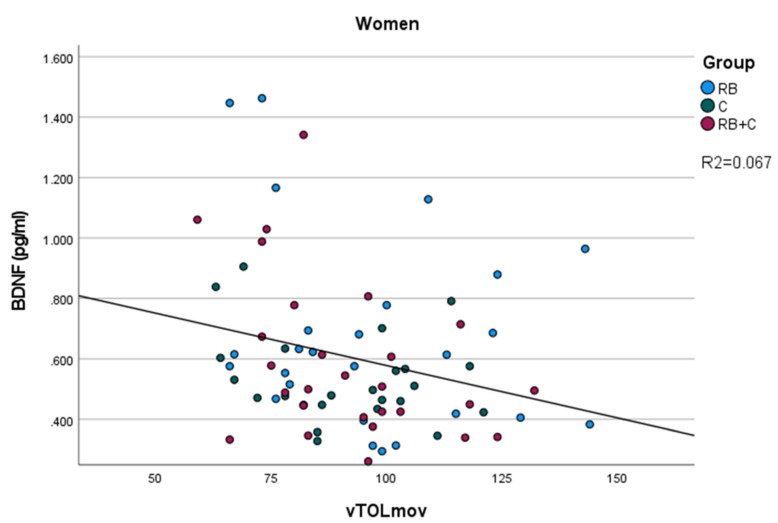
In recent decades, the elderly population has increased at higher rates than any other population group, resulting in an increase in age-related diseases such as neurodegenerative and cognitive impairment. To address this global health problem, it is necessary to search for new dietary strategies that can prevent the main neurocognitive problems associated with the ageing process. Therefore, the aim of the present study was to analyze the effect of cocoa flavanols and red berry anthocyanins on brain-derived neurotrophic factor (BDNF) and nerve growth factor receptor (NGF-R) and to stablish the possible improvement in cognitive performance by using a battery of neurocognitive tests that included the Verbal Learning Test Spain-Complutense, the Spatial Recall Test 10/36 BRB-N, the Wechsler Adult Intelligence Scale III and IV, the STROOP Task and the Tower of London Test. A randomized, double-blind, parallel-group study was performed in 60 healthy volunteers between 50 and 75 years old who consumed a cocoa powder, a red berries mixture or a combination of both for 12 weeks. After the intervention, we observed a reduction in the time needed to start ( = 0.031) and finish ( = 0.018) the neurocognitive test known as the Tower of London in all groups, but the decrease in time to finish the task was more pronounced in the intervention with the combination of cocoa-red berries group. We failed to show any significant difference in BDNF and NGF-R sera levels. However we found a negative correlation between BDNF and the number of movements required to finish the TOL in women ( = 0.044). In conclusion, our study showed an improvement in executive function, without any change in neurotrofin levels, for all intervention arms.
近几十年来,老年人口的增长率高于其他任何人口群体,导致与年龄相关的疾病(如神经退行性疾病和认知障碍)的发病率增加。为了解决这一全球健康问题,有必要寻找新的饮食策略,以预防与衰老过程相关的主要神经认知问题。因此,本研究旨在分析可可黄烷醇和红色浆果花青素对脑源性神经营养因子(BDNF)和神经生长因子受体(NGF-R)的影响,并通过使用一系列神经认知测试来确定认知表现的可能改善,这些测试包括西班牙-Complutense 言语学习测试、BRB-N 空间回忆测试 10/36、韦氏成人智力量表 III 和 IV、斯特鲁普任务和伦敦塔测试。在 60 名年龄在 50 至 75 岁之间的健康志愿者中进行了一项随机、双盲、平行组研究,这些志愿者分别摄入可可粉、红色浆果混合物或两者的组合,为期 12 周。干预后,我们观察到所有组的伦敦塔认知测试开始( = 0.031)和完成( = 0.018)时间都有所减少,但在可可-红色浆果联合干预组中,完成任务的时间减少更为明显。我们未能显示 BDNF 和 NGF-R 血清水平有任何显著差异。然而,我们发现 BDNF 与女性完成 TOL 所需的运动次数之间存在负相关( = 0.044)。总之,我们的研究表明,所有干预组的执行功能都有所改善,而神经营养因子水平没有任何变化。