Department of Public Health, College of Health Sciences, University of Aksum, Axum P.O. Box 1010, Ethiopia.
Department of Epidemiology, University Medical Center Groningen, University of Groningen, 9700 RB Groningen, The Netherlands.
Nutrients. 2021 Dec 28;14(1):131. doi: 10.3390/nu14010131.
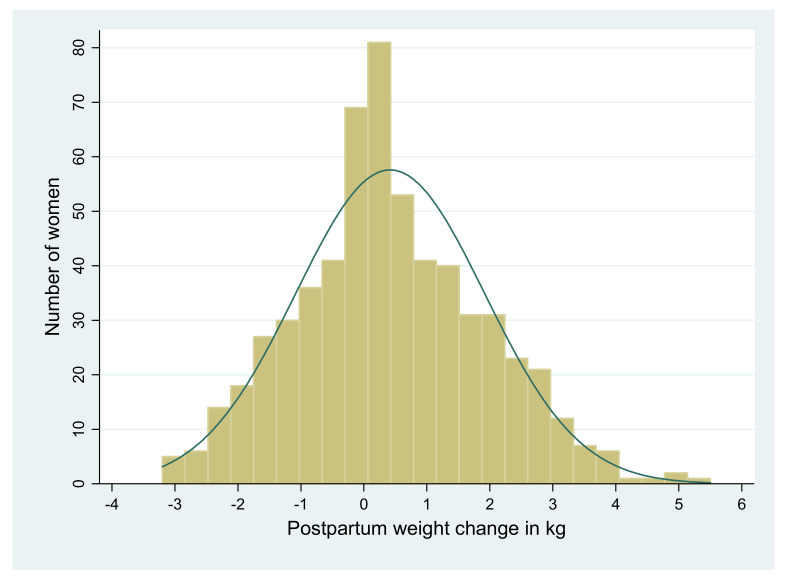
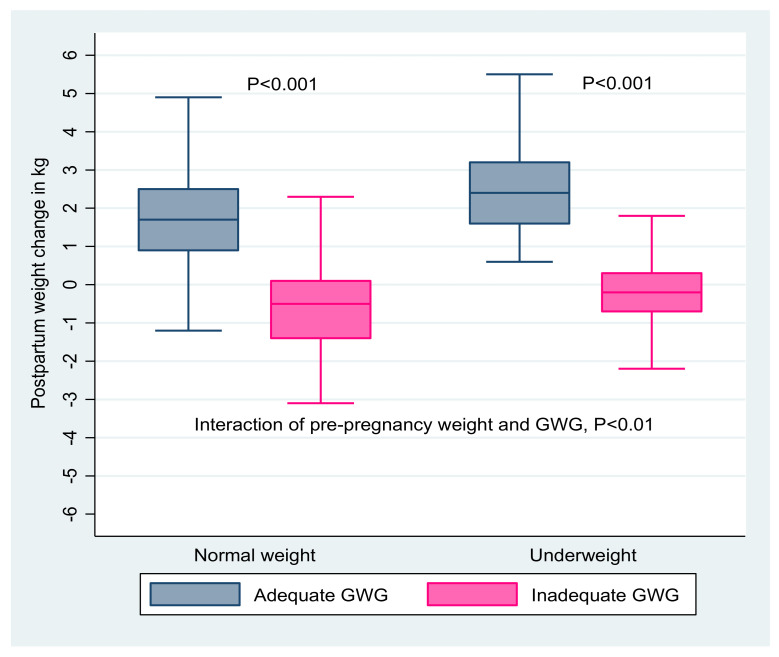
(1) Background: Postpartum weight may increase compared to pre-pregnancy due to weight retention or decrease due to weight loss. Both changes could pose deleterious effects on maternal health and subsequent pregnancy outcomes. Therefore, this study aimed to assess postpartum weight change and its associated factors. (2) Methods: A total of 585 women from the lte-Awlaelo igray thiopia (KITE) cohort were included in the analysis. (3) Results: The mean pre-pregnancy body mass index and weight gain during pregnancy were 19.7 kg/m and 10.8 kg, respectively. At 18 to 24 months postpartum, the weight change ranged from -3.2 to 5.5 kg (mean = 0.42 kg [SD = 1.5]). In addition, 17.8% of women shifted to normal weight and 5.1% to underweight compared to the pre-pregnancy period. A unit increase in weight during pregnancy was associated with higher weight change (β = 0.56 kg, 95% CI [0.52, 0.60]) and increased probability to achieve normal weight (AOR = 1.65, 95% CI [1.37, 2.00]). Food insecurity (AOR = 5.26, 95% CI [1.68, 16.50]), however, was associated with a shift to underweight postpartum. Interestingly, high symptoms of distress (AOR = 0.13, 95% CI [0.03, 0.48]) also negatively impacted a change in weight category. (4) Conclusions: In low-income settings such as northern Ethiopia, higher weight gain and better mental health during pregnancy may help women achieve a better nutritional status after pregnancy and before a possible subsequent pregnancy.
(1) 背景:产后体重可能因体重滞留而比孕前增加,也可能因体重减轻而减少。这两种变化都可能对产妇健康和随后的妊娠结局产生有害影响。因此,本研究旨在评估产后体重变化及其相关因素。(2) 方法:共纳入来自埃塞俄比亚北部 lte-Awlaelo igray thiopia(KITE)队列的 585 名女性进行分析。(3) 结果:孕前平均体重指数和孕期体重增加分别为 19.7kg/m 和 10.8kg。产后 18-24 个月,体重变化范围为-3.2 至 5.5kg(平均值为 0.42kg[SD=1.5])。此外,与孕前相比,17.8%的女性体重恢复正常,5.1%的女性体重减轻。孕期体重增加 1 个单位与体重变化更大(β=0.56kg,95%CI[0.52,0.60])和更有可能恢复正常体重(AOR=1.65,95%CI[1.37,2.00])有关。然而,粮食不安全(AOR=5.26,95%CI[1.68,16.50])与产后体重下降到消瘦有关。有趣的是,高症状困扰(AOR=0.13,95%CI[0.03,0.48])也对体重类别变化产生负面影响。(4) 结论:在埃塞俄比亚北部等低收入环境中,孕期体重增加更多和更好的心理健康状况可能有助于女性在怀孕后和再次怀孕前获得更好的营养状况。