Department for Developmental Origins of Disease, University Medical Center Utrecht Brain Center and Wilhelmina Children's Hospital, Utrecht University, 3508 AB Utrecht, The Netherlands.
Centre for Neuroscience, Surgery and Trauma, Blizard Institute, Queen Mary University of London, London E1 2AD, UK.
Nutrients. 2021 Dec 30;14(1):176. doi: 10.3390/nu14010176.
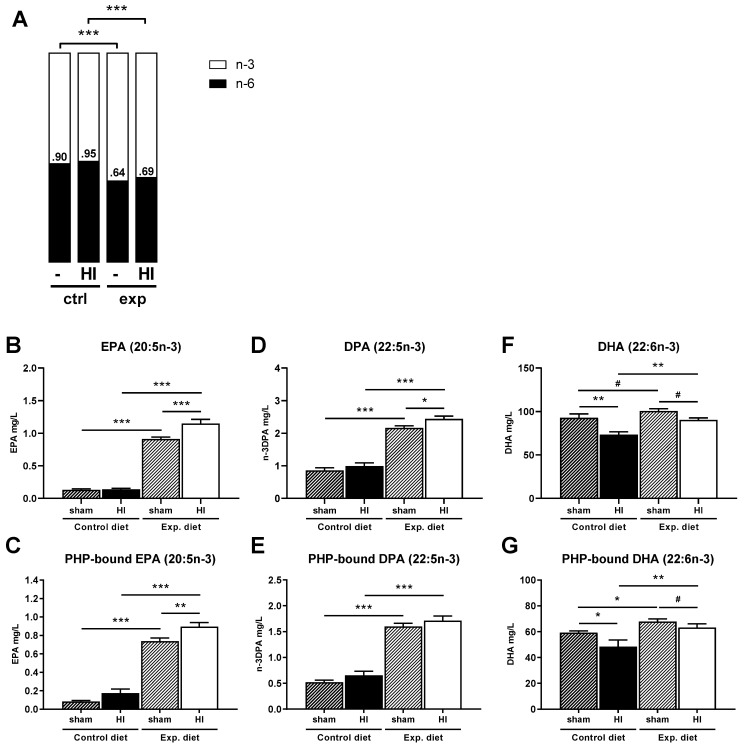
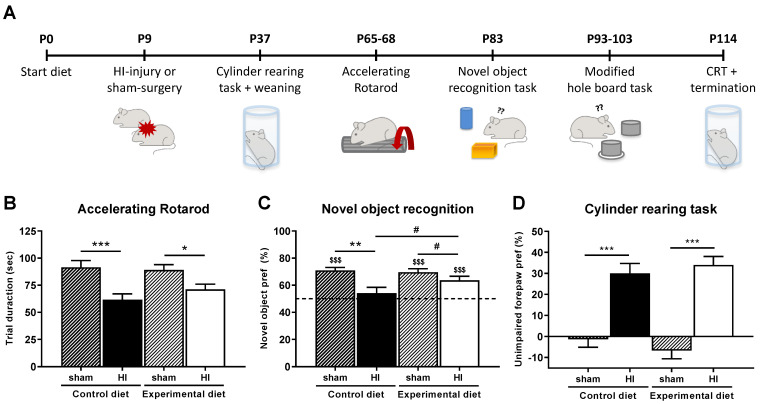
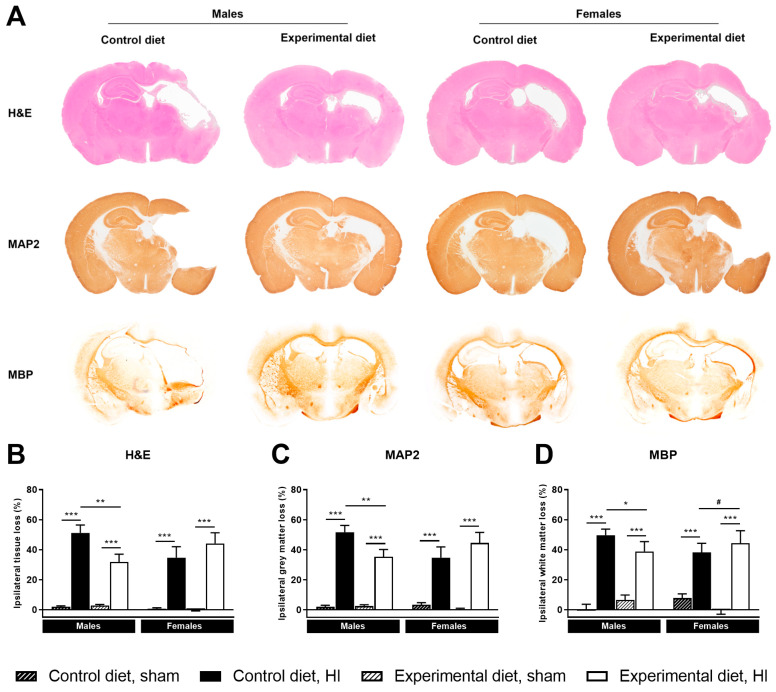
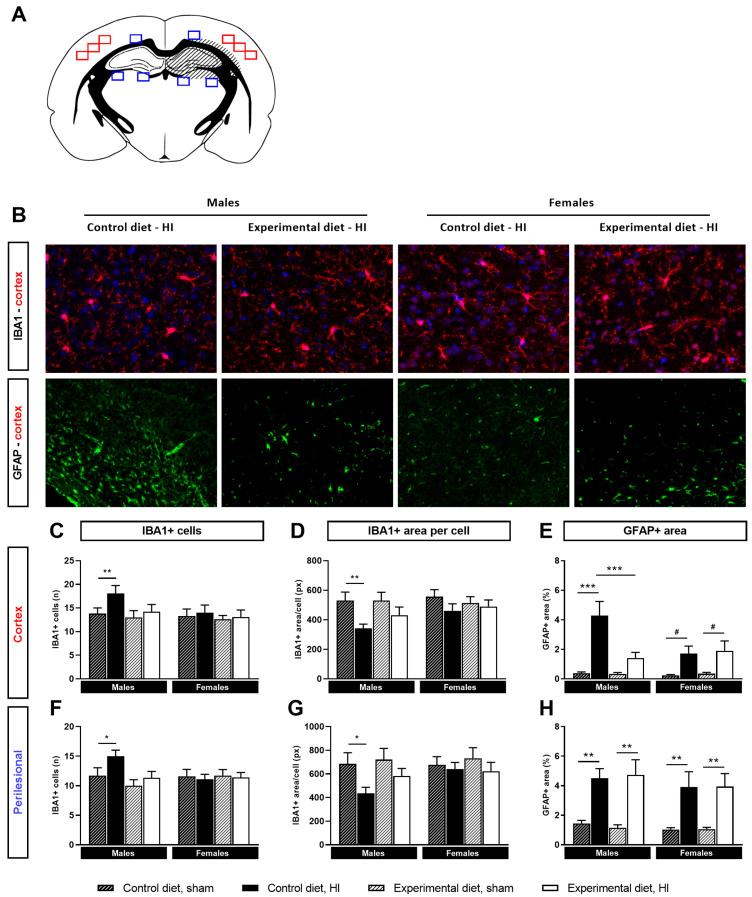
Perinatal hypoxia-ischemia (HI) is a major cause of neonatal brain injury, leading to long-term neurological impairments. Medical nutrition can be rapidly implemented in the clinic, making it a viable intervention to improve neurodevelopment after injury. The omega-3 (-3) fatty acids docosahexaenoic acid (DHA, 22:6-3) and eicosapentaenoic acid (EPA, 20:5-3), uridine monophosphate (UMP) and choline have previously been shown in rodents to synergistically enhance brain phospholipids, synaptic components and cognitive performance. The objective of this study was to test the efficacy of an experimental diet containing DHA, EPA, UMP, choline, iodide, zinc, and vitamin B12 in a mouse model of perinatal HI. Male and female C57Bl/6 mice received the experimental diet or an isocaloric control diet from birth. Hypoxic ischemic encephalopathy was induced on postnatal day 9 by ligation of the right common carotid artery and systemic hypoxia. To assess the effects of the experimental diet on long-term motor and cognitive outcome, mice were subjected to a behavioral test battery. Lesion size, neuroinflammation, brain fatty acids and phospholipids were analyzed at 15 weeks after HI. The experimental diet reduced lesion size and neuroinflammation specifically in males. In both sexes, brain -3 fatty acids were increased after receiving the experimental diet. The experimental diet also improved novel object recognition, but no significant effects on motor performance were observed. Current data indicates that early life nutritional supplementation with a combination of DHA, EPA, UMP, choline, iodide, zinc, and vitamin B12 may provide neuroprotection after perinatal HI.
围产期缺氧缺血(HI)是新生儿脑损伤的主要原因,导致长期神经功能障碍。医学营养可以在临床中迅速实施,因此是改善损伤后神经发育的可行干预措施。先前在啮齿动物中已经表明,ω-3(-3)脂肪酸二十二碳六烯酸(DHA,22:6-3)和二十碳五烯酸(EPA,20:5-3)、尿苷一磷酸(UMP)和胆碱协同作用可增强大脑磷脂、突触成分和认知表现。本研究的目的是在围产期 HI 小鼠模型中测试含有 DHA、EPA、UMP、胆碱、碘、锌和维生素 B12 的实验饮食的功效。雄性和雌性 C57Bl/6 小鼠从出生起就接受实验饮食或等热量对照饮食。在出生后第 9 天,通过结扎右侧颈总动脉和全身缺氧诱导缺氧缺血性脑病。为了评估实验饮食对长期运动和认知结果的影响,小鼠接受了行为测试组合。在 HI 后 15 周分析损伤大小、神经炎症、大脑脂肪酸和磷脂。实验饮食可特异性减少雄性损伤大小和神经炎症。在两性中,接受实验饮食后大脑 -3 脂肪酸增加。实验饮食还改善了新物体识别,但对运动表现没有明显影响。目前的数据表明,围产期生命早期补充 DHA、EPA、UMP、胆碱、碘、锌和维生素 B12 的组合可能在围产期 HI 后提供神经保护。