Idris Sanaa M, Eltom Kamal H, Okuni Julius B, Ojok Lonzy, Elmagzoub Wisal A, El Wahed Ahmed Abd, Eltayeb ElSagad, Gameel Ahmed A
Department of Animal Health and Safety of Animal Products, Institute for Studies and Promotion of Animal Exports, University of Khartoum, Shambat 13314, Khartoum North, Sudan.
Department of Pathology, Faculty of Veterinary Medicine, University of Khartoum, Shambat 13314, Khartoum North, Sudan.
Animals (Basel). 2021 Dec 21;12(1):12. doi: 10.3390/ani12010012.
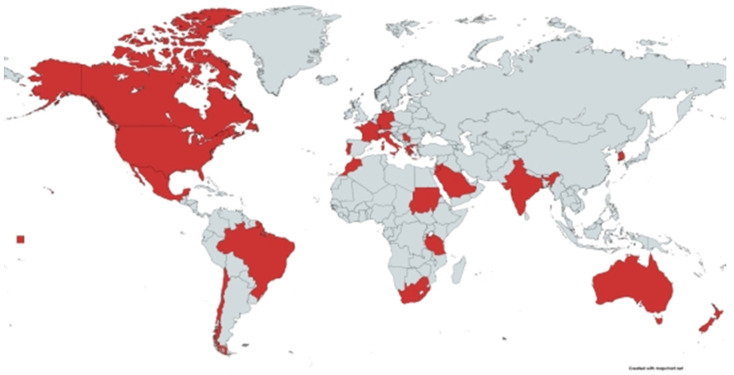
Paratuberculosis (PTB) is a contagious and chronic enteric disease of ruminants and many non-ruminants caused by subsp. (MAP), and is characterised by diarrhoea and progressive emaciation with consequent serious economic losses due to death, early culling, and reduced productivity. In addition, indirect economic losses may arise from trade restrictions. Besides being a production limiting disease, PTB is a potential zoonosis; MAP has been isolated from Crohn's disease patients and was associated with other human diseases, such as rheumatoid arthritis, Hashimoto's thyroiditis, Type 1 diabetes, and multiple sclerosis. Paratuberculosis in sheep and goats may be globally distributed though information on the prevalence and economic impact in many developing countries seem to be scanty. Goats are more susceptible to infection than sheep and both species are likely to develop the clinical disease. Ingestion of feed and water contaminated with faeces of MAP-positive animals is the common route of infection, which then spreads horizontally and vertically. In African countries, PTB has been described as a "neglected disease", and in small ruminants, which support the livelihood of people in rural areas and poor communities, the disease was rarely reported. Prevention and control of small ruminants' PTB is difficult because diagnostic assays demonstrate poor sensitivity early in the disease process, in addition to the difficulties in identifying subclinically infected animals. Further studies are needed to provide more insight on molecular epidemiology, transmission, and impact on other animals or humans, socio-economic aspects, prevention and control of small ruminant PTB.
副结核病(PTB)是由副结核分枝杆菌亚种(MAP)引起的反刍动物和许多非反刍动物的一种传染性慢性肠道疾病,其特征为腹泻和进行性消瘦,因死亡、过早淘汰和生产力下降而导致严重的经济损失。此外,贸易限制可能会造成间接经济损失。PTB不仅是一种限制生产的疾病,还是一种潜在的人畜共患病;已从克罗恩病患者中分离出MAP,且其与其他人类疾病有关,如类风湿性关节炎、桥本甲状腺炎、1型糖尿病和多发性硬化症。绵羊和山羊的副结核病可能在全球范围内分布,不过许多发展中国家关于其流行率和经济影响的信息似乎很少。山羊比绵羊更容易感染,且这两个物种都可能发展为临床疾病。摄入被MAP阳性动物粪便污染的饲料和水是常见的感染途径,然后疾病会水平和垂直传播。在非洲国家,PTB被描述为一种“被忽视的疾病”,而在支持农村地区和贫困社区人们生计的小型反刍动物中,该病很少被报道。小型反刍动物PTB的预防和控制很困难,因为诊断检测在疾病早期显示出较差的敏感性,此外还难以识别亚临床感染动物。需要进一步研究以更深入了解小型反刍动物PTB的分子流行病学、传播、对其他动物或人类的影响、社会经济方面以及预防和控制措施。