Athinoula A. Martinos Center for Biomedical Imaging, Massachusetts General Hospital, Harvard Medical School, Charlestown, MA 02129, USA.
Department of Global Health, Peking University School of Public Health, Beijing 100871, China.
Cells. 2021 Dec 21;11(1):10. doi: 10.3390/cells11010010.
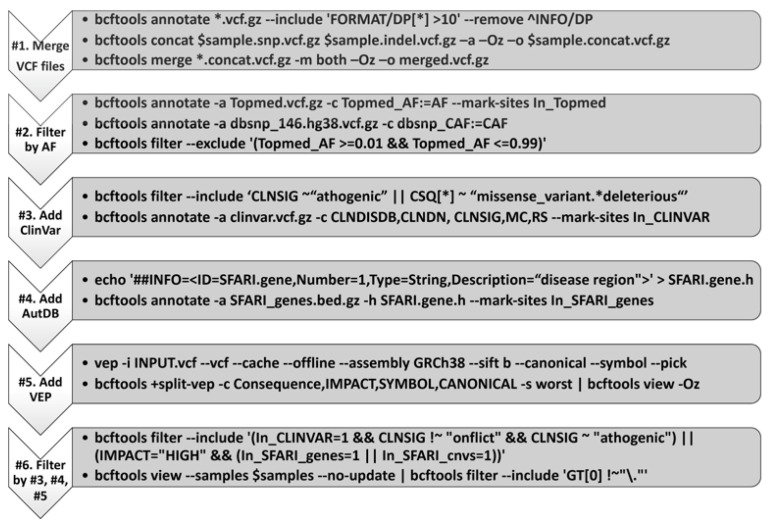
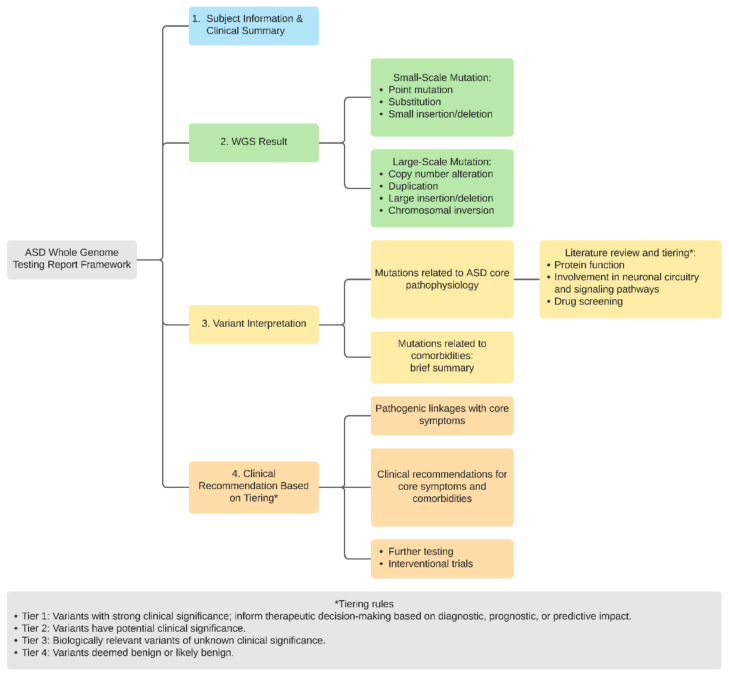
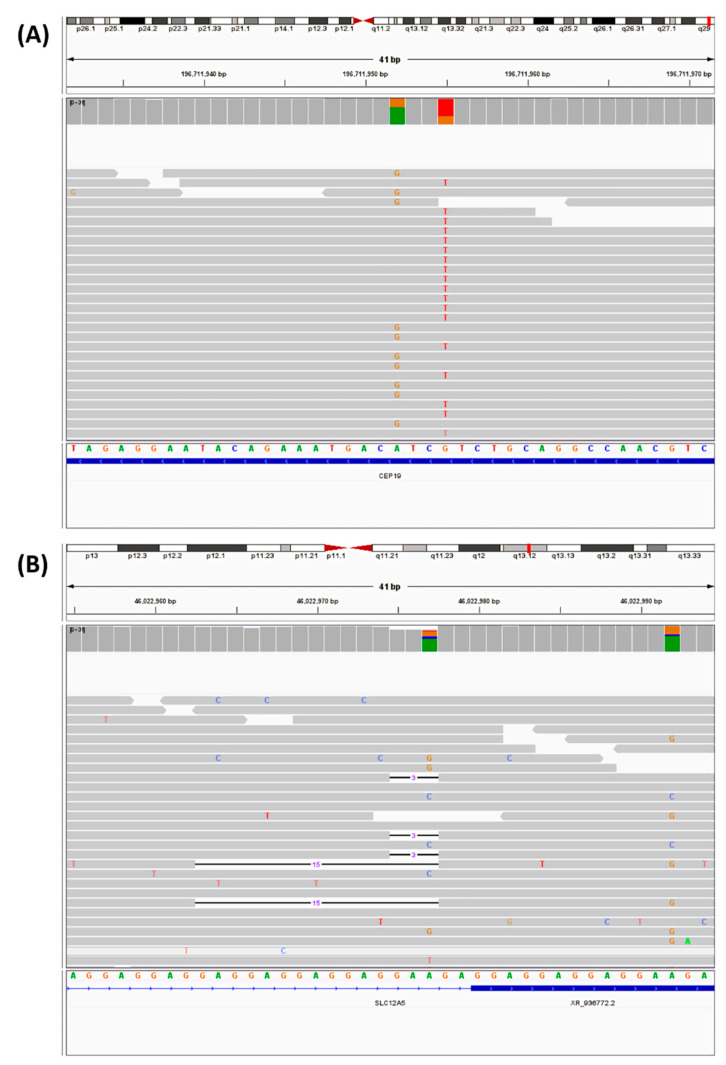
Autism spectrum disorder (ASD) is a neurodevelopmental disorder with strong genetic influences. There is an increasing demand for ASD genetic testing beyond the traditionally recommended microarray and syndromic autism testing; however, the current whole genome sequencing (WGS) and whole exome sequencing (WES) methods are lacking an academic standard for WGS variant annotation, reporting, and interpretation, tailored towards patients with ASD and offer very limited interpretation for clinical significance. Using WGS data from six family trios, we demonstrate the clinical feasibility and technical implementation of an evidence-based, fully transparent bioinformatics pipeline and report framework for an ASD-focused WGS genetic report. We confirmed a portion of the key variants with Sanger sequencing and provided interpretation with consideration of patients' clinical symptoms and detailed literature review. Furthermore, we showed that identification of the genetic contributions of ASD core symptoms and comorbidities may promote a better understanding of the ASD pathophysiology, lead to early detection of associated comorbidities, and facilitate pharmacologic intervention based on pathological pathways inferred from the genetic information. We will make the bioinformatics pipeline and interpretation framework publicly available, in an easily accessible format, after validation with a larger cohort. We hope that the present proposed protocol can serve as a starting point to invite discourse and debate to further improve approaches in WGS-based genetic consultation for patients with ASD.
自闭症谱系障碍 (ASD) 是一种具有强烈遗传影响的神经发育障碍。除了传统推荐的微阵列和综合征性自闭症测试之外,对 ASD 基因测试的需求不断增加;然而,目前的全基因组测序 (WGS) 和全外显子组测序 (WES) 方法缺乏针对 ASD 患者的 WGS 变体注释、报告和解释的学术标准,并且仅提供非常有限的临床意义解释。我们使用来自六个家庭三胞胎的 WGS 数据,展示了针对 ASD 的 WGS 遗传报告的基于证据、完全透明的生物信息学管道和报告框架的临床可行性和技术实现。我们通过 Sanger 测序证实了一部分关键变体,并结合患者的临床症状和详细的文献回顾进行了解释。此外,我们表明,确定 ASD 核心症状和合并症的遗传贡献可能有助于更好地理解 ASD 病理生理学,早期发现相关合并症,并根据从遗传信息推断出的病理途径促进基于病理的药物干预。在经过更大的队列验证后,我们将以易于访问的格式公开提供生物信息学管道和解释框架。我们希望本研究提出的方案可以作为一个起点,邀请讨论和辩论,以进一步改进基于 WGS 的 ASD 患者遗传咨询方法。