Polewczyk Anna, Jacheć Wojciech, Nowosielecka Dorota, Tomaszewski Andrzej, Brzozowski Wojciech, Szczęśniak-Stańczyk Dorota, Duda Krzysztof, Kutarski Andrzej
Department of Physiology, Patophysiology and Clinical Immunology, Collegium Medicum of Jan Kochanowski University, 25-369 Kielce, Poland.
Department of Cardiac Surgery, Świętokrzyskie Centrum of Cardiology, 25-736 Kielce, Poland.
J Clin Med. 2021 Dec 24;11(1):89. doi: 10.3390/jcm11010089.
Lead-related tricuspid valve dysfunction (LDTVD) has not been studied in a large population and its management remains controversial.
An analysis of the clinical data of 2678 patients undergoing transvenous lead extraction (TLE) in years 2008-2021 was conducted, with a separate group of 119 patients with LDTVD. Potential risk factors for LDTVD, improvement in valve function, and long-term prognosis after TLE were assessed.
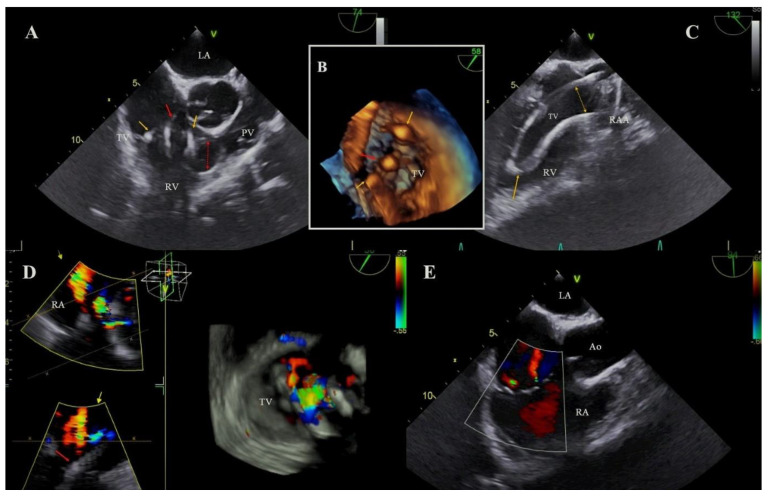
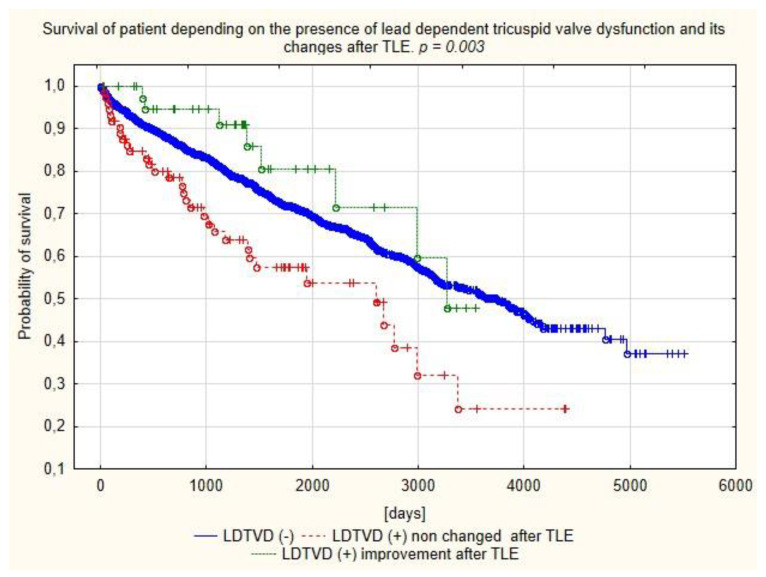
LDTVD was diagnosed in 4.44% of patients referred for lead extraction due to different reasons. The most common mechanism of LDTVD was propping upward or clamping down the leaflet by the lead (85.71%). The probability of LDTVD was higher in female sex, patients with valvular heart disease, atrial fibrillation, heart failure, large right ventricle and high pulmonary artery systolic pressure, the presence of only pacing lead, and in case of collision of the lead with tricuspid valve and adhesion of the lead to the heart structures. The prognosis of patients with LDTVD was worse, however, patients with improved valve function after TLE showed a significantly better long-term survival.
Lead dependent tricuspid valve dysfunction is a potentially serious condition that requires thorough diagnostics and thoughtful management. The risk factors for LDTVD are primarily related to the course of the lead and its adhesion to the heart structures. Improvement of tricuspid valve function after TLE is observed in 35.29% of patients Patients with LDTVD have a worse long-term survival, but the improvement in valve function following TLE contributes to a significant reduction in mortality.
与铅相关的三尖瓣功能障碍(LDTVD)尚未在大量人群中进行研究,其管理仍存在争议。
对2008年至2021年期间接受经静脉导线拔除术(TLE)的2678例患者的临床资料进行分析,其中单独一组为119例LDTVD患者。评估LDTVD的潜在危险因素、瓣膜功能改善情况以及TLE后的长期预后。
因不同原因接受导线拔除术的患者中,4.44%被诊断为LDTVD。LDTVD最常见的机制是导线向上支撑或夹住瓣叶(85.71%)。女性、患有瓣膜性心脏病、心房颤动、心力衰竭、右心室大及肺动脉收缩压高、仅存在起搏导线以及导线与三尖瓣碰撞且导线与心脏结构粘连的患者发生LDTVD的可能性更高。LDTVD患者的预后较差,然而,TLE后瓣膜功能改善的患者长期生存率显著更高。
导线依赖性三尖瓣功能障碍是一种潜在的严重疾病,需要进行全面诊断和谨慎管理。LDTVD的危险因素主要与导线的走行及其与心脏结构的粘连有关。35.29%的患者在TLE后三尖瓣功能得到改善。LDTVD患者的长期生存率较差,但TLE后瓣膜功能的改善有助于显著降低死亡率。