Center for Infection and Inflammation Imaging Research and.
Department of Pediatrics, Johns Hopkins University School of Medicine, Baltimore, Maryland, USA.
JCI Insight. 2022 Jan 11;7(1):e154117. doi: 10.1172/jci.insight.154117.
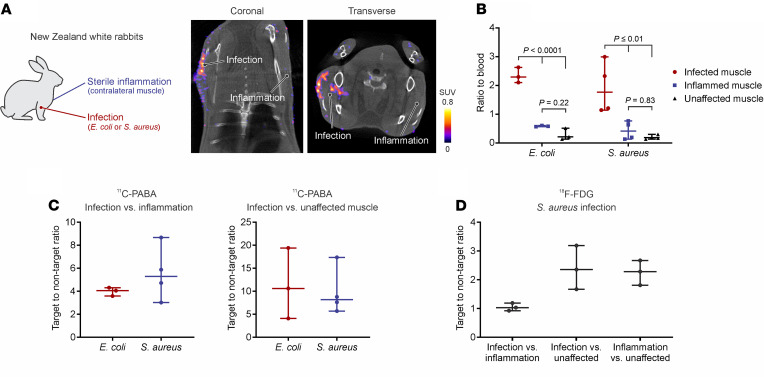
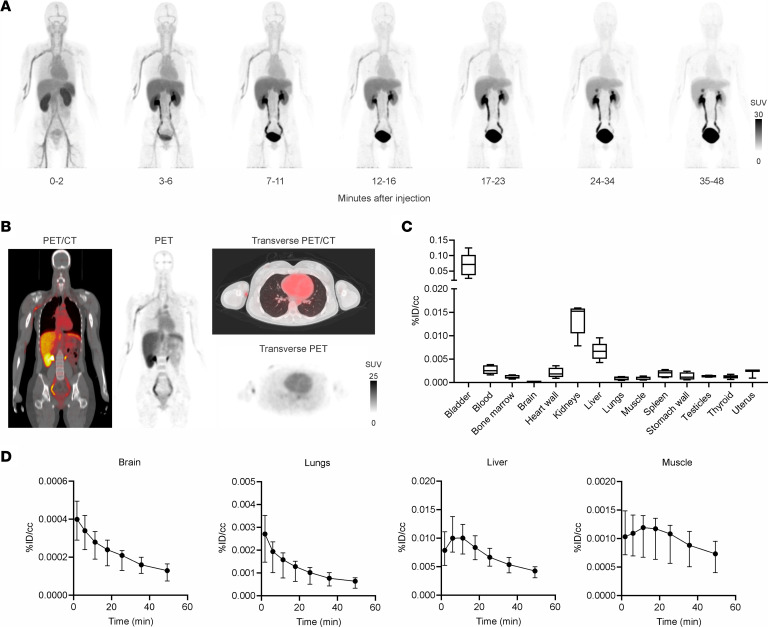
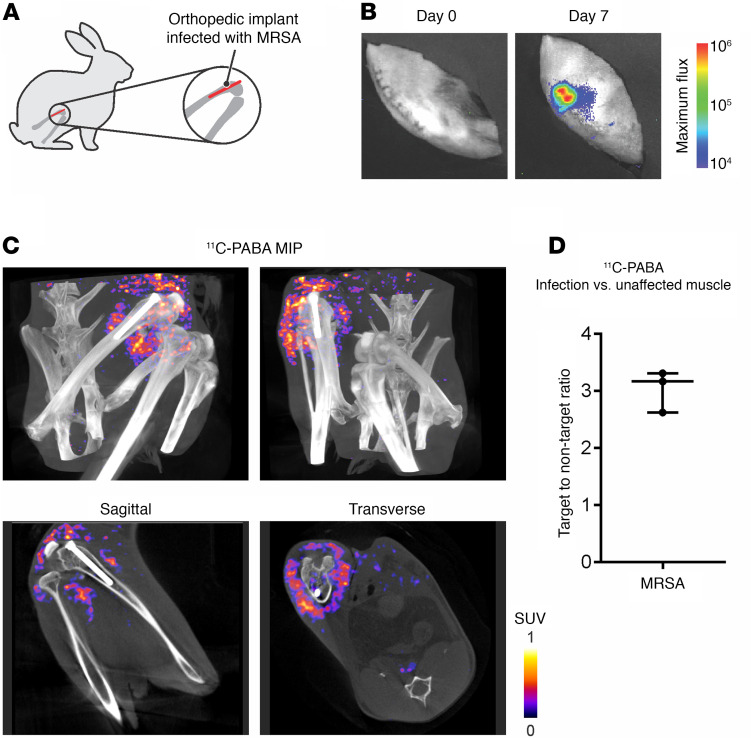
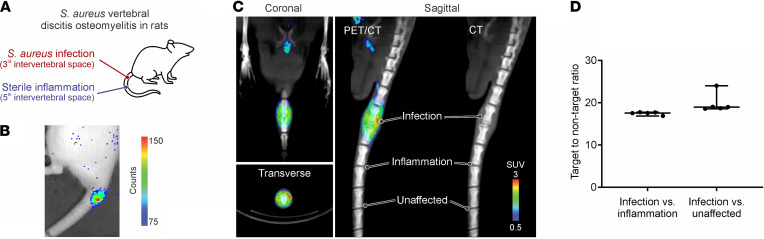
Tools for noninvasive detection of bacterial pathogens are needed but are not currently available for clinical use. We have previously shown that para-aminobenzoic acid (PABA) rapidly accumulates in a wide range of pathogenic bacteria, motivating the development of related PET radiotracers. In this study, 11C-PABA PET imaging was used to accurately detect and monitor infections due to pyogenic bacteria in multiple clinically relevant animal models. 11C-PABA PET imaging selectively detected infections in muscle, intervertebral discs, and methicillin-resistant Staphylococcus aureus-infected orthopedic implants. In what we believe to be first-in-human studies in healthy participants, 11C-PABA was safe, well-tolerated, and had a favorable biodistribution, with low background activity in the lungs, muscles, and brain. 11C-PABA has the potential for clinical translation to detect and localize a broad range of bacteria.
需要用于非侵入性检测细菌病原体的工具,但目前尚无可用于临床的工具。我们之前已经表明,对氨基苯甲酸(PABA)在广泛的致病菌中迅速积累,这促使我们开发了相关的 PET 放射性示踪剂。在这项研究中,11C-PABA PET 成像用于准确检测和监测多种临床相关动物模型中化脓性细菌引起的感染。11C-PABA PET 成像选择性地检测了肌肉、椎间盘和耐甲氧西林金黄色葡萄球菌感染的骨科植入物中的感染。在我们认为是健康参与者的首次人体研究中,11C-PABA 是安全的,耐受性良好,具有良好的生物分布,肺部、肌肉和大脑中的背景活性低。11C-PABA 有可能用于临床转化,以检测和定位广泛的细菌。