VA Maryland Healthcare System, Baltimore, Maryland, USA.
Department of Medicine, Division of Gastroenterology & Hepatology.
JCI Insight. 2022 Feb 22;7(4):e150894. doi: 10.1172/jci.insight.150894.
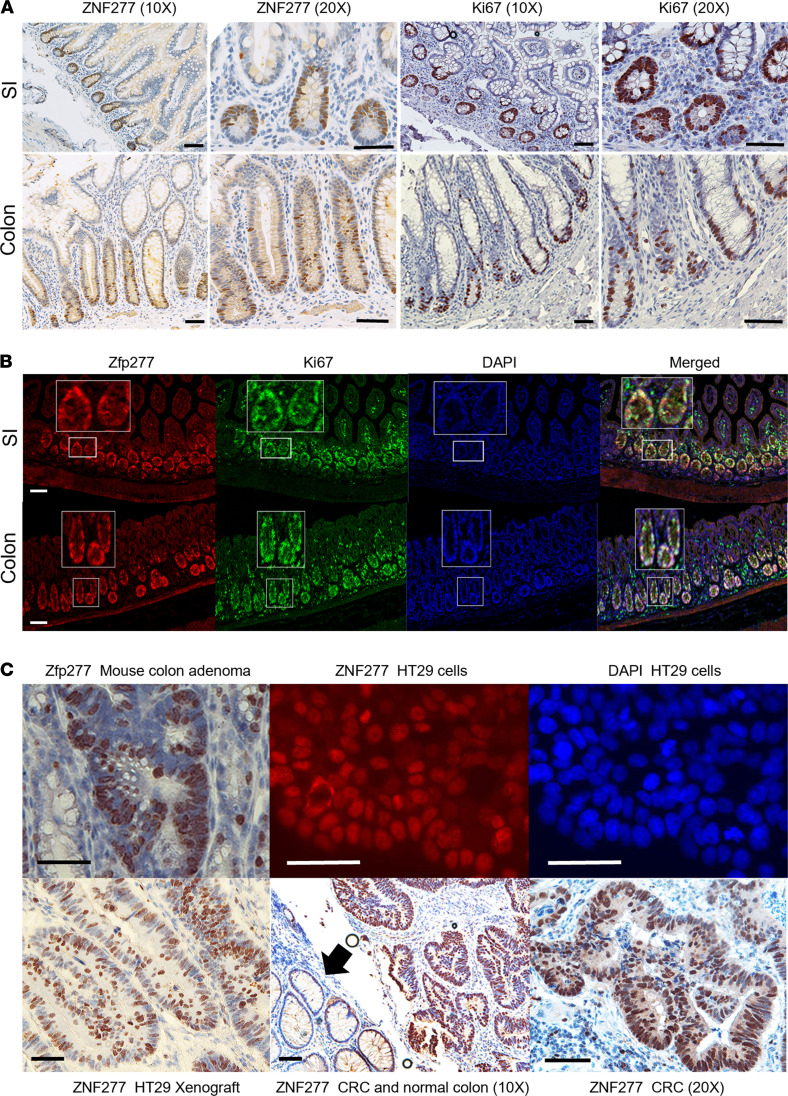
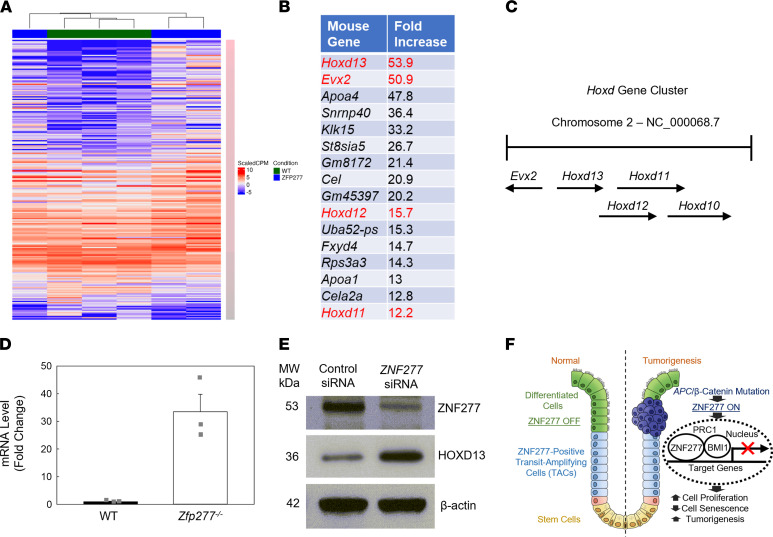
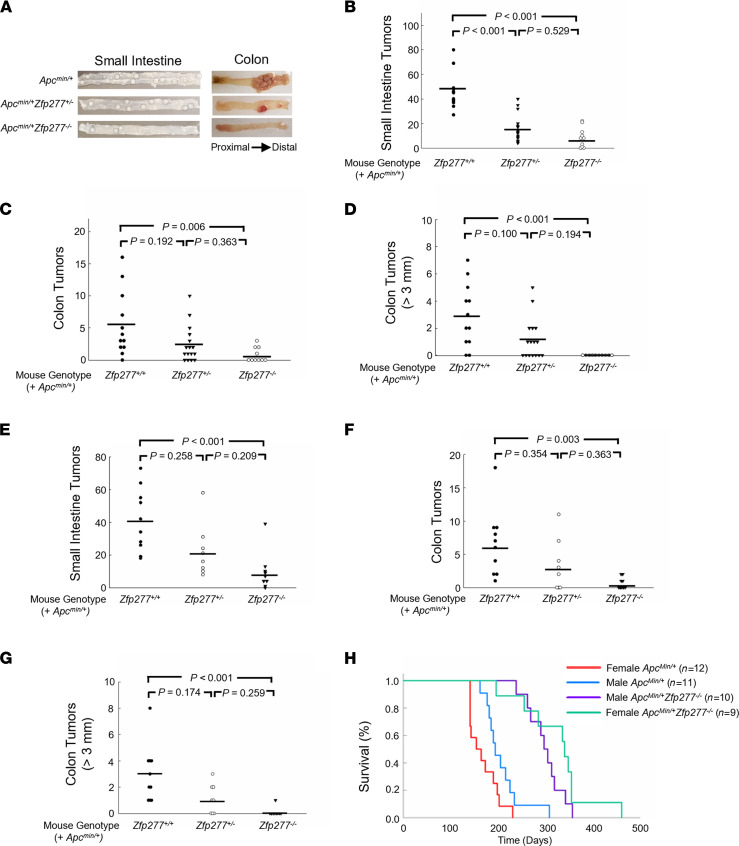
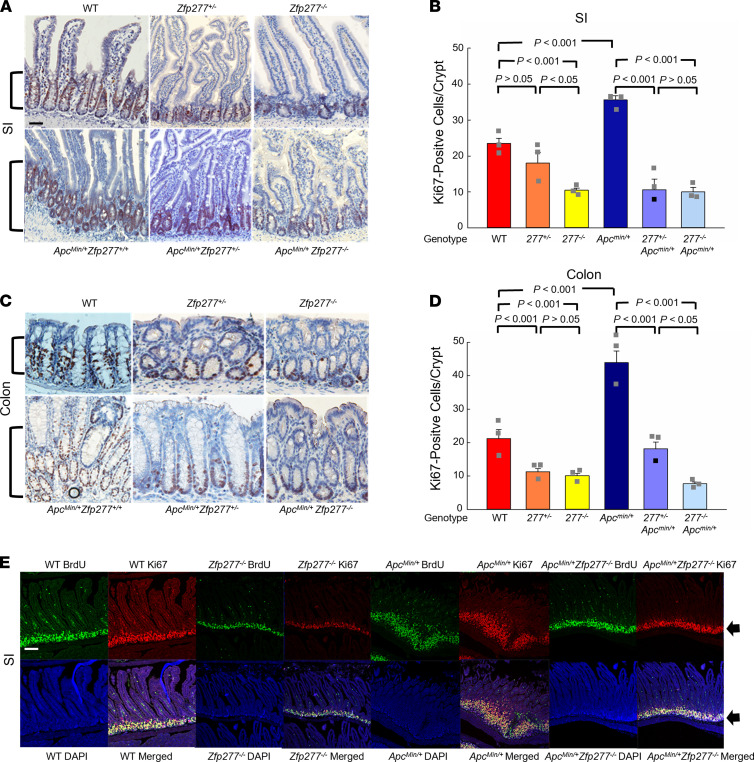
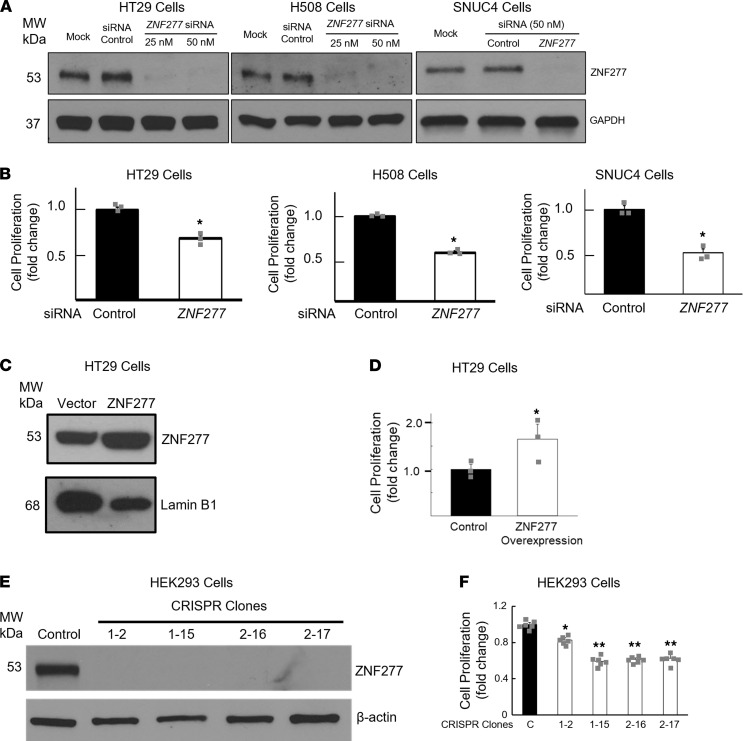
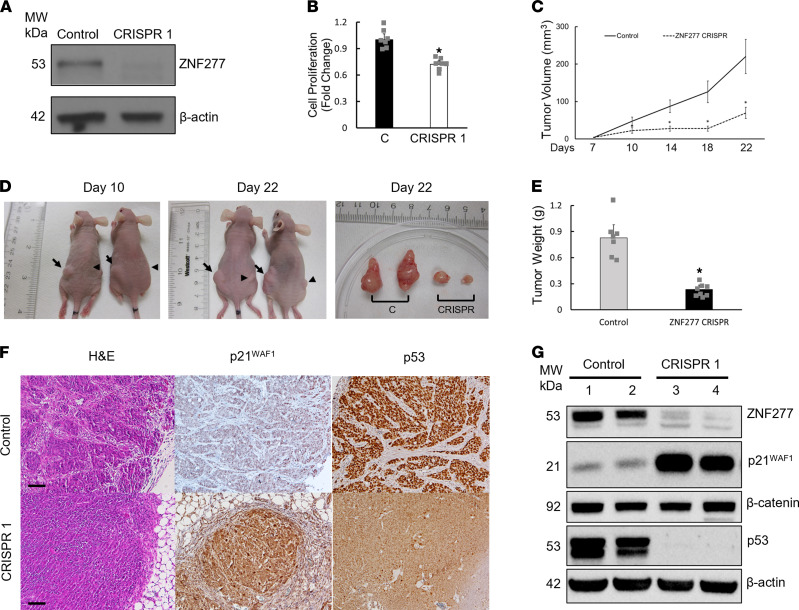
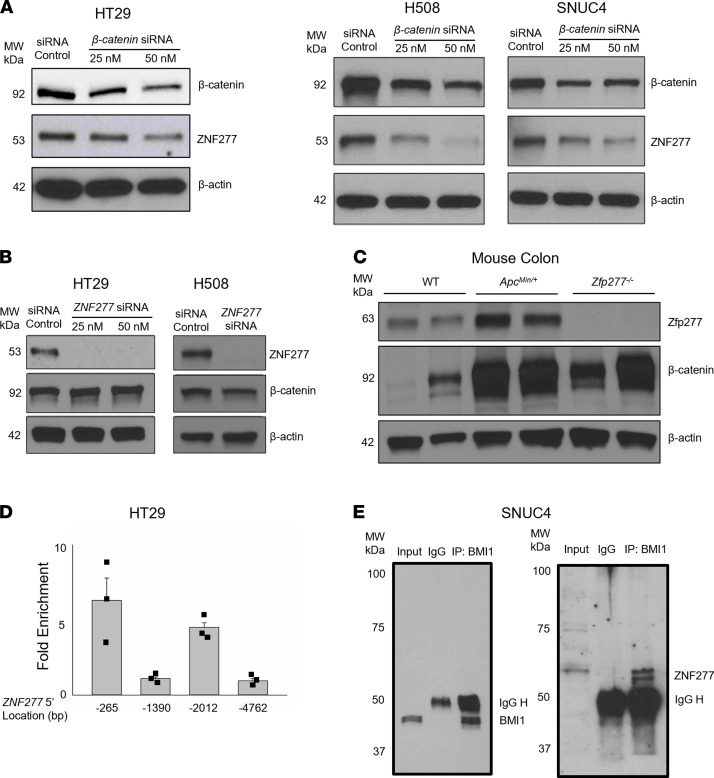
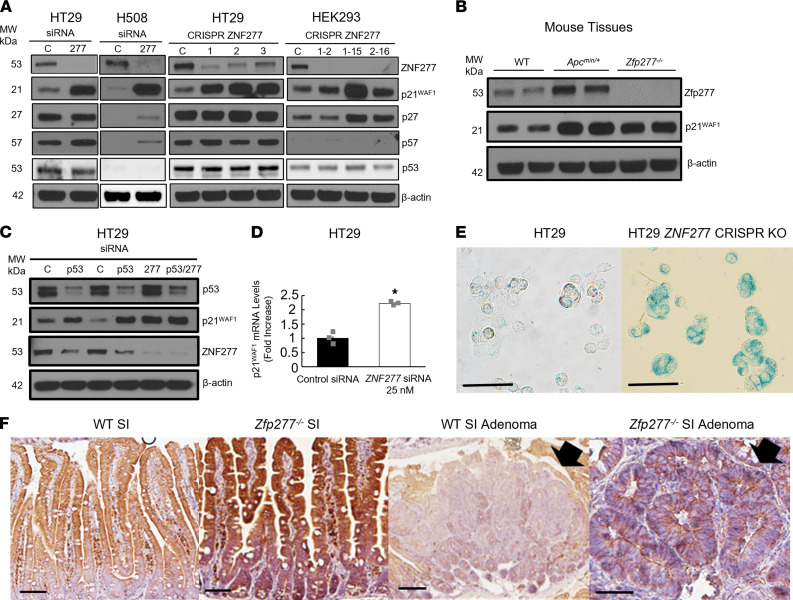
Sustained proliferative signaling and resisting cell death are hallmarks of cancer. Zinc finger protein 277 (ZNF277; murine Zfp277), a transcription factor regulating cellular senescence, is overexpressed in colon cancer, but its actions in intestinal homeostasis and neoplasia are unclear. Using human and murine intestine, human colon cancer cells, and ApcMin/+ mice with dysregulated β-catenin signaling and exuberant intestinal neoplasia, we explored the actions of ZNF277/Zfp277 and defined the underlying mechanisms. In normal human and murine intestine, ZNF277/Zfp277 was expressed uniquely in early stem cell progenitors, undifferentiated transit-amplifying cells (TACs). Zfp277 was overexpressed in the ApcMin/+ mouse colon, implicating ZNF277/Zfp277 as a transcriptional target of β-catenin signaling. We confirmed this by showing β-catenin knockdown reduced ZNF277 expression and, using chromatin IP, identified 2 β-catenin binding sites in the ZNF277 promoter. Zfp277 deficiency attenuated intestinal epithelial cell proliferation and tumor formation, and it strikingly prolonged ApcMin/+ mouse survival. RNA-Seq and PCR analyses revealed that Zfp277 modulates expression of genes in key cancer pathways, including β-catenin signaling, the HOXD family that regulates development, and p21WAF1, a cell cycle inhibitor and tumor suppressor. In both human colon cancer cells and the murine colon, ZNF277/Zfp277 deficiency induced p21WAF1 expression and promoted senescence. Our findings identify ZNF277/Zfp277 as both a TAC marker and colon cancer oncogene that regulates cellular proliferation and senescence, in part by repressing p21WAF1 expression.
持续的增殖信号和抵抗细胞死亡是癌症的标志。锌指蛋白 277(ZNF277;鼠 Zfp277)是一种调节细胞衰老的转录因子,在结肠癌中过度表达,但它在肠道稳态和肿瘤发生中的作用尚不清楚。我们使用人源和鼠源肠道、人结肠癌细胞和 ApcMin/+ 小鼠(β-catenin 信号失调和肠道肿瘤过度生长),探索了 ZNF277/Zfp277 的作用,并确定了潜在的机制。在正常的人源和鼠源肠道中,ZNF277/Zfp277 仅在早期干细胞祖细胞和未分化的过渡扩增细胞(TAC)中表达。Zfp277 在 ApcMin/+ 小鼠结肠中过度表达,表明 ZNF277/Zfp277 是 β-catenin 信号的转录靶标。我们通过证明 β-catenin 敲低降低了 ZNF277 的表达,并使用染色质免疫沉淀实验鉴定了 ZNF277 启动子中的 2 个 β-catenin 结合位点,证实了这一点。Zfp277 缺失减弱了肠道上皮细胞的增殖和肿瘤形成,并显著延长了 ApcMin/+ 小鼠的存活时间。RNA-Seq 和 PCR 分析显示,Zfp277 调节了包括 β-catenin 信号通路、调节发育的 HOXD 家族和细胞周期抑制剂和肿瘤抑制因子 p21WAF1 在内的关键癌症途径中的基因表达。在人源结肠癌细胞和鼠源结肠中,ZNF277/Zfp277 缺失诱导了 p21WAF1 的表达并促进了衰老。我们的研究结果表明,ZNF277/Zfp277 既是 TAC 标志物,也是结肠癌致癌基因,通过抑制 p21WAF1 的表达,调节细胞增殖和衰老。