Malaria Alert Centre, Kamuzu University of Health Sciences, Private Bag 360, Chichiri, Blantyre 3, Malawi.
Department of Applied Human Nutrition, Faculty of Chemical and Food Engineering, Bahir Dar Institute of Technology, Bahir Dar University, Bahir Dar, Ethiopia.
Parasit Vectors. 2022 Jan 12;15(1):7. doi: 10.1186/s13071-021-05123-4.
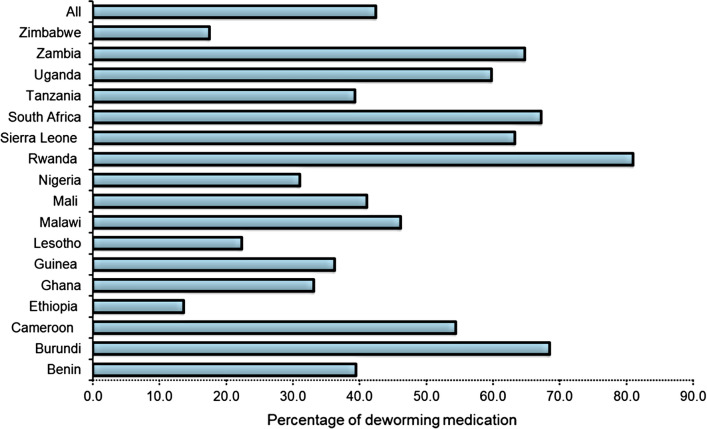
Despite the limited knowledge regarding the effects of deworming medication (DM) on nutritional indicators in sub-Saharan Africa (SSA), deworming programmes continue to be implemented in resource-limited countries. Therefore, the current study aimed to examine the effects of DM on anaemia among children aged 6-59 months in SSA.
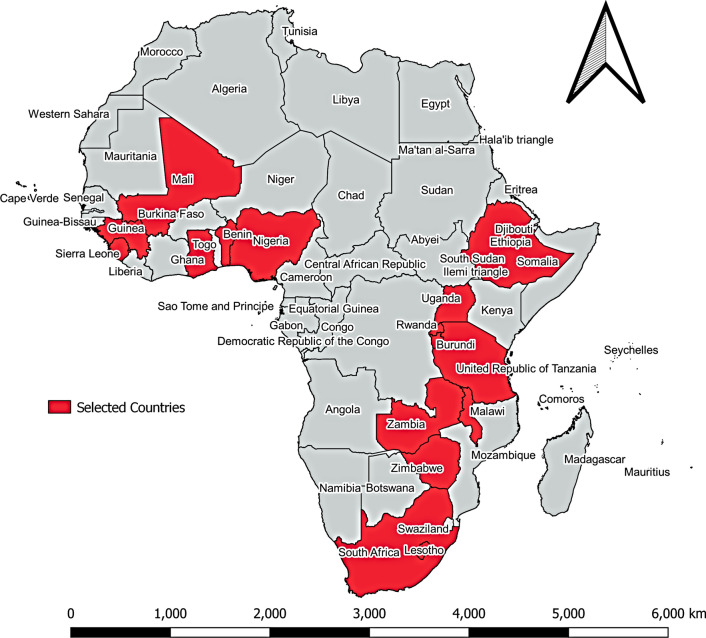
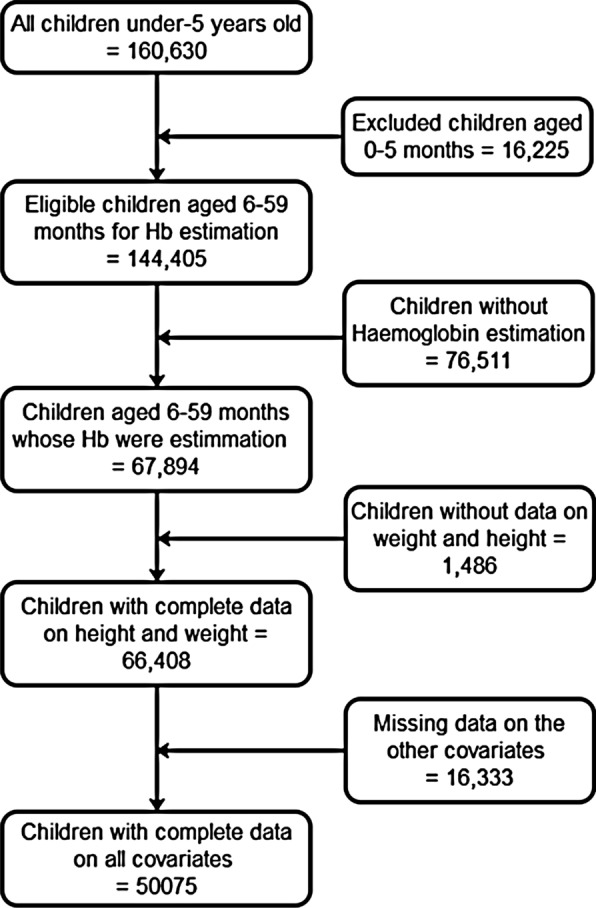
The analysis was performed using data obtained from 17 demographic and health surveys (DHSs) conducted in SSA. Children were considered to be anaemic if their haemoglobin (Hb) concentration was less than 11.0 g/dl, adjusting for altitude. To account for both multiple measures at the cluster level and the clustering of children within the same country, generalized linear mixed models were used to analyse the anaemia outcomes in 50,075 children aged 6-59 months.
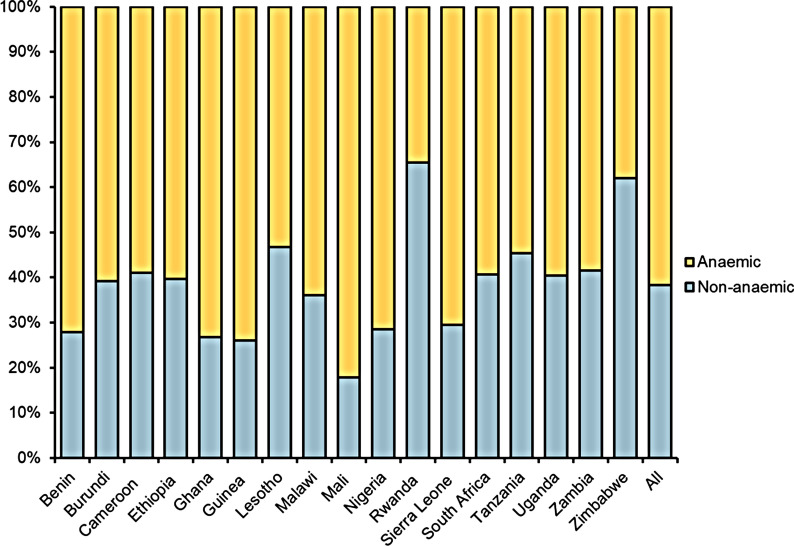
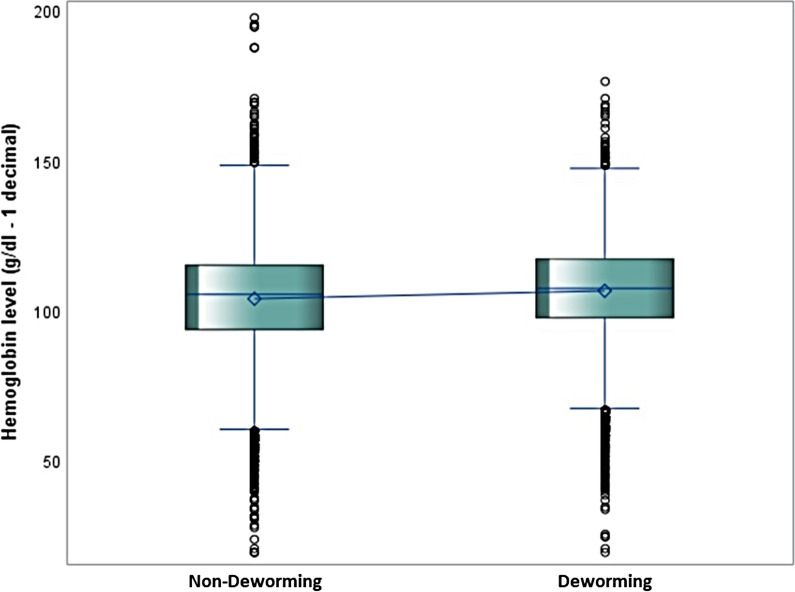
Overall, anaemia was reported in 61.8% of the children, and their median Hb concentration was 10.5 g/dl (interquartile range 9.4-11.5). The prevalence of anaemia ranged from 34.5% in Rwanda to 81.1% in Mali. Multivariate analyses showed that children who did not receive DM had increased odds of being anaemic (adjusted odds ratio [aOR]: 1.11; 95% confidence interval [CI] 1.07-1.16).
The current study revealed that DM can decrease the risk of anaemia among preschool-age children (pre-SAC) in SSA. Thus, tailored public health programmes aimed at reducing childhood anaemia need to consider deworming. However, longitudinal studies are needed to validate the association that has been reported in this cross-sectional study.
尽管人们对在撒哈拉以南非洲(SSA)中驱虫药物(DM)对营养指标的影响知之甚少,但在资源有限的国家中,驱虫方案仍在继续实施。因此,本研究旨在检查 DM 对 SSA 6-59 个月儿童贫血的影响。
该分析使用来自 SSA 进行的 17 项人口与健康调查(DHS)的数据进行。如果儿童的血红蛋白(Hb)浓度低于 11.0 g/dl,调整海拔高度后,则认为其患有贫血。为了同时考虑到群集层面的多次测量以及同一国家内儿童的聚类情况,使用广义线性混合模型对 50075 名 6-59 个月大的儿童的贫血结果进行了分析。
总体而言,有 61.8%的儿童报告患有贫血,其 Hb 浓度中位数为 10.5 g/dl(四分位距为 9.4-11.5)。贫血的患病率从卢旺达的 34.5%到马里的 81.1%不等。多变量分析表明,未接受 DM 的儿童贫血的可能性增加(调整后的优势比[aOR]:1.11;95%置信区间[CI]:1.07-1.16)。
本研究表明,DM 可以降低 SSA 学龄前儿童(pre-SAC)患贫血的风险。因此,需要考虑驱虫来制定针对减少儿童贫血的公共卫生计划。但是,需要进行纵向研究来验证在这项横断面研究中报告的关联。