Medical Physics Group, Institute of Diagnostic and Interventional Radiology, Jena University Hospital - Friedrich Schiller University Jena, Germany.
Medical Physics Group, Institute of Diagnostic and Interventional Radiology, Jena University Hospital - Friedrich Schiller University Jena, Germany.
Z Med Phys. 2022 Aug;32(3):346-360. doi: 10.1016/j.zemedi.2021.11.004. Epub 2022 Jan 10.
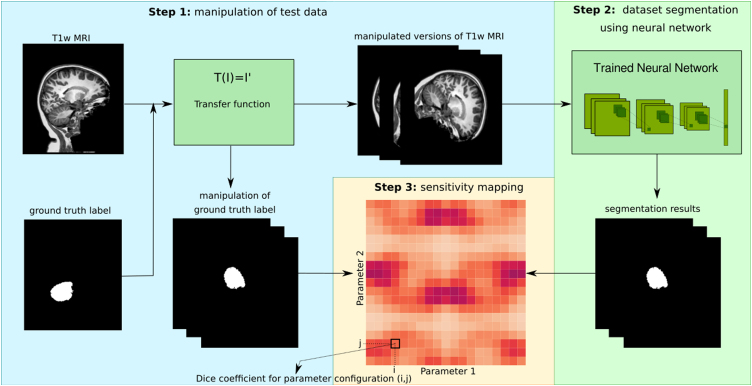
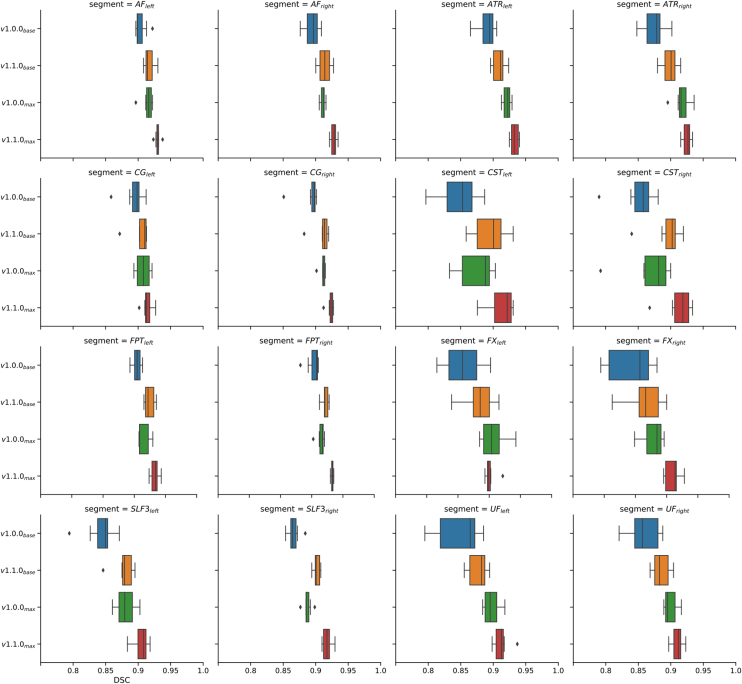
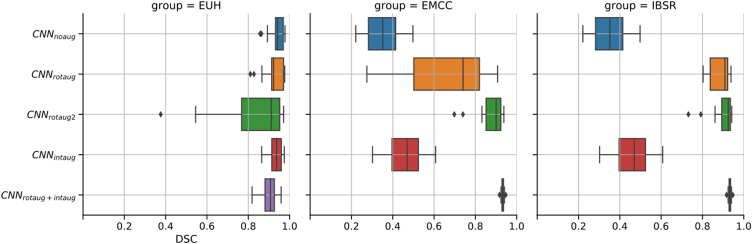
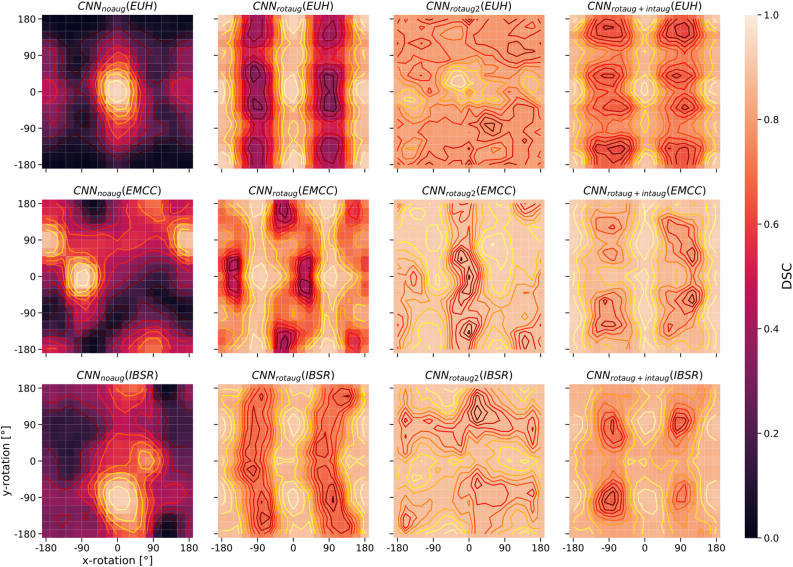
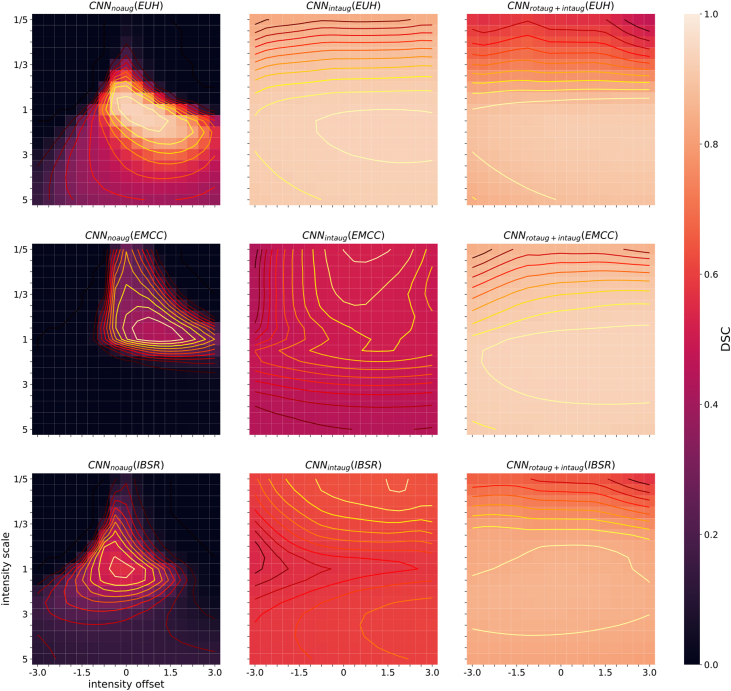
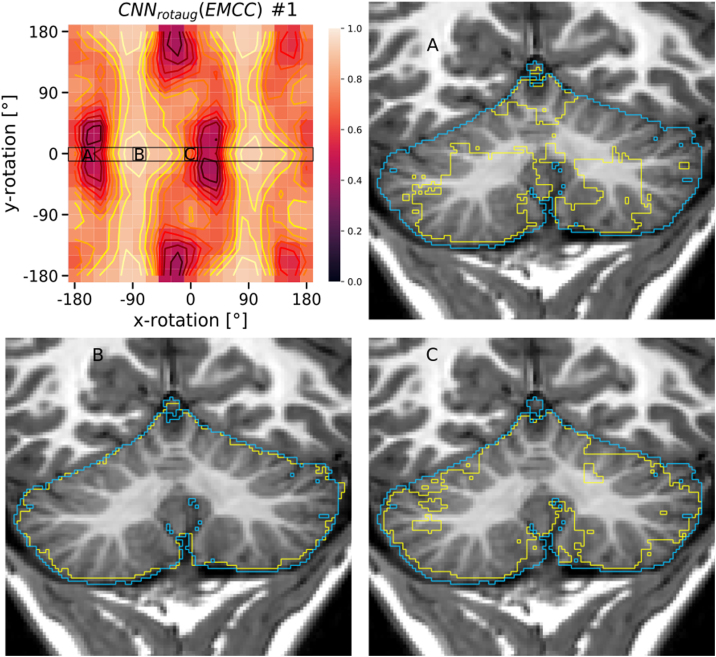
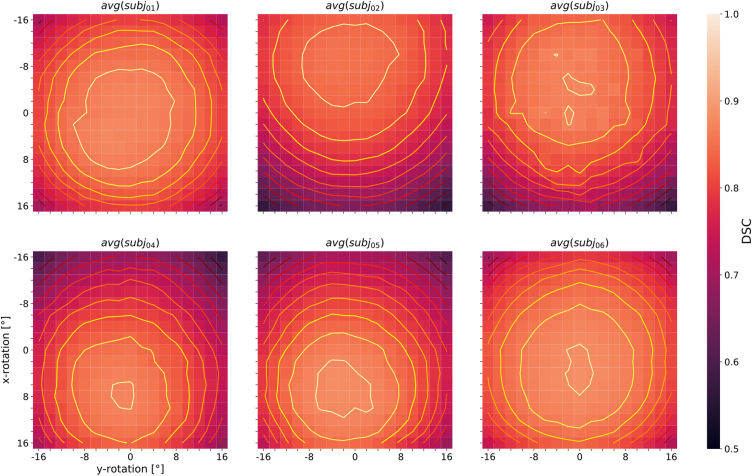
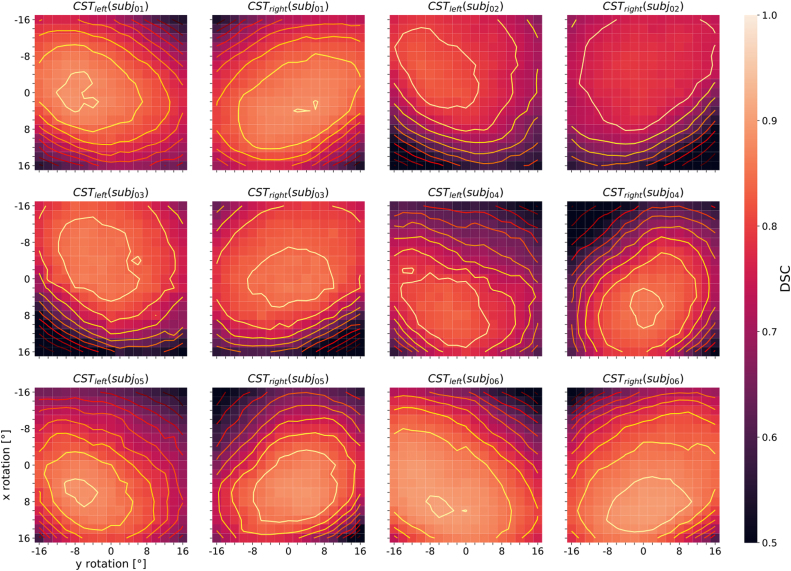
The application of deep neural networks for segmentation in medical imaging has gained substantial interest in recent years. In many cases, this variant of machine learning has been shown to outperform other conventional segmentation approaches. However, little is known about its general applicability. Especially the robustness against image modifications (e.g., intensity variations, contrast variations, spatial alignment) has hardly been investigated. Data augmentation is often used to compensate for sensitivity to such changes, although its effectiveness has not yet been studied. Therefore, the goal of this study was to systematically investigate the sensitivity to variations in input data with respect to segmentation of medical images using deep learning. This approach was tested with two publicly available segmentation frameworks (DeepMedic and TractSeg). In the case of DeepMedic, the performance was tested using ground truth data, while in the case of TractSeg, the STAPLE technique was employed. In both cases, sensitivity analysis revealed significant dependence of the segmentation performance on input variations. The effects of different data augmentation strategies were also shown, making this type of analysis a useful tool for selecting the right parameters for augmentation. The proposed analysis should be applied to any deep learning image segmentation approach, unless the assessment of sensitivity to input variations can be directly derived from the network.
近年来,深度学习网络在医学图像分割中的应用引起了广泛关注。在许多情况下,这种机器学习变体已被证明优于其他传统的分割方法。然而,其普遍适用性知之甚少。特别是针对图像修改(例如,强度变化、对比度变化、空间配准)的鲁棒性几乎没有被研究过。数据增强通常用于补偿对这些变化的敏感性,尽管其有效性尚未得到研究。因此,本研究的目的是系统地研究使用深度学习对医学图像分割的输入数据变化的敏感性。该方法使用两个公开的分割框架(DeepMedic 和 TractSeg)进行了测试。在 DeepMedic 的情况下,使用真实数据测试了性能,而在 TractSeg 的情况下,使用了 STAPLE 技术。在这两种情况下,敏感性分析都表明分割性能对输入变化有很大的依赖性。还展示了不同的数据增强策略的效果,这使得这种类型的分析成为选择正确增强参数的有用工具。除非可以直接从网络中得出对输入变化的敏感性评估,否则应将所提出的分析应用于任何深度学习图像分割方法。