De Angel Valeria, Lewis Serena, White Katie, Oetzmann Carolin, Leightley Daniel, Oprea Emanuela, Lavelle Grace, Matcham Faith, Pace Alice, Mohr David C, Dobson Richard, Hotopf Matthew
Institute of Psychiatry, Psychology and Neuroscience, King's College London, London, UK.
NIHR Maudsley Biomedical Research Centre, South London and Maudsley NHS Foundation Trust, London, UK.
NPJ Digit Med. 2022 Jan 11;5(1):3. doi: 10.1038/s41746-021-00548-8.
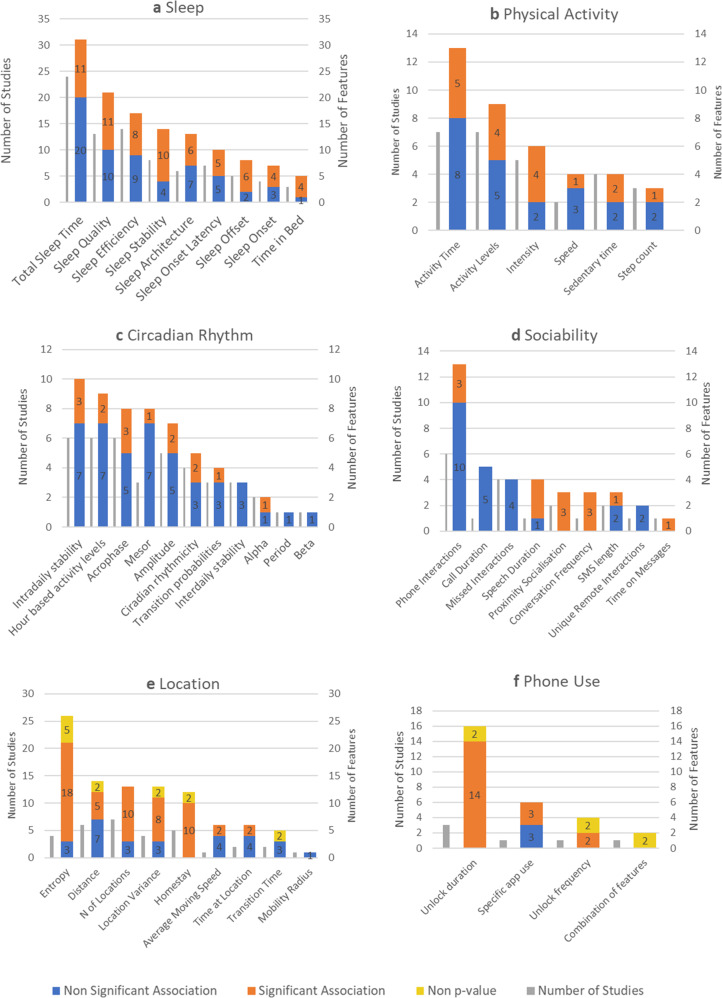
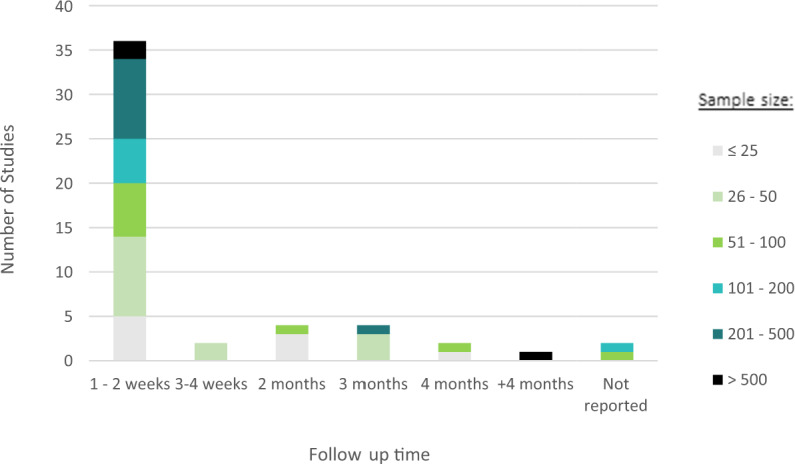
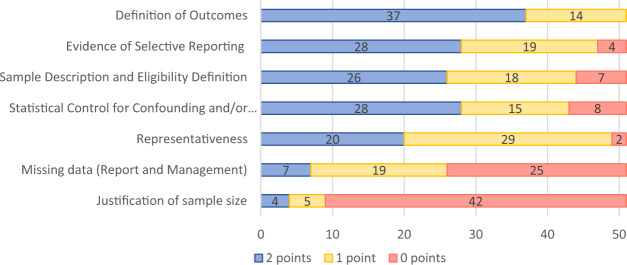
The use of digital tools to measure physiological and behavioural variables of potential relevance to mental health is a growing field sitting at the intersection between computer science, engineering, and clinical science. We summarised the literature on remote measuring technologies, mapping methodological challenges and threats to reproducibility, and identified leading digital signals for depression. Medical and computer science databases were searched between January 2007 and November 2019. Published studies linking depression and objective behavioural data obtained from smartphone and wearable device sensors in adults with unipolar depression and healthy subjects were included. A descriptive approach was taken to synthesise study methodologies. We included 51 studies and found threats to reproducibility and transparency arising from failure to provide comprehensive descriptions of recruitment strategies, sample information, feature construction and the determination and handling of missing data. The literature is characterised by small sample sizes, short follow-up duration and great variability in the quality of reporting, limiting the interpretability of pooled results. Bivariate analyses show consistency in statistically significant associations between depression and digital features from sleep, physical activity, location, and phone use data. Machine learning models found the predictive value of aggregated features. Given the pitfalls in the combined literature, these results should be taken purely as a starting point for hypothesis generation. Since this research is ultimately aimed at informing clinical practice, we recommend improvements in reporting standards including consideration of generalisability and reproducibility, such as wider diversity of samples, thorough reporting methodology and the reporting of potential bias in studies with numerous features.
利用数字工具测量与心理健康潜在相关的生理和行为变量是一个不断发展的领域,处于计算机科学、工程学和临床科学的交叉点。我们总结了关于远程测量技术的文献,梳理了方法学挑战和对可重复性的威胁,并确定了抑郁症的主要数字信号。在2007年1月至2019年11月期间检索了医学和计算机科学数据库。纳入了已发表的研究,这些研究将抑郁症与从患有单相抑郁症的成年人及健康受试者的智能手机和可穿戴设备传感器获得的客观行为数据联系起来。采用描述性方法来综合研究方法。我们纳入了51项研究,发现由于未能全面描述招募策略、样本信息、特征构建以及缺失数据的确定和处理,导致了对可重复性和透明度的威胁。该文献的特点是样本量小、随访时间短且报告质量差异很大,限制了汇总结果的可解释性。双变量分析显示,抑郁症与来自睡眠、身体活动、位置和手机使用数据的数字特征之间在统计学上显著关联具有一致性。机器学习模型发现了聚合特征的预测价值。鉴于综合文献中存在的缺陷,这些结果应仅被视为假设生成的起点。由于这项研究最终旨在为临床实践提供信息,我们建议改进报告标准,包括考虑普遍性和可重复性,例如样本的更广泛多样性、全面报告方法以及对具有众多特征的研究中潜在偏差的报告。