Department of Lab Medicine and Pathology, University of Washington School of Medicine, Seattle, US.
Department of Genome Sciences, University of Washington School of Medicine, Seattle, US.
Aging Cell. 2022 Feb;21(2):e13548. doi: 10.1111/acel.13548. Epub 2022 Jan 12.
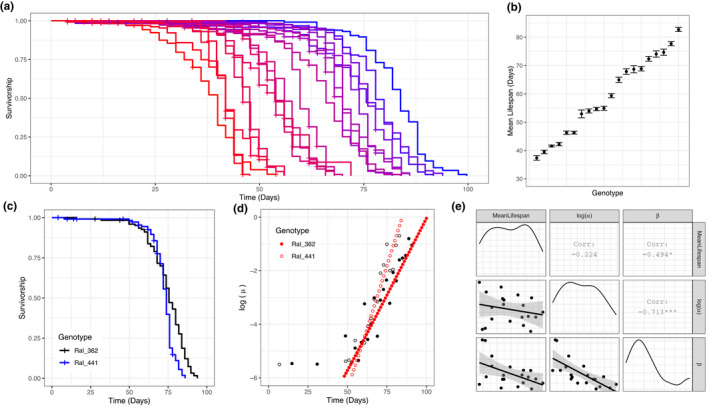
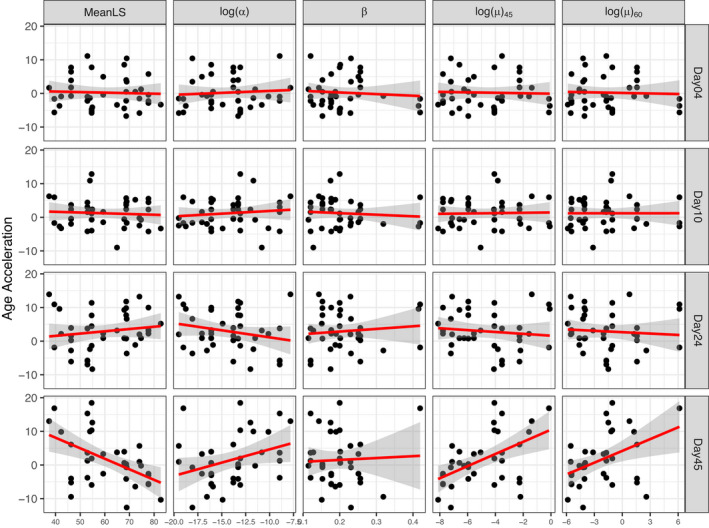
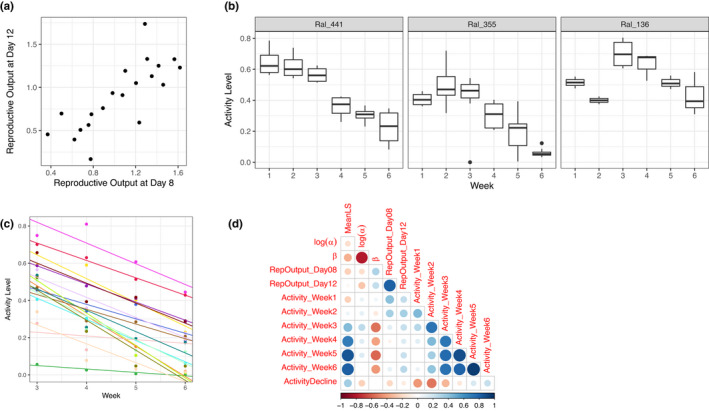
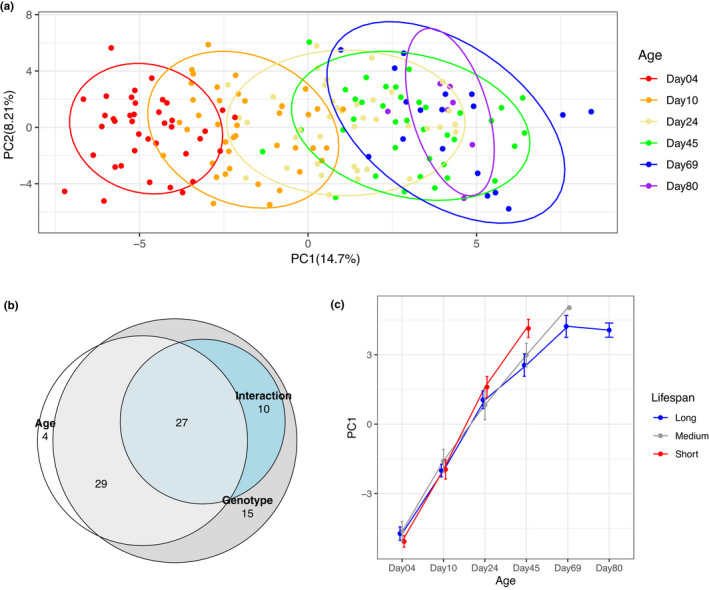
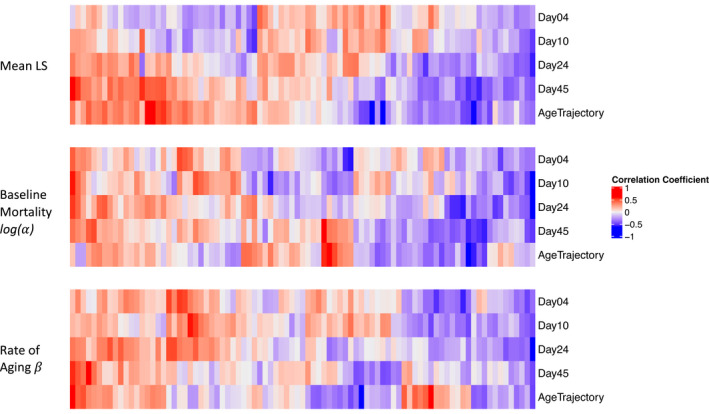
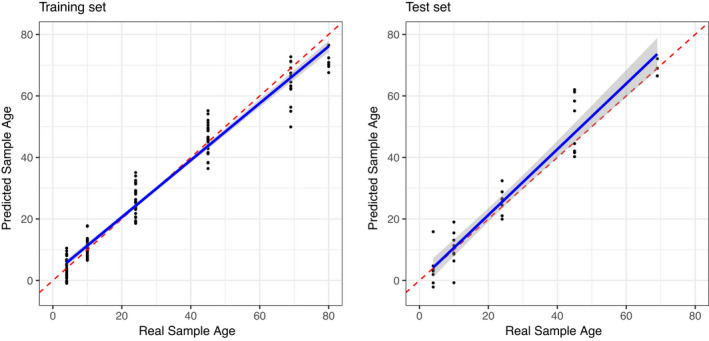
Many biomarkers have been shown to be associated not only with chronological age but also with functional measures of biological age. In human populations, it is difficult to show whether variation in biological age is truly predictive of life expectancy, as such research would require longitudinal studies over many years, or even decades. We followed adult cohorts of 20 Drosophila Genetic Reference Panel (DGRP) strains chosen to represent the breadth of lifespan variation, obtain estimates of lifespan, baseline mortality, and rate of aging, and associate these parameters with age-specific functional traits including fecundity and climbing activity and with age-specific targeted metabolomic profiles. We show that activity levels and metabolome-wide profiles are strongly associated with age, that numerous individual metabolites show a strong association with lifespan, and that the metabolome provides a biological clock that predicts not only sample age but also future mortality rates and lifespan. This study with 20 genotypes and 87 metabolites, while relatively small in scope, establishes strong proof of principle for the fly as a powerful experimental model to test hypotheses about biomarkers and aging and provides further evidence for the potential value of metabolomic profiles as biomarkers of aging.
许多生物标志物不仅与实际年龄有关,而且与生物年龄的功能测量有关。在人类群体中,很难证明生物年龄的变化是否真的可以预测预期寿命,因为此类研究需要多年甚至几十年的纵向研究。我们对 20 个代表寿命变化范围的果蝇遗传参考面板(DGRP)菌株的成年队列进行了跟踪,以获得寿命、基线死亡率和衰老率的估计值,并将这些参数与特定年龄的功能特征(包括生育力和攀爬活动)以及特定年龄的靶向代谢组学特征相关联。我们表明,活动水平和代谢组学全谱与年龄密切相关,许多单个代谢物与寿命有很强的关联,而代谢组学提供了一个生物钟,不仅可以预测样本年龄,还可以预测未来的死亡率和寿命。这项涉及 20 个基因型和 87 个代谢物的研究,尽管范围相对较小,但为使用果蝇作为一种强大的实验模型来测试关于生物标志物和衰老的假设提供了强有力的原理证明,并进一步证明了代谢组学特征作为衰老生物标志物的潜在价值。