Department of Microbiology and Cell Biology, Montana State University, 2155 Analysis Drive, Bozeman, MT 59718, USA.
Chemical and Biological Engineering Department, Montana State University, USA.
Vet Microbiol. 2022 Feb;265:109334. doi: 10.1016/j.vetmic.2022.109334. Epub 2022 Jan 10.
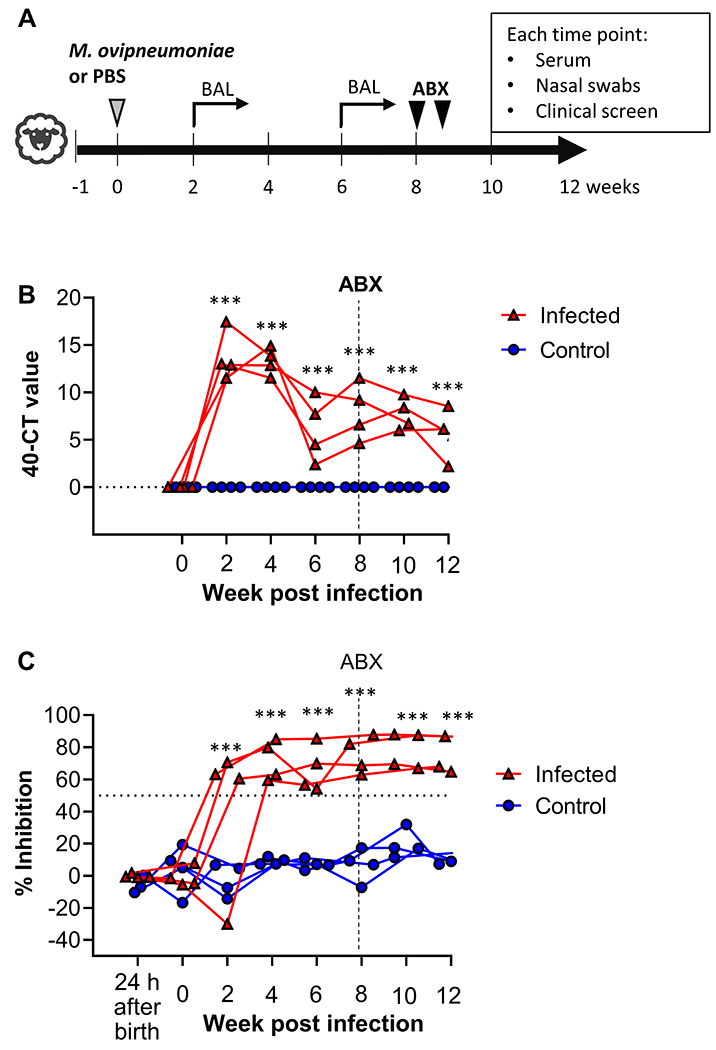
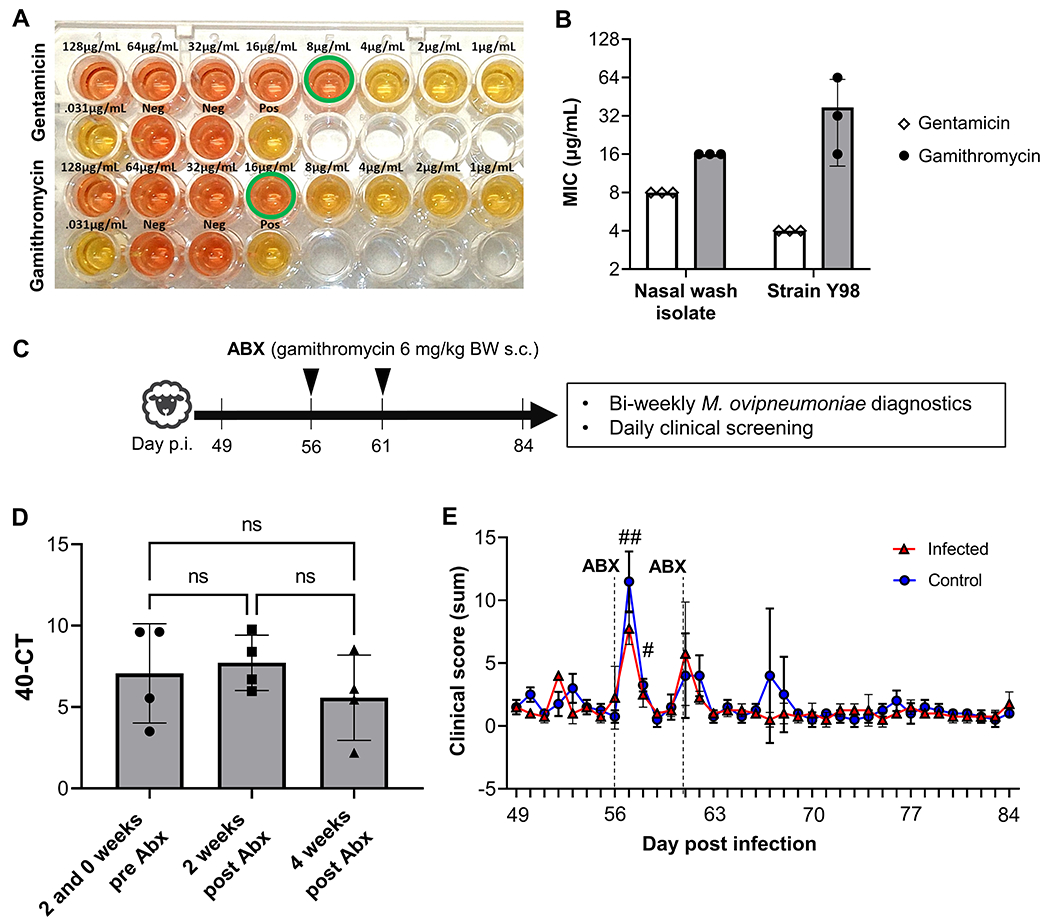
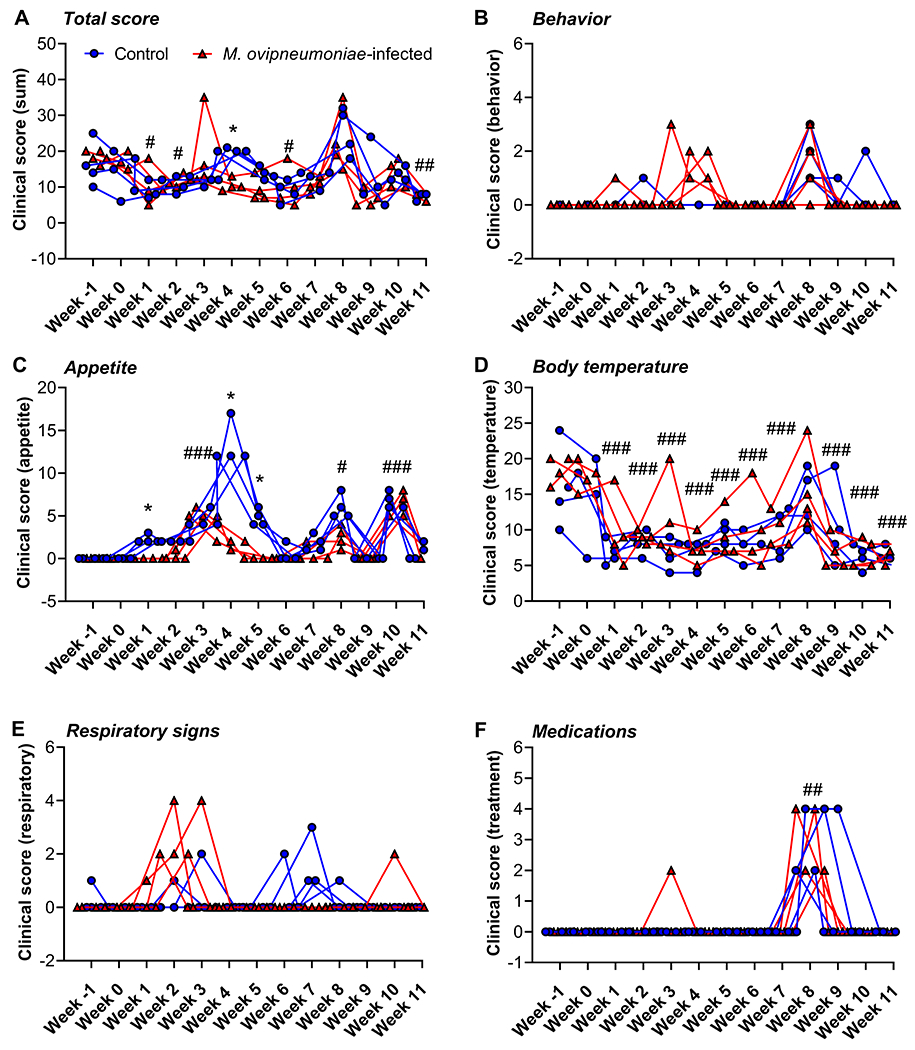
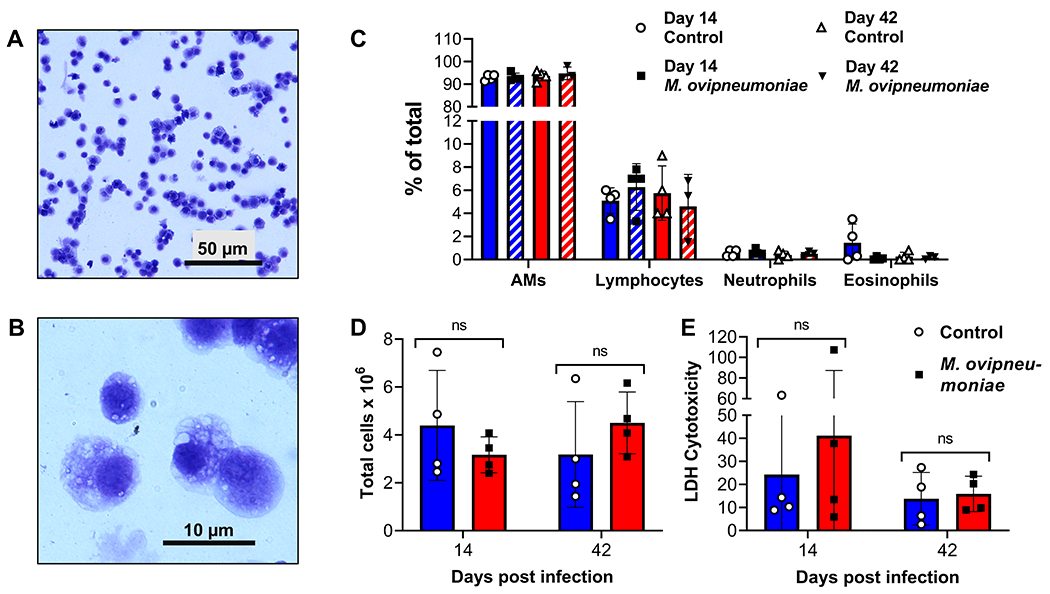
Mycoplasma ovipneumoniae (M. ovipneumoniae) is a respiratory pathogen associated with mild to moderate respiratory disease in domestic lambs and severe pneumonia outbreaks in wild ruminants such as bighorn sheep. However, whether M. ovipneumoniae by itself causes clinical respiratory disease in domestic sheep in the absence of secondary bacterial pathogens is still unclear. The goal of our study was to better understand the role of M. ovipneumoniae as a respiratory pathogen in domestic sheep and to explore potential antibiotic treatment approaches. Therefore, we inoculated four 4-month-old, specific-pathogen-free lambs with fresh nasal wash fluids from M. ovipneumoniae-infected sheep. The lambs were monitored for M. ovipneumoniae colonization, M. ovipneumoniae-specific antibodies, clinical signs, and cellular and molecular correlates of lung inflammation for eight weeks. All lambs then were treated with gamithromycin and observed for an additional four weeks. M. ovipneumoniae inoculation resulted in stable colonization of the upper respiratory tract in all M. ovipneumoniae-inoculated, but in none of the four mock-infected control lambs. All M. ovipneumoniae-infected lambs developed a robust antibody response to M. ovipneumoniae within 2 weeks. However, we did not observe significant signs of respiratory disease, evidence of lung damage or inflammation in any of the infected lambs. Interestingly, treatment with gamithromycin, which blocked growth of the M. ovipneumoniae in vitro, failed to reduce M. ovipneumoniae colonization. These observations indicate that, in the absence of co-infections, M. ovipneumoniae caused asymptomatic colonization of the upper respiratory tract that was resistant to clearance by the host immune response and by gamithromycin treatment.
绵羊肺炎支原体(M. ovipneumoniae)是一种与绵羊呼吸道疾病相关的病原体,可导致家羊出现轻度至中度呼吸道疾病,也可导致野生反刍动物(如大角羊)发生严重肺炎疫情。然而,在没有继发细菌病原体的情况下,绵羊肺炎支原体本身是否会导致家羊出现临床呼吸道疾病仍不清楚。本研究的目的是更好地了解绵羊肺炎支原体作为一种呼吸道病原体在家羊中的作用,并探索潜在的抗生素治疗方法。因此,我们将新鲜的绵羊肺炎支原体鼻腔洗液接种到 4 月龄、无特定病原体的 4 只羔羊中。监测这些羔羊的绵羊肺炎支原体定植、绵羊肺炎支原体特异性抗体、临床症状以及肺部炎症的细胞和分子相关变化,共 8 周。然后,所有羔羊均接受加米霉素治疗,并观察 4 周。绵羊肺炎支原体接种导致所有接种绵羊肺炎支原体的羔羊上呼吸道均稳定定植,但在 4 只模拟感染对照羔羊中均未定植。所有感染绵羊肺炎支原体的羔羊在 2 周内均对绵羊肺炎支原体产生了强烈的抗体反应。然而,我们并未观察到任何感染羔羊出现明显的呼吸道疾病症状、肺部损伤或炎症迹象。有趣的是,体外能抑制绵羊肺炎支原体生长的加米霉素治疗未能降低绵羊肺炎支原体的定植。这些观察结果表明,在没有合并感染的情况下,绵羊肺炎支原体可引起上呼吸道无症状定植,这种定植可抵抗宿主免疫反应和加米霉素治疗的清除。