Department of Ecology and Evolutionary Biology, University of Colorado-Boulder, Boulder, Colorado, USA.
Cooperative Institute for Research in Environmental Science, Boulder, Colorado, USA.
mSystems. 2022 Feb 22;7(1):e0133021. doi: 10.1128/msystems.01330-21. Epub 2022 Jan 18.
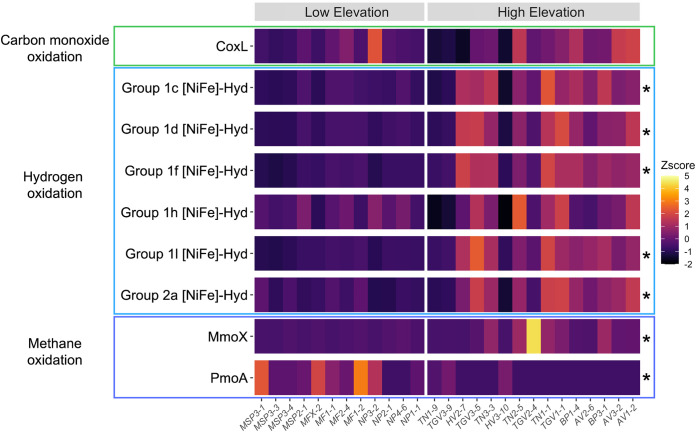
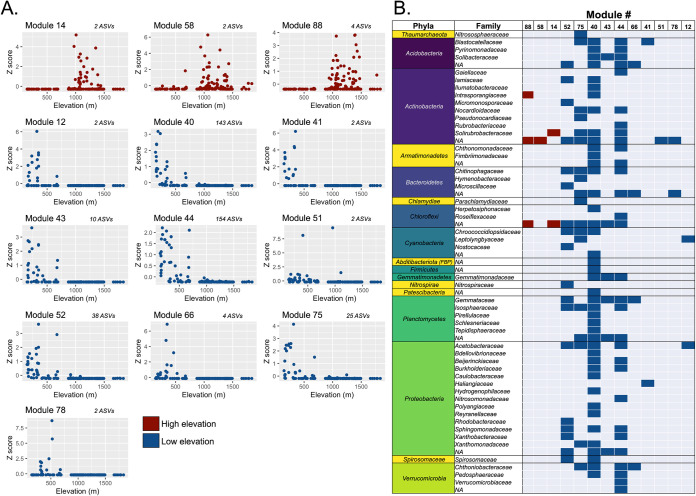
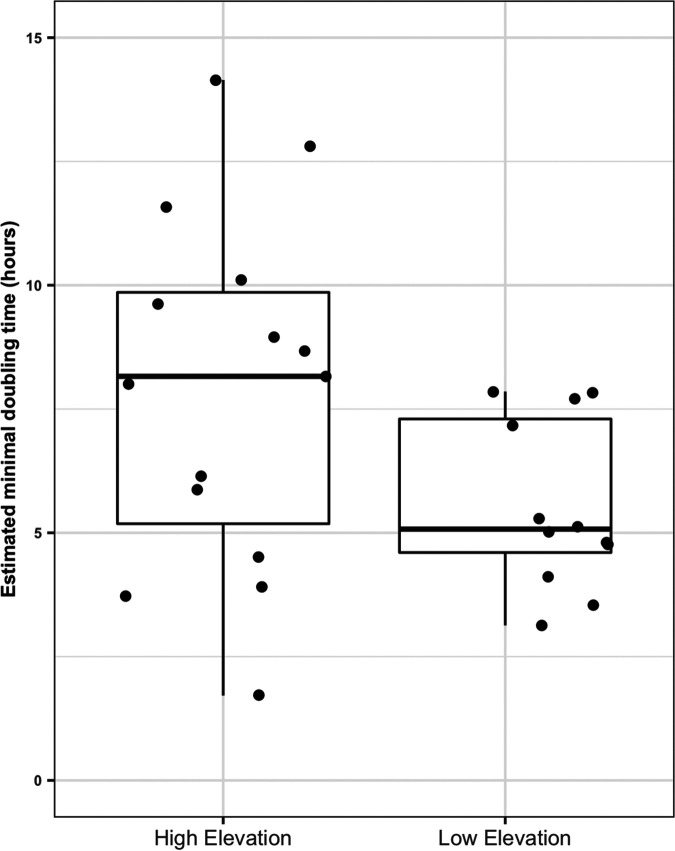
The inland soils found on the Antarctic continent represent one of the more challenging environments for microbial life on Earth. Nevertheless, Antarctic soils harbor unique bacterial and archaeal (prokaryotic) communities able to cope with extremely cold and dry conditions. These communities are not homogeneous, and the taxonomic composition and functional capabilities (genomic attributes) of these communities across environmental gradients remain largely undetermined. We analyzed the prokaryotic communities in soil samples collected from across the Shackleton Glacier region of Antarctica by coupling quantitative PCR, marker gene amplicon sequencing, and shotgun metagenomic sequencing. We found that elevation was the dominant factor explaining differences in the structures of the soil prokaryotic communities, with the drier and saltier soils found at higher elevations harboring less diverse communities and unique assemblages of cooccurring taxa. The higher-elevation soil communities also had lower maximum potential growth rates (as inferred from metagenome-based estimates of codon usage bias) and an overrepresentation of genes associated with trace gas metabolism. Together, these results highlight the utility of assessing community shifts across pronounced environmental gradients to improve our understanding of the microbial diversity found in Antarctic soils and the strategies used by soil microbes to persist at the limits of habitability. Antarctic soils represent an ideal system to study how environmental properties shape the taxonomic and functional diversity of microbial communities given the relatively low diversity of Antarctic soil microbial communities and the pronounced environmental gradients that occur across soils located in reasonable proximity to one another. Moreover, the challenging environmental conditions typical of most Antarctic soils present an opportunity to investigate the traits that allow soil microbes to persist in some of the most inhospitable habitats on Earth. We used cultivation-independent methods to study the bacterial and archaeal communities found in soil samples collected from across the Shackleton Glacier region of the Transantarctic Mountains. We show that those environmental characteristics associated with elevation have the greatest impact on the structure of these microbial communities, with the colder, drier, and saltier soils found at higher elevations sustaining less diverse communities that were distinct from those in more hospitable soils with respect to their composition, genomic attributes, and overall life-history strategies. Notably, the harsher conditions found in higher-elevation soils likely select for taxa with lower maximum potential growth rates and an increased reliance on trace gas metabolism to support growth.
内陆土壤在南极大陆上的发现是地球微生物生命面临的更具挑战性的环境之一。然而,南极土壤中蕴藏着独特的细菌和古菌(原核生物)群落,能够适应极寒和干燥的条件。这些群落并非均匀分布,而且这些群落的分类组成和功能能力(基因组属性)在环境梯度上仍然很大程度上尚未确定。我们通过结合定量 PCR、标记基因扩增子测序和鸟枪法宏基因组测序,分析了从南极沙克尔顿冰川地区采集的土壤样本中的原核生物群落。我们发现,海拔是解释土壤原核生物群落结构差异的主要因素,海拔较高的干燥和含盐土壤中栖息的群落多样性较低,共同出现的分类群组合独特。较高海拔的土壤群落的最大潜在生长速率也较低(根据基于宏基因组的密码子使用偏性估计推断),并且与痕量气体代谢相关的基因过度表达。这些结果共同强调了评估明显环境梯度上的群落变化以提高我们对南极土壤中微生物多样性的理解以及土壤微生物在可居住性极限下生存所使用的策略的重要性。南极土壤代表了一个理想的系统,可以研究环境特性如何塑造微生物群落的分类和功能多样性,因为南极土壤微生物群落的相对较低多样性以及彼此之间距离合理的土壤中存在的明显环境梯度。此外,大多数南极土壤的挑战性环境条件为研究允许土壤微生物在地球上一些最不适宜居住的栖息地中生存的特征提供了机会。我们使用非培养方法研究了从横贯南极山脉沙克尔顿冰川地区采集的土壤样本中发现的细菌和古菌群落。我们表明,与海拔相关的那些环境特征对这些微生物群落的结构影响最大,海拔较高的寒冷、干燥和含盐土壤维持的群落多样性较低,与较适宜土壤中的群落不同,其组成、基因组属性和整体生活史策略都不同。值得注意的是,较高海拔土壤中更恶劣的条件可能会选择生长速率较低和对痕量气体代谢的依赖增加以支持生长的分类群。