School of Biotechnology and Biomolecular Sciences, University of New South Wales, Sydney, 2052, Australia.
Australian Antarctic Division, Department of Environment, Antarctic Conservation and Management, 203 Channel Highway, Kingston, TAS, 7050, Australia.
Microbiome. 2020 Mar 16;8(1):37. doi: 10.1186/s40168-020-00809-w.
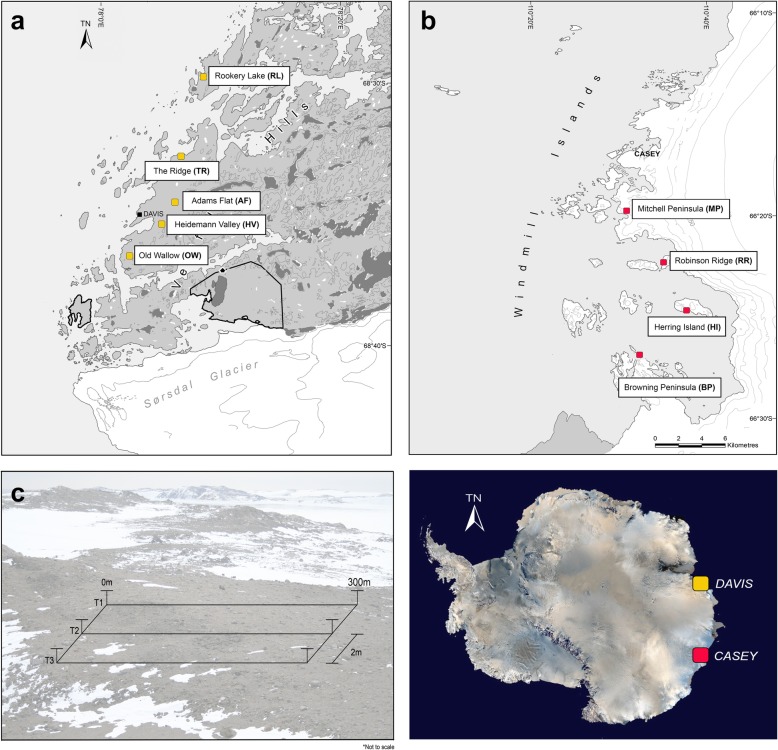
Resident soil microbiota play key roles in sustaining the core ecosystem processes of terrestrial Antarctica, often involving unique taxa with novel functional traits. However, the full scope of biodiversity and the niche-neutral processes underlying these communities remain unclear. In this study, we combine multivariate analyses, co-occurrence networks and fitted species abundance distributions on an extensive set of bacterial, micro-eukaryote and archaeal amplicon sequencing data to unravel soil microbiome patterns of nine sites across two east Antarctic regions, the Vestfold Hills and Windmill Islands. To our knowledge, this is the first microbial biodiversity report on the hyperarid Vestfold Hills soil environment.
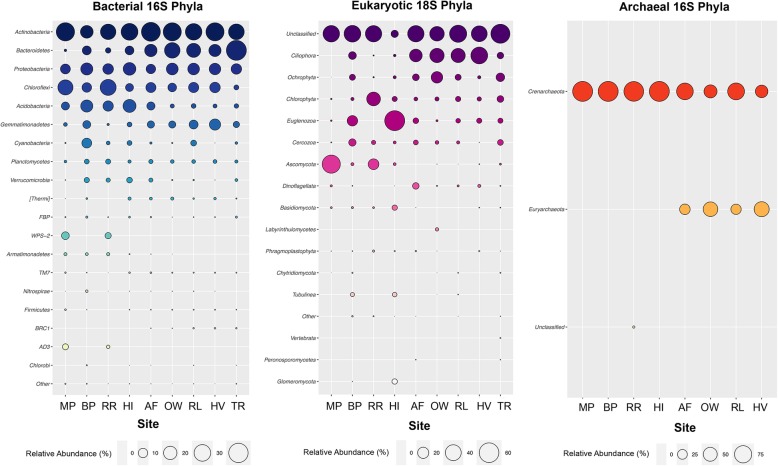
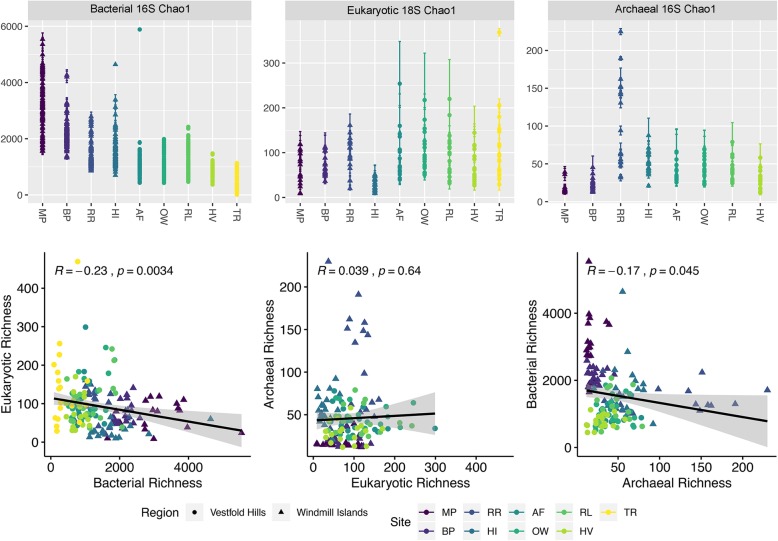
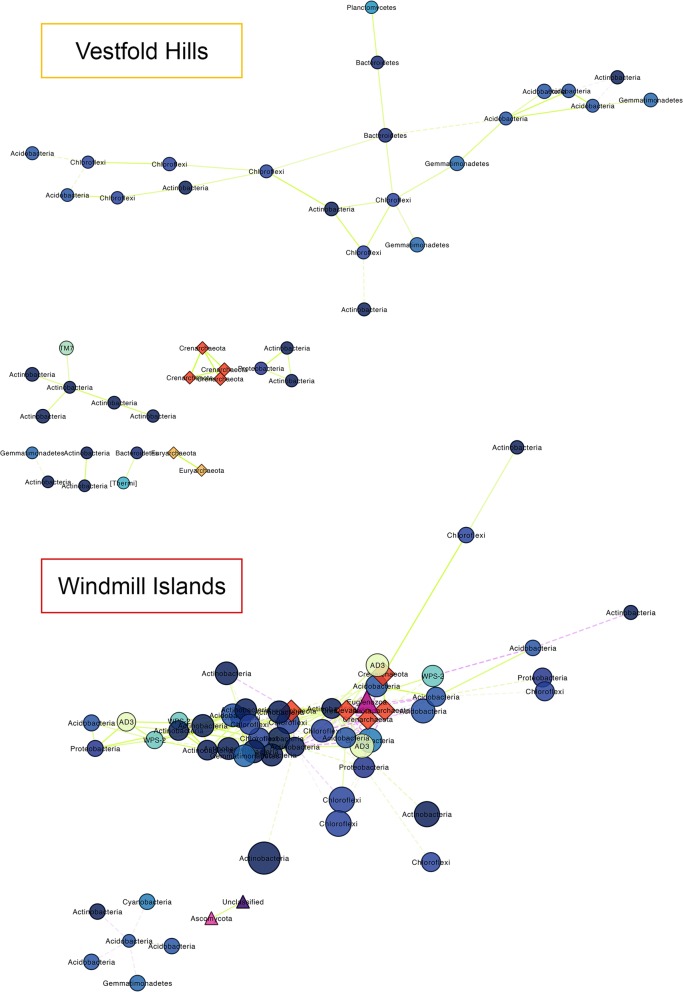
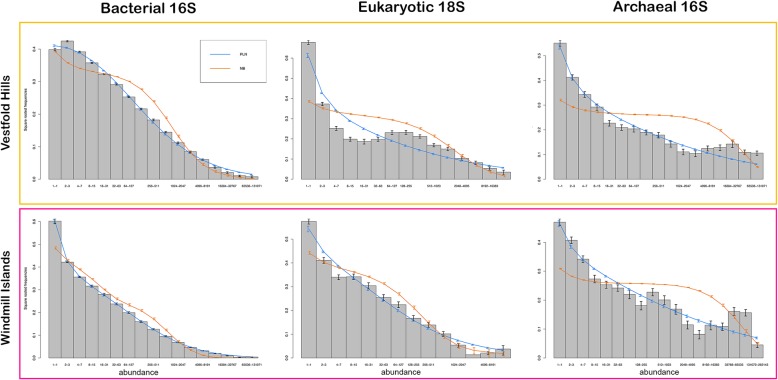
Our findings reveal distinct regional differences in phylogenetic composition, abundance and richness amongst microbial taxa. Actinobacteria dominated soils in both regions, yet Bacteroidetes were more abundant in the Vestfold Hills compared to the Windmill Islands, which contained a high abundance of novel phyla. However, intra-region comparisons demonstrate greater homogeneity of soil microbial communities and measured environmental parameters between sites at the Vestfold Hills. Community richness is largely driven by a variable suite of parameters but robust associations between co-existing members highlight potential interactions and sharing of niche space by diverse taxa from all three microbial domains of life examined. Overall, non-neutral processes appear to structure the polar soil microbiomes studied here, with niche partitioning being particularly strong for bacterial communities at the Windmill Islands. Eukaryotic and archaeal communities reveal weaker niche-driven signatures accompanied by multimodality, suggesting the emergence of neutrality.
We provide new information on assemblage patterns, environmental drivers and non-random occurrences for Antarctic soil microbiomes, particularly the Vestfold Hills, where basic diversity, ecology and life history strategies of resident microbiota are largely unknown. Greater understanding of these basic ecological concepts is a pivotal step towards effective conservation management.
居民土壤微生物在维持陆地南极洲的核心生态系统过程中发挥着关键作用,通常涉及具有新颖功能特征的独特分类群。然而,这些群落的生物多样性全貌和无偏向生态位过程仍不清楚。在这项研究中,我们结合多元分析、共现网络和拟合的物种丰度分布,对来自两个东南极地区(沃斯托克山脉和风车群岛)的 9 个地点的大量细菌、微真核生物和古菌扩增子测序数据进行了分析,以揭示土壤微生物组的模式。据我们所知,这是第一篇关于超干旱沃斯托克山脉土壤环境的微生物生物多样性报告。
我们的研究结果揭示了微生物分类群在系统发育组成、丰度和丰富度方面存在明显的区域差异。放线菌在两个地区的土壤中均占主导地位,但与风车群岛相比,沃斯托克山脉的细菌数量更多,而且风车群岛含有大量新的门。然而,区域内的比较表明,沃斯托克山脉各个站点的土壤微生物群落和测量的环境参数之间具有更大的同质性。群落丰富度主要由一系列可变参数驱动,但共存成员之间的稳健关联突出了不同分类群之间潜在的相互作用和生态位空间的共享,这些分类群来自生命的三个微生物领域。总的来说,非中性过程似乎构成了这里研究的极地土壤微生物组,在风车群岛,细菌群落的生态位划分尤为强烈。真核生物和古菌群落显示出较弱的由生态位驱动的特征,伴随着多峰性,表明中性的出现。
我们提供了南极土壤微生物组,特别是沃斯托克山脉土壤微生物组的组合模式、环境驱动因素和非随机出现的新信息,在沃斯托克山脉,居民微生物的基本多样性、生态学和生活史策略在很大程度上是未知的。对这些基本生态概念的更深入了解是有效保护管理的关键步骤。