Hydrological Sciences Laboratory, NASA Goddard Space Flight Center, Greenbelt, MD, USA.
Science Applications International Corporation, Greenbelt, MD, USA.
Sci Rep. 2022 Jan 19;12(1):964. doi: 10.1038/s41598-022-05130-0.
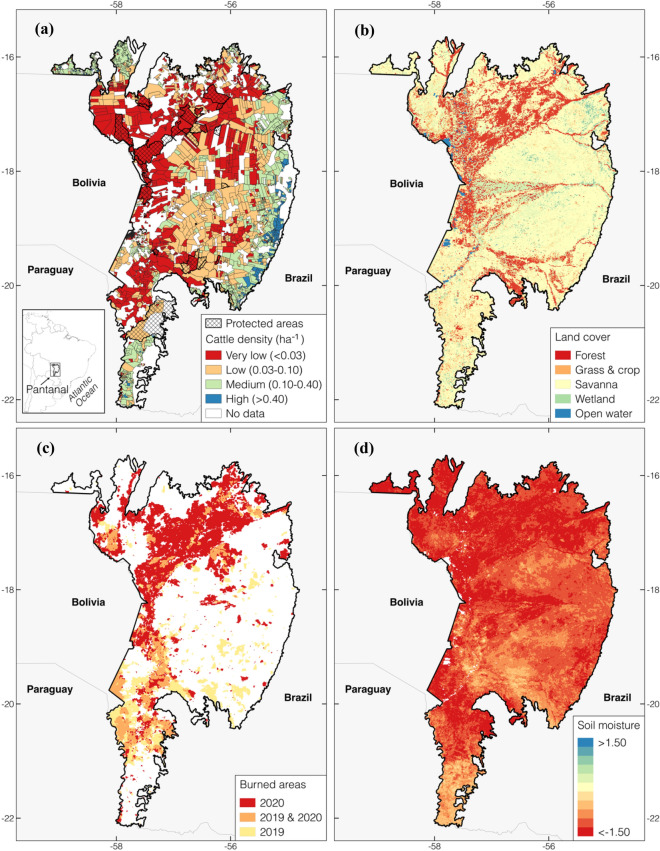
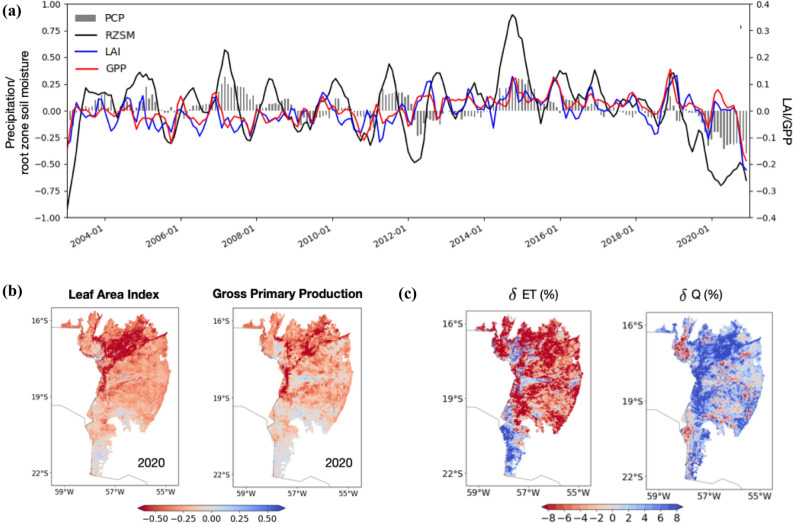
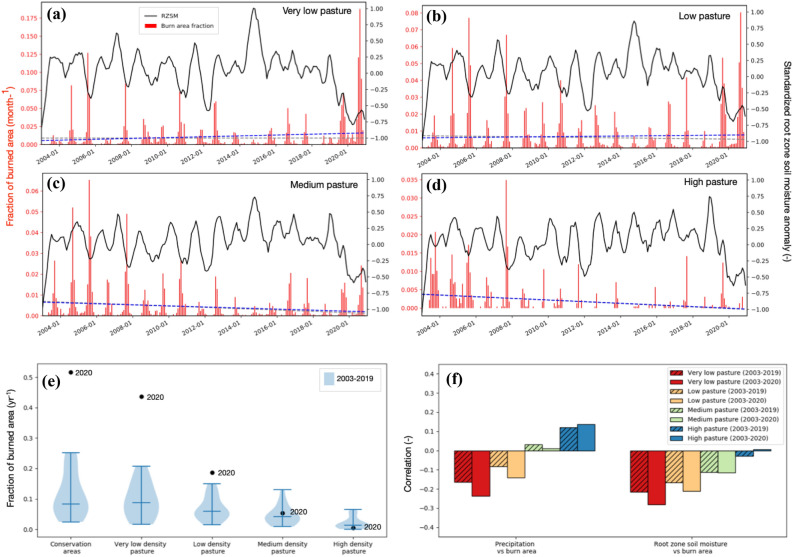
The Pantanal, the largest contiguous wetland in the world with a high diversity of ecosystems and habitat for several endangered species, was impacted by record-breaking wildfires in 2020. In this study, we integrate satellite and modeling data that enable exploration of natural and human contributing factors to the unprecedented 2020 fires. We demonstrate that the fires were fueled by an exceptional multi-year drought, but dry conditions solely could not explain the spatial patterns of burning. Our analysis reveals how human-caused fires exacerbated drought effects on natural ecosystem within the Pantanal, with large burned fractions primarily over natural (52%), and low cattle density areas (44%) in 2020. The post-fire ecosystem and hydrology changes also had strong ecological effects, with vegetation productivity less than - 1.5 σ over more than 30% of the natural and conservation areas. In contrast to more managed areas, there was a clear decrease in evaporation (by ~ 9%) and an increase in runoff (by ~ 5%) over the natural areas, with long-term impacts on ecosystem recovery and fire risk. This study provides the first tropical evidence outside rainforests of the synergy between climate, land management and fires, and the associated impacts on the ecosystem and hydrology over the largest contiguous wetlands in the world.
潘塔纳尔湿地是世界上最大的连续湿地,拥有多样化的生态系统和多种濒危物种的栖息地,在 2020 年遭遇了创纪录的野火。在这项研究中,我们整合了卫星和模型数据,以便探索自然和人为因素对 2020 年这场前所未有的火灾的影响。我们的研究表明,火灾是由异常的多年干旱引发的,但仅干燥的条件并不能解释燃烧的空间模式。我们的分析揭示了人为火灾如何加剧了干旱对潘塔纳尔湿地自然生态系统的影响,2020 年有大量的燃烧区域主要集中在自然区域(52%)和低牛密度地区(44%)。火灾后的生态系统和水文变化也产生了强烈的生态影响,植被生产力在自然和保护区的 30%以上地区下降了超过 1.5σ。与管理更为严格的地区相比,自然地区的蒸发量明显减少(约减少 9%),径流量增加(约增加 5%),对生态系统恢复和火灾风险产生了长期影响。本研究首次在热带雨林以外的地区提供了热带地区的证据,证明了气候、土地管理和火灾之间的协同作用,以及对世界上最大的连续湿地的生态系统和水文变化的相关影响。