Moreno-Vedia Juan, Girona Josefa, Ibarretxe Daiana, Masana Lluís, Rodríguez-Calvo Ricardo
Vascular Medicine and Metabolism Unit, Research Unit on Lipids and Atherosclerosis, "Sant Joan" University Hospital, Universitat Rovira i Virgili, Institut de Investigació Sanitaria Pere Virgili (IISPV), 43204 Reus, Spain.
Spanish Biomedical Research Centre in Diabetes and Associated Metabolic Disorders (CIBERDEM), 28029 Madrid, Spain.
Biomedicines. 2022 Jan 17;10(1):197. doi: 10.3390/biomedicines10010197.
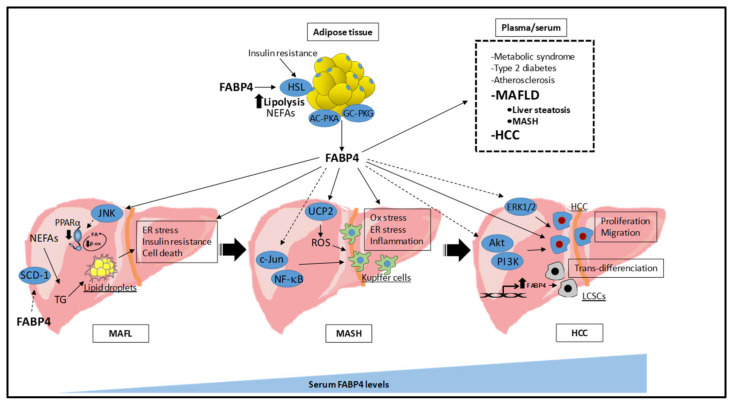
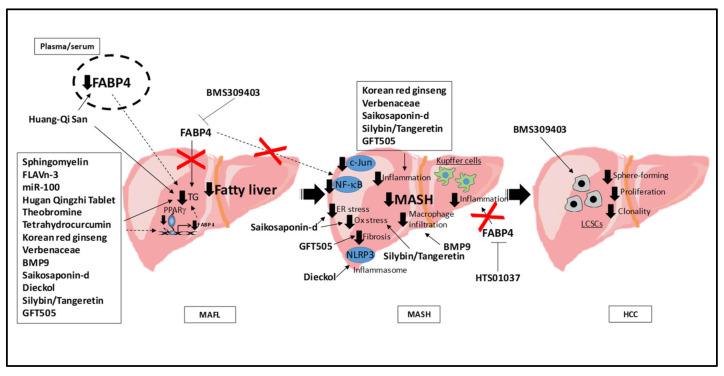
Metabolic-associated fatty liver disease (MAFLD), the main cause of chronic liver disease worldwide, is a progressive disease ranging from fatty liver to steatohepatitis (metabolic-associated steatohepatitis; MASH). Nevertheless, it remains underdiagnosed due to the lack of effective non-invasive methods for its diagnosis and staging. Although MAFLD has been found in lean individuals, it is closely associated with obesity-related conditions. Adipose tissue is the main source of liver triglycerides and adipocytes act as endocrine organs releasing a large number of adipokines and pro-inflammatory mediators involved in MAFLD progression into bloodstream. Among the adipocyte-derived molecules, fatty acid binding protein 4 (FABP4) has been recently associated with fatty liver and additional features of advanced stages of MAFLD. Additionally, emerging data from preclinical studies propose FABP4 as a causal actor involved in the disease progression, rather than a mere biomarker for the disease. Therefore, the FABP4 regulation could be considered as a potential therapeutic strategy to MAFLD. Here, we review the current knowledge of FABP4 in MAFLD, as well as its potential role as a therapeutic target for this disease.
代谢相关脂肪性肝病(MAFLD)是全球慢性肝病的主要病因,是一种从脂肪肝发展到脂肪性肝炎(代谢相关脂肪性肝炎;MASH)的进展性疾病。然而,由于缺乏有效的非侵入性诊断和分期方法,该病仍未得到充分诊断。虽然在瘦人身上也发现了MAFLD,但它与肥胖相关疾病密切相关。脂肪组织是肝脏甘油三酯的主要来源,脂肪细胞作为内分泌器官,会释放大量参与MAFLD进展的脂肪因子和促炎介质进入血液。在脂肪细胞衍生的分子中,脂肪酸结合蛋白4(FABP4)最近被发现与脂肪肝以及MAFLD晚期的其他特征有关。此外,临床前研究的新数据表明FABP4是参与疾病进展的因果因素,而不仅仅是该疾病的生物标志物。因此,FABP4的调节可被视为MAFLD的一种潜在治疗策略。在此,我们综述了目前关于FABP4在MAFLD中的知识,以及它作为该疾病治疗靶点的潜在作用。