Department of Chemistry, University of Wisconsin-Madison, Madison, Wisconsin 53706, United States.
Department of Chemistry, University of Utah, Salt Lake City, Utah 84112, United States.
Biochemistry. 2022 Feb 1;61(3):195-205. doi: 10.1021/acs.biochem.1c00644. Epub 2022 Jan 21.
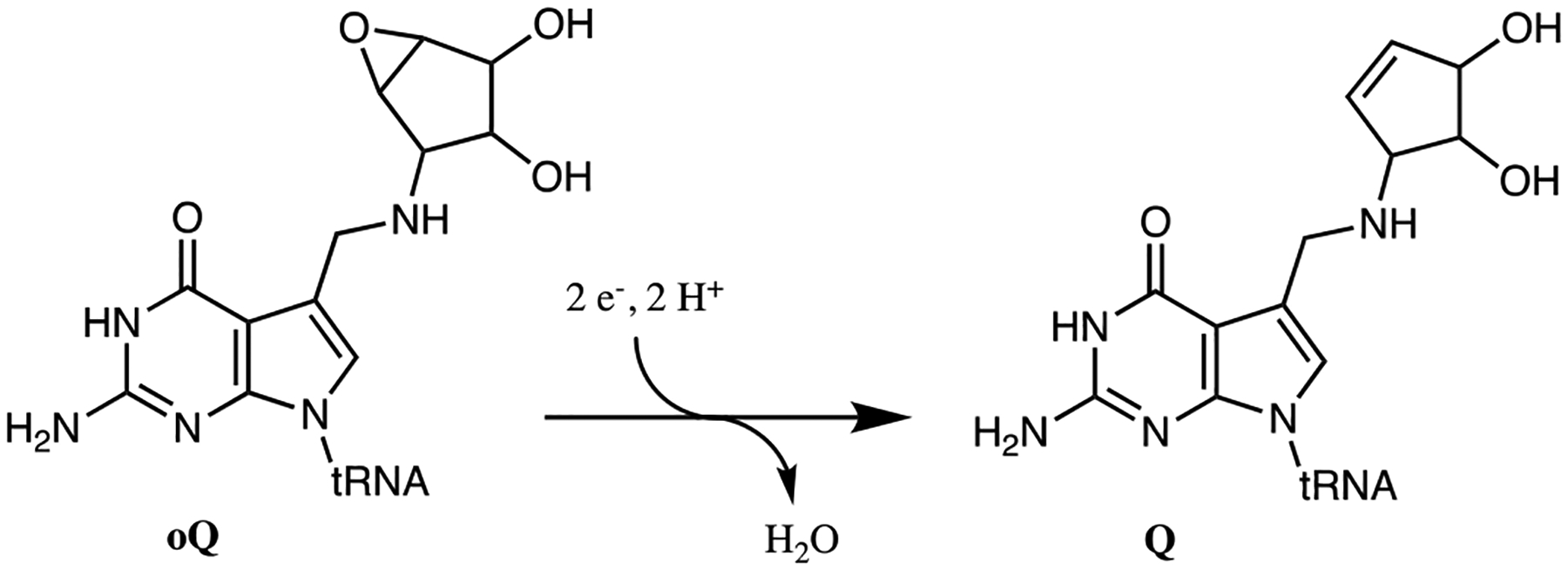
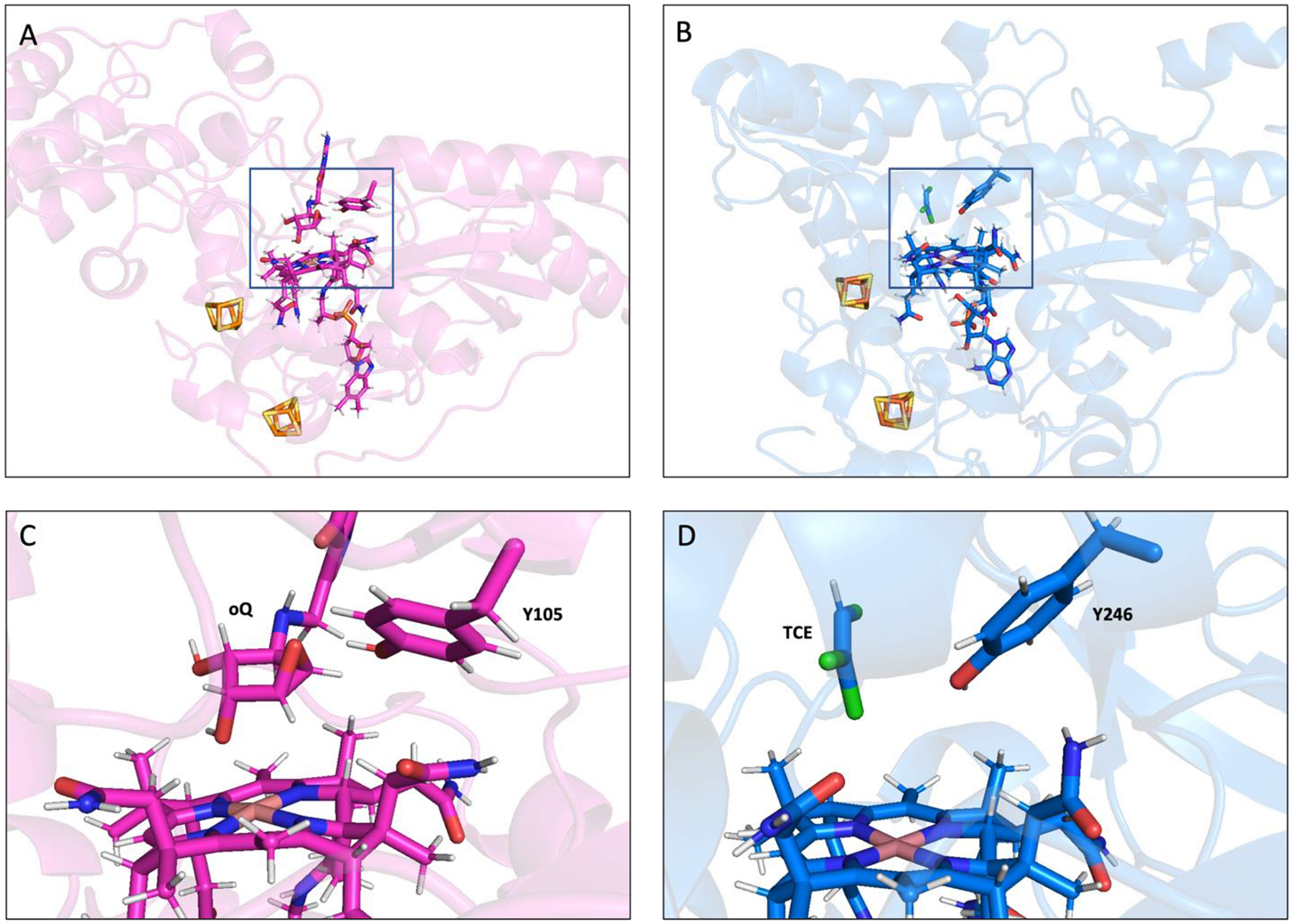
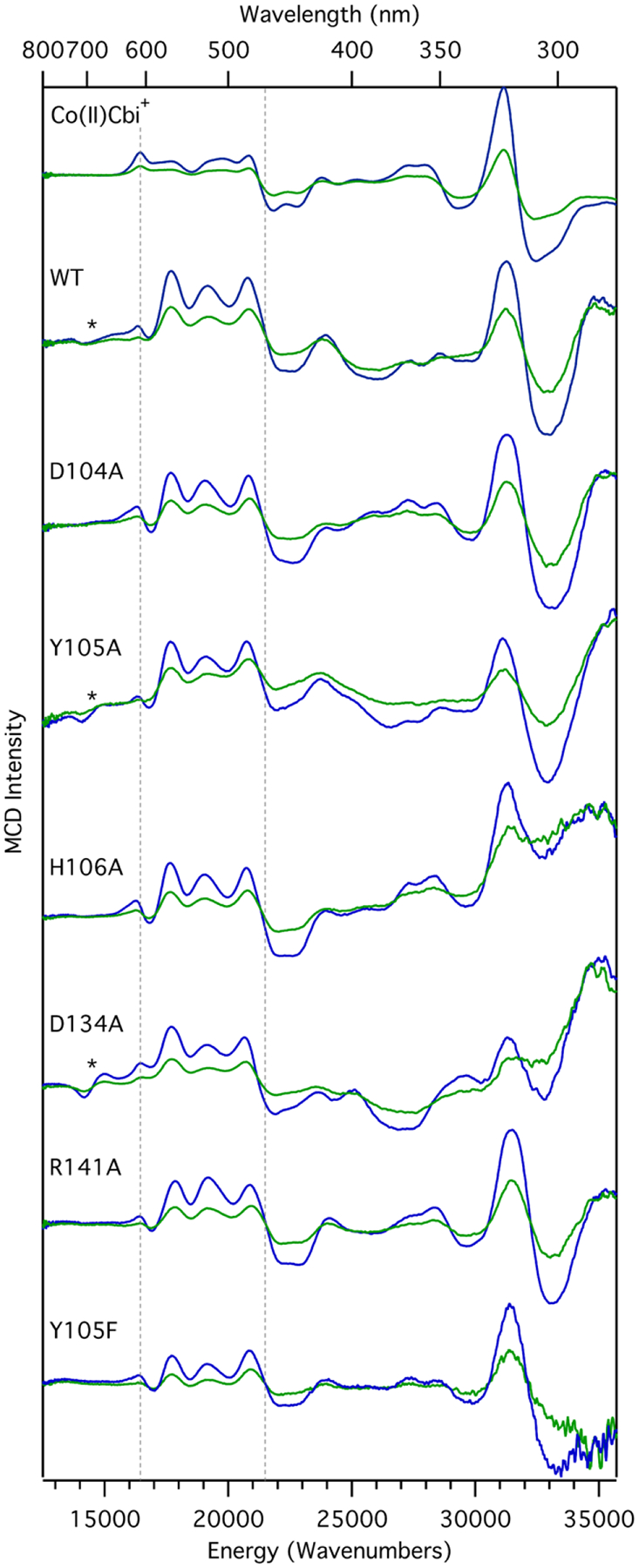
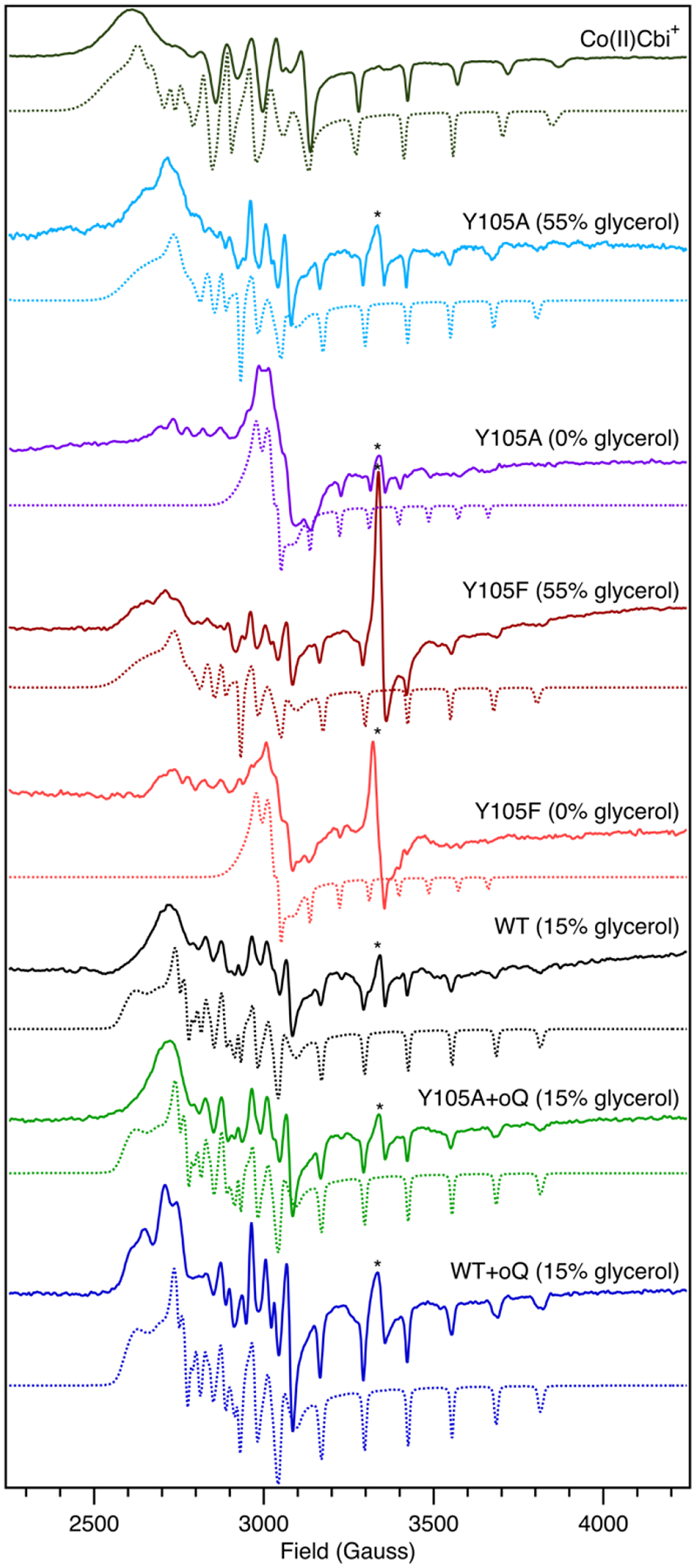
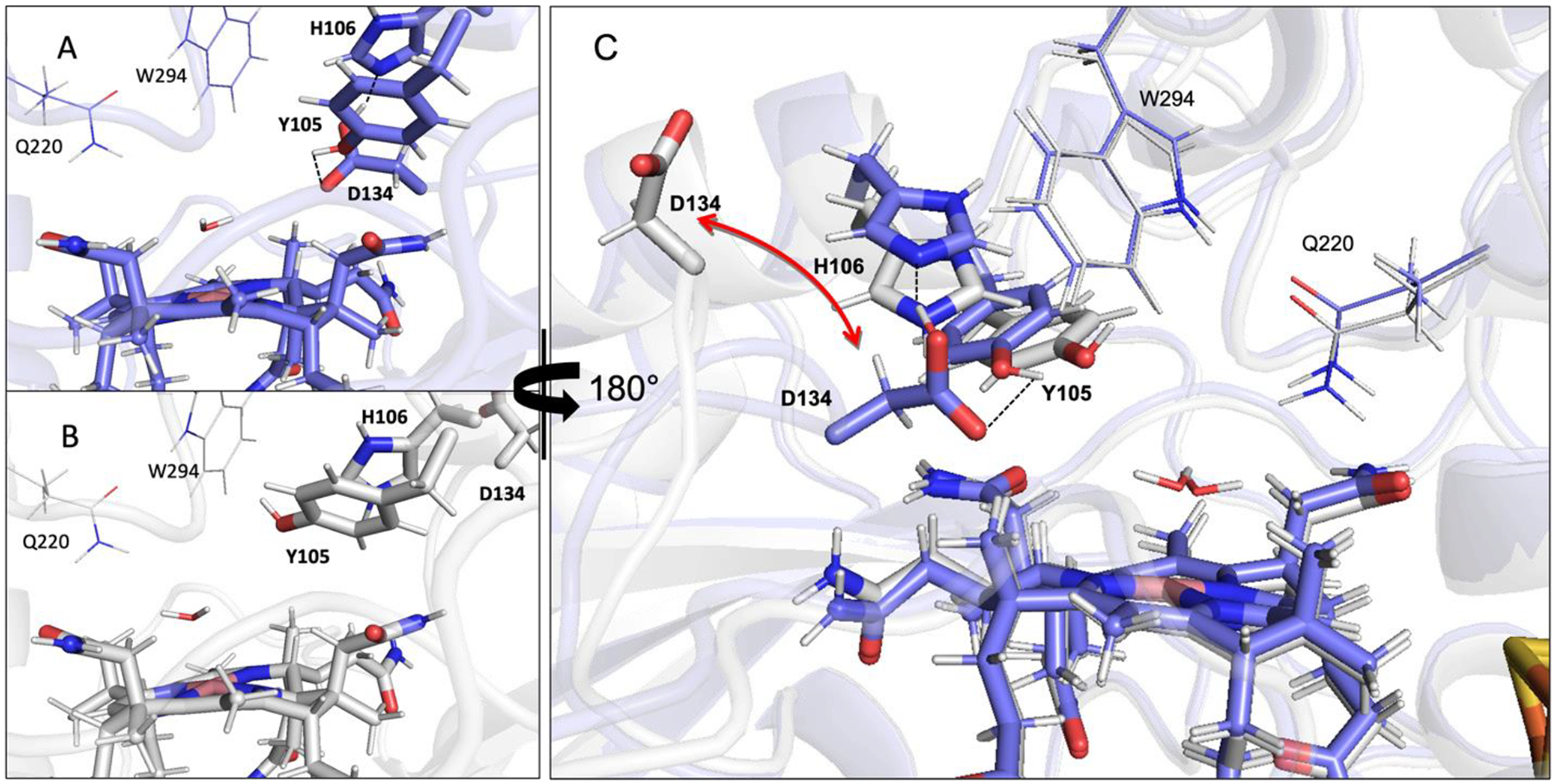
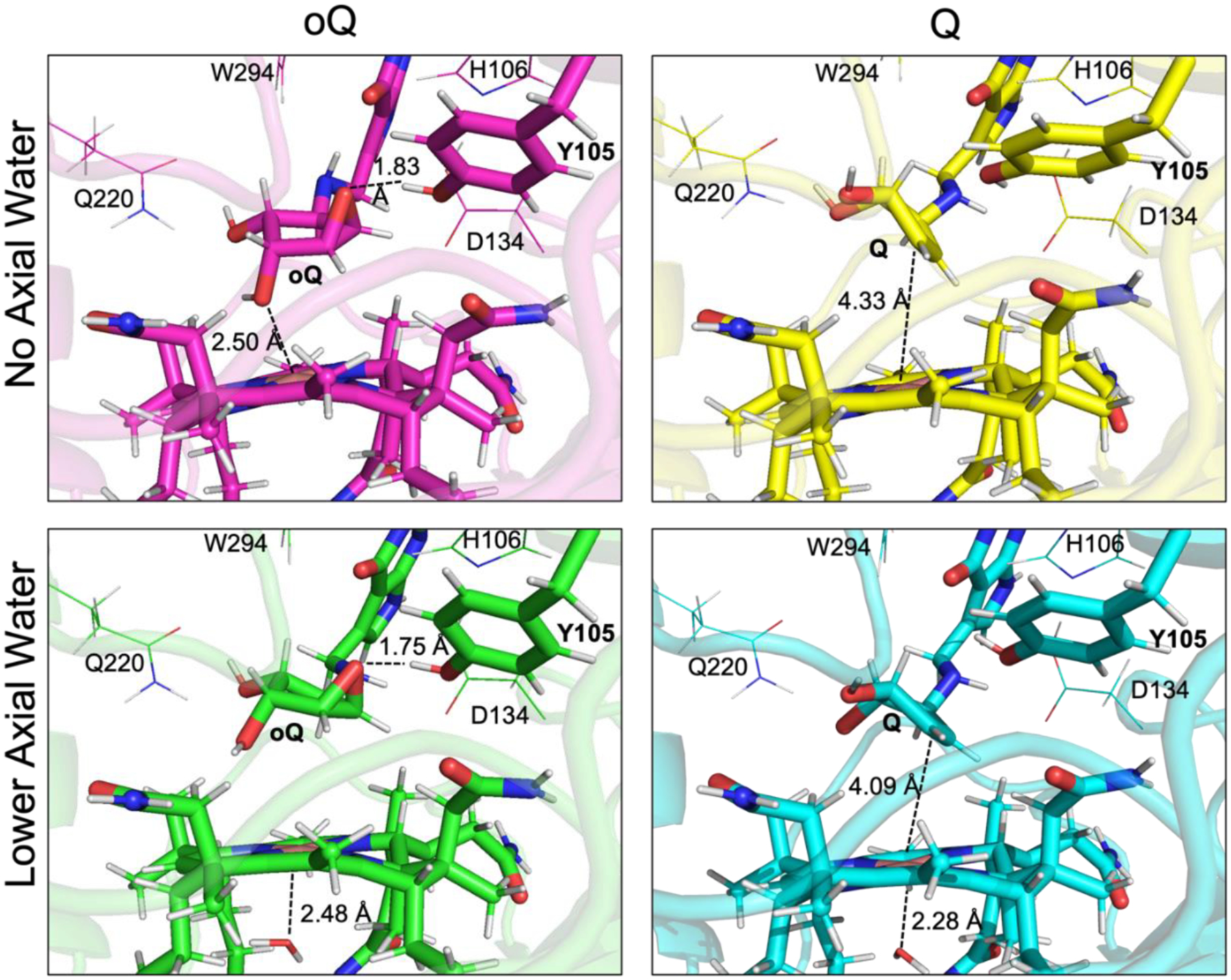
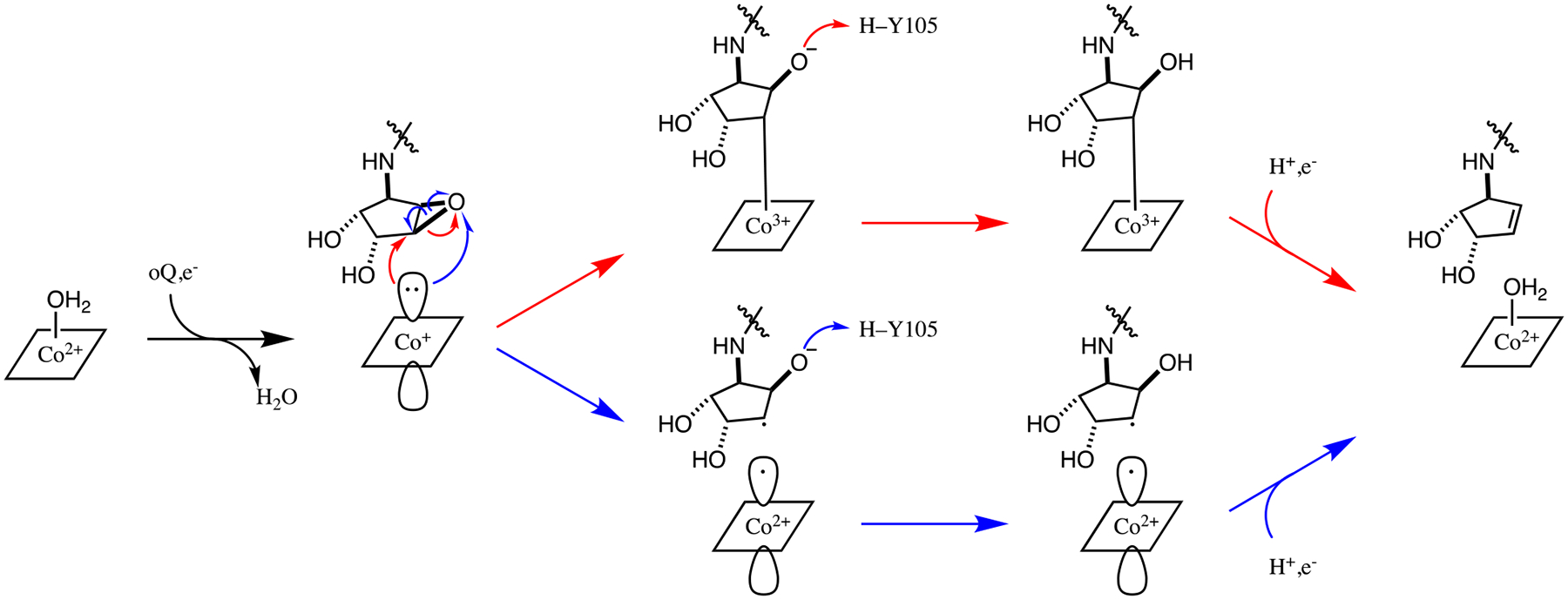
Queuosine (Q) is a highly modified nucleoside of transfer RNA that is formed from guanosine triphosphate over the course of eight steps. The final step in this process, involving the conversion of epoxyqueuosine (oQ) to Q, is catalyzed by the enzyme QueG. A recent X-ray crystallographic study revealed that QueG possesses the same cofactors as reductive dehalogenases, including a base-off Co(II)cobalamin (Co(II)Cbl) species and two [4Fe-4S] clusters. While the initial step in the catalytic cycle of QueG likely involves the formation of a reduced Co(I)Cbl species, the mechanisms employed by this enzyme to accomplish the thermodynamically challenging reduction of base-off Co(II)Cbl to Co(I)Cbl and to convert oQ to Q remain unknown. In this study, we have used electron paramagnetic resonance (EPR) and magnetic circular dichroism (MCD) spectroscopies in conjunction with whole-protein quantum mechanics/molecular mechanics (QM/MM) computations to further characterize wild-type QueG and select variants. Our data indicate that the Co(II)Cbl cofactor remains five-coordinate upon substrate binding to QueG. Notably, during a QM/MM optimization of a putative QueG reaction intermediate featuring an alkyl-Co(III) species, the distance between the Co ion and coordinating C atom of oQ increased to >3.3 Å and the C-O bond of the epoxide reformed to regenerate the oQ-bound Co(I)Cbl reactant state of QueG. Thus, our computations indicate that the QueG mechanism likely involves single-electron transfer from the transient Co(I)Cbl species to oQ rather than direct Co-C bond formation, similar to the mechanism that has recently been proposed for the tetrachloroethylene reductive dehalogenase PceA.
Queuosine (Q) 是一种高度修饰的转移 RNA 核苷,由三磷酸鸟苷经过八步反应生成。这个过程的最后一步,即环氧 Queuosine (oQ) 转化为 Q,是由酶 QueG 催化的。最近的一项 X 射线晶体学研究表明,QueG 拥有与还原性脱卤酶相同的辅因子,包括一个碱基脱离的 Co(II)钴胺素 (Co(II)Cbl) 物种和两个 [4Fe-4S] 簇。虽然 QueG 催化循环的初始步骤可能涉及形成还原的 Co(I)Cbl 物种,但该酶完成热力学挑战性的碱基脱离的 Co(II)Cbl 还原为 Co(I)Cbl 并将 oQ 转化为 Q 的机制仍不清楚。在这项研究中,我们使用电子顺磁共振 (EPR) 和圆二色性 (MCD) 光谱学结合全蛋白量子力学/分子力学 (QM/MM) 计算进一步表征野生型 QueG 和选择变体。我们的数据表明,在 QueG 结合底物时,Co(II)Cbl 辅因子仍然保持五配位。值得注意的是,在对具有烷基-Co(III)物种的假定 QueG 反应中间体进行 QM/MM 优化期间,Co 离子和 oQ 配位 C 原子之间的距离增加到 >3.3 Å,并且环氧化物的 C-O 键重新形成以再生 QueG 的 oQ 结合 Co(I)Cbl 反应物状态。因此,我们的计算表明,QueG 机制可能涉及瞬态 Co(I)Cbl 物种向 oQ 的单电子转移,而不是直接的 Co-C 键形成,类似于最近提出的四氯乙烯还原性脱卤酶 PceA 的机制。