Laboratoire de Chimie des Processus Biologiques, CNRS-UMR 8229, Collège De France, Université Pierre et Marie Curie, 11 place Marcelin Berthelot, Paris 75231 Cedex 05, France.
Department of Microbiology and Cell Science, University of Florida, Gainesville, Florida 32611, United States.
Acc Chem Res. 2023 Nov 21;56(22):3142-3152. doi: 10.1021/acs.accounts.3c00418. Epub 2023 Nov 2.
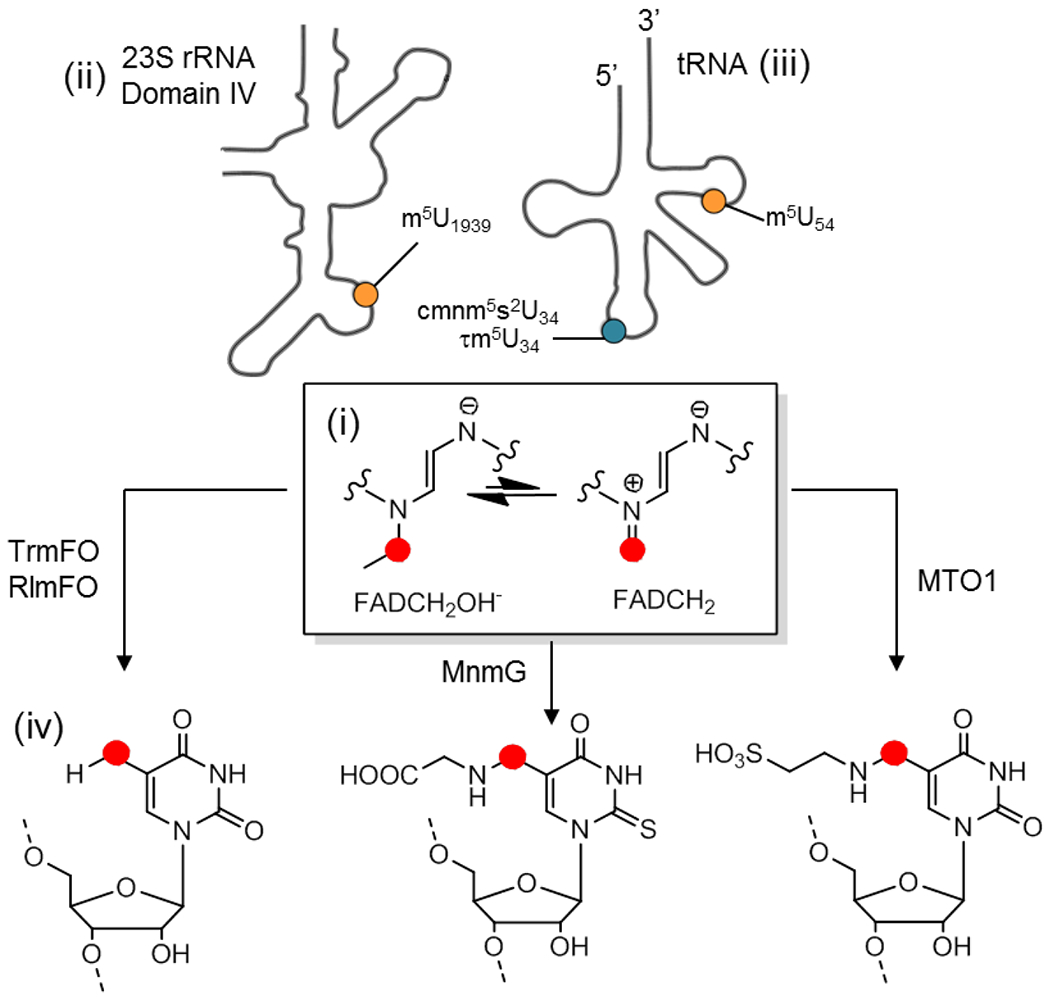
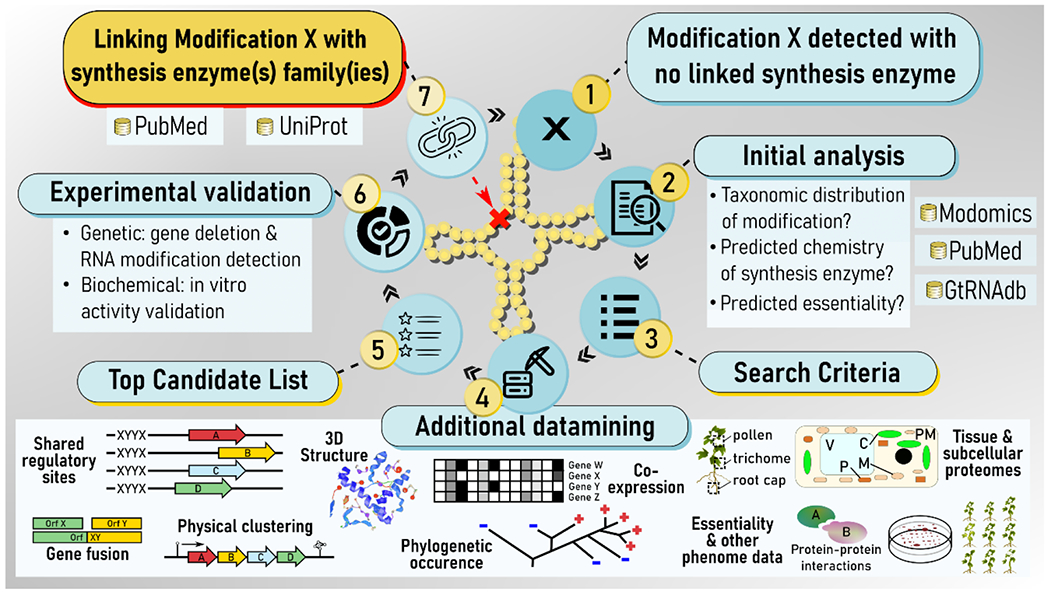
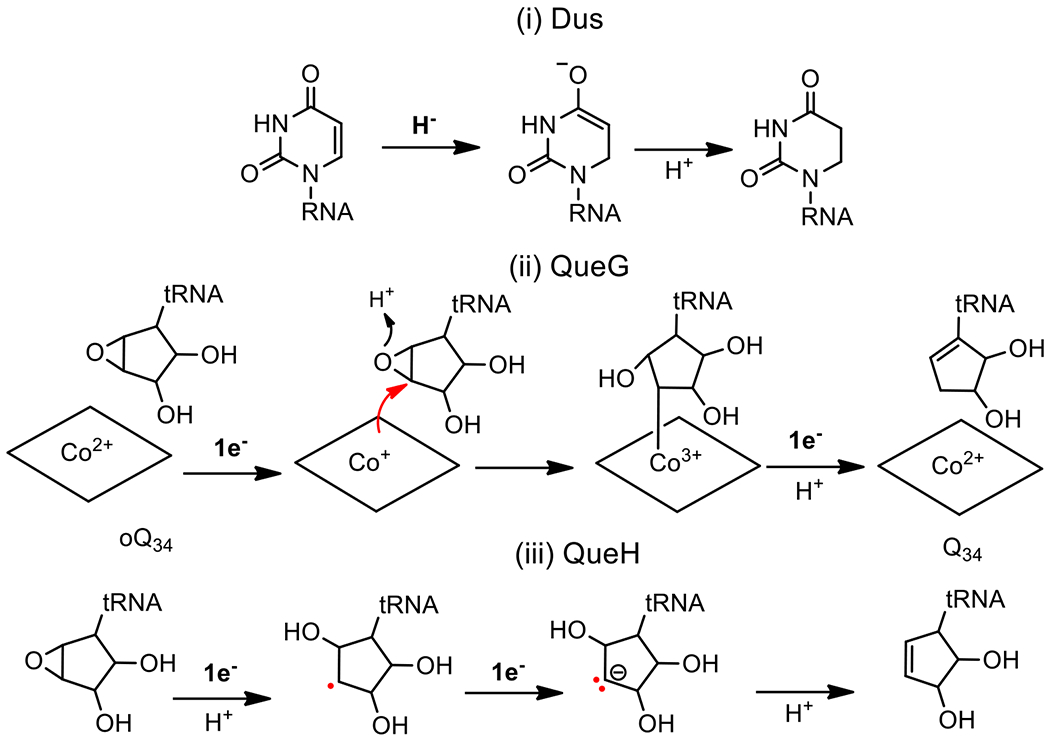
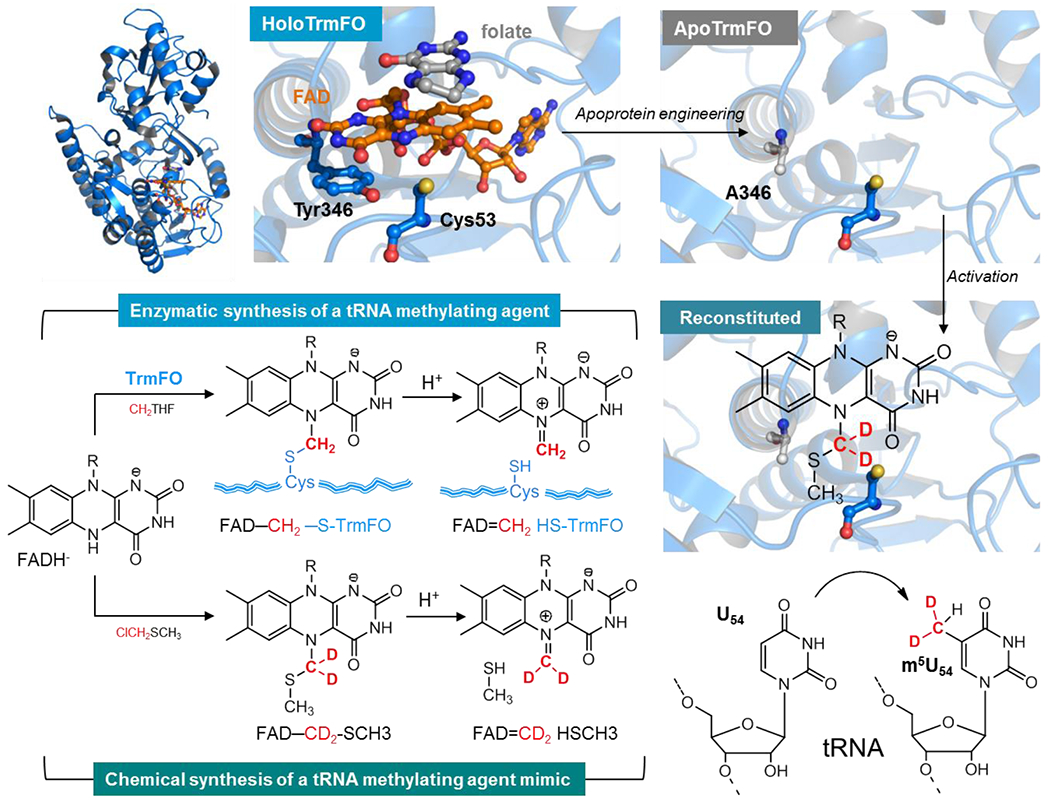
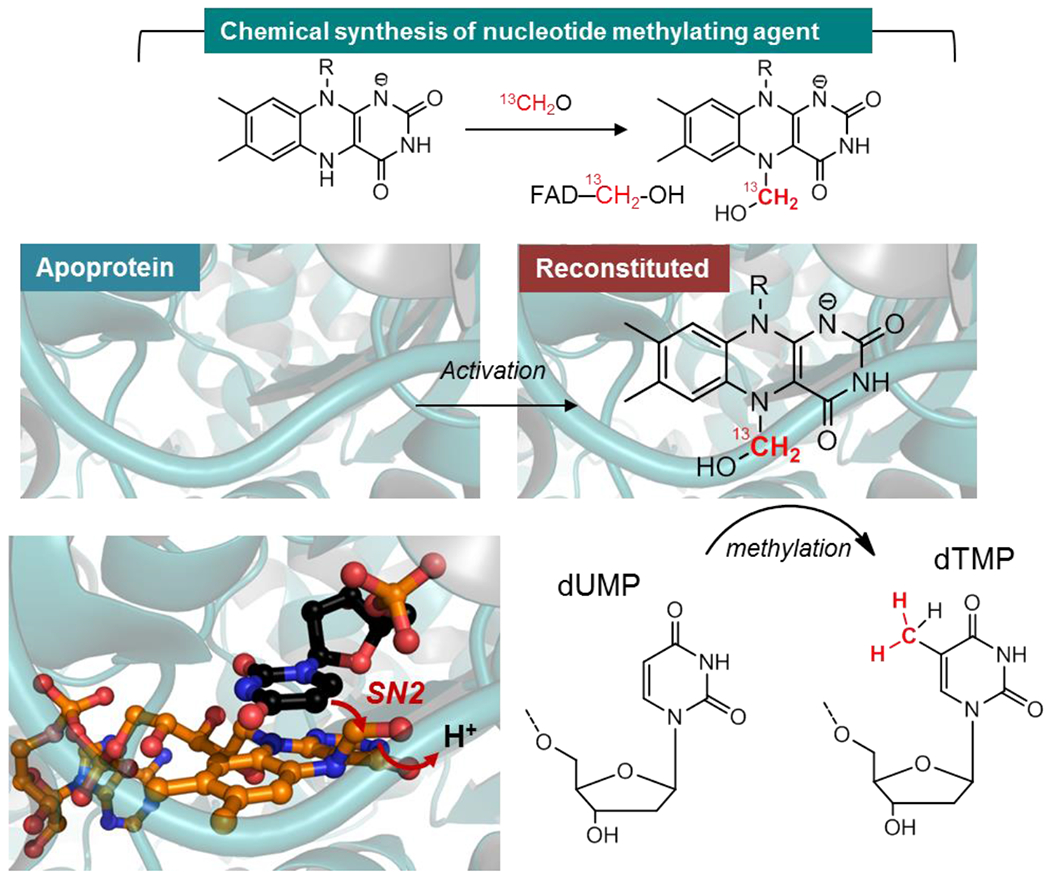
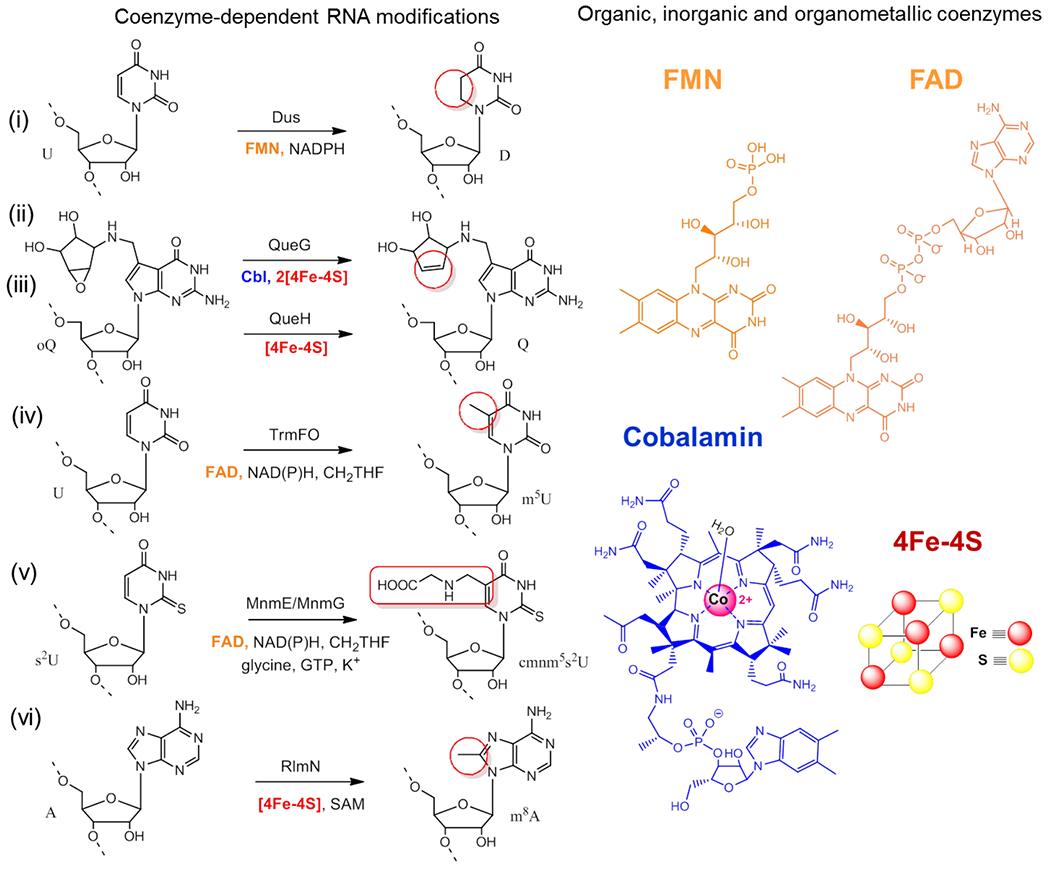
RNA modifications found in most RNAs, particularly in tRNAs and rRNAs, reveal an abundance of chemical alterations of nucleotides. Over 150 distinct RNA modifications are known, emphasizing a remarkable diversity of chemical moieties in RNA molecules. These modifications play pivotal roles in RNA maturation, structural integrity, and the fidelity and efficiency of translation processes. The catalysts responsible for these modifications are RNA-modifying enzymes that use a striking array of chemistries to directly influence the chemical landscape of RNA. This diversity is further underscored by instances where the same modification is introduced by distinct enzymes that use unique catalytic mechanisms and cofactors across different domains of life. This phenomenon of convergent evolution highlights the biological importance of RNA modification and the vast potential within the chemical repertoire for nucleotide alteration. While shared RNA modifications can hint at conserved enzymatic pathways, a major bottleneck is to identify alternative routes within species that possess a modified RNA but are devoid of known RNA-modifying enzymes. To address this challenge, a combination of bioinformatic and experimental strategies proves invaluable in pinpointing new genes responsible for RNA modifications. This integrative approach not only unveils new chemical insights but also serves as a wellspring of inspiration for biocatalytic applications and drug design. In this Account, we present how comparative genomics and genome mining, combined with biomimetic synthetic chemistry, biochemistry, and anaerobic crystallography, can be judiciously implemented to address unprecedented and alternative chemical mechanisms in the world of RNA modification. We illustrate these integrative methodologies through the study of tRNA and rRNA modifications, dihydrouridine, 5-methyluridine, queuosine, 8-methyladenosine, 5-carboxymethylamino-methyluridine, or 5-taurinomethyluridine, each dependent on a diverse array of redox chemistries, often involving organic compounds, organometallic complexes, and metal coenzymes. We explore how vast genome and tRNA databases empower comparative genomic analyses and enable the identification of novel genes that govern RNA modification. Subsequently, we describe how the isolation of a stable reaction intermediate can guide the synthesis of a biomimetic to unveil new enzymatic pathways. We then discuss the usefulness of a biochemical "shunt" strategy to study catalytic mechanisms and to directly visualize reactive intermediates bound within active sites. While we primarily focus on various RNA-modifying enzymes studied in our laboratory, with a particular emphasis on the discovery of a SAM-independent methylation mechanism, the strategies and rationale presented herein are broadly applicable for the identification of new enzymes and the elucidation of their intricate chemistries. This Account offers a comprehensive glimpse into the evolving landscape of RNA modification research and highlights the pivotal role of integrated approaches to identify novel enzymatic pathways.
RNA 修饰存在于大多数 RNA 中,尤其是 tRNA 和 rRNA 中,揭示了核苷酸化学修饰的丰富性。已知有超过 150 种不同的 RNA 修饰,这强调了 RNA 分子中化学基团的显著多样性。这些修饰在 RNA 成熟、结构完整性以及翻译过程的保真度和效率中发挥着关键作用。负责这些修饰的催化剂是 RNA 修饰酶,它们使用各种化学物质直接影响 RNA 的化学景观。这种多样性进一步强调了相同修饰由使用不同催化机制和辅助因子的不同酶引入的情况,这些酶存在于生命的不同领域。这种趋同进化现象突出了 RNA 修饰的生物学重要性以及核苷酸改变的化学库中的巨大潜力。虽然共享的 RNA 修饰可以暗示保守的酶途径,但一个主要的瓶颈是在具有修饰 RNA 但缺乏已知 RNA 修饰酶的物种中确定替代途径。为了解决这个挑战,生物信息学和实验策略的结合在确定负责 RNA 修饰的新基因方面非常宝贵。这种综合方法不仅揭示了新的化学见解,而且为生物催化应用和药物设计提供了灵感源泉。在本报告中,我们展示了比较基因组学和基因组挖掘如何与仿生合成化学、生物化学和厌氧晶体学相结合,以明智地解决 RNA 修饰领域前所未有的替代化学机制。我们通过研究 tRNA 和 rRNA 修饰、二氢尿苷、5-甲基尿苷、Queuosine、8-甲基腺嘌呤、5-羧甲基氨基甲基尿苷或 5-牛磺酸甲基尿苷来举例说明这些综合方法,每种修饰都依赖于多种多样的氧化还原化学,通常涉及有机化合物、有机金属配合物和金属辅酶。我们探讨了庞大的基因组和 tRNA 数据库如何为比较基因组分析提供支持,并能够识别控制 RNA 修饰的新基因。随后,我们描述了如何通过分离稳定的反应中间体来指导仿生合成以揭示新的酶途径。然后,我们讨论了生化“分流”策略的有用性,以研究催化机制并直接可视化结合在活性位点内的反应中间体。虽然我们主要关注我们实验室研究的各种 RNA 修饰酶,特别强调发现 SAM 独立的甲基化机制,但这里提出的策略和原理广泛适用于鉴定新酶和阐明其复杂的化学性质。本报告全面概述了 RNA 修饰研究的不断发展的格局,并强调了综合方法在鉴定新的酶途径方面的关键作用。