Department of Pediatric Surgery, University Children's Hospital Basel (UKBB) and University of Basel, Basel, Switzerland.
Department of Pediatric Surgery, University Children's Hospital Zürich, Zürich, Switzerland.
Front Immunol. 2022 Jan 6;12:781147. doi: 10.3389/fimmu.2021.781147. eCollection 2021.
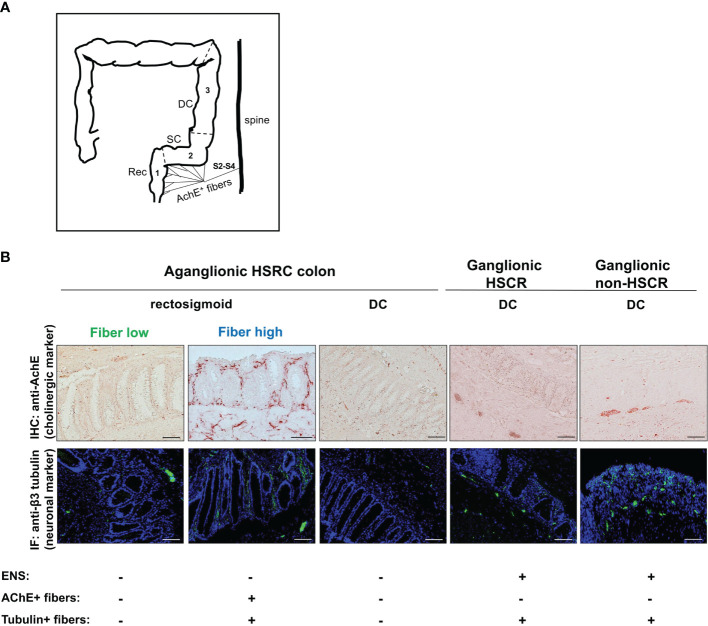
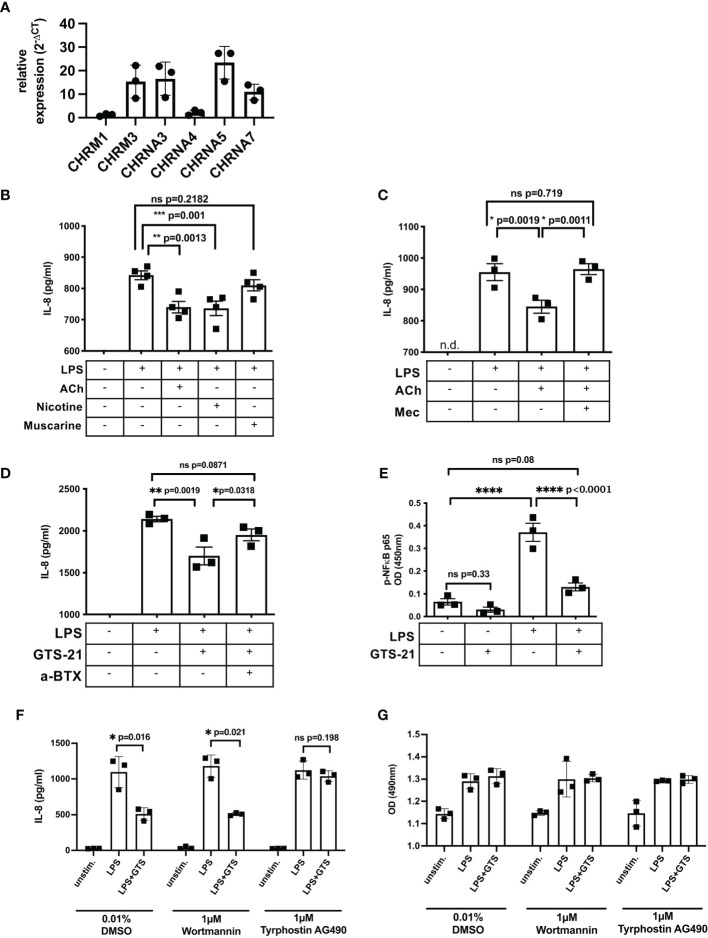
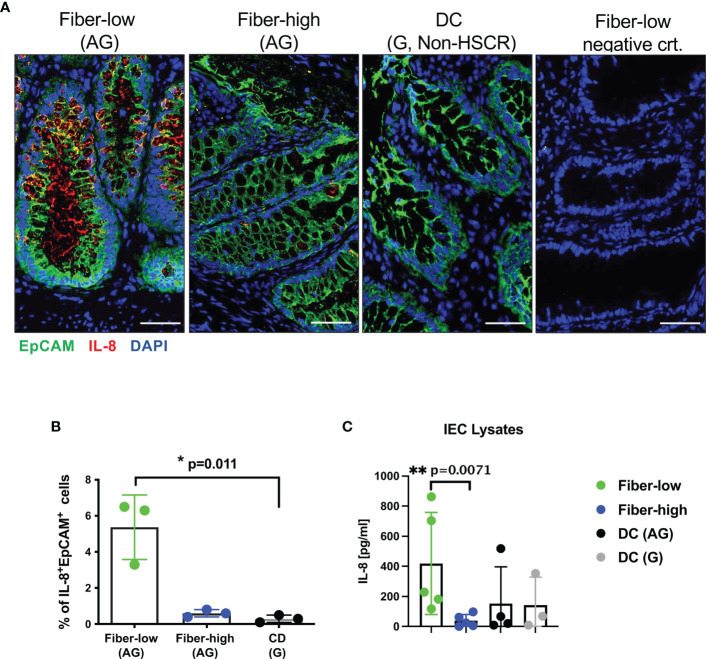
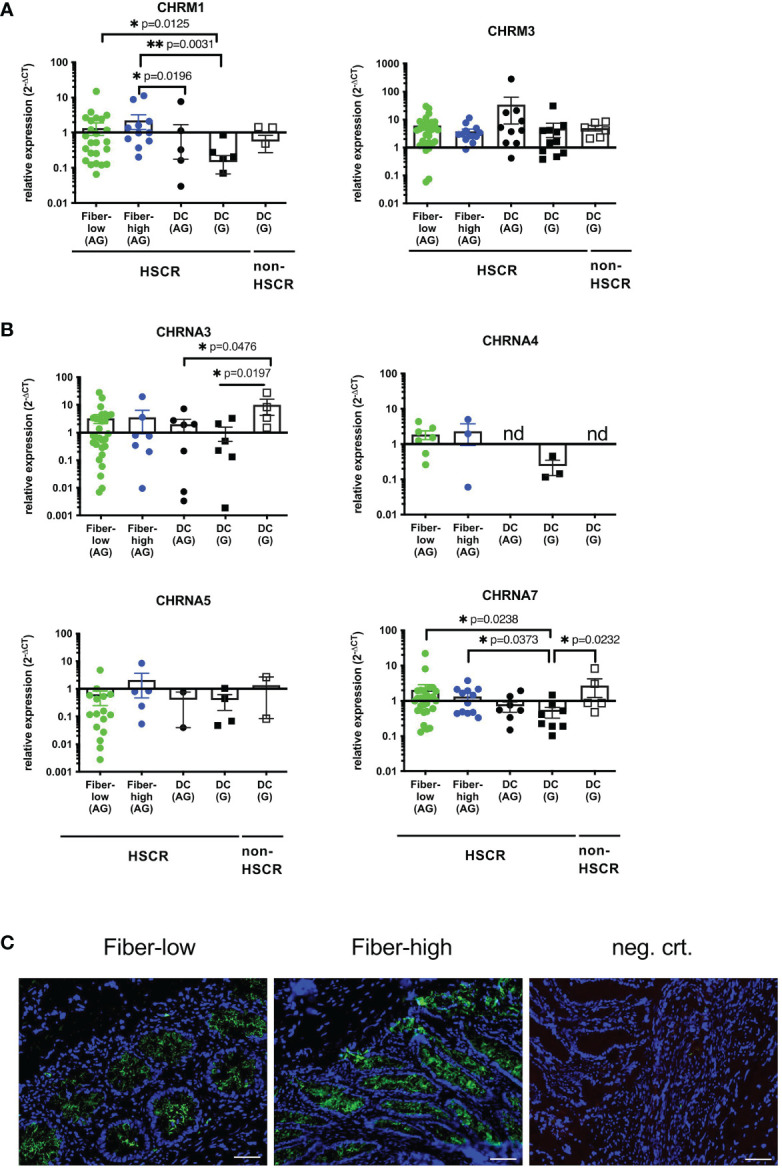
Infants affected by Hirschsprung disease (HSCR), a neurodevelopmental congenital disorder, lack ganglia of the intrinsic enteric nervous system (aganglionosis) in a variable length of the colon, and are prone to developing severe Hirschsprung-associated enterocolitis (HAEC). HSCR patients typically show abnormal dense innervation of extrinsic cholinergic nerve fibers throughout the aganglionic rectosigmoid. Cholinergic signaling has been reported to reduce inflammatory response. Consequently, a sparse extrinsic cholinergic innervation in the mucosa of the rectosigmoid correlates with increased inflammatory immune cell frequencies and higher incidence of HAEC in HSCR patients. However, whether cholinergic signals influence the pro-inflammatory immune response of intestinal epithelial cells (IEC) is unknown. Here, we analyzed colonic IEC isolated from 43 HSCR patients with either a low or high mucosal cholinergic innervation density (fiber-low versus fiber-high) as well as from control tissue. Compared to fiber-high samples, IEC purified from fiber-low rectosigmoid expressed significantly higher levels of IL-8 but not TNF-α, IL-10, TGF-β1, Muc-2 or tight junction proteins. IEC from fiber-low rectosigmoid showed higher IL-8 protein concentrations in cell lysates as well as prominent IL-8 immunoreactivity compared to IEC from fiber-high tissue. Using the human colonic IEC cell line SW480 we demonstrated that cholinergic signals suppress lipopolysaccharide-induced IL-8 secretion the alpha 7 nicotinic acetylcholine receptor (a7nAChR). In conclusion, we showed for the first time that the presence of a dense mucosal cholinergic innervation is associated with decreased secretion of IEC-derived pro-inflammatory IL-8 in the rectosigmoid of HSCR patients likely dependent on a7nAChR activation. Owing to the association between IL-8 and enterocolitis-prone, fiber-low HSCR patients, targeted therapies against IL-8 might be a promising immunotherapy candidate for HAEC treatment.
患有先天性神经发育障碍先天性巨结肠症(HSCR)的婴儿在结肠的可变长度中缺乏固有肠神经系统的神经节(无神经节),并且容易发生严重的先天性巨结肠相关结肠炎(HAEC)。HSCR 患者通常表现出整个无神经节直肠乙状结肠中异常密集的外源性胆碱能神经纤维支配。据报道,胆碱能信号可降低炎症反应。因此,直肠乙状结肠黏膜中外源性胆碱能神经支配稀疏与炎症免疫细胞频率增加和 HSCR 患者 HAEC 发生率增加相关。然而,胆碱能信号是否影响肠道上皮细胞(IEC)的促炎免疫反应尚不清楚。在这里,我们分析了来自 43 名 HSCR 患者的结肠 IEC,这些患者的黏膜胆碱能神经支配密度低(纤维低)或高(纤维高),以及来自对照组织的 IEC。与纤维高样本相比,从纤维低直肠乙状结肠纯化的 IEC 表达的 IL-8 水平明显更高,但 TNF-α、IL-10、TGF-β1、Muc-2 或紧密连接蛋白则不然。与纤维高组织的 IEC 相比,来自纤维低直肠乙状结肠的 IEC 在细胞裂解物中具有更高的 IL-8 蛋白浓度,并表现出明显的 IL-8 免疫反应性。使用人结肠 IEC 细胞系 SW480,我们证明了胆碱能信号可抑制脂多糖诱导的 IL-8 分泌,这依赖于α7 烟碱型乙酰胆碱受体(a7nAChR)。总之,我们首次表明,致密的黏膜胆碱能神经支配的存在与 HSCR 患者直肠乙状结肠中 IEC 衍生的促炎 IL-8 分泌减少有关,这可能依赖于 a7nAChR 的激活。由于 IL-8 与易发生结肠炎的纤维低 HSCR 患者之间存在关联,针对 IL-8 的靶向治疗可能是 HAEC 治疗的一种有前途的免疫治疗候选药物。