Gut Health Group, Rowett Institute, University of Aberdeen, Foresterhill, AB25 2ZD Aberdeen, UK.
Medical Microbiology and Infection Prevention, University of Groningen, University Medical Center Groningen, Hanzeplein 1, 9713 GZ Groningen, The Netherlands.
Microb Genom. 2022 Jan;8(1). doi: 10.1099/mgen.0.000739.
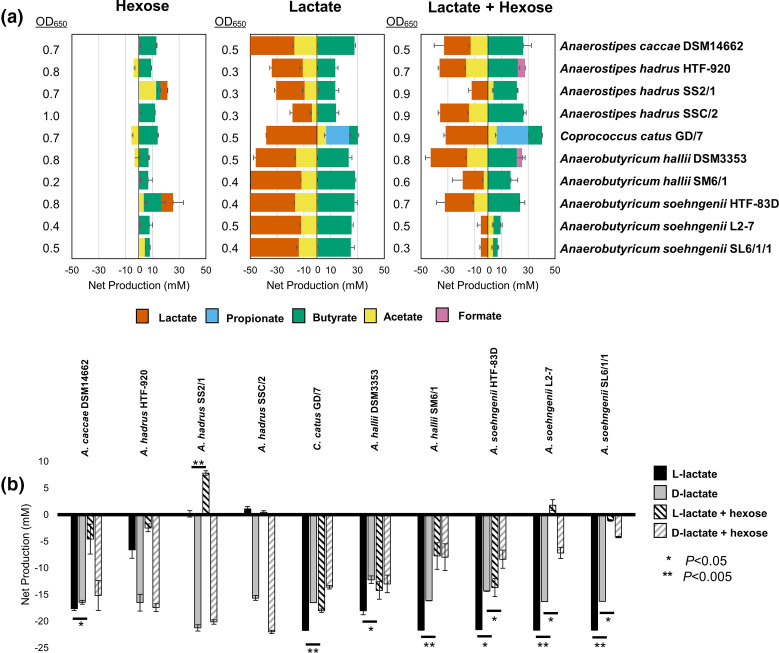
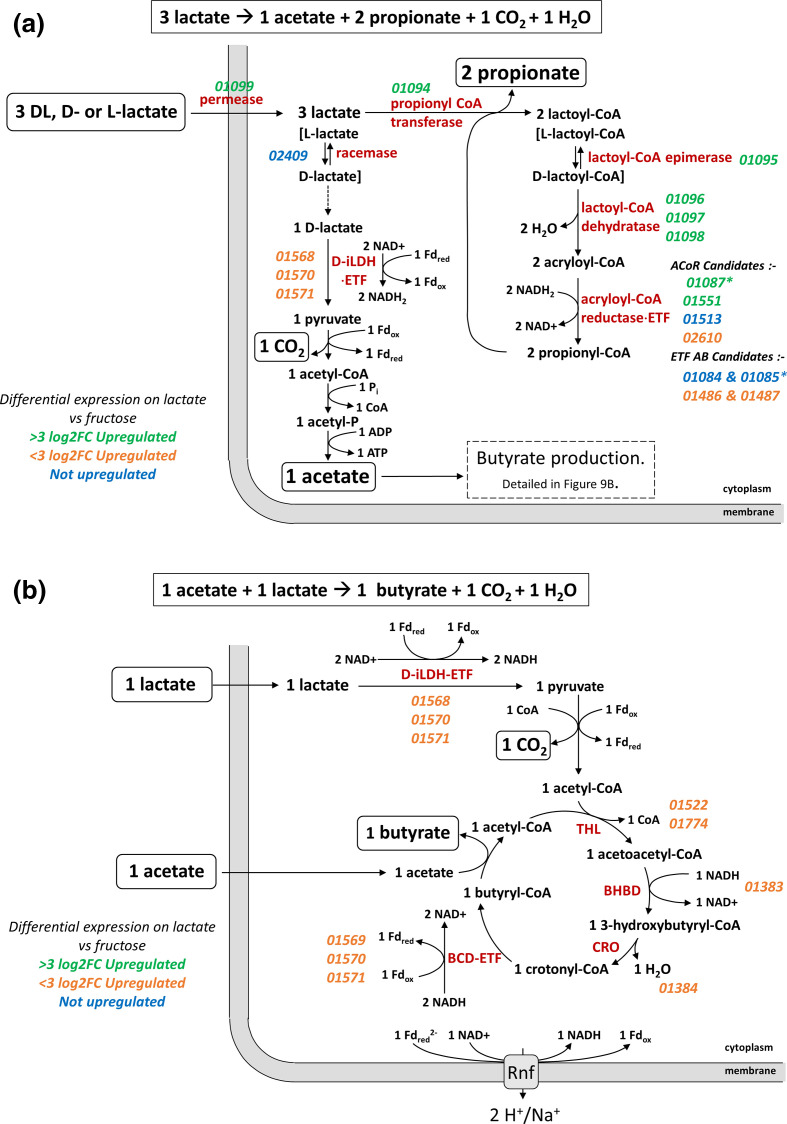
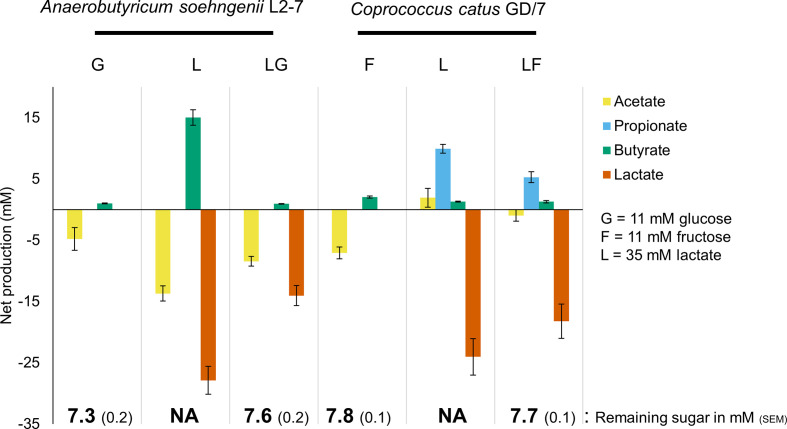
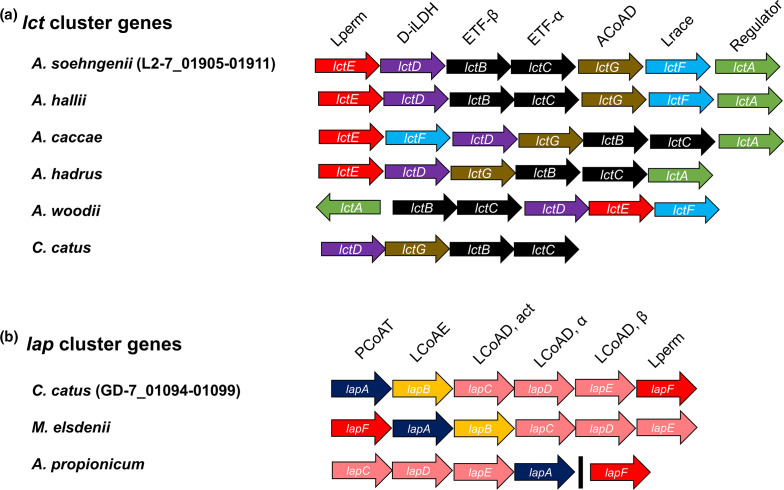
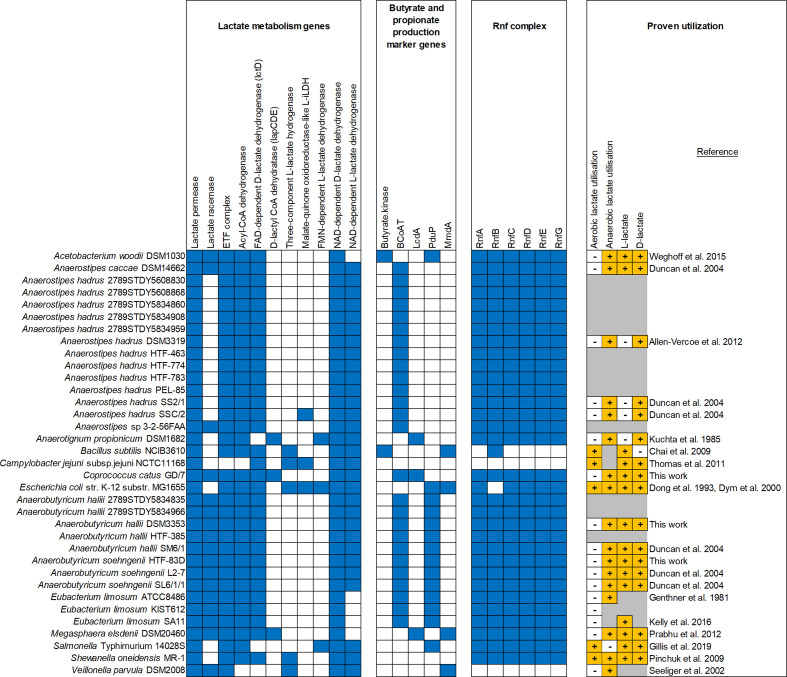
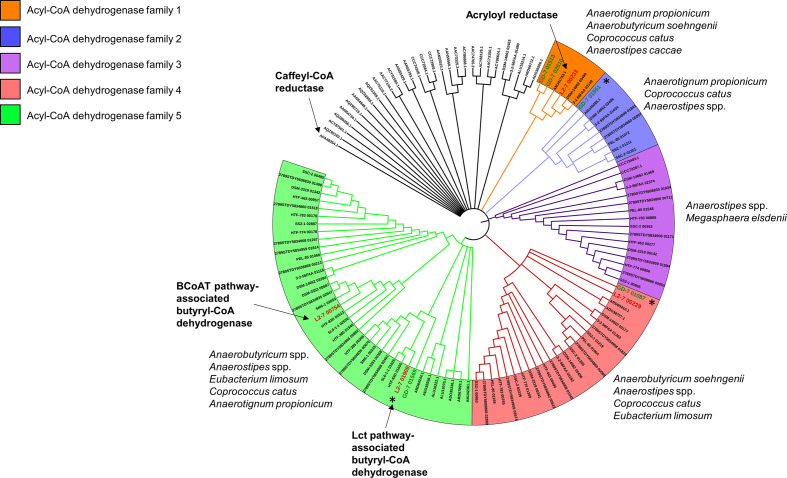
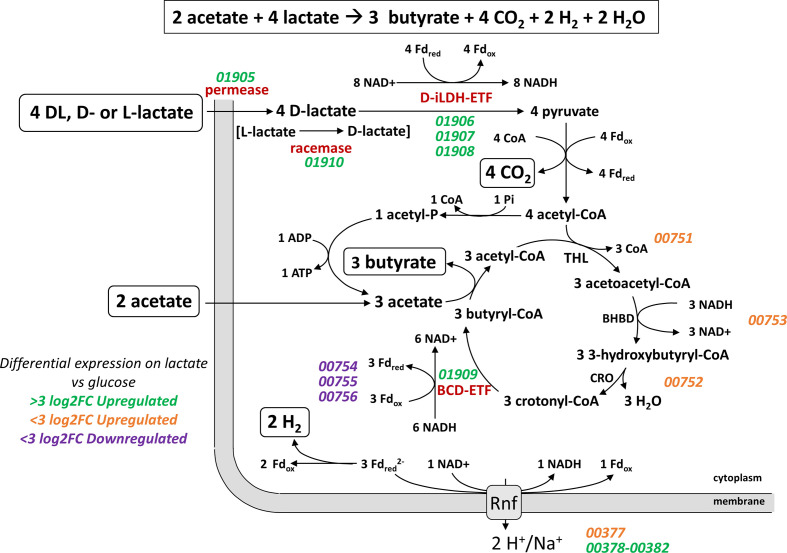
Lactate accumulation in the human gut is linked to a range of deleterious health impacts. However, lactate is consumed and converted to the beneficial short-chain fatty acids butyrate and propionate by indigenous lactate-utilizing bacteria. To better understand the underlying genetic basis for lactate utilization, transcriptomic analyses were performed for two prominent lactate-utilizing species from the human gut, and , during growth on lactate, hexose sugar or hexose plus lactate. In L2-7 six genes of the lactate utilization () cluster, including NAD-independent d-lactate dehydrogenase (d-iLDH), were co-ordinately upregulated during growth on equimolar d- and l-lactate (dl-lactate). Upregulated genes included an acyl-CoA dehydrogenase related to butyryl-CoA dehydrogenase, which may play a role in transferring reducing equivalents between reduction of crotonyl-CoA and oxidation of lactate. Genes upregulated in GD/7 included a six-gene cluster () encoding propionyl CoA-transferase, a putative lactoyl-CoA epimerase, lactoyl-CoA dehydratase and lactate permease, and two unlinked acyl-CoA dehydrogenase genes that are candidates for acryloyl-CoA reductase. A d-iLDH homologue in is encoded by a separate, partial gene cluster, but not upregulated on lactate. While converts three mols of dl-lactate via the acrylate pathway to two mols propionate and one mol acetate, some of the acetate can be re-used with additional lactate to produce butyrate. A key regulatory difference is that while glucose partially repressed cluster expression in , there was no repression of lactate-utilization genes by fructose in the non-glucose utilizer . This suggests that these species could occupy different ecological niches for lactate utilization in the gut, which may be important factors to consider when developing lactate-utilizing bacteria as novel candidate probiotics.
人类肠道中乳酸的积累与一系列有害的健康影响有关。然而,乳酸被土著利用乳酸的细菌消耗并转化为有益的短链脂肪酸,如丁酸和丙酸。为了更好地理解乳酸利用的潜在遗传基础,对来自人类肠道的两种重要的乳酸利用物种 和 ,在乳酸、己糖或己糖加乳酸生长时,进行了转录组分析。在 L2-7 中,当以等摩尔的 d-和 l-乳酸(dl-乳酸)生长时,乳酸利用()簇的六个基因(包括 NAD 非依赖性 d-乳酸脱氢酶(d-iLDH))被协调地上调。上调的基因包括与丁酰 CoA 脱氢酶相关的酰基辅酶 A 脱氢酶,它可能在将还原当量从 crotonyl-CoA 的还原和乳酸的氧化之间转移中发挥作用。在 GD/7 中上调的基因包括一个六基因簇(),编码丙酰 CoA 转移酶、一个假定的乳酰 CoA 差向异构酶、乳酰 CoA 脱水酶和乳酸通透酶,以及两个不相关的酰基辅酶 A 脱氢酶基因,它们是丙烯酰 CoA 还原酶的候选基因。 中的 d-iLDH 同源物由一个单独的、部分的 基因簇编码,但在乳酸上没有上调。虽然 通过丙烯酸盐途径将三个摩尔的 dl-乳酸转化为两个摩尔的丙酸和一个摩尔的乙酸,但一些乙酸可以与额外的乳酸一起重新用于产生丁酸。一个关键的调节差异是,虽然葡萄糖部分抑制了 簇在 中的表达,但非葡萄糖利用物 中果糖对乳酸利用基因没有抑制作用。这表明这些物种在肠道中可能占据不同的乳酸利用生态位,这在将乳酸利用细菌开发为新型候选益生菌时可能是一个重要的考虑因素。