LaChance Patrick A, Graham Jalina, Shapiro Benjamin L, Morris Ashlyn J, Taube Jeffrey S
Department of Psychological and Brain Sciences, Dartmouth College, Hanover, NH, USA.
Sci Adv. 2022 Jan 28;8(4):eabg8404. doi: 10.1126/sciadv.abg8404.
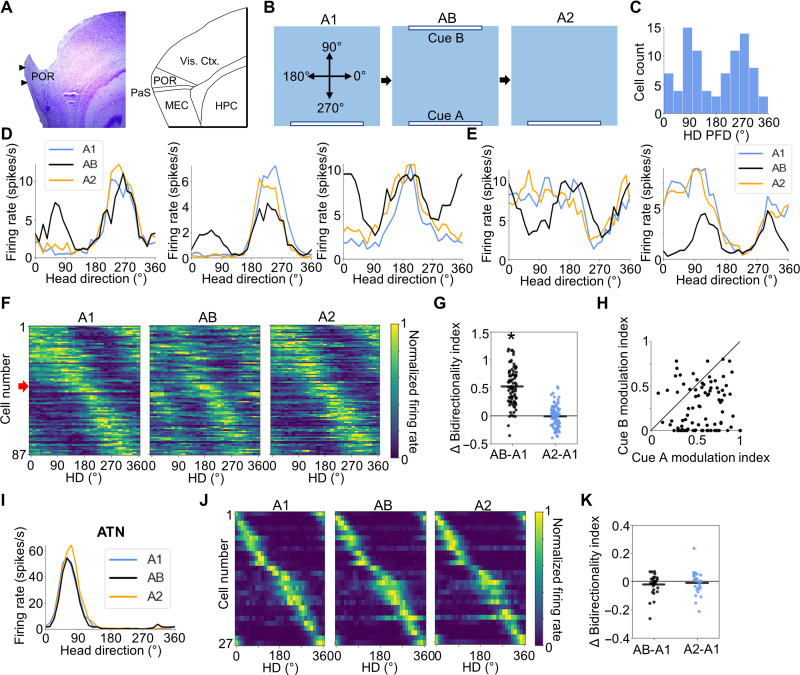
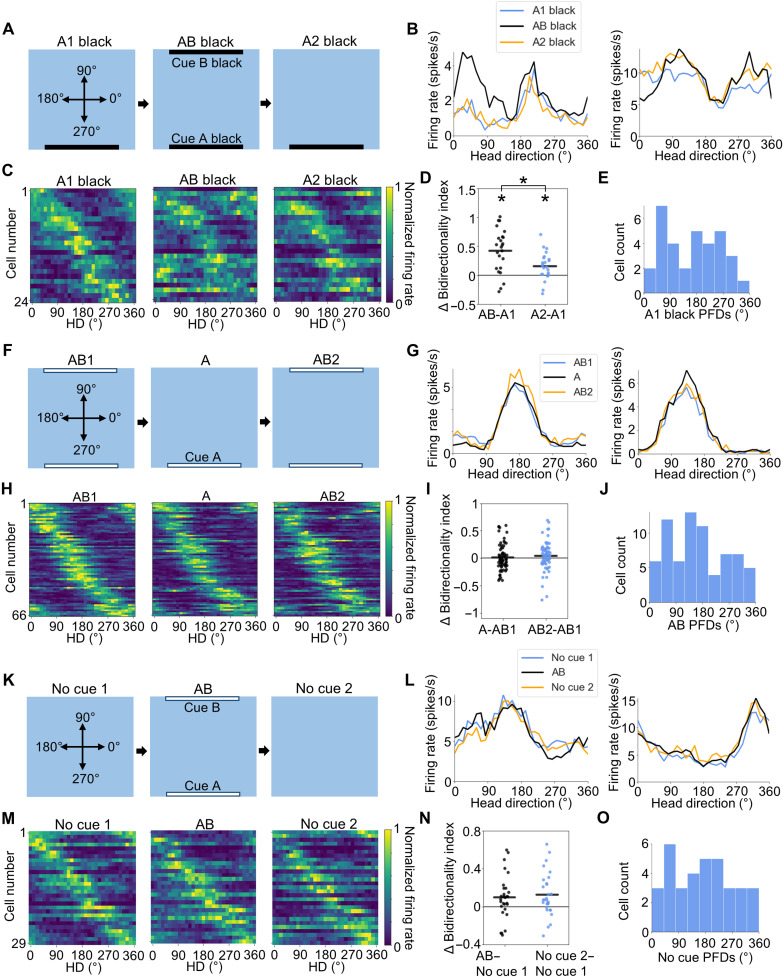
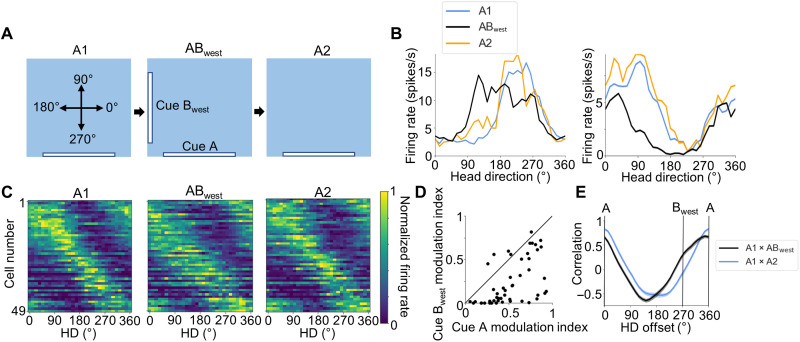
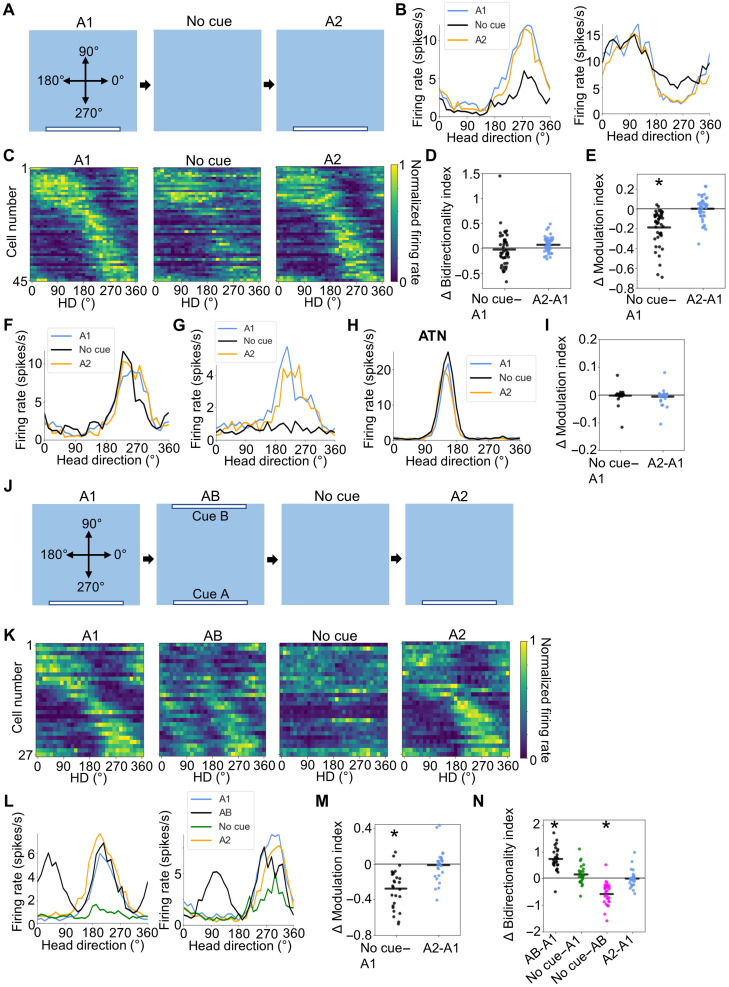
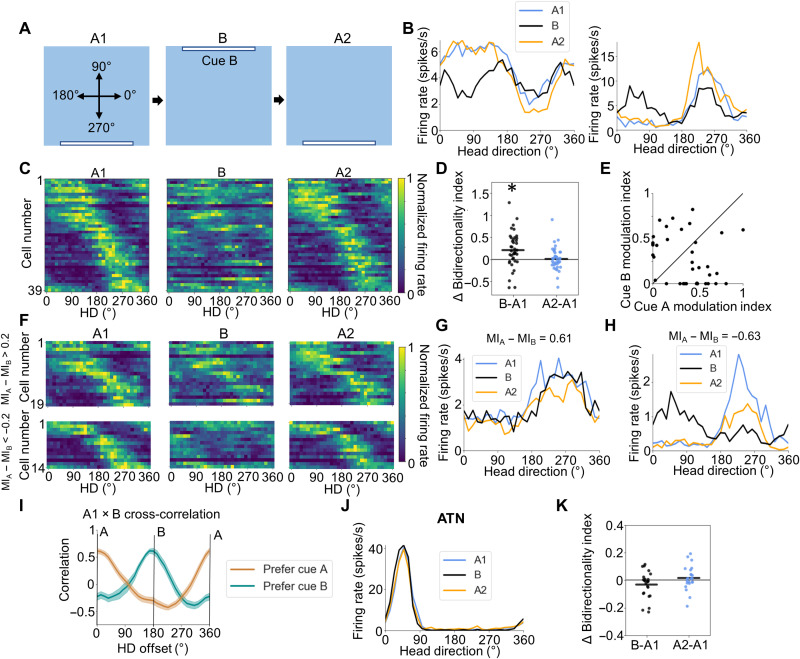
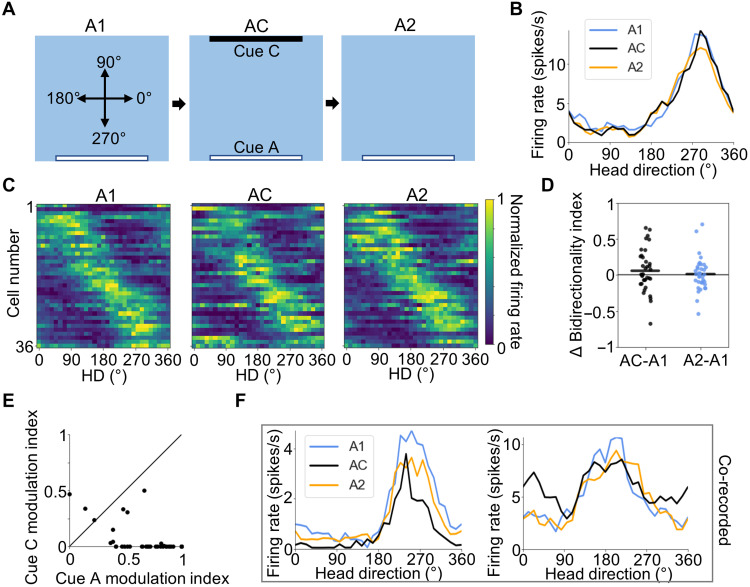
Visual landmarks can anchor an animal's internal sense of orientation to the external world. The rodent postrhinal cortex (POR) may facilitate this processing. Here, we demonstrate that, in contrast to classic head direction (HD) cells, which have a single preferred orientation, POR HD cells develop a second preferred orientation when an established landmark cue is duplicated along another environmental wall. We therefore refer to these cells as landmark-modulated-HD (LM-HD) cells. LM-HD cells discriminate between landmarks in familiar and novel locations, discriminate between visually disparate landmarks, and continue to respond to the previous location of a familiar landmark following its removal. Rats initially exposed to different stable landmark configurations show LM-HD tuning that may reflect the integration of visual landmark information into an allocentric HD signal. These results provide insight into how visual landmarks are integrated into a framework that supports the neural encoding of landmark-based orientation.
视觉地标可以将动物的内部方向感与外部世界联系起来。啮齿动物的后鼻皮质(POR)可能有助于这种处理过程。在这里,我们证明,与具有单一偏好方向的经典头部方向(HD)细胞不同,当一个既定的地标线索沿着另一堵环境墙重复出现时,POR HD细胞会形成第二个偏好方向。因此,我们将这些细胞称为地标调制HD(LM-HD)细胞。LM-HD细胞能够区分熟悉和新位置的地标,区分视觉上不同的地标,并且在熟悉的地标被移除后仍会对其先前位置做出反应。最初接触不同稳定地标配置的大鼠表现出LM-HD调谐,这可能反映了视觉地标信息整合到基于空间的HD信号中。这些结果为视觉地标如何整合到支持基于地标的方向神经编码的框架中提供了见解。