Department of Psychiatry, Fatemi Hospital, School of Medicine, Ardabil University of Medical Sciences, Ardabil, Iran.
Department of Psychiatry, Tehran University of Medical Sciences, Tehran, Iran.
BMC Pediatr. 2022 Jan 29;22(1):70. doi: 10.1186/s12887-022-03123-6.
Poor health behaviors and variables are recently more documented in attention-deficit hyperactivity disorder (ADHD) lifestyle which might be relevant to the pathophysiology of this disorder. The objective of this case-control study was to assess the nutrient intake, dietary patterns, and anthropometric variables in children with ADHD compared to normal peers.
One hundred children diagnosed with ADHD were included and compared to 100 healthy, sex-matched normal children as the control group. Anthropometric indices, macronutrients, and micronutrients were measured and compared in both groups.
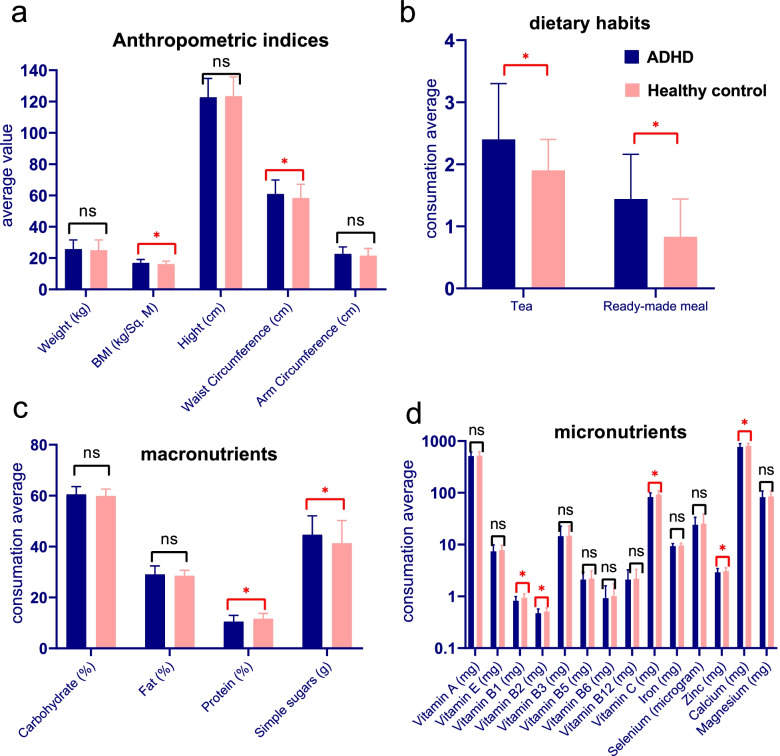
ADHD children were significantly consuming more simple sugars, tea, ready-made meals but less protein, vitamin B1, vitamin B2, vitamin C, zinc and calcium compared to the control group. The body mass index (BMI) and waist circumference of children with ADHD were significantly higher and were related to the severity and type of the disease.
Unhealthy eating behavior is more frequent in children with ADHD, compared to normal children which might warrant lifestyle intervention in this disorder.
最近,注意力缺陷多动障碍(ADHD)患者的生活方式中出现了更多的不良健康行为和变量,这些可能与该障碍的病理生理学有关。本病例对照研究的目的是评估 ADHD 患儿与正常同龄儿相比的营养摄入、饮食模式和人体测量学变量。
纳入 100 名被诊断为 ADHD 的儿童,并与 100 名性别匹配的健康正常儿童作为对照组进行比较。在两组中测量并比较了人体测量学指标、宏量营养素和微量营养素。
与对照组相比,ADHD 儿童摄入的简单糖、茶和即食餐更多,而蛋白质、维生素 B1、维生素 B2、维生素 C、锌和钙摄入更少。ADHD 儿童的体重指数(BMI)和腰围明显更高,且与疾病的严重程度和类型有关。
与正常儿童相比,ADHD 儿童的不良饮食习惯更为常见,这可能需要对该障碍进行生活方式干预。