School of Public Health, College of Health Sciences, Addis Ababa University, Addis Ababa, Ethiopia.
Population Health and Disease Prevention, College of Health Sciences, University of California at Irvine, CA, 92697, Irvine, USA.
BMC Public Health. 2022 Jan 29;22(1):196. doi: 10.1186/s12889-022-12571-9.
Land use change has increasingly been expanding throughout the world in the past decades. It can have profound effects on the spatial and temporal distribution of vector borne diseases like malaria through ecological and habitat change. Understanding malaria disease occurrence and the impact of prevention interventions under this intense environmental modification is important for effective and efficient malaria control strategy.
A descriptive ecological study was conducted by reviewing health service records at Abobo district health office. The records were reviewed to extract data on malaria morbidity, mortality, and prevention and control methods. Moreover, Meteorological data were obtained from Gambella region Meteorology Service Center and National Meteorology Authority head office. Univariate, bivariate and multivariate analysis techniques were used to analyze the data.
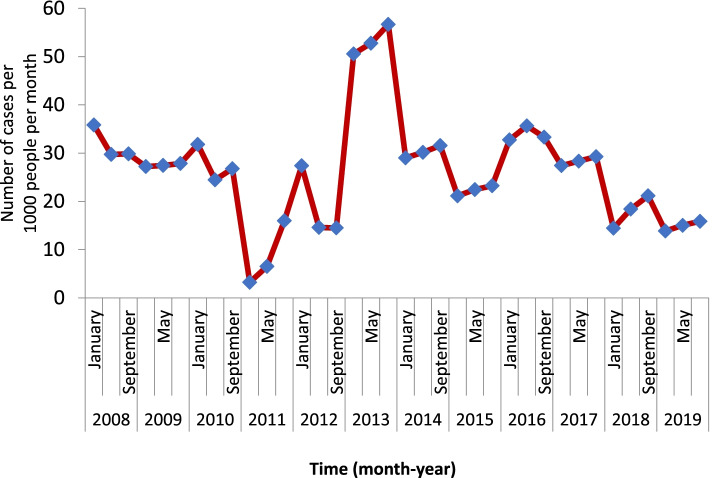
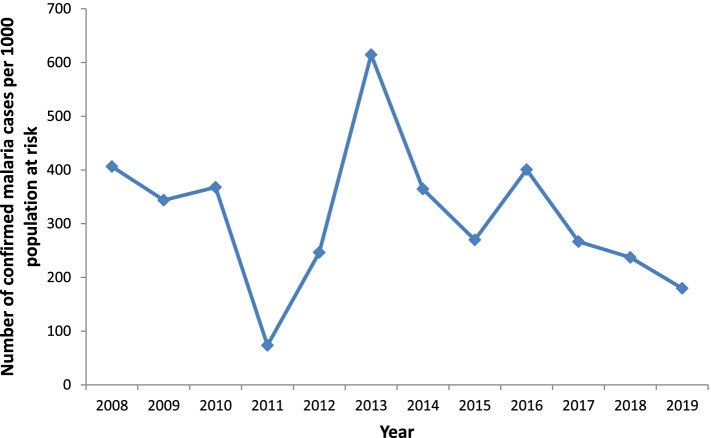
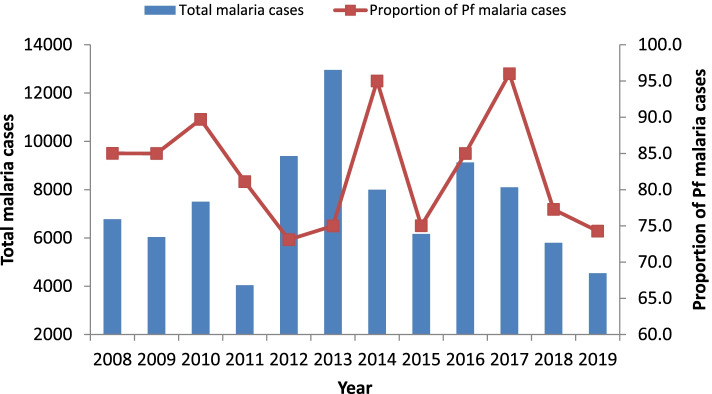
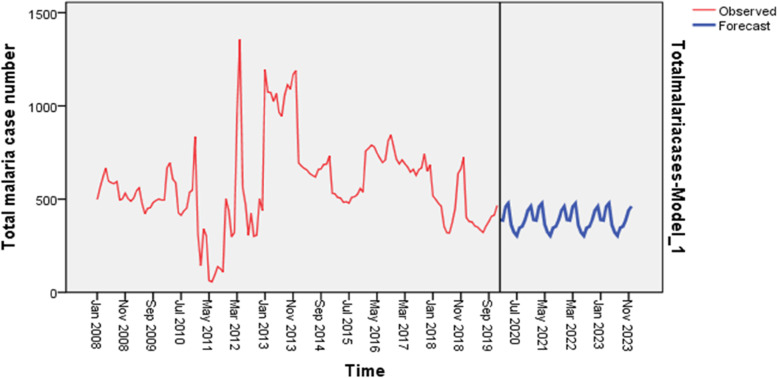
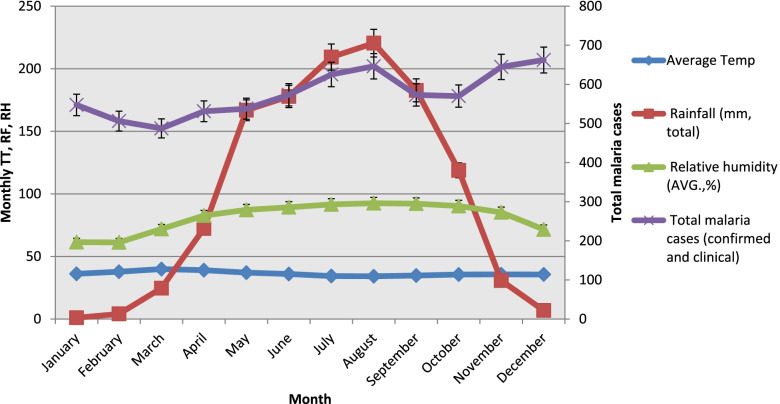
For the twelve-year time period, the mean annual total malaria case count in the district was 7369.58. The peak monthly malaria incidence was about 57 cases per 1000 people. Only in 2009 and 2015 that zero death due to malaria was recorded over the past 12 years. Fluctuating pattern of impatient malaria cases occurrence was seen over the past twelve years with an average number of 225.5 inpatient cases. The data showed that there is a high burden of malaria in the district. Plasmodium falciparum (Pf) was a predominant parasite species in the district with the maximum percentage of about 90. There was no statistically significant association between season and total malaria case number (F: 1.982, P:0.195). However, the inter-annual total case count difference was statistically significant (F: 36.305, p < 0001). Total malaria case count had shown two months lagged carry on effect. Moreover, 3 months lagged humidity had significant positive effect on total malaria cases. Malaria prevention interventions and meteorological factors showed statistically significant association with total malaria cases.
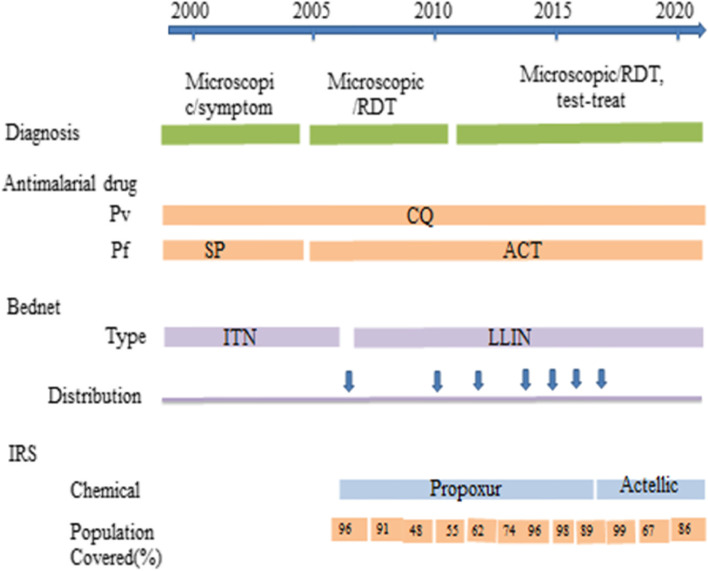
Malaria was and will remain to be a major public health problem in the area. The social and economic impact of the disease on the local community is clearly pronounced as it is the leading cause of health facility visit and admission including the mortality associated with it. Scale up of effective interventions is quite important. Continuous monitoring of the performance of the vector control tools needs to be done.
在过去几十年中,土地利用变化在全球范围内日益扩大。它可以通过生态和栖息地变化对疟疾等虫媒病的时空分布产生深远影响。了解在这种强烈的环境变化下疟疾疾病的发生和预防干预措施的影响,对于制定有效的疟疾控制策略非常重要。
通过回顾阿博博区卫生办公室的卫生服务记录,进行了描述性生态研究。记录被审查以提取疟疾发病率、死亡率和预防控制方法的数据。此外,气象数据来自甘贝拉地区气象服务中心和国家气象局总部。使用单变量、双变量和多变量分析技术来分析数据。
在 12 年的时间里,该地区的年平均疟疾总病例数为 7369.58 例。每月疟疾发病高峰期约为每 1000 人 57 例。在过去的 12 年中,只有 2009 年和 2015 年记录到零例疟疾死亡。过去 12 年来,门诊疟疾病例的发生呈波动模式,平均有 225.5 例住院病例。数据显示,该地区疟疾负担沉重。恶性疟原虫(Pf)是该地区的主要寄生虫种类,其比例最高约为 90%。季节与总疟疾病例数之间没有统计学上的显著关联(F:1.982,P:0.195)。然而,年度总病例数差异具有统计学意义(F:36.305,p<0.0001)。总疟疾病例数表现出两个月的滞后持续效应。此外,3 个月滞后的湿度对总疟疾病例有显著的正向影响。疟疾预防干预措施和气象因素与总疟疾病例呈统计学关联。
疟疾过去是、现在仍然是该地区的一个主要公共卫生问题。这种疾病对当地社区的社会和经济影响是显而易见的,因为它是导致卫生机构就诊和入院的主要原因,包括与之相关的死亡率。扩大有效干预措施的规模非常重要。需要持续监测控制措施的效果。