Department of Infectious Diseases, Henan Provincial People's Hospital, Zhengzhou University People's Hospital, Zhengzhou, China.
Drug Deliv. 2022 Dec;29(1):440-453. doi: 10.1080/10717544.2022.2030428.
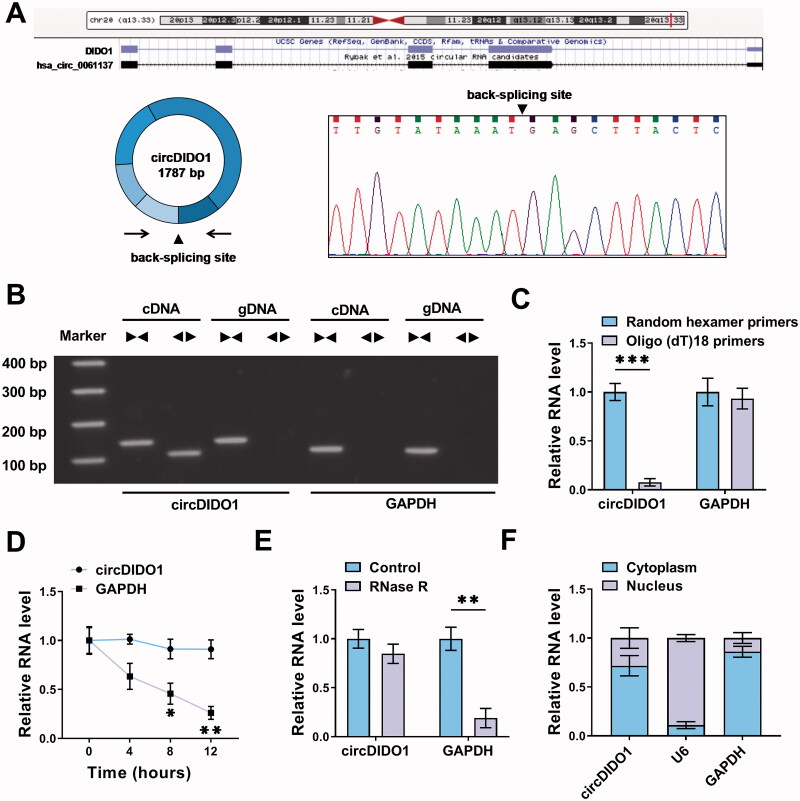
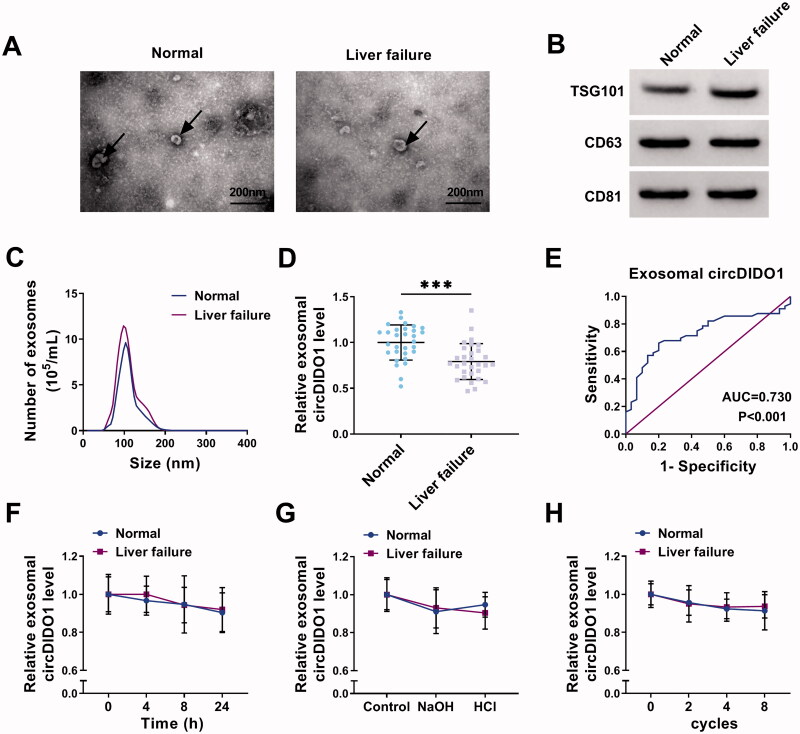
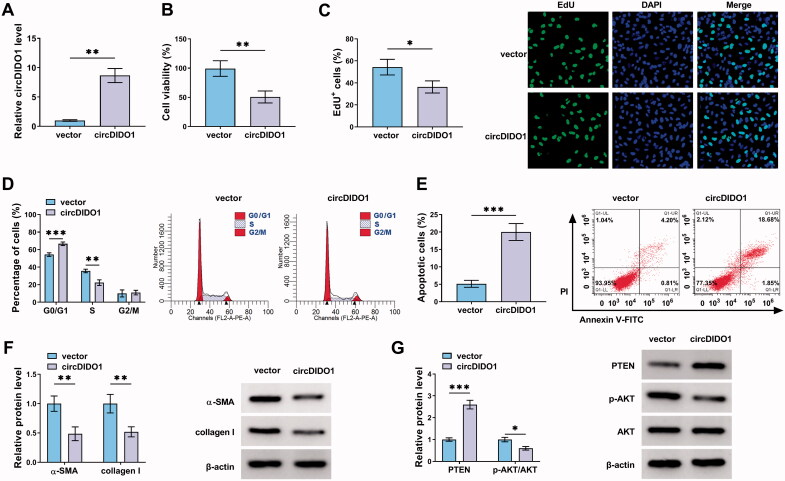
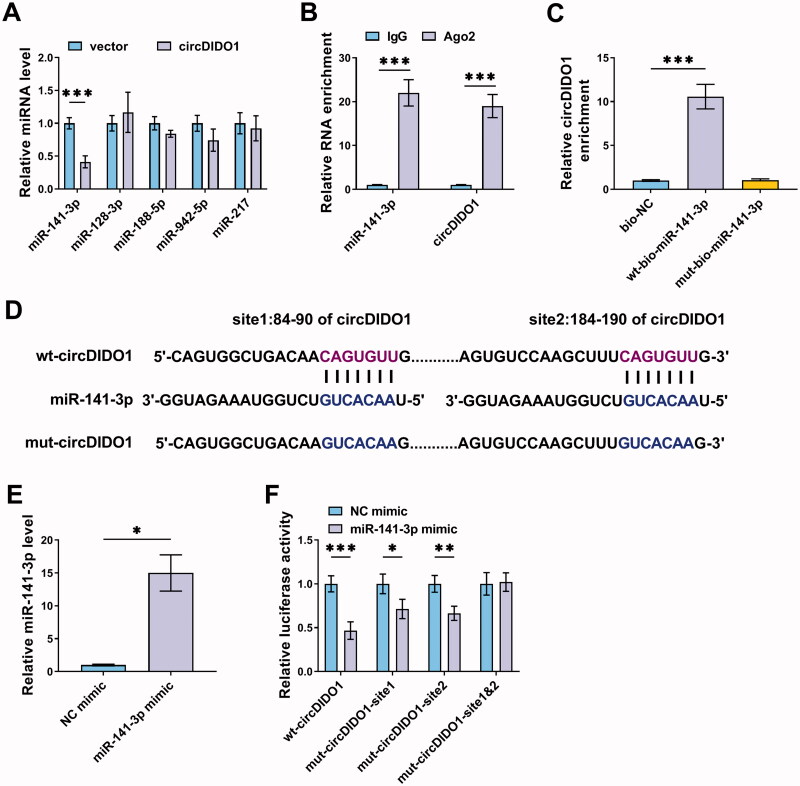
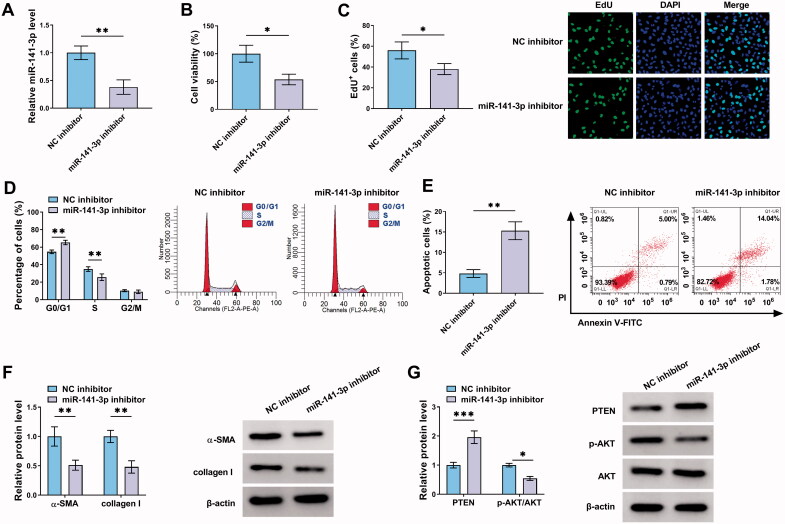
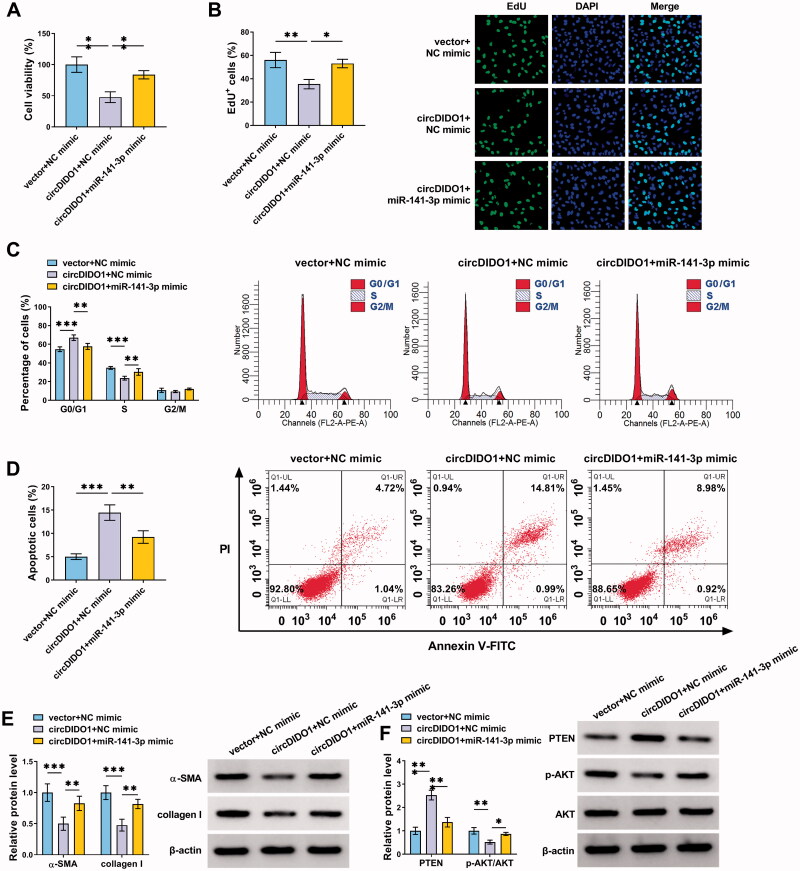
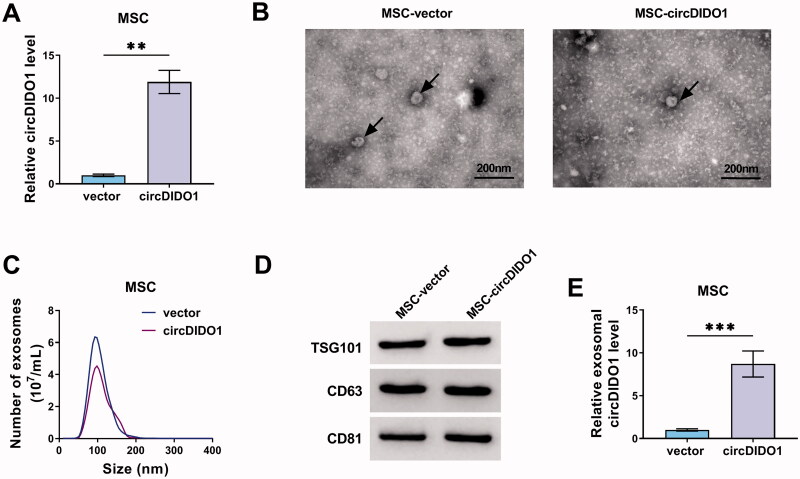
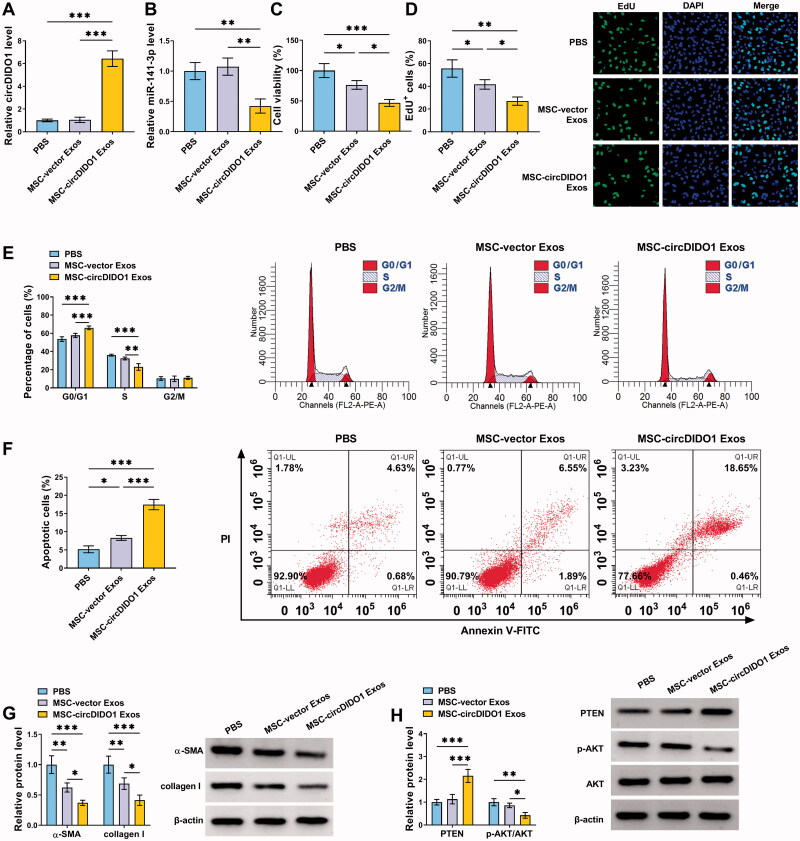
Liver fibrosis is a common pathologic stage of the development of liver failure. It has showed that exosomes loaded with therapeutic circRNAs can be manufactured in bulk by exosome secreted cells , thus enabling personalized treatment. This study aimed to investigate the role of exosome-based delivery of circDIDO1 in liver fibrosis. Levels of genes and proteins were examined by qRT-PCR and Western blot. Cell proliferation, apoptosis, and cell cycle were analyzed by using cell counting kit-8 (CCK-8) assay, EdU assay, and flow cytometry, respectively. The binding between circDIDO1 and miR-141-3p was confirmed by dual-luciferase reporter, RNA pull-down and RIP assays. Exosomes were isolated by ultracentrifugation, and qualified by transmission electron microscopy (TEM), nanoparticle tracking analysis (NTA) and Western blot. CircDIDO1 overexpression or miR-141-3p inhibition suppressed the proliferation, reduced pro-fibrotic markers, and induced apoptosis as well as cell cycle arrest in hepatic stellate cells (HSCs) by blocking PTEN/AKT pathway. Mechanistically, circDIDO1 acted as an endogenous sponge for miR-141-3p, further rescue experiments showed that circDIDO1 suppressed HSC activation by targeting miR-141-3p. Extracellular circDIDO1 could be incorporated into exosomes isolated from mesenchymal stem cells (MSCs), and transmitted to HSCs to restrain HSC activation. Clinically, low levels of serum circDIDO1 in exosome were correlated with liver failure, and serum exosomal circDIDO1 had a well diagnostic value for liver fibrosis in liver failure patients. Transfer of circDIDO1 mediated by MSC-isolated exosomes suppressed HSC activation through the miR-141-3p/PTEN/AKT pathway, gaining a new insight into the prevention of liver fibrosis in liver failure patients.
肝纤维化是肝功能衰竭发展的常见病理阶段。研究表明,载有治疗性 circRNA 的外泌体可以由外泌体分泌细胞大量制造,从而实现个性化治疗。本研究旨在探讨基于外泌体递送 circDIDO1 在肝纤维化中的作用。通过 qRT-PCR 和 Western blot 检测基因和蛋白水平。使用细胞计数试剂盒-8(CCK-8)测定、EdU 测定和流式细胞术分别分析细胞增殖、凋亡和细胞周期。通过双荧光素酶报告、RNA 下拉和 RIP 测定证实 circDIDO1 与 miR-141-3p 之间的结合。通过超速离心分离外泌体,并通过透射电子显微镜(TEM)、纳米颗粒跟踪分析(NTA)和 Western blot 进行鉴定。CircDIDO1 过表达或 miR-141-3p 抑制通过阻断 PTEN/AKT 通路抑制肝星状细胞(HSCs)增殖,降低促纤维化标志物,诱导细胞凋亡和细胞周期停滞。在机制上,circDIDO1 作为 miR-141-3p 的内源性海绵,进一步的挽救实验表明,circDIDO1 通过靶向 miR-141-3p 抑制 HSC 激活。外泌体 circDIDO1 可被间质干细胞(MSCs)分离的外泌体摄取,并传递给 HSCs 以抑制 HSC 激活。临床研究表明,外泌体中血清 circDIDO1 水平低与肝功能衰竭相关,血清外泌体 circDIDO1 对肝功能衰竭患者肝纤维化具有良好的诊断价值。MSC 分离的外泌体介导的 circDIDO1 转移通过 miR-141-3p/PTEN/AKT 通路抑制 HSC 激活,为肝功能衰竭患者肝纤维化的防治提供了新的思路。