Laboratory of Cellular Immunobiology, Sloan Kettering Institute for Cancer Research, New York, NY.
Adult Bone Marrow Transplant Service, Department of Medicine, Memorial Sloan Kettering Cancer Center, New York, NY.
Blood Adv. 2022 Mar 8;6(5):1547-1558. doi: 10.1182/bloodadvances.2021005941.
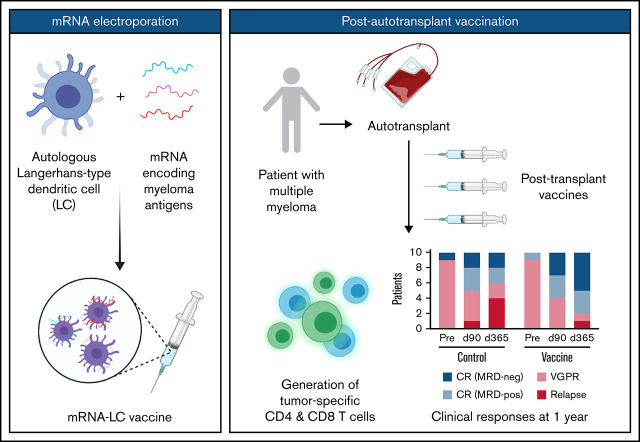
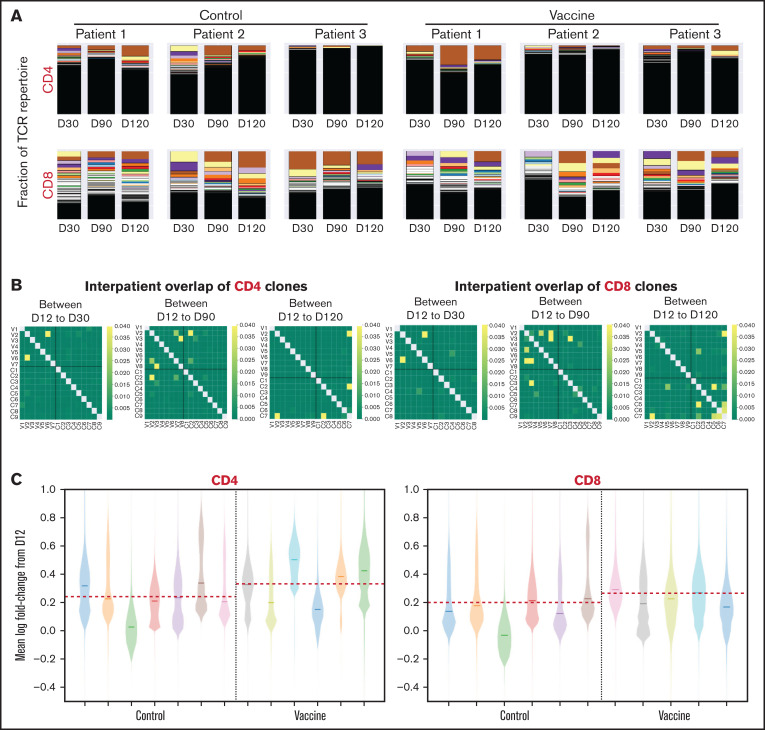
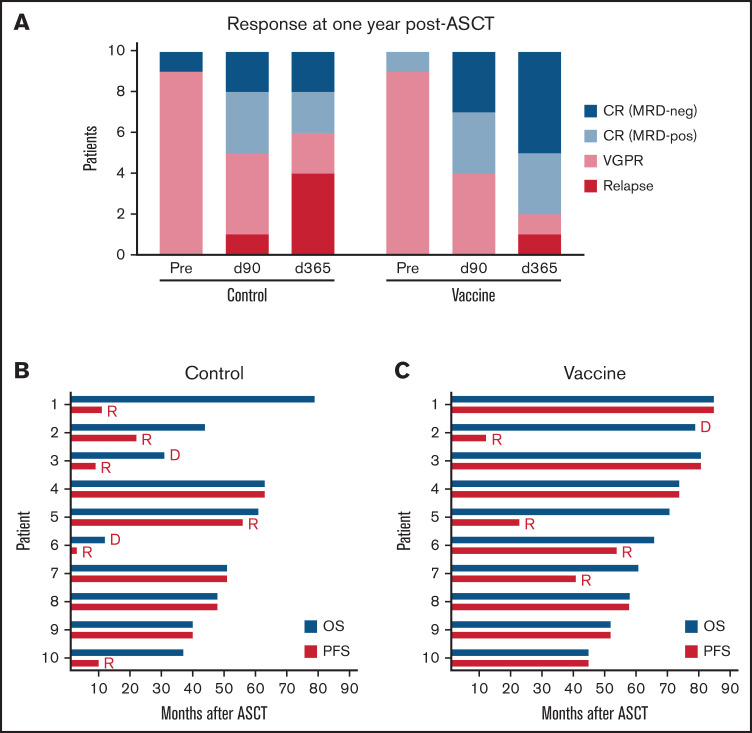
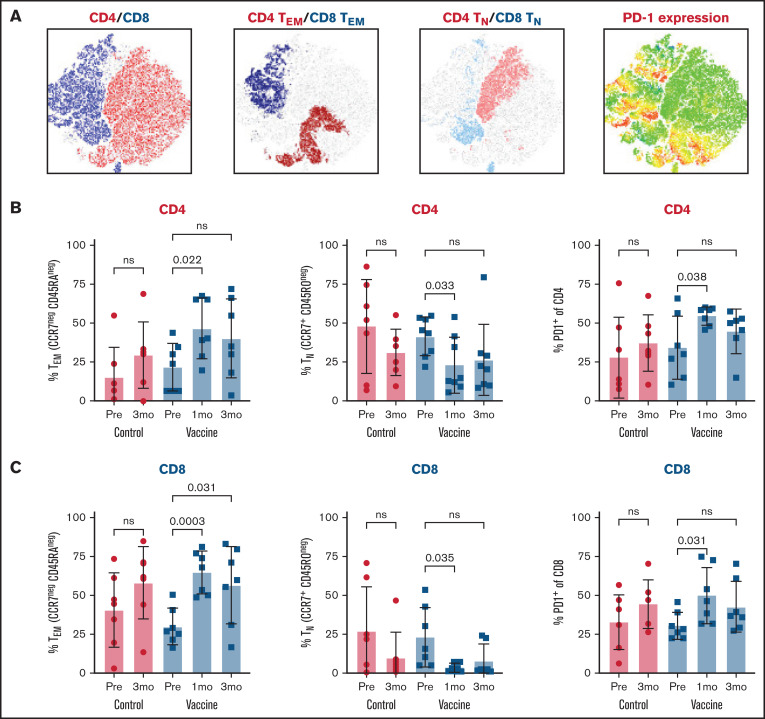
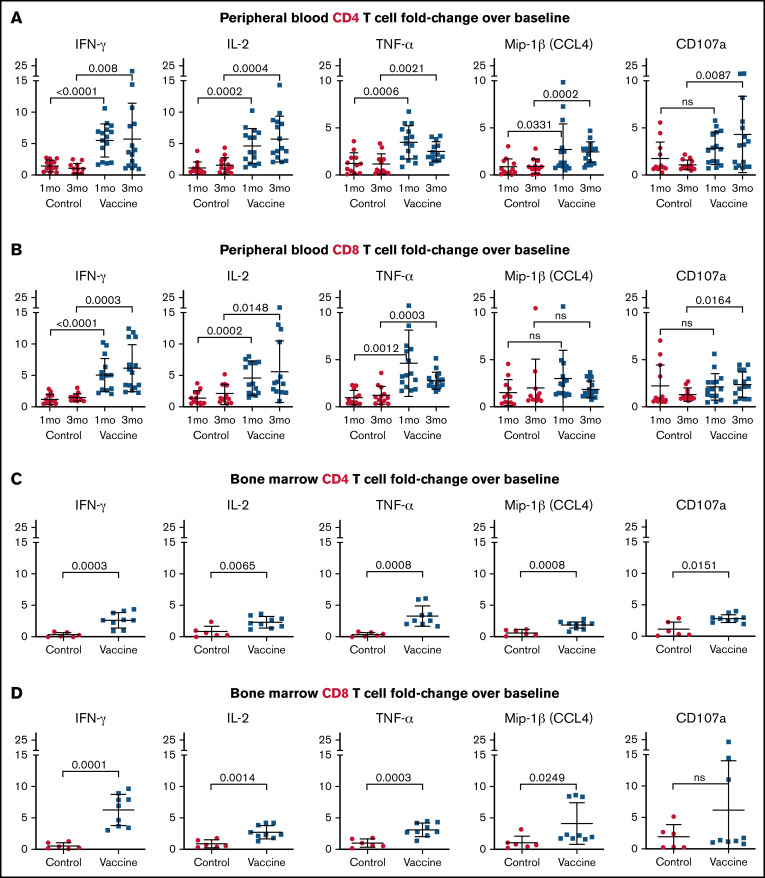
Posttransplant vaccination targeting residual disease is an immunotherapeutic strategy to improve antigen-specific immune responses and prolong disease-free survival after autologous stem cell transplantation (ASCT) for multiple myeloma (MM). We conducted a phase 1 vaccine trial to determine the safety, toxicity, and immunogenicity of autologous Langerhans-type dendritic cells (LCs) electroporated with CT7, MAGE-A3, and Wilms tumor 1 (WT1) messenger RNA (mRNA), after ASCT for MM. Ten patients received a priming immunization plus 2 boosters at 12, 30, and 90 days, respectively, after ASCT. Vaccines contained 9 × 10⁶ mRNA-electroporated LCs. Ten additional patients did not receive LC vaccines but otherwise underwent identical ASCT and supportive care. At 3 months after ASCT, all patients started lenalidomide maintenance therapy. Vaccinated patients developed mild local delayed-type hypersensitivity reactions after booster vaccines, but no toxicities exceeded grade 1. At 1 and 3 months after vaccines, antigen-specific CD4 and CD8 T cells increased secretion of proinflammatory cytokines (interferon-γ, interleukin-2, and tumor necrosis factor-α) above prevaccine levels, and also upregulated the cytotoxicity marker CD107a. CD4 and CD8 T-cell repertoire analysis showed a trend for increased clonal expansion in the vaccine cohort, which was more pronounced in the CD4 compartment. Although not powered to assess clinical efficacy, treatment responses favored the vaccine arm. Triple antigen-bearing mRNA-electroporated autologous LC vaccination initiated at engraftment after ASCT, in conjunction with standard lenalidomide maintenance therapy for MM, is safe and induces antigen-specific immune reactivity. This trial was registered at www.clinicaltrials.gov as #NCT01995708.
自体干细胞移植(ASCT)后针对残留疾病的移植后疫苗接种是一种免疫治疗策略,可改善多发性骨髓瘤(MM)患者自体干细胞移植后的抗原特异性免疫反应并延长无病生存时间。我们进行了一项 1 期疫苗试验,以确定自体朗格汉斯型树突状细胞(LC)电穿孔 CT7、MAGE-A3 和 Wilms 肿瘤 1(WT1)信使 RNA(mRNA)后,在 MM 患者 ASCT 后的安全性、毒性和免疫原性。10 名患者在 ASCT 后分别接受了一次初免接种和 2 次加强接种,时间分别为 12、30 和 90 天。疫苗中包含 9×10⁶ 个电穿孔的 mRNA 自体 LC。另外 10 名患者未接受 LC 疫苗接种,但接受了相同的 ASCT 和支持性治疗。ASCT 后 3 个月,所有患者开始接受来那度胺维持治疗。加强疫苗后,接种疫苗的患者出现轻度局部迟发型超敏反应,但没有毒性超过 1 级。在接种疫苗后 1 个月和 3 个月时,抗原特异性 CD4 和 CD8 T 细胞增加了促炎细胞因子(干扰素-γ、白细胞介素-2 和肿瘤坏死因子-α)的分泌,超过了接种前的水平,并且还上调了细胞毒性标志物 CD107a。CD4 和 CD8 T 细胞库分析显示,疫苗组的克隆扩增呈增加趋势,CD4 组更为明显。尽管没有足够的能力评估临床疗效,但治疗反应有利于疫苗组。在 ASCT 后植入物时开始进行三抗原负载的自体 LC 电穿孔 mRNA 疫苗接种,同时结合标准的来那度胺维持治疗 MM,是安全的,并可诱导抗原特异性免疫反应。该试验在 www.clinicaltrials.gov 上注册为 #NCT01995708。