Moran Heriberto, Cancel Limary M, Huang Peigen, Roberge Sylvie, Xu Tuoye, Tarbell John M, Munn Lance L
Wallace H. Coulter Laboratory, Department of Biomedical Engineering, The City College of New York, The City University of New York, New York, NY 10032, USA.
Edwin L. Steele Laboratories for Tumor Biology, Department of Radiation Oncology, Massachusetts General Hospital and Harvard Medical School, Charlestown, MA 02129, USA.
Matrix Biol Plus. 2022 Jan 6;13:100100. doi: 10.1016/j.mbplus.2021.100100. eCollection 2022 Feb.
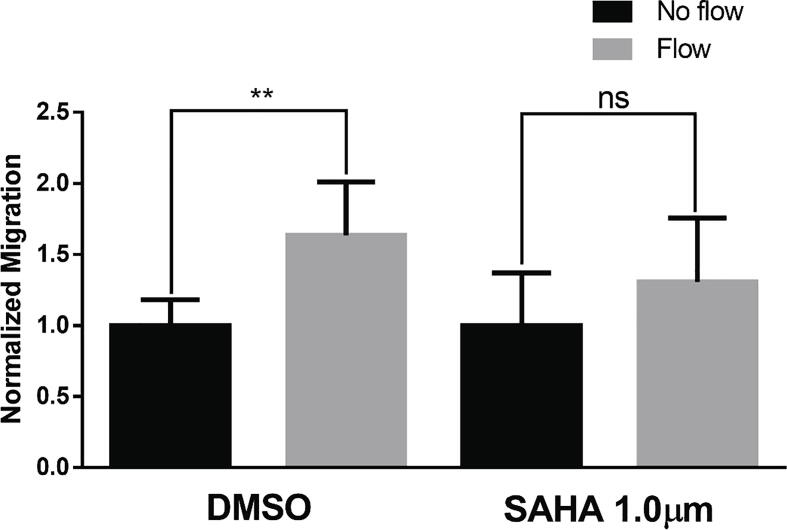
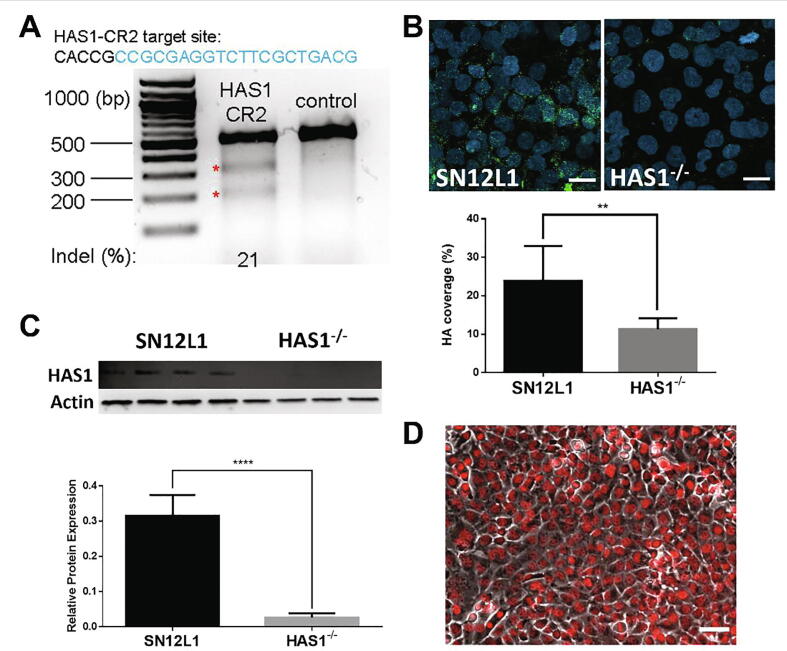
Mammalian cells, including cancer cells, are covered by a surface layer containing cell bound proteoglycans, glycoproteins, associated glycosaminoglycans and bound proteins that is commonly referred to as the glycocalyx. Solid tumors also have a dynamic fluid microenvironment with elevated interstitial flow. In the present work we further investigate the hypothesis that interstitial flow is sensed by the tumor glycocalyx leading to activation of cell motility and metastasis. Using a highly metastatic renal carcinoma cell line (SN12L1) and its low metastatic counterpart (SN12C) we demonstrate in vitro that the small molecule Suberoylanilide Hydroxamic Acid (SAHA) inhibits the heparan sulfate synthesis enzyme N-deacetylase-N-sulfotransferase-1, reduces heparan sulfate in the glycocalyx and suppresses SN12L1 motility in response to interstitial flow. SN12L1 cells implanted in the kidney capsule of SCID mice formed large primary tumors and metastasized to distant organs, but when treated with SAHA metastases were not detected. In another set of experiments, the role of hyaluronic acid was investigated. Hyaluronan synthase 1, a critical enzyme in the synthetic pathway for hyaluronic acid, was knocked down in SN12L1 cells and in vitro experiments revealed inhibition of interstitial flow induced migration. Subsequently these cells were implanted in mouse kidneys and no distant metastases were detected. These findings suggest new therapeutic approaches to the treatment of kidney carcinoma metastasis.
包括癌细胞在内的哺乳动物细胞被一层表面层所覆盖,该表面层包含细胞结合蛋白聚糖、糖蛋白、相关糖胺聚糖和结合蛋白,通常被称为糖萼。实体瘤也具有动态的流体微环境,其间质流增加。在本研究中,我们进一步研究了以下假设:肿瘤糖萼感知间质流,导致细胞运动和转移的激活。使用高转移性肾癌细胞系(SN12L1)及其低转移性对应物(SN12C),我们在体外证明小分子辛二酰苯胺异羟肟酸(SAHA)抑制硫酸乙酰肝素合成酶N-脱乙酰酶-N-磺基转移酶-1,减少糖萼中的硫酸乙酰肝素,并抑制SN12L1对间质流的运动反应。植入SCID小鼠肾包膜的SN12L1细胞形成大的原发性肿瘤并转移至远处器官,但用SAHA治疗时未检测到转移。在另一组实验中,研究了透明质酸的作用。透明质酸合成酶1是透明质酸合成途径中的关键酶,在SN12L1细胞中被敲低,体外实验显示间质流诱导的迁移受到抑制。随后将这些细胞植入小鼠肾脏,未检测到远处转移。这些发现提示了治疗肾癌转移的新方法。