Department of Pathology, Affiliated Hospital of Youjiang Medical University for Nationalities, Baise, China.
Department of Hepatobiliary Surgery, Affiliated Hospital of Youjiang Medical University for Nationalities, Baise, China.
Cell Death Dis. 2022 Feb 2;13(2):102. doi: 10.1038/s41419-022-04505-5.
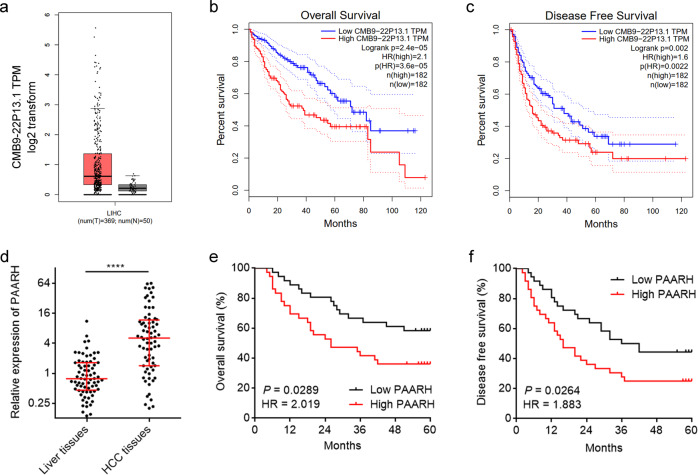
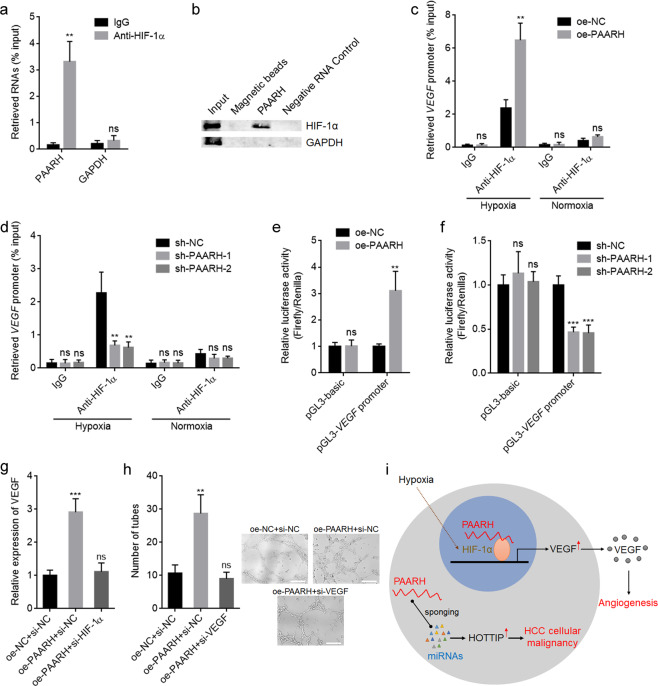
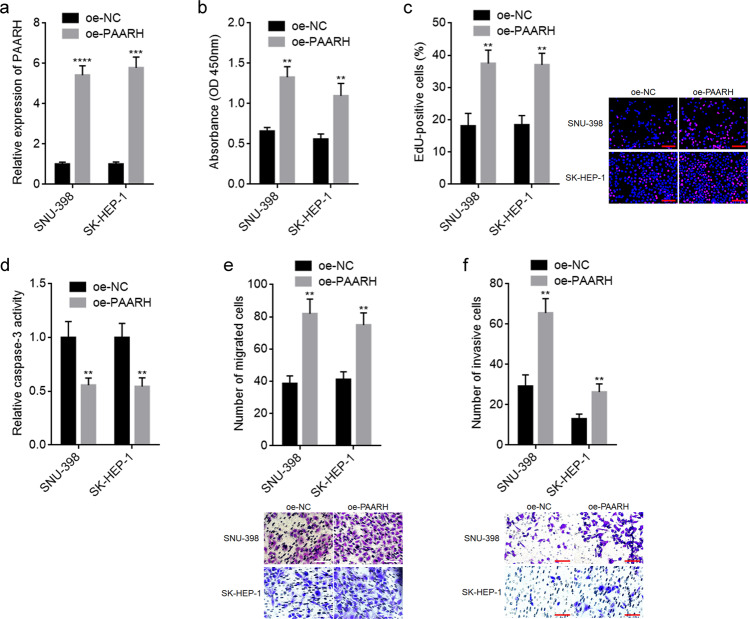
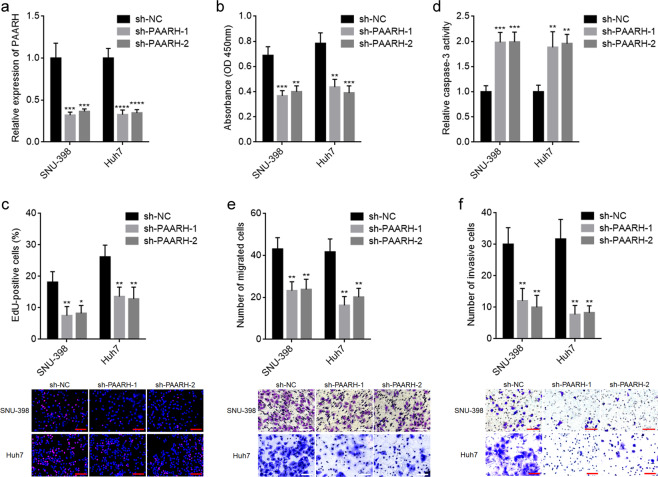
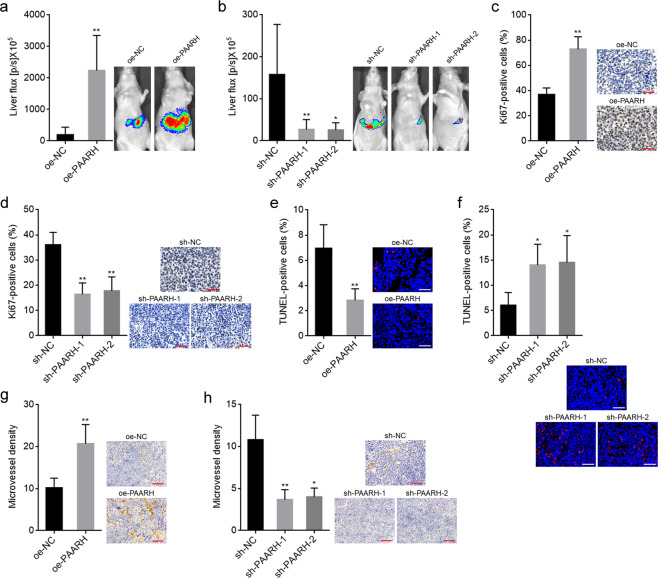
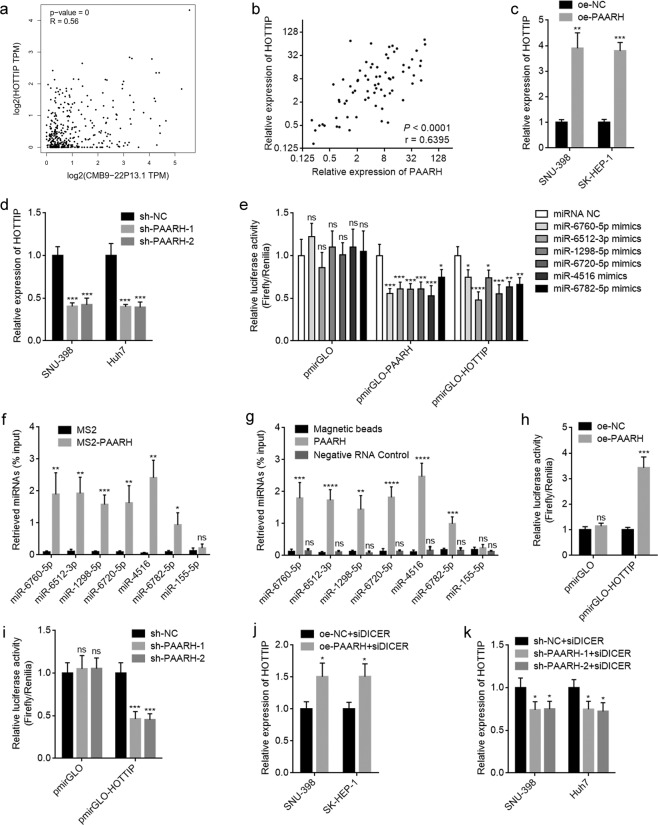
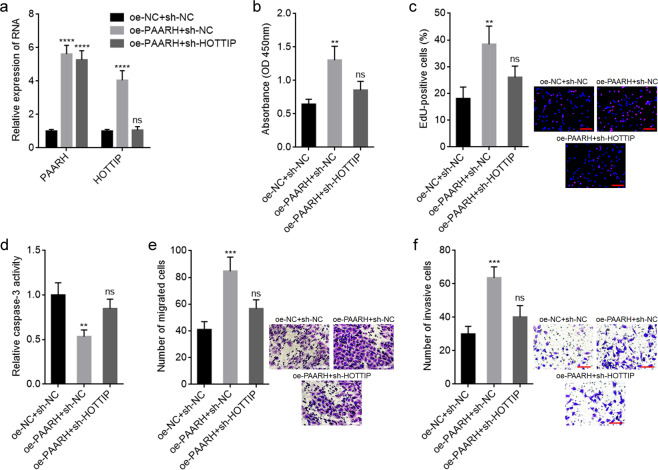
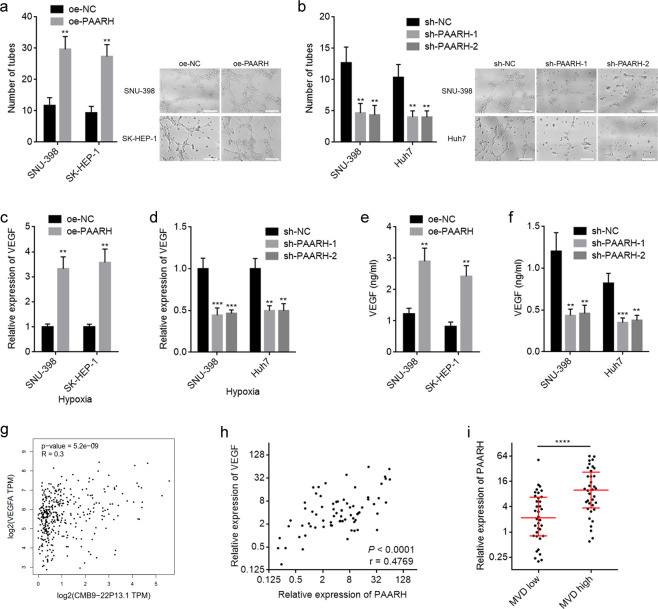
Hepatocellular carcinoma (HCC) is one of the leading lethal malignancies and a hypervascular tumor. Although some long non-coding RNAs (lncRNAs) have been revealed to be involved in HCC. The contributions of lncRNAs to HCC progression and angiogenesis are still largely unknown. In this study, we identified a HCC-related lncRNA, CMB9-22P13.1, which was highly expressed and correlated with advanced stage, vascular invasion, and poor survival in HCC. We named this lncRNA Progression and Angiogenesis Associated RNA in HCC (PAARH). Gain- and loss-of function assays revealed that PAARH facilitated HCC cellular growth, migration, and invasion, repressed HCC cellular apoptosis, and promoted HCC tumor growth and angiogenesis in vivo. PAARH functioned as a competing endogenous RNA to upregulate HOTTIP via sponging miR-6760-5p, miR-6512-3p, miR-1298-5p, miR-6720-5p, miR-4516, and miR-6782-5p. The expression of PAARH was significantly positively associated with HOTTIP in HCC tissues. Functional rescue assays verified that HOTTIP was a critical mediator of the roles of PAARH in modulating HCC cellular growth, apoptosis, migration, and invasion. Furthermore, PAARH was found to physically bind hypoxia inducible factor-1 subunit alpha (HIF-1α), facilitate the recruitment of HIF-1α to VEGF promoter, and activate VEGF expression under hypoxia, which was responsible for the roles of PAARH in promoting angiogenesis. The expression of PAARH was positively associated with VEGF expression and microvessel density in HCC tissues. In conclusion, these findings demonstrated that PAARH promoted HCC progression and angiogenesis via upregulating HOTTIP and activating HIF-1α/VEGF signaling. PAARH represents a potential prognostic biomarker and therapeutic target for HCC.
肝细胞癌(HCC)是一种主要的致命恶性肿瘤和富血管肿瘤。虽然已经发现一些长链非编码 RNA(lncRNA)参与 HCC,但 lncRNA 对 HCC 进展和血管生成的贡献在很大程度上仍然未知。在这项研究中,我们鉴定了一种与 HCC 相关的 lncRNA,CMB9-22P13.1,它在 HCC 中高表达,与晚期、血管侵犯和不良预后相关。我们将这种 lncRNA 命名为 HCC 中与进展和血管生成相关的 RNA(PAARH)。增益和缺失功能测定表明,PAARH 促进 HCC 细胞生长、迁移和侵袭,抑制 HCC 细胞凋亡,并促进 HCC 肿瘤生长和血管生成。PAARH 作为竞争内源性 RNA 通过海绵 miR-6760-5p、miR-6512-3p、miR-1298-5p、miR-6720-5p、miR-4516 和 miR-6782-5p 上调 HOTTIP。PAARH 在 HCC 组织中的表达与 HOTTIP 显著正相关。功能恢复测定验证了 HOTTIP 是 PAARH 调节 HCC 细胞生长、凋亡、迁移和侵袭的关键介质。此外,发现 PAARH 与缺氧诱导因子-1 亚基 alpha(HIF-1α)物理结合,促进 HIF-1α 募集到 VEGF 启动子,并在缺氧下激活 VEGF 表达,这是 PAARH 促进血管生成的作用机制。PAARH 的表达与 HCC 组织中 VEGF 表达和微血管密度呈正相关。总之,这些发现表明,PAARH 通过上调 HOTTIP 和激活 HIF-1α/VEGF 信号通路促进 HCC 进展和血管生成。PAARH 代表 HCC 的一个潜在的预后生物标志物和治疗靶点。