German Center for Neurodegenerative Diseases (DZNE), Bonn, Germany.
German Center for Neurodegenerative Diseases (DZNE), Bonn, Germany; A.A. Martinos Center for Biomedical Imaging, Massachusetts General Hospital, Boston, MA, USA; Department of Radiology, Harvard Medical School, Boston, MA, USA.
Neuroimage. 2022 May 1;251:118933. doi: 10.1016/j.neuroimage.2022.118933. Epub 2022 Feb 3.
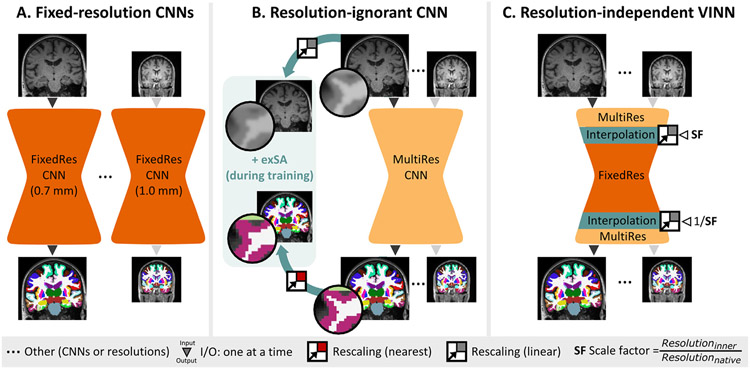
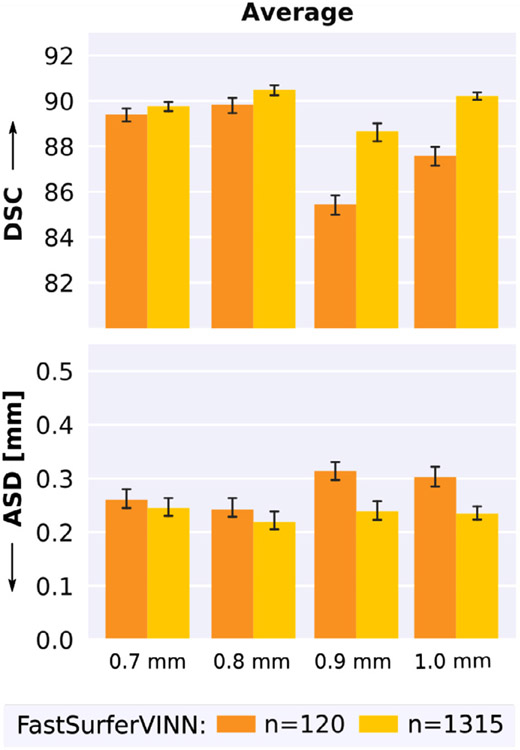
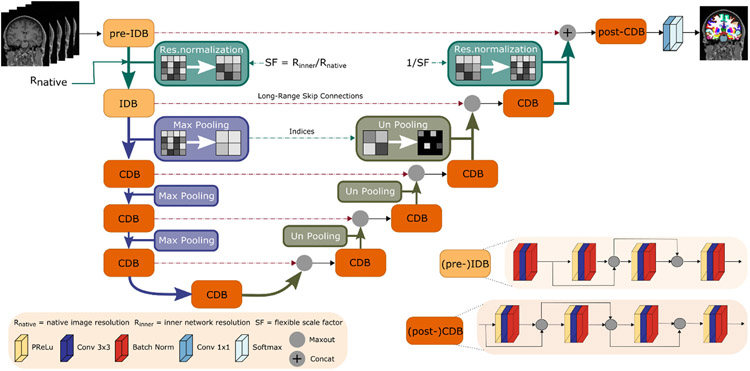
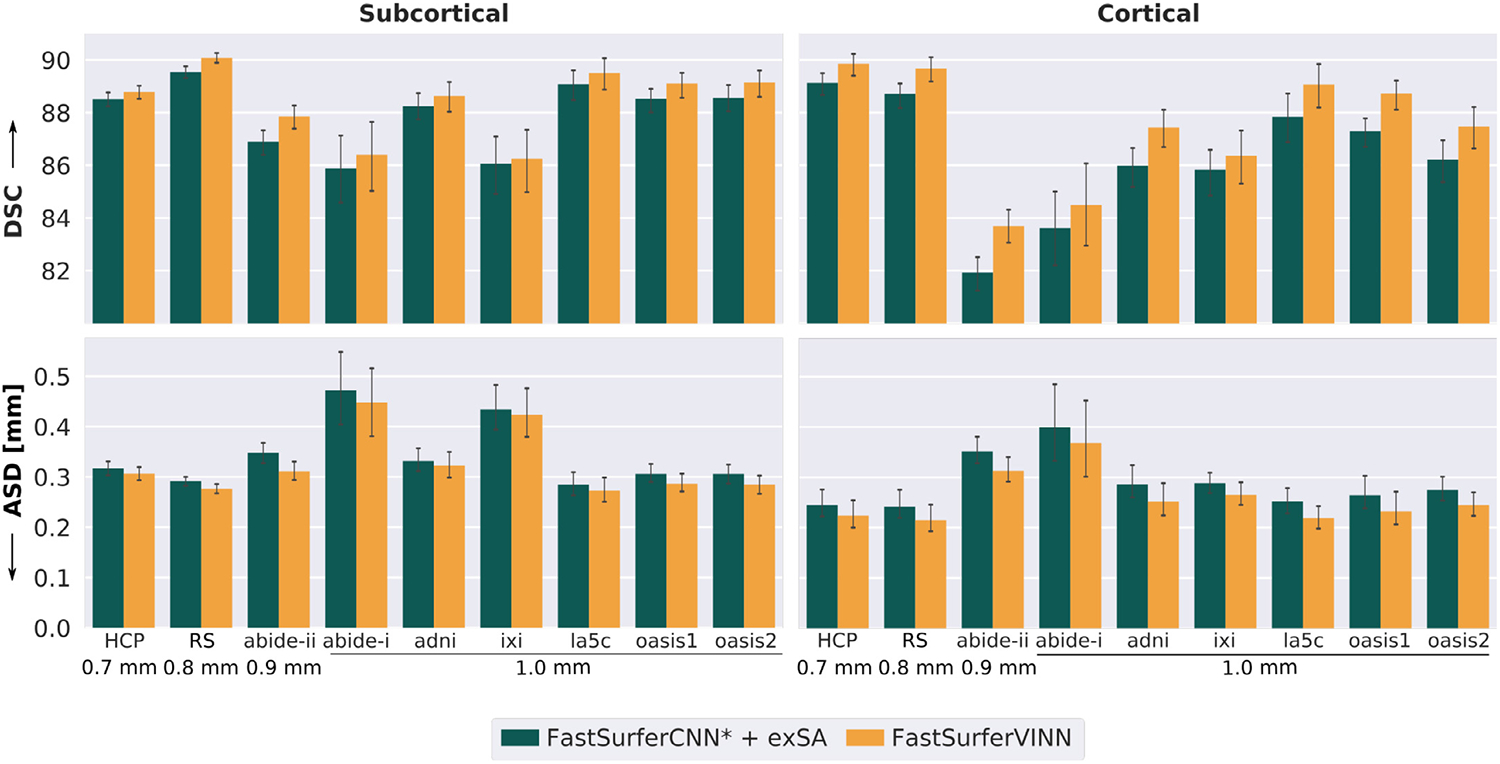
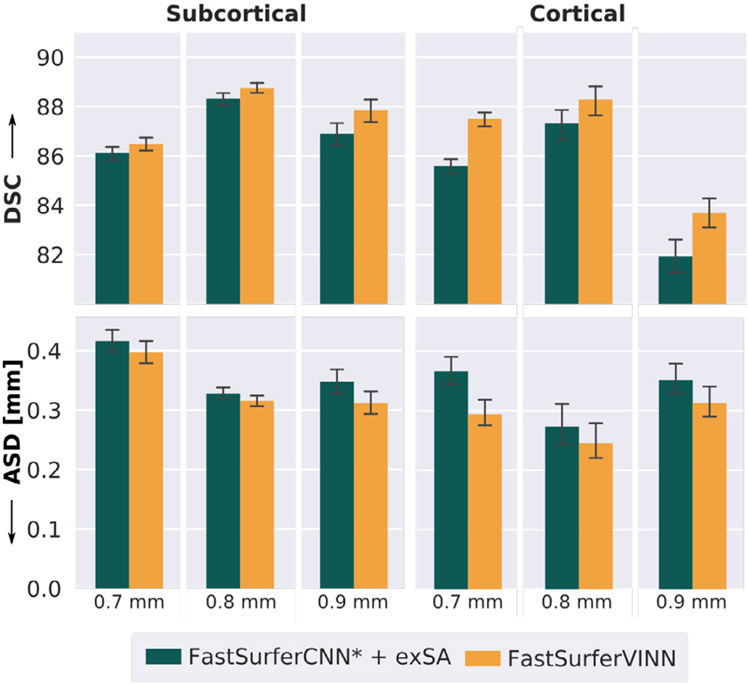
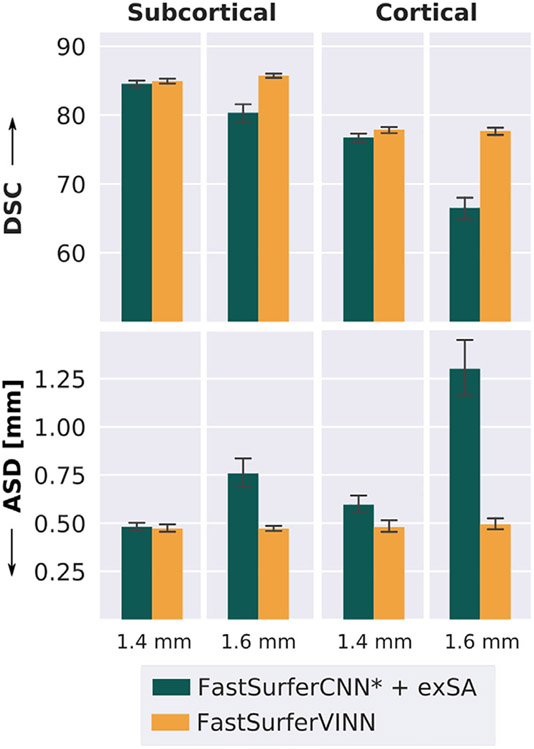
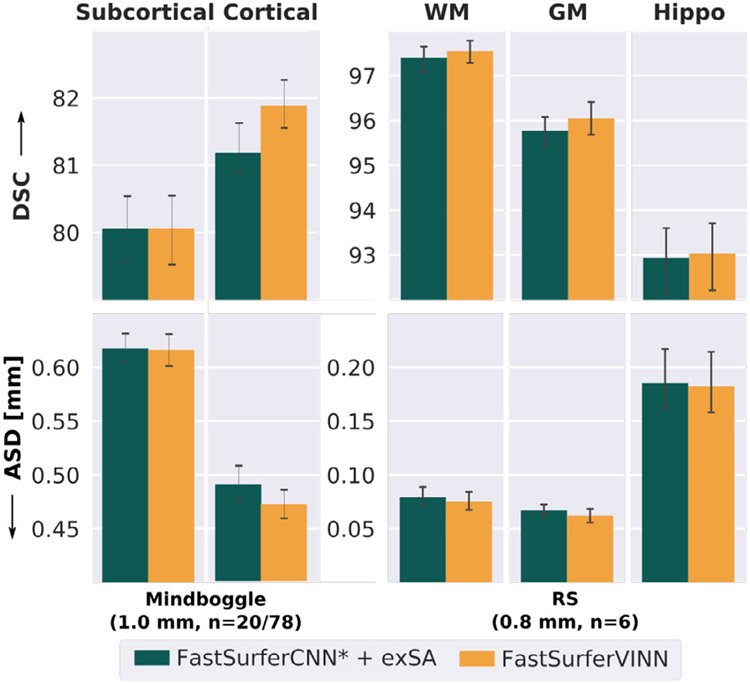
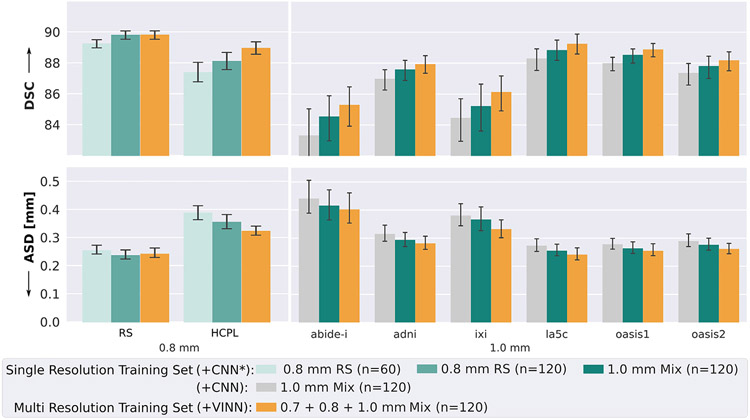
Leading neuroimaging studies have pushed 3T MRI acquisition resolutions below 1.0 mm for improved structure definition and morphometry. Yet, only few, time-intensive automated image analysis pipelines have been validated for high-resolution (HiRes) settings. Efficient deep learning approaches, on the other hand, rarely support more than one fixed resolution (usually 1.0 mm). Furthermore, the lack of a standard submillimeter resolution as well as limited availability of diverse HiRes data with sufficient coverage of scanner, age, diseases, or genetic variance poses additional, unsolved challenges for training HiRes networks. Incorporating resolution-independence into deep learning-based segmentation, i.e., the ability to segment images at their native resolution across a range of different voxel sizes, promises to overcome these challenges, yet no such approach currently exists. We now fill this gap by introducing a Voxel-size Independent Neural Network (VINN) for resolution-independent segmentation tasks and present FastSurferVINN, which (i) establishes and implements resolution-independence for deep learning as the first method simultaneously supporting 0.7-1.0 mm whole brain segmentation, (ii) significantly outperforms state-of-the-art methods across resolutions, and (iii) mitigates the data imbalance problem present in HiRes datasets. Overall, internal resolution-independence mutually benefits both HiRes and 1.0 mm MRI segmentation. With our rigorously validated FastSurferVINN we distribute a rapid tool for morphometric neuroimage analysis. The VINN architecture, furthermore, represents an efficient resolution-independent segmentation method for wider application.
领先的神经影像学研究已经将 3T MRI 采集分辨率降低到 1.0 毫米以下,以提高结构定义和形态测量的精度。然而,只有少数几个耗时的自动化图像分析管道已经针对高分辨率(HiRes)设置进行了验证。另一方面,高效的深度学习方法很少支持超过一个固定的分辨率(通常为 1.0 毫米)。此外,缺乏标准的亚毫米分辨率,以及具有足够的扫描仪、年龄、疾病或遗传变异覆盖范围的多样化 HiRes 数据的有限可用性,给训练 HiRes 网络带来了额外的、未解决的挑战。将分辨率独立性纳入基于深度学习的分割中,即在一系列不同体素大小下对其原始分辨率的图像进行分割的能力,有望克服这些挑战,但目前还没有这样的方法。我们现在通过引入一个用于分辨率独立分割任务的体素大小独立神经网络(VINN)来填补这一空白,并提出了 FastSurferVINN,它(i)首次建立并实现了深度学习的分辨率独立性,同时支持 0.7-1.0 毫米全脑分割,(ii)在所有分辨率下都显著优于最先进的方法,(iii)缓解了 HiRes 数据集存在的数据不平衡问题。总的来说,内部分辨率独立性对 HiRes 和 1.0 毫米 MRI 分割都有好处。通过我们经过严格验证的 FastSurferVINN,我们提供了一个用于形态计量神经影像学分析的快速工具。此外,VINN 架构代表了一种高效的分辨率独立分割方法,可更广泛地应用。