Department of Ophthalmology, Shanghai General Hospital and Shanghai Jiao Tong University School of Medicine, National Clinical Research Center for Eye Diseases, Shanghai Key Laboratory of Ocular Fundus Diseases, and Shanghai Engineering Center for Visual Science and Photomedicine, Shanghai Engineering Center for Precise Diagnosis and Treatment of Eye Diseases, Shanghai, China.
Department of Nursing, Shanghai General Hospital, Shanghai, China.
Invest Ophthalmol Vis Sci. 2022 Feb 1;63(2):17. doi: 10.1167/iovs.63.2.17.
To determine the differences of metabolites and metabolic pathways between patients with proliferative diabetic retinopathy (PDR) and without diabetes (nondiabetic controls) in plasma and vitreous, respectively, and to characterize the relationship between plasma and vitreous metabolic profiles.
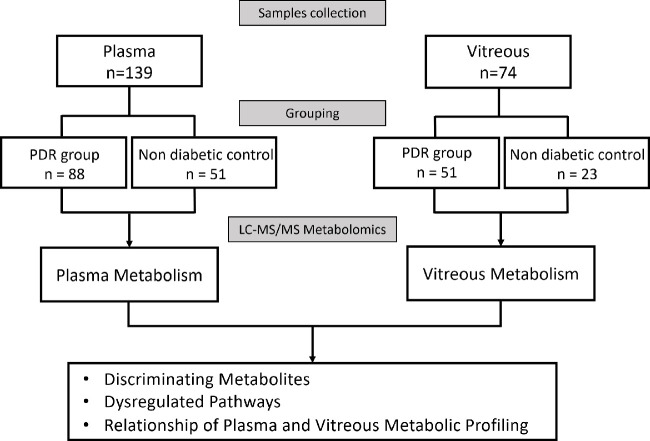
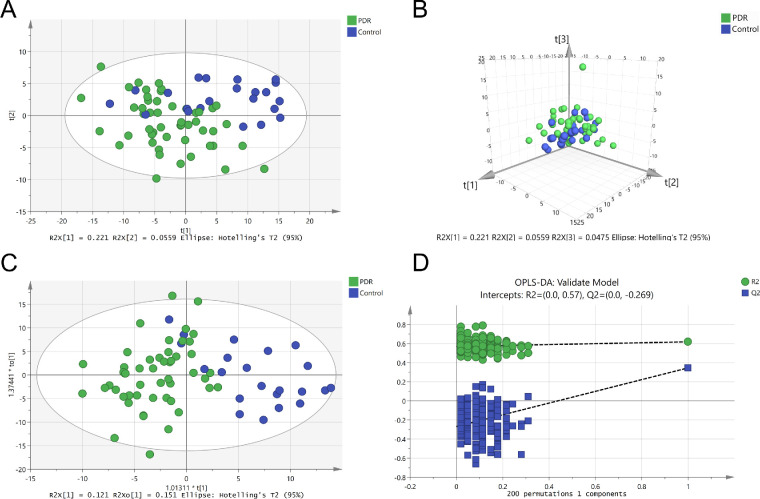
Liquid chromatography/tandem mass spectrometry technology was performed to distinct metabolite profiles of plasma and vitreous. A total of 139 plasma samples from 88 patients with PDR and 51 nondiabetic controls, as well as 74 vitreous samples from 51 patients with PDR and 23 nondiabetic controls, were screened. Pathway analysis was performed using MetaboAnalyst 5.0. Pearson correlation analysis was used to investigate the correlation of metabolites in vitreous and plasma.
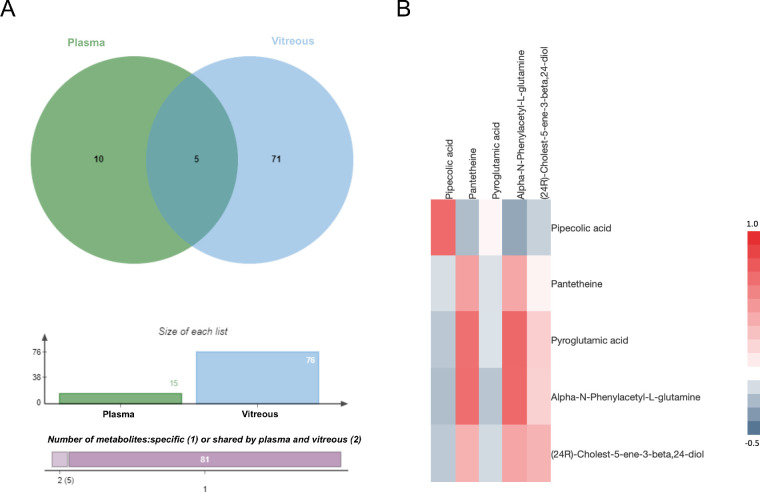
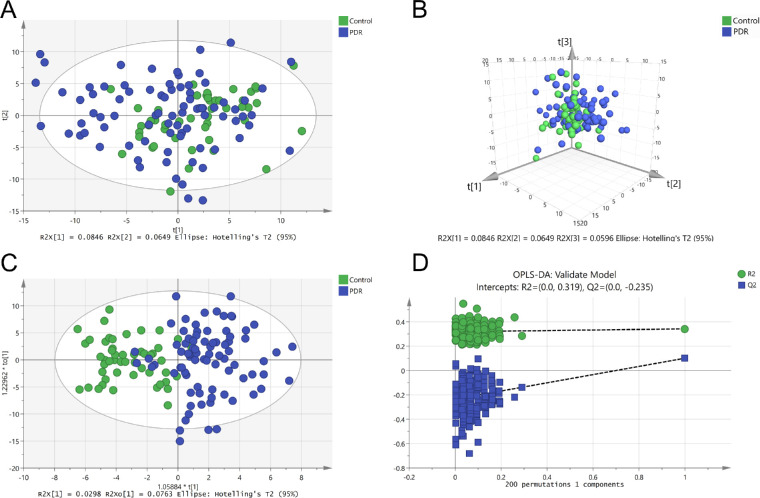
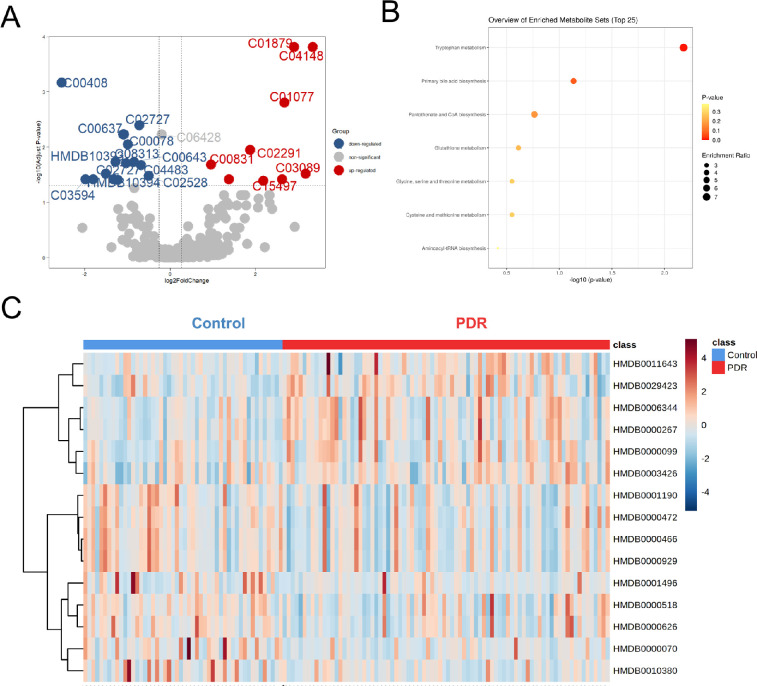
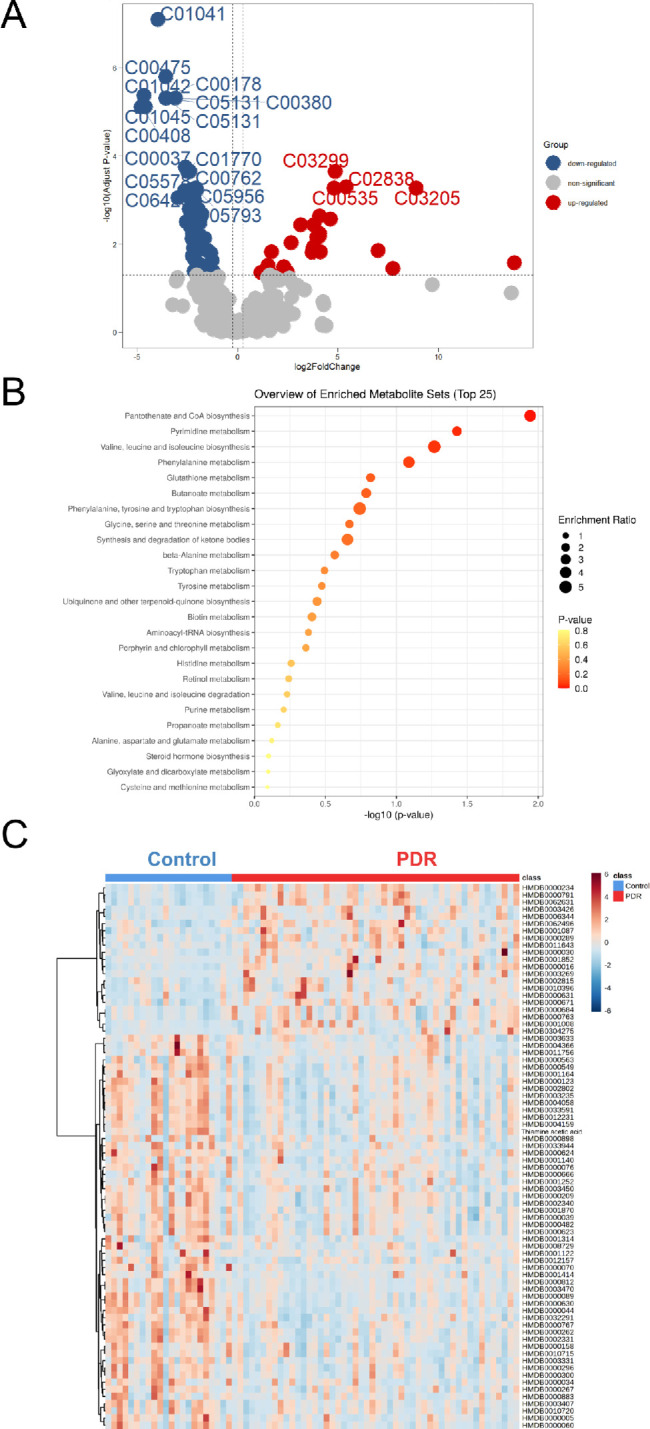
After adjusting for age, fasting blood glucose, and urea, in vitreous metabolomes, a total of 76 features distinguished patients with PDR from controls. Fifteen differential metabolites were found in plasma metabolites. Pantothenate and CoA biosynthesis was the common metabolic pathway altered in both plasma and vitreous. Aromatic amino acid metabolism pathways were dysregulated in vitreous of PDR. For four metabolic features, there were positive correlations between vitreous and plasma.
Despite great differences between the metabolic profiles of plasma and vitreous in PDR cases, there are also similarities in the change of metabolites and metabolic pathways. Exploring the relationship of metabolomics between vitreous and plasma may help provide new understanding of the mechanism of PDR.
分别确定增生性糖尿病视网膜病变(PDR)患者和无糖尿病(非糖尿病对照)患者血浆和玻璃体液中的代谢物和代谢途径差异,并表征血浆和玻璃体液代谢谱之间的关系。
采用液相色谱/串联质谱技术分别对血浆和玻璃体液的代谢物图谱进行区分。共筛选了 88 例 PDR 患者的 139 份血浆样本和 51 份非糖尿病对照,以及 51 例 PDR 患者的 74 份玻璃体液样本和 23 份非糖尿病对照。使用 MetaboAnalyst 5.0 进行途径分析。采用 Pearson 相关分析考察玻璃体液和血浆中代谢物的相关性。
在调整年龄、空腹血糖和尿素后,玻璃体液代谢组学中共发现 76 个特征可将 PDR 患者与对照者区分开来。在血浆代谢物中发现 15 个差异代谢物。泛酸和辅酶 A 生物合成是改变血浆和玻璃体液的共同代谢途径。芳香族氨基酸代谢途径在 PDR 的玻璃体液中失调。对于四个代谢特征,玻璃体液和血浆之间存在正相关。
尽管 PDR 患者的血浆和玻璃体液代谢谱存在很大差异,但代谢物和代谢途径的变化也存在相似之处。探索玻璃体液和血浆之间代谢组学的关系可能有助于提供对 PDR 机制的新认识。